@hthieblot It was my dream, but life got in the way. Because of AI didn't got any job to start after my bachelor's degree in 2024. Nobody hires new graduate.
If you're serious about becoming a Senior Backend Engineer in 2026, master this progression:
Level 1: Postman / Bruno
Test APIs properly before your users become your QA team. Contracts matter from day one.
Level 2: Redis
Speed is easy. Cache invalidation is the real challenge. Learn to weigh trade-offs over cleverness.
Level 3: PostgreSQL
Data modeling, indexing, transactions the foundation of real backend thinking. Schema design is system design.
Level 4: Kafka
Async systems are powerful, but retries, ordering, and idempotency separate juniors from seniors. Failure is a feature you design for.
Level 5: Docker
"Works on my machine" should have ended in your junior years. Consistency beats convenience every time.
Level 6: OpenTelemetry
Trace requests across services and distributed systems finally make sense end-to-end. Observability isn't optional it's essential.
Level 7: Grafana
Dashboards that show latency, errors, and throughput not just pretty graphs. If you can't measure it, you can't improve it.
Level 8: Prometheus
Metrics that force you to think in SLOs and system health, not just features. Reliability outpaces feature velocity in the long run.
Level 9: k6
Load test your "scalable" backend. Watch it break. Then fix it. Scale is a verb, not an adjective.
Level 10: Terraform
Senior engineers don't just write code. They own the infrastructure it runs on. Infrastructure is code. Ownership is culture.
The pattern:
• Foundation: Postman/Bruno, PostgreSQL, Redis
• Resilience: Kafka, Docker, k6
• Observability: OpenTelemetry, Grafana, Prometheus
• Ownership: Terraform
Master one layer before rushing the next.
(save it)
We're hiring front-end engineers for the @ComfyUI. 2.5M monthly users, 106K stars, 60k community nodes running on top of it.
The engineers I want for both roles have opened the ComfyUI repo, scrolled the frontend code, and found things they'd change.
Both roles are remote-friendly. SF presence is a plus.
Senior: https://t.co/CJLiNoZp5t
SWE: https://t.co/7J6zwGnNO2
Anthropic just paid millions to hire Andrej Karpathy.
He gave you the same knowledge for $0 the same week.
Co-founder of OpenAI. Former head of AI at Tesla. The man who coined vibe coding.
No recruitment fee. No exclusive access. Just a link and 29 minutes.
LLMs are ghosts not animals.
Vibe coding is dead.
Software 3.0 is here.
Watch it.
Then read this.
Because Karpathy tells you what Software 3.0 is.
This shows you how to build one - a software factory with Claude Code that ships features while you sleep.
The full build guide is below.
instead of watching 2 hours of Netflix tonight, watch this 40-minute masterclass from the founder of a $20B China AI company
it's the clearest explanation I've seen of how Agent Swarms and AI systems actually work at scale
useful whether you've never built an agent in your life or have been using Claude every day for the past year
I took the key ideas and turned them into a practical guide on how to actually build with Kimi
find it below
this is f*cking gold
the Claude setup most people will never find on their own
if I had this a year ago, I would've worked 5x faster
in the right hands, this changes everything:
If you want to become good at system design (in 30 days), learn these 30 case studies:
1 How Stock Exchange Works
→ https://t.co/ckLlZUh4UR
2 How YouTube Works
→ https://t.co/dTVLjI8EYh
3 How Google Docs Works
→ https://t.co/lXjTlb3Vm9
4 How Kafka Works
→ https://t.co/1D04tpNm2q
5 How URL Shorteners Work
→ https://t.co/SNxRzuzV6B
6 How WhatsApp Works
→ https://t.co/phAf30nR2M
7 How Airbnb Works
→ https://t.co/4NZMIlN70F
8 How Spotify Works
→ https://t.co/d1rGAvPIxA
9 How Slack Works
→ https://t.co/dpjG03ZvlL
10 How Reddit Works
→ https://t.co/J3ZrmwJ0q4
11 How Bluesky Works
→ https://t.co/wfo35CdFvm
12 How Tinder Works
→ https://t.co/uTLfmUajeG
13 How Twitter Timeline Works
→ https://t.co/T7xJTWL30C
14 How Uber Finds Nearby Drivers
→ https://t.co/UX8AA8yNmv
15 How Amazon S3 Works
→ https://t.co/fOchSbdw3C
16 How Apple AirTags Work
→ https://t.co/02ChJDY5Y5
17 How LLMs Actually Work
→ https://t.co/VW4fD9fH8P
18 How ChatGPT Apps Work
→ https://t.co/cK51NCi6OQ
19 How Uber Computes ETA
→ https://t.co/t5G2mhzahX
20 How Meta Serverless Works
→ https://t.co/jVCIuoN4wj
21 How Live Comments Work
→ https://t.co/UzdZPXinxX
22 How Real-Time Leaderboards Work
→ https://t.co/tPqC4Cear5
23 How Live Presence Works
→ https://t.co/u7LWmkQ9UB
24 How YouTube Scales MySQL
→ https://t.co/vm2enNgV16
25 How Vector Databases Work
→ https://t.co/UAtlY6Ntle
26 How Pastebin Works
→ https://t.co/nVS9TKAluk
27 How ChatGPT Works
→ https://t.co/wgE4cxO7i2
28 How Nginx Works
→ https://t.co/XX0ukXAQuG
29 How Lyft Works
→ https://t.co/T9fvldjqC4
30 How Google Search Works
→ https://t.co/DVlsy0vLPq
What else should make this list?
===
👋 PS - Want my System Design Playbook for FREE?
Try the link below to join my newsletter right now:
→ https://t.co/ByOFTtOihX
(200K+ software engineers are already inside.)
===
💾 Save & RT to help others learn system design.
👤 Follow @systemdesignone + turn on notifications.
🚨 Stanford AI professor Andrew Ng just released a completely free 2.5-hour AI Prompting course.
And honestly, this might be one of the most useful AI courses for beginners and professionals right now.
Andrew Ng is one of the biggest names in AI education:
the engineer who built Claude Code just dropped a 28-minute video on how to write prompts that actually work
I've seen $300 courses that don't cover what he shows in the first 10 minutes
CLAUDE.md files, memory shortcuts, parallel sessions, prompting patterns
all in one video and completely free
works whether you're a developer, a beginner, or someone who's been using Claude for months
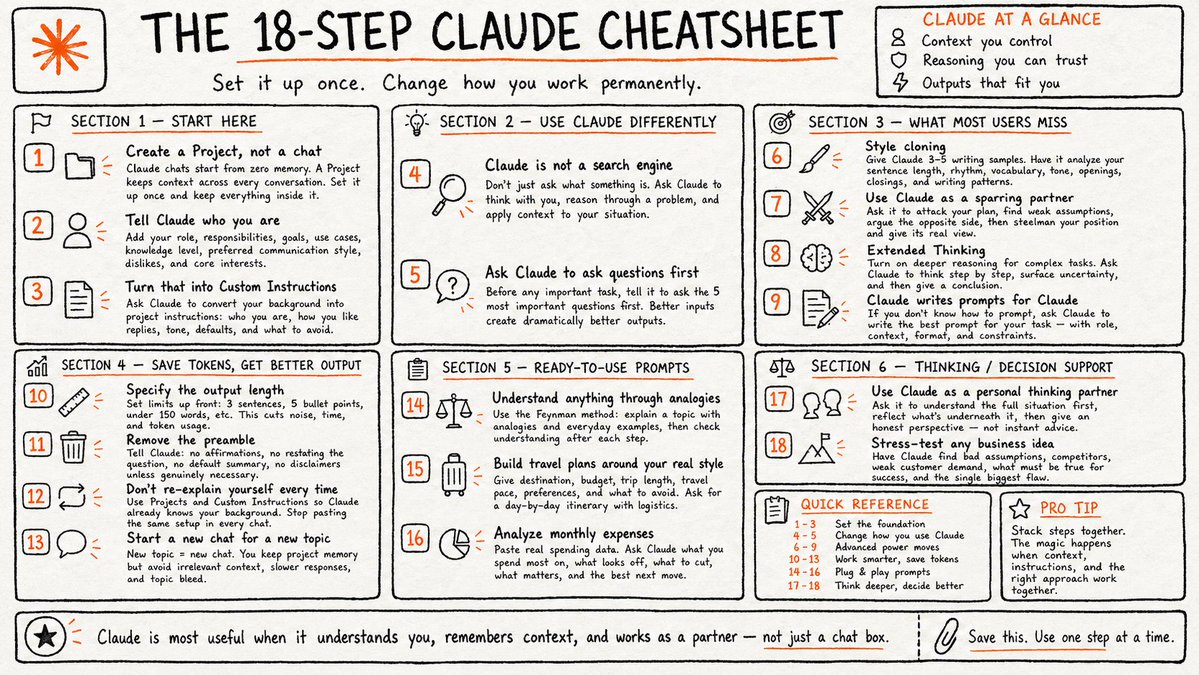
based on this, I put together 18 things you can copy and use in Claude today
full guide in the article below
Bad decisions don't happen by accident.
They happen because nobody taught you how to think.
This 1-hour MIT lecture fixes that.
Free. On YouTube. Tonight.
The ones who watch this make different choices tomorrow. 👇
If I had to land a $200K AI engineer job in 90 days, I would not get a degree.
I would master these 10 GitHub repos.
1. awesome-llm-apps
The production AI playbook. RAG, agents, multimodal apps, all in working code. 106K+ stars.
Repo → https://t.co/oXrD5A8K6a
2. LangChain
The foundational framework. Used in production by Klarna, Replit, Elastic, and most AI startups in 2026.
Repo → https://t.co/alIh6rDDIu
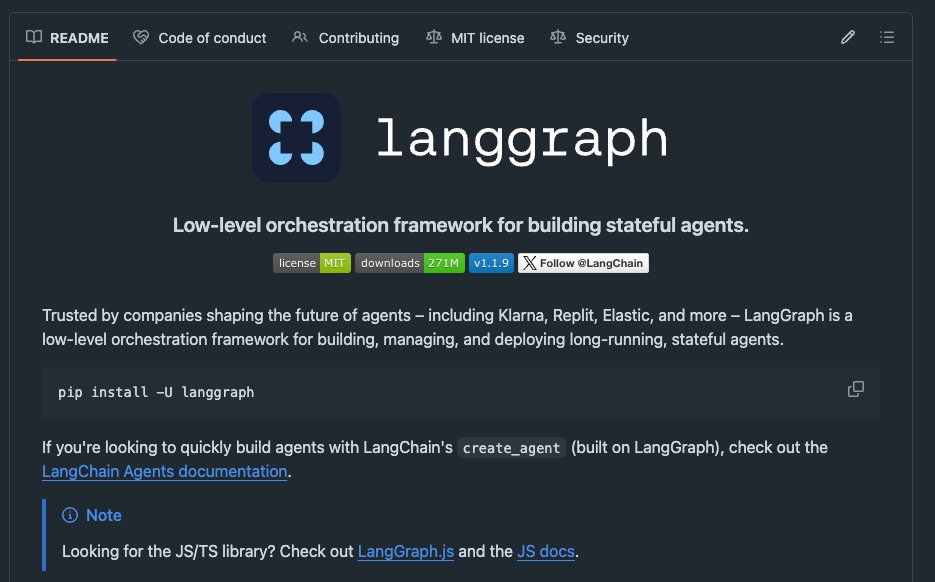
3. LangGraph
The orchestration layer powering production agents. The skill on every senior AI engineer job description.
Repo → https://t.co/bzVBn9uecV
4. CrewAI
Multi-agent coordination. The framework most Fortune 500 teams reach for first.
Repo → https://t.co/0xohE065sD
5. Ollama
Run any open-source LLM on your own machine. The fastest way to learn how models actually work.
Repo → https://t.co/gyZhUdzsnZ
6. awesome-mcp-servers
MCP is the standard every major AI lab adopted in 2026. Knowing it puts you ahead of 99% of engineers.
Repo → https://t.co/ejVOgkRJDX
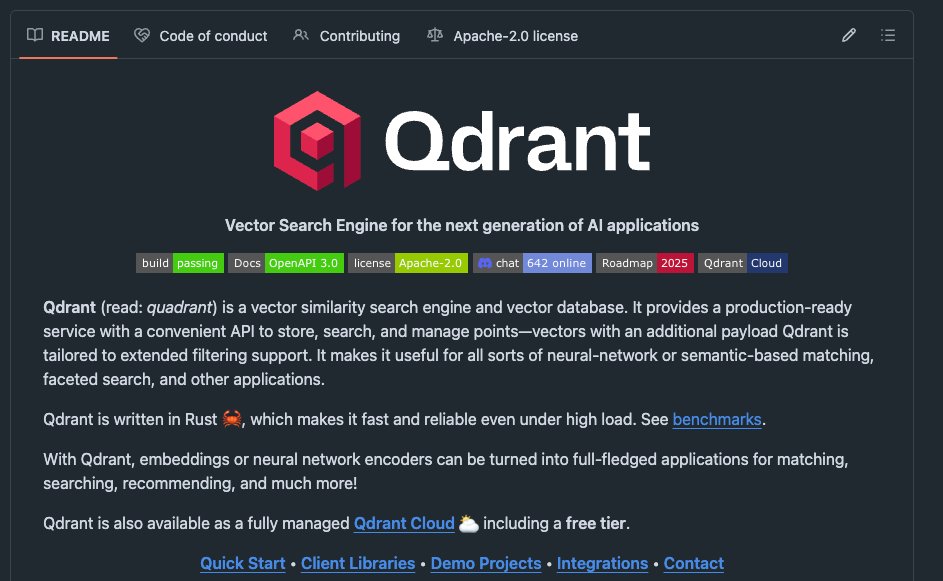
7. Qdrant
The vector database used for production RAG at scale. Embeddings and semantic search are non-negotiable for AI roles.
Repo → https://t.co/ziSSXW2dzZ
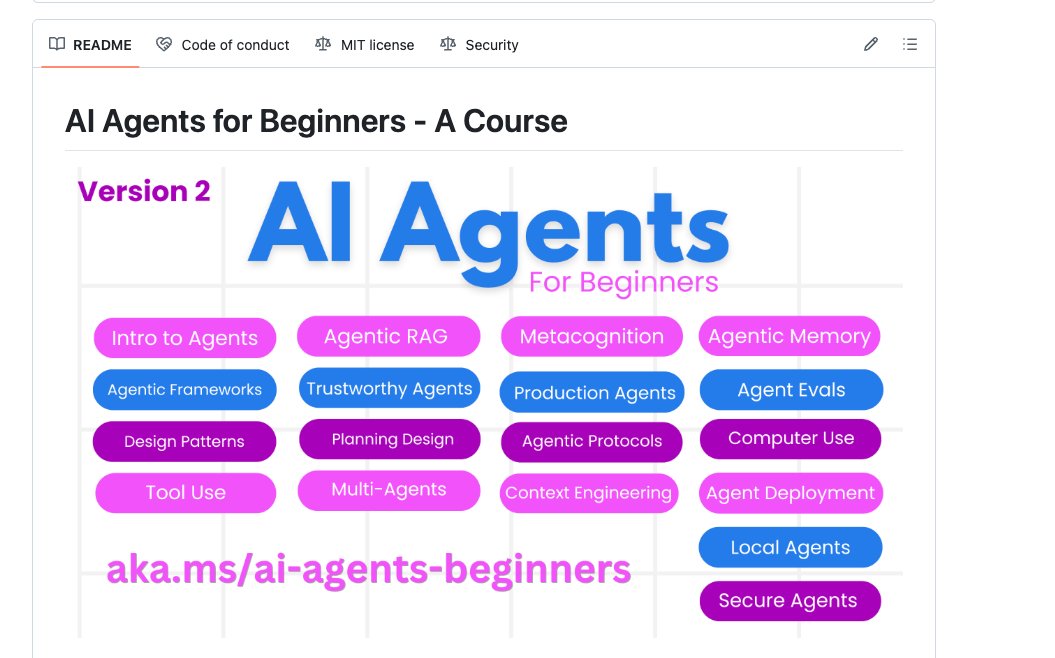
8. AI-Agents-for-Beginners
Microsoft's free 12-lesson course on building agents. Real code, real exercises, real prep.
Repo → https://t.co/7dNsDw6bTj
9. system-design-primer
Production AI is system design. The repo FAANG engineers use to prep for interviews.
Repo → https://t.co/AypwqcL1Xz
10. awesome-claude-code
The playbook for the tool now used inside FAANG, OpenAI, Anthropic, and most YC startups.
Repo → https://t.co/VhNjDoz7YM
Here's the wildest part:
A $200K AI engineer in 2026 isn't paid for a degree.
They are paid for what these 10 repos teach.
The market doesn't care where you learned it. It only cares if you can ship.
90 days. 10 repos. One portfolio that proves you can do the work.
That's it. That's the whole game.
Save this before you forget.
100% free. 100% open source.
🚨 Anthropic's own team just showed how to actually use Claude Code properly.
30 minutes. free. the person who created Claude Code.
watch the workshop. bookmark it.
worth more than every $500 course you almost bought.
you've been using Claude without knowing 40 of its commands.
Then read the guide below.
Karpathy didn't make a course.
He made THE course.
3 hours. Free.
Tokenization. Attention. Hallucinations. Tool use. RLHF. DeepSeek. AlphaGo.
Every behavior you've ever wondered about in an LLM - where it comes from, why it exists, how it was engineered.
The gap between engineers who understand this and engineers who don't isn't technical depth.
It's the ability to conceive of entirely different things.