I got a 1.9B model to watch a restaurant camera and tell staff which tables need cleaning 🍽️
It runs on my laptop. No cloud, and it generates zero tokens.
Built over a weekend with @liquidai d1-2B
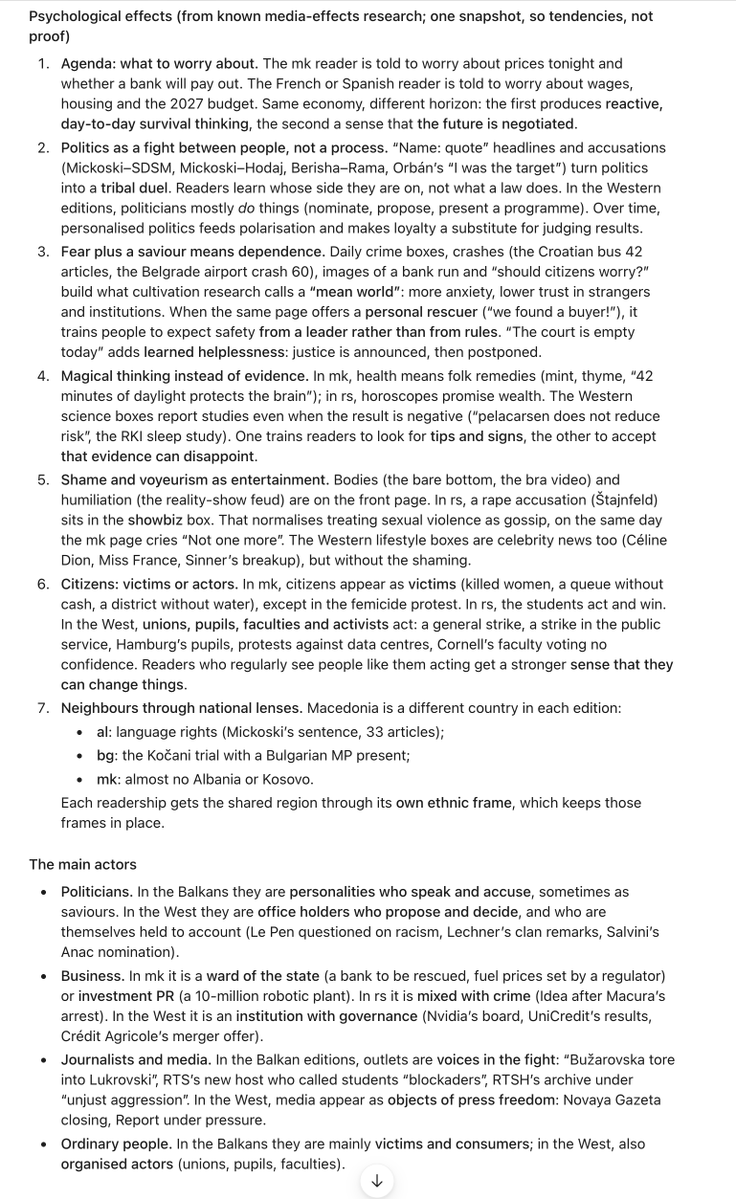
Од денес пуштивме 4 нови изданија на https://t.co/kEn2iTiBfn (DE, FR, IT, ES). Му дадов инструкција на Claude да направи психолошка анализа на насловните на сите 8 изданија и го даде следниот извештај.
🚨 BREAKING: An asteroid was found to have all the building blocks of life.
Japanese scientists have confirmed a monumental discovery: asteroid Ryugu contains all five nucleobases essential for DNA and RNA. By analyzing just 5.4 grams of material returned by the Hayabusa2 spacecraft, researchers identified adenine, guanine, cytosine, thymine, and uracil in similar proportions. This marks the first time a single celestial body has been found to harbor a complete, balanced mix of every fundamental component needed to store and transfer biological information, suggesting that the molecular foundation of life is far more prevalent in deep space than previously imagined.
This breakthrough provides compelling evidence for the theory that asteroids and meteorites may have delivered the basic ingredients for life to early Earth during its formation. Unlike previous findings that only showed partial sets of these molecules, Ryugu’s chemistry points toward a water-rich parent body where complex reactions could occur over millions of years. While it remains a mystery how these molecules eventually transitioned into living organisms, their widespread presence across the solar system implies that the recipe for biology is not a terrestrial anomaly, but a cosmic standard.
source: Oba, Y., et al. (2026). A complete set of canonical nucleobases in the carbonaceous asteroid (162173) Ryugu. Nature Astronomy.
Да се направи еден документарец како за 50 години ја уништија општина Центар, како од една улица од 200м се перат пари со 3 пати асфалтирање за две години, како се сечат дрва и како на секое ќоше се крева зграда, за секоја дупка на улиците и тротоарите 1/2
Money only exists in our collective imagination as a fiction made from words. We can make more money and we can make less money, but we cannot buy more time.
Watch the whole talk here: https://t.co/r7vV0V72ll
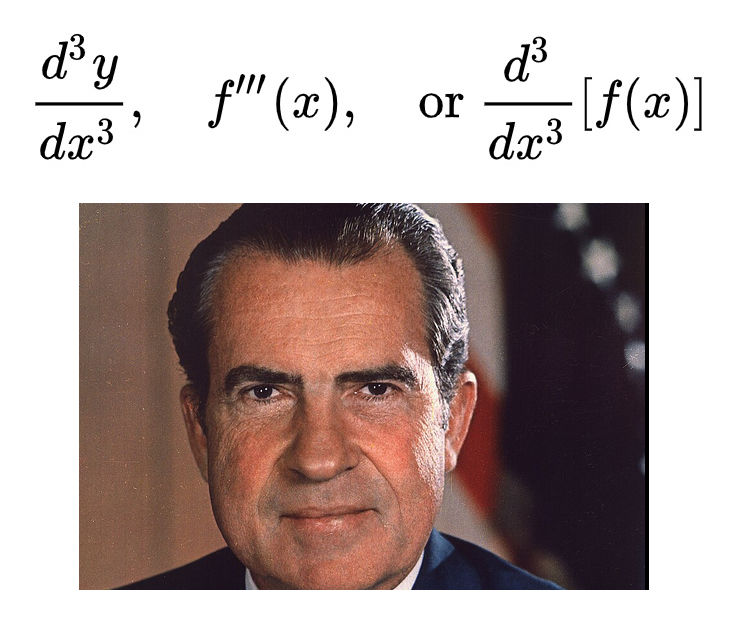
“In the fall of 1972 President Nixon announced that the rate of increase of inflation was decreasing. This was the first time a sitting president used the third derivative to advance his case for reelection.”
~Hugo Rossi,“Mathematics Is an Edifice, Not a Toolbox,”Notices of AMS
Notebook has just unlocked over 700 textbooks from the world’s leading publishers. Every single one is available to you, completely free of charge! @Gemini_Notebook
BREAKING: Claude Code found 14,219 photos of my face on my Android that I never took. Phone was secretly taking them almost every time I picked it up. Even when I was just lying in bed. Even at home.
Not screenshots. Real frames from the front camera. On the train. In the car. At home. When I just grabbed it to check the time.
They were just sitting in a system cache. Timestamps and GPS on them. Nothing in Gallery. Nothing in Recently Deleted.
Plugged the phone into my laptop, made a full backup, told Claude Code to look for any front-camera files that weren’t in my photos. It pulled /data/system/users/0/faceunlock/cache and another folder inside Google Play Services. Over 14 thousand files. Normal ones and infrared from Face Unlock. Every single one had time and location.
Started scrolling. Almost everything from the last 15 months. Then I saw a file created 2 seconds ago. I was still looking at the folder. Phone kept taking photos while I was reading this.
Google and the phone makers say Face Unlock turns everything into a mathematical model and deletes the image right away. On this phone the raw frames were just sitting there. Some of the processes writing to that folder were from system diagnostics. Couple of old apps that still had camera permission could also get in.
Turned off diagnostics, revoked camera access from everything that doesn’t need it, cleared the cache. But how many of these frames already went somewhere else, I don’t know.
If you want to check yours, plug it in, make a full backup or use ADB, and ask Claude to look for front-camera files outside your Gallery. Path above is where mine were.
Колку раскрсници во Скопје, додека се реновираа, можеа да се направат вака :
https://t.co/H8gNQFiqY4
ама не, лупни семафор, нека чекаат. кај се брзаат.
Many of you don't understand how serious this is, so let me break it down.
In computer science there is a famous kind of puzzle called 3-SAT. You are given a long list of yes-or-no switches and a set of rules about how they must be arranged, and you have to find a combination that satisfies every rule. The obvious way to solve it is to try every combination, but each new switch doubles the number of possibilities, so a puzzle with a few hundred switches would take longer than the age of the universe to brute force.
For decades, the smartest people in the field found clever tricks that made this a little faster, but every trick still hit the same wall: the time required kept exploding as the puzzle grew.
About 25 years ago, two computer scientists, Russell Impagliazzo and Ramamohan Paturi, working with Francis Zane, turned that wall into a formal idea.
They proposed the Exponential Time Hypothesis, which says this explosion is not a failure of human cleverness but a law of nature. No algorithm, however brilliant, will ever solve 3-SAT without the time blowing up exponentially. Nobody could prove it, but almost everyone believed it, and it became one of the foundations of modern computer science.
Researchers used it as a measuring stick. If you could show that solving some other problem quickly would also crack 3-SAT quickly, you had shown that problem was hopelessly hard too. Hundreds of papers, across scheduling, graphs, logic and much more, rest on this one assumption.
Now an internal AI model at OpenAI claims to have broken it. It says it found an algorithm that solves these puzzles meaningfully faster than the hypothesis allows, and it has checked the proof in a computer verification system called Lean.
And here is the remarkable part: the very people who proposed the hypothesis, Impagliazzo and Paturi, along with MIT's Ryan Williams, are now leading the public review of whether a machine has disproved their own idea.
So what happens next? If the disproof holds, a large part of theoretical computer science has to be revisited.
Every result that said "this problem cannot be solved faster, assuming ETH" loses its foundation, and researchers will have to work out which of those walls were real and which were simply where we stopped looking. It does not mean everything becomes easy. The new algorithm is still slow in absolute terms and this is not the famous P versus NP problem being solved.
But it means our map of what is possible was wrong in a place we were very confident about, and it was an AI that redrew it. If the disproof fails, the hypothesis survives and the field breathes out, but we will still have watched an AI produce serious, checkable work on one of the deepest questions in the discipline, closely enough that the founders of the idea had to take it seriously. Either way, something has shifted.