I built the Nigerian Literature Archive for the books many of us grew up reading and the ones we may have forgotten.
From Ige Adubi to Ralia the Sugar Girl, Eze Goes to School and more, it’s a small way to preserve and rediscover Nigerian literature.
https://t.co/c1PJNqpXeL
If your theological convictions are not actively making you more gracious, humble, and repentant than your beliefs are not being shaped by Jesus they’re motivated by a desire to be argumentatively “right.”
When pastors lose the kingdom‑covenant architecture, the Psalms collapse into two predictable defaults: moralism or psychologizing.
If the Old Covenant frame disappears, the preacher has no categories for royal representation, covenant lawsuit, enthronement, or national horizon.
So he retreats into the only tools left: virtue and feelings.
But the Psalter is not a self‑help manual.
It is the constitutional songbook of the King.
Read without the kingdom, it becomes about “me.”
Read within the kingdom, it becomes about Him—and only then about His people.
Recover the architecture and you recover the Psalms.
Here is a link to a free, practical resource for learning, loving, and praying for your city/context. Consider working through it with your church planting team, staff, or small group. #church#churchplanting https://t.co/1spR4BSbjp
"An African Introduction to the New Testament is a monumental achievement in biblical scholarship." ~Rev. Dr. Michael Bird, deputy principal at Ridley College, Melbourne, Australia (@mbird12) (@Fortresspress)
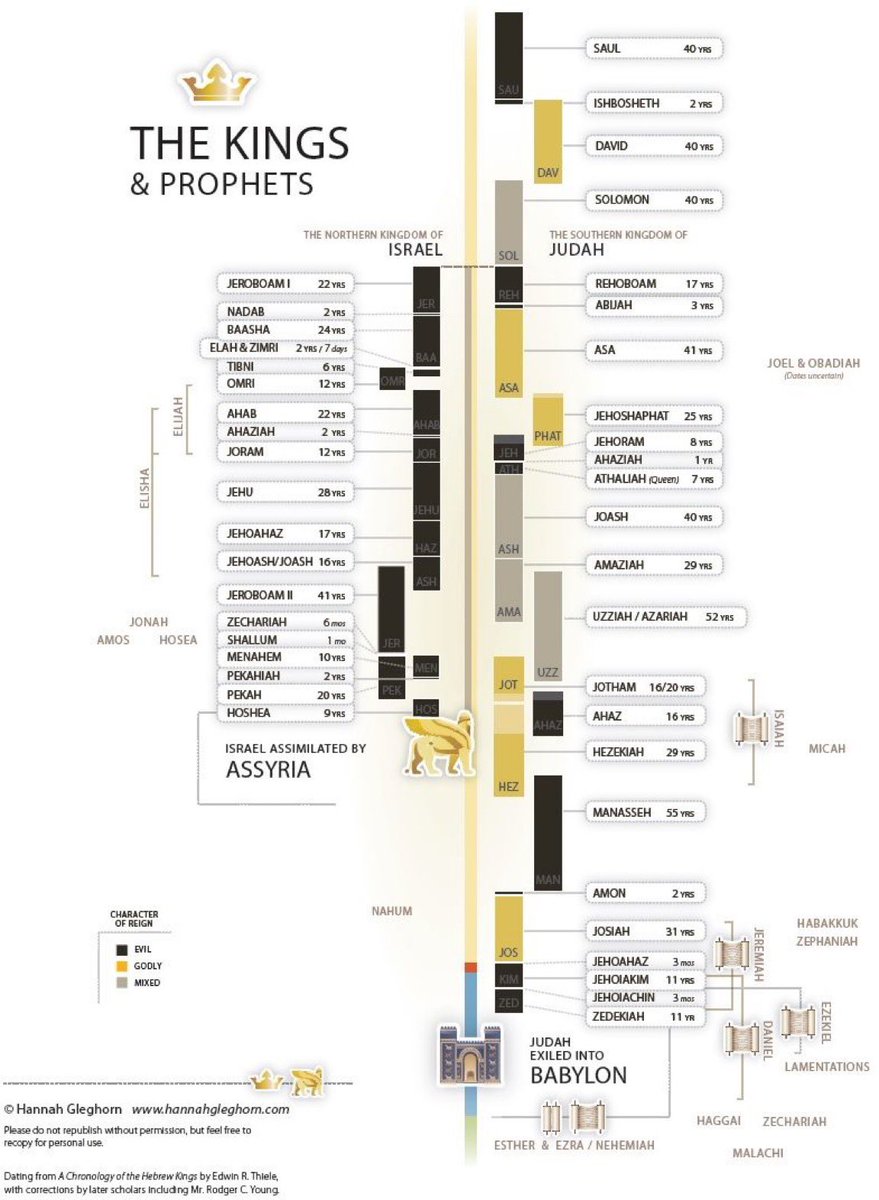
Ever get lost trying to line up all the kings, prophets, and books of the Bible? This chart gives a bird’s-eye view of how it all fits together... and ultimately pointing to the true King, Prophet, and Priest - Jesus Christ.
This clearly created waves. Few things to point out:
1. This is a pretty standard, non-controversial take as far as the study of Greek goes. The words in the NT *are* synonymous and used interchangeably. I have yet to find a source that says otherwise that isn't attempting to make an argument from tradition in defense of a particular church polity rather than standard exegetical hermeneutics.
2. I'm not saying that the development we see take place in the 2nd century is a bad thing, merely that it is in fact a thing. There can be a reasonable case made that the distinction and hierarchy seen take place in the division of the offices was even a necessary one. I think the short time between the NT author's use of said terms and Ignatius's divisional categories of them is a good case of how quickly doctrinal/dogmatic development can in fact take place. It's a good example of why scripture must be our guiding principle in *all* cases, not to the exclusion of church tradition we see develop, but nonetheless, in subservience to it. Traditions are not bad, historical Protestantism doesn't believe that. Tradition has a vote and a voice, but scripture has the veto.
3. This post was not an attack on Roman Catholic, Eastern / Oriental Orthodoxy, or the LDS. I hate to break it to everyone, but you guys do not monopolize my posting motivations. I simply was working through the Greek text of 1 Timothy 3-5 and it prompted the post.
4. Go touch grass, hug your kids, go for a walk, drink a good cup of coffee/tea. I didn't read that many comments but you don't need a PhD in ancient manuscripts know that far too many of you guys spend way too much time getting angry on X.
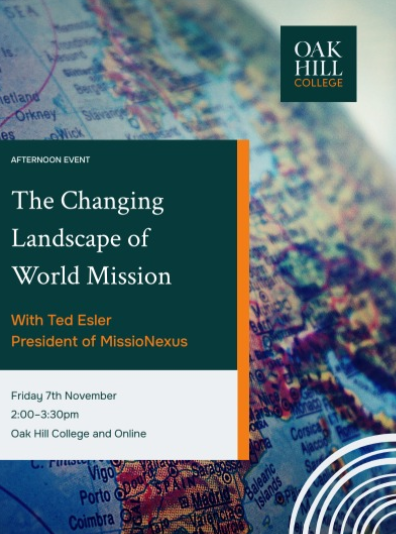
Delighted to announce this 90-min webinar from @tedstur on Fri 7 Nov, 2pm:
"The Changing Landscape of World Mission"
We’ll explore major trends shaping evangelical mission today - and there's few better than @MissioNexus President to guide us!
To join us, see tweet below 👇
Freedom from anxiety doesn’t come from fleeing the storm—it comes from facing it with Jesus.
In the Gospels, when the disciples were in the boat and the storm hit, they panicked. But Jesus didn’t first address the waves or the wind. He addressed their hearts.
“Why are you so afraid? Have you still no faith?” (Mark 4:40)
The hurricane wasn’t the problem. Their hearts were.
Anxiety wasn’t the enemy—it was the symptom.
Fear exposed what they trusted most.
Jesus is always more concerned about our hearts than our circumstances. Because the real battle isn’t between us and the storm— It’s between faith and fear.
So when anxiety rises, don’t just pray for the storm to stop.
Ask Jesus to speak peace to your heart. Let Him be your peace.
It’s not storm-free lives that bring peace. It’s encountering the presence of the One who sleeps through hurricanes and speaks stillness with a word.