ISRT (University of Dhaka, Bangladesh) invites applications for its vacant regular MS in Applied Statistics and Data Science program (Session 2024-25). You can access the details of the application procedure by the following link:
https://t.co/Qh3rM26g9X
‘R for Applied Statistics and Data Science’ Training Program to start from 01 February 2024 – Institute of Statistical Research and Training #rstats https://t.co/7yUFEAzuAu
Journal of Statistical Research (https://t.co/BHcAkffsTn) will publish a special issue on "Longitudinal data analysis and related topics." Dr. Kalyan Das, a former professor of IIT Bombay, will be the guest editor for the issue.
Call for papers: https://t.co/volaZgh5kk
This is how I advise my #PhD students to write research manuscripts (in case someone finds it helpful).
General points:
1. Research questions addressed by your manuscript are key and should guide you.
2. Don’t view your manuscript as an article. See it as a STORY.
3. Pick the writing style that is easily understood by a broader community. Make reading easy.
4. Most of data should get into the paper. If some doesn’t support the hypothesis, it still must be in the Suppl. Information. It must show the reproducibility limits.
5. Make the paper shorter, not longer. Cut out things that may sound like ‘bluff’ or ‘decoration’ of the story. Use well-defined terminology, don’t invent it unless clearly necessary.
6. Focus on reporting & explaining the numbers. Minimize discussions of qualitative outcomes and your imagination.
▫️
Specific steps:
1️⃣ First, formulate and polish the key questions that your study addresses. It may take hours or even days (even though you've been doing research in this area for years). A single study should address no more than 1-3 key questions. It’s your perfect start for writing.
2️⃣ Write down the structure of your STORY first: Sections and Subsections that will answer those questions. Into each subsection, put 1-2 sentences that formulate the message(s) from this subsection. It will hugely help you navigate the manuscript later and save a lot of time.
3️⃣ Write approximate messages in the conclusion section. Usually, no more than 1-4 sentences.
▫️
At this point, SHARE your [structure+questions+messages] document with your advisor for feedback. Toss it back and forth until you both converge. You can also include major collaborators if needed.
▫️
4️⃣ Write the introduction part. Put down the paragraphs that introduce a reader into the key question(s) of the manuscript and the background of your story.
5️⃣ Write the main text for each section, smoothly and firmly. Each paragraph should add a separate value and end with a message-like sentence. Follow the “First… Second… Third…” structure for paragraphs when possible, it gives rigor and readability to your story.
6️⃣ Write the conclusions. Add a broader perspective that is justified and not generic.
7️⃣ Write the abstract. It must have simple terminology and clearly explain what readers can find inside the paper. It also should contain the key conclusions.
8️⃣ Write up 4-5 different titles and spend >30 mins with your team discussing which title sounds best.
Finally, iterate on the resulting draft within your team.
The number of drafts can easily exceed 20.
▫️
❗In addition, I always emphasize that a high quality of your research paper:
- sharpen your writing and analytical skills.
- shapes your reputation.
- shows who you are as a researcher and communicator.
▫️
p.s. Everyone has a different style of advising and writing. You can adopt only some specific steps if you find them helpful.
p.p.s. Another way that we sometimes use is by starting with figures ('story in figures' style).
#AcademicTwitter #AcademicChatter
The most interesting part of our RV road trip in China this summer ⬇️ isn't actually what we saw but what we DIDN'T see.
Here it is:
1) We didn't see any trace of this mythical "social credit score" (which means I still haven't seen any in 10+ years of traveling and living in China...).
2) We didn't see any homelessness, nor did we see any extreme poverty, despite traveling in some of the less developed parts of rural China. We of course saw a lot of folks that were obviously not well off - China is still on average a poorer country than the West - but no-one living in slums or begging on the streets.
3) We didn't see any violence, not even the slightest episode of road rage. That's something that's always impressed me: Chinese people are incredibly calm and chill, there's a strong cultural aversion to violence and especially physical violence.
4) For all the talk of China as a "police state", we didn't get stopped by the police even once in 5,000 km and 32 days of driving. Our sole interaction with the authorities during our trip was when we approached the Mongolian border there was an army checkpoint where they were checking everyone's ID. That's it.
5) We didn't see repression of minorities' cultures, on the contrary. Whenever we went to an area with a large minority population - be it Mongolians, Koreans or Russians - their culture was celebrated. Street names were in their language, restaurants served their food, museums explained their history, cultural events and sites were about their culture, etc.
6) We didn't experience racism or display of nationalism. Chinese people are very patriotic, sure, with many Chinese flags around and obvious pride in their country's achievements but we've never had an experience where this translated into racism or nationalism. On the contrary wherever we went - and this has consistently been the case in all my travels in China - people were incredibly welcoming and curious about us. I cannot begin to count the amount of free stuff my daughters got offered by strangers during the trip!
7) Lastly, needless to say we didn't witness any "human rights abuses" or stuff of that nature. People who don't know the country don't realize just how normal life actually is in China. It's a whole lot of people doing normal stuff: working, eating out, shopping, driving, entertaining themselves, etc. Just normal human beings like you and me, with actually a lot of respect for each others. Sure China has a very different culture and values from the West: the extreme importance of family, of education, of hard work, a collectivist understanding of society as opposed to individualist, social harmony as a paramount value, etc. But that's what makes the country interesting and beautiful, we should welcome differences and diversity in this world instead of fearing it.
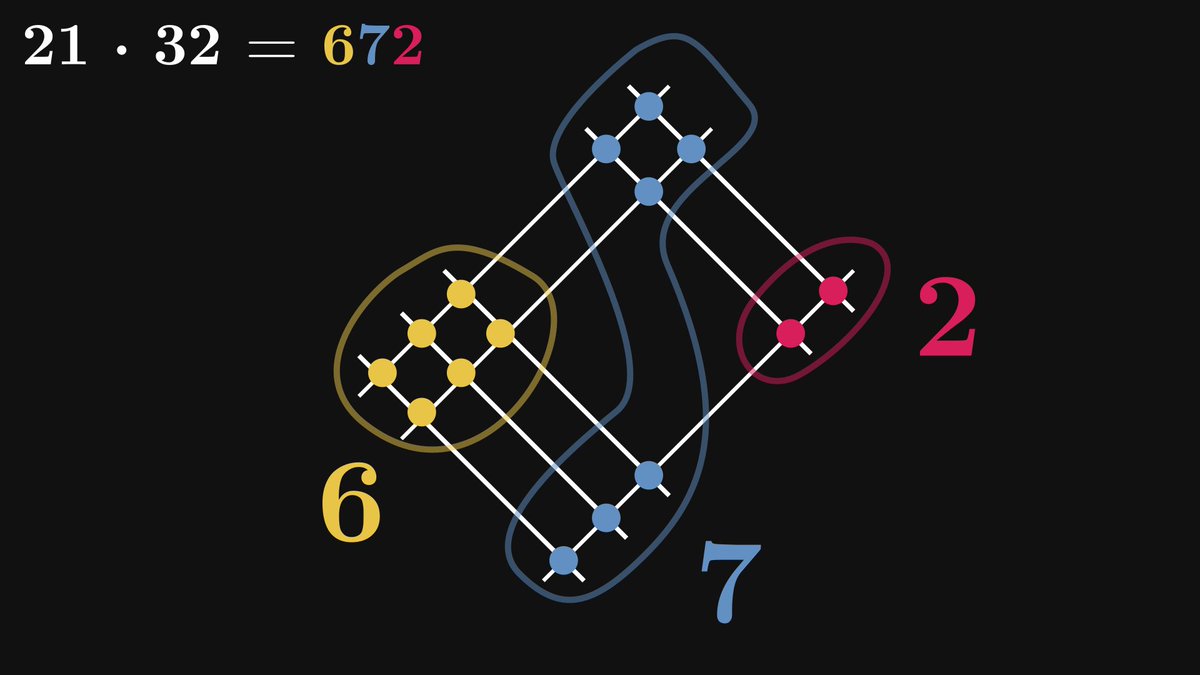
The Japanese multiplication method makes everybody feel "I wish they taught math like this in school."
It's not just a cute visual tool: it illuminates how and why long multiplication works.
Here is the full story.
Data Science courses have been included in the updated B.S. in Applied Statistics syllabus (Link: https://t.co/FAmseJDO2w) at the Institute of Statistical Research and Training (ISRT), Dhaka University, Bangladesh. #DataScience#RStats#dhakauniversity#Statistics
“We show that LaTeX users were slower than Word users, wrote less text in the same amount of time, and produced more typesetting, orthographical, grammatical, and formatting errors. “
https://t.co/4hAnm6J2ZM
Thanks @FlorianBuehler
Dr. Asim Dey will talk on “Anomaly Detection in Temporal Networks through Topological Features and Motifs with Application to Mobility Data” on 20 December 2022
Venue: ISRT seminar room, Dhaka University
Date and time: 20 December 2022 at 2 PM
#rstats#ISRT#DhakaUniversity
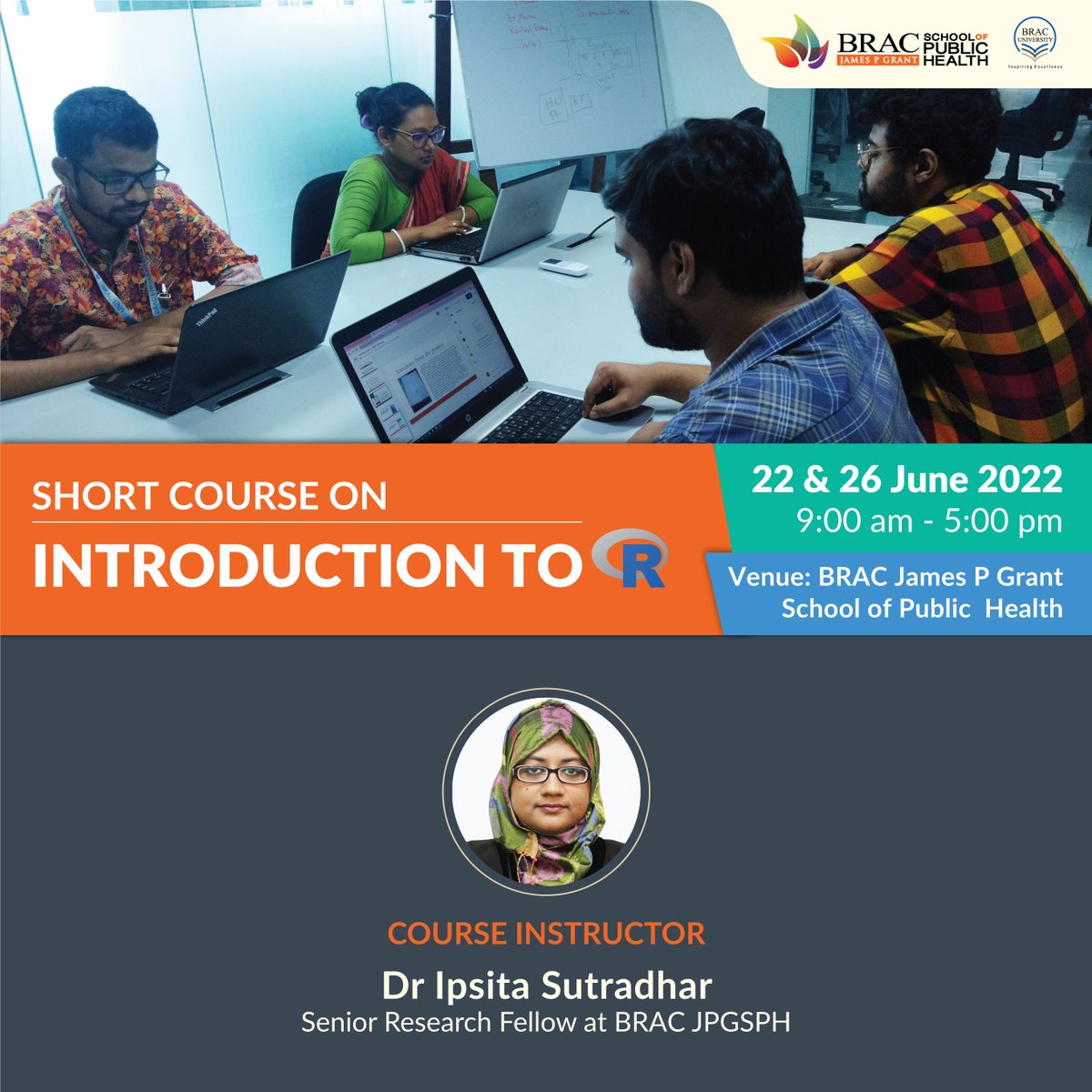
We are offering a 2-day short course on quantitative data analysis skills using 'R' on June 22 & 26, 2022.
The course will be facilitated by @IpsitaEva, Senior Research Fellow, @BRACJPGSPH
Apply here by 18 June 2022: https://t.co/hCKIdP98g4
Details: https://t.co/66SsFLIZoD
We are offering a 2-day short course on quantitative data analysis skills using 'R' on June 22 & 26, 2022.
The course will be facilitated by @IpsitaEva, Senior Research Fellow, @BRACJPGSPH
Apply here by 18 June 2022: https://t.co/hCKIdP98g4
Details: https://t.co/66SsFLIZoD
I have been living under a rock so I only just saw this nice interview with the living legend Ross Ihaka, who after developing R plans to retire to the far north for gardening, fishing and to stay offline so he can get back to the real world :)
https://t.co/bZ5uo7JAoy
U.S. News published its first-ever ranking of doctoral programs in biostatistics. Career opportunities are expected to grow in this field, inspiring this addition. 😆🎉 https://t.co/2GY59oFrP7
Very sad to hear that Sir David Cox has died. He was a giant in the field of Statistics, and a wonderfully modest and generous person. He has been a professional and person hero of mine since I was lucky enough to meet him when I was a grad student over 40 yrs. ago.