@fendley_laura@TessaBGarland This sounds so fun! It could promote other interests within the students that they didn't know they were interested in to begin with!
@VanniciaHooks@Terranc36108894@TessaBGarland This is a great idea! Local elementary schools in and around my county give a free pizza coupon to students who read 10 books a month and log them and return the sheet to the teacher with a parent signature.
promote about their favorite book. One spot will say I'm reading and the other will say "Just Read." This will allow students to pick out their favorite book and then explore what they've already read too!
We don't have a media specialist but a literacy coach. She schedules literacy trainings and breaks down data and the methods that work for reading. We thought it would be a good idea to implement a section for children to
@TessaBGarland#CFCultureofLiteracy
@VanniciaHooks@TessaBGarland I do like that it finds where the student is at academically and then gauges lessons from there. I think it would be beneficial if you could create groups based on the data and find other students who are struggling on the same topics.
@kristawgreene@TessaBGarland How effective do you find the sight word testing? Do you feel the student is reading the words or just memorizing them at this age? I am just curious since we don't do them.
The assessment we use is called PALS, phonological awareness literacy screening. We do this assessment 3 times a year, beginning, middle and end. The PALS is developmentally sensitive, valid and a reliable tool
All of these tools are built upon throughout the school year to build that foundation so the student is ready to begin reading in Kindergarten.
#CFQualityAssessments@TessaBGarland
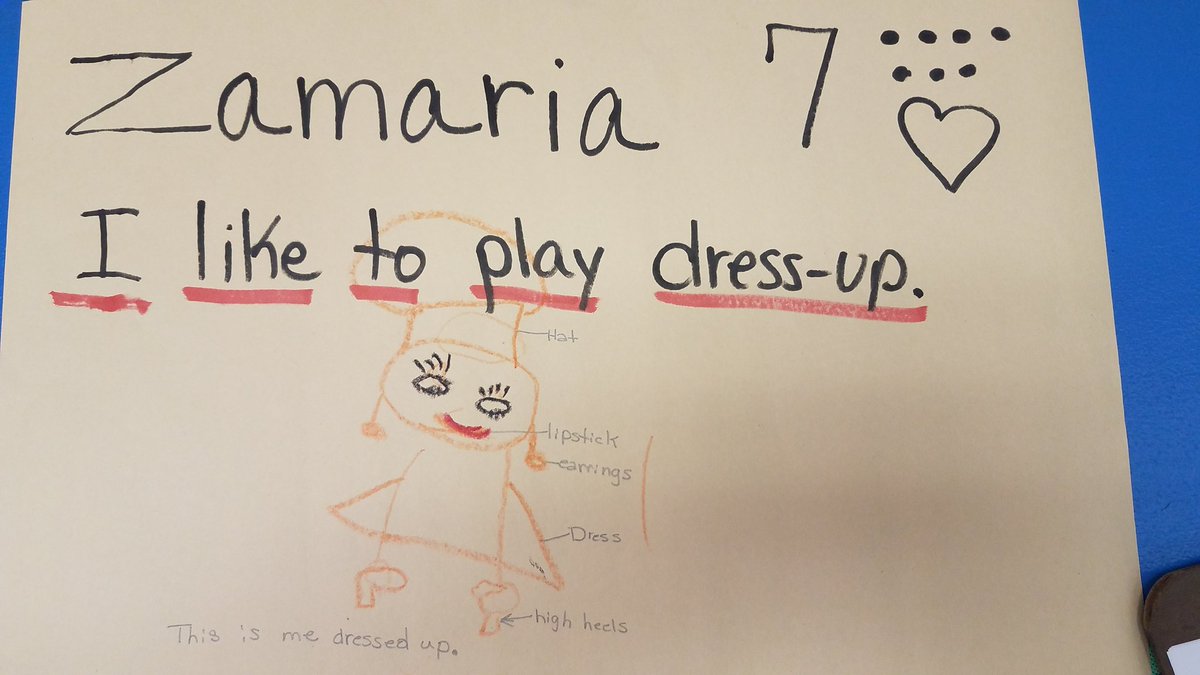
In Pre-K, we interact with books, talk about print, play with language and explore writing. The children pretend read in the beginning by retelling stories or making them up and pretend write by drawing pictures and symbols to resemble writing.
@Samanth88908917 @TessaBGarland I love the "W" questions that are listed to use. This will help prompt conversation with the students and letting them guide the conversation.
@AshleyS02929192@TessaBGarland I like this idea for Pre-K! We are introducing a new artist every month and letting the kids create their own version of the artist's masterpiece. This type of lesson is needed to see the critical thinking of our young students.
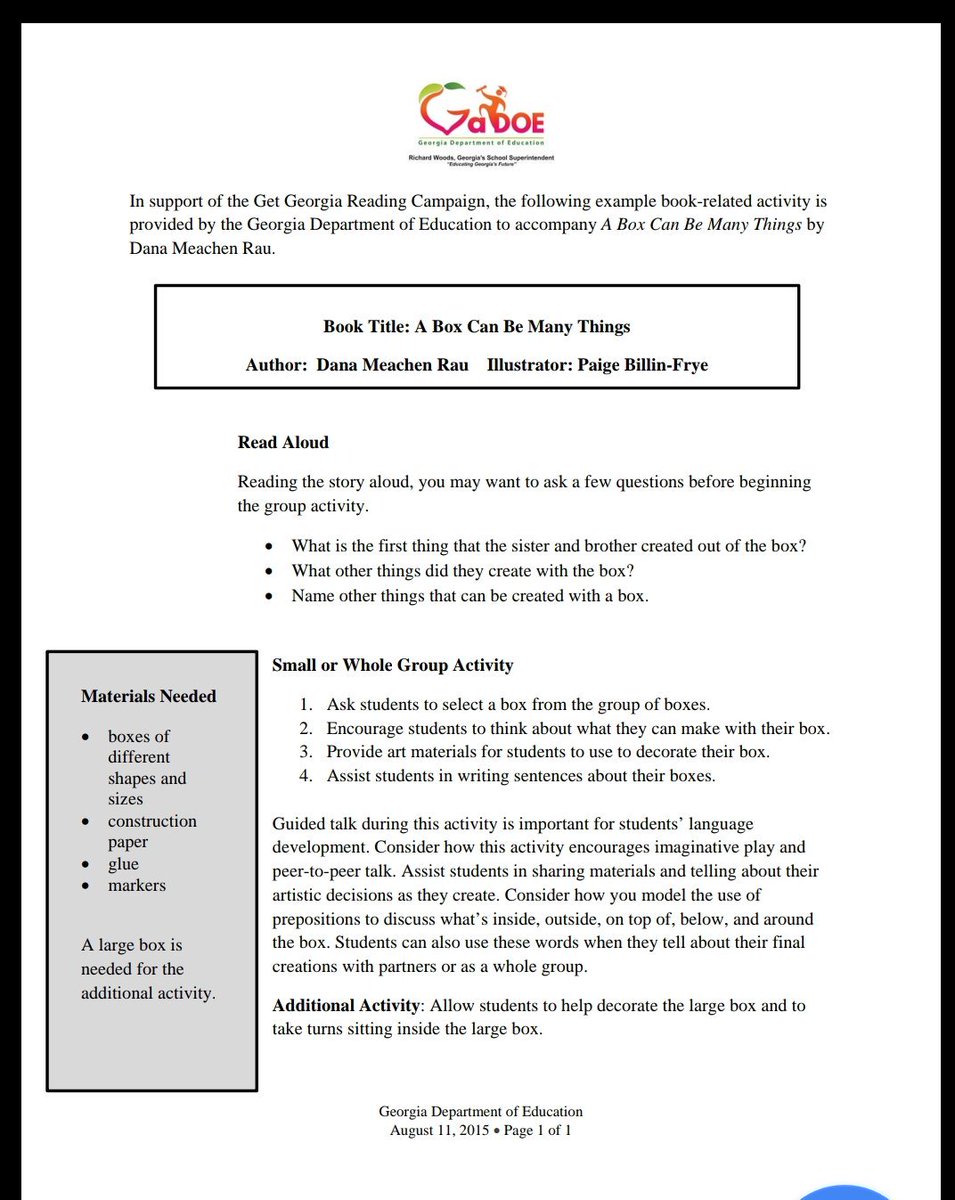
I plan to use the story "A Box can be Many Things," by reading the story and then doing the activity I found on the GaDOE site. The kids will imagine what a box can be, draw about it and I can assist them in writing.
@TessaBGarland#CFDigitalResource
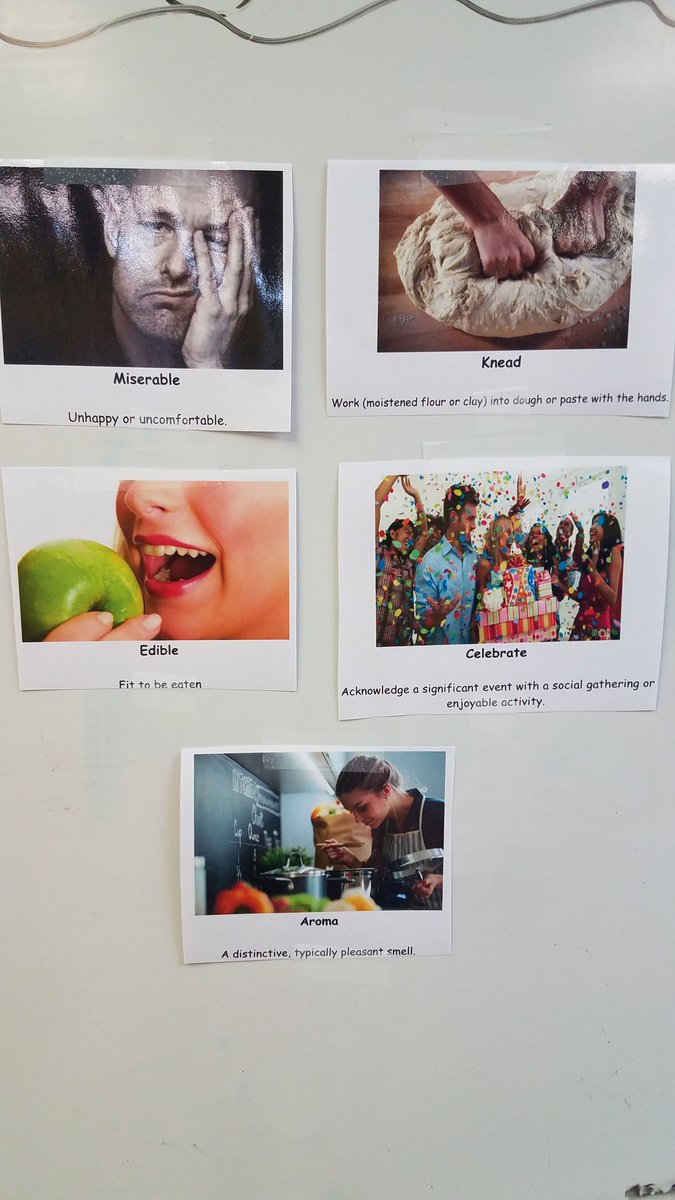
@PaigeHarris93@TessaBGarland This is important to teach at a younger age too so when the student becomes older, they know how to learn a new word using this technique like second nature.
@kristawgreene@TessaBGarland We use phonological awareness techniques too and break up the syllables in compound words and also in regular words. This helps the kids sound out and hear how to say the word. We also delete syllables and see if they can tell what part of the word is left.
We learn new words in my class by incorporating them into every day language. When we are learning to write them, we engage in large group learning by writing the king or queen of the day's name
@TessaBGarland#CFPhonics
And by writing a sentence to answer the question of the day. We can sound out words this way and show concepts of print and spacial awareness of letters too.
@TessaBGarland#CFPhonics
@Terranc36108894@TessaBGarland What a great way to reach to the students interests and keep them engaged in learning at the same time. I use the game head, shoulders, knees and toes to segment sentences using Tier 2 words for my Pre-K students. Kids love to be active and it helps them!