Japanese scientists found a death point on your body.
Press it for 30 seconds to reset cortisol and slow cell aging.
They tested 500 volunteers.
Here's the results that even shocked them. 🧵👇
Elon Musk a créé, en une seule journée, 4 400 nouveaux millionnaires.
Près de 400 d’entre eux ont dépassé les 100 millions de dollars.
Ce ne sont ni des banquiers ni des investisseurs en capital-risque. Ce sont des employés de SpaceX : soudeurs, techniciens, mécaniciens et même des employés de la cantine. Pendant vingt ans, l’entreprise a rémunéré des gens de tous les niveaux avec des actions, et pas seulement avec un salaire élevé. Qui produit récolte.
Juan Hernandez, immigrant mexicain, a accepté un emploi de soudeur à 28 dollars de l’heure en 2015, sans même bien savoir ce qu’était SpaceX. Il a reçu une petite participation de 10 000 dollars et a pu en acheter davantage à prix réduit via une retenue sur salaire. Aujourd’hui, sa part vaut 880 000 dollars.
Trevor Hise a ignoré les conseils de ses parents pour prendre un emploi « sûr » chez General Electric. Il a choisi SpaceX, y est resté 12 ans et a accumulé plus de 100 000 actions. Au prix de l’introduction en bourse, cela représente 13,5 millions de dollars. À 37 ans, il peut déjà prendre sa retraite. Ses mots à lui : « L’ampleur de cela est ridicule. »
Le détail le plus éloquent est survenu avant même l’introduction en bourse : plus de 100 employés se sont discrètement associés pour engager une gestionnaire de patrimoine capable de s’occuper de jusqu’à 5 milliards de dollars. Beaucoup n’avaient jamais eu besoin d’un gestionnaire de fortune dans leur vie.
Il y a des décennies que les introductions en bourse des entreprises technologiques enrichissent les programmeurs. Cette fois, l’argent est descendu jusqu’au plancher des usines. C’est ça, le vrai capitalisme : celui qui prend des risques, celui qui travaille et celui qui apporte de la valeur récolte des fruits proportionnels.
La gauche déteste ce genre d’histoires. Parce qu’elle prouve que la véritable ascension sociale ne vient pas de partager la misère des autres, mais de créer de la richesse qui élève ceux qui ont le courage de construire.
I saw a post on Reddit that said that “The underlying purpose of AI is to allow wealth to access skill while removing from the skilled the ability to access wealth.” And I don’t think I’ve ever seen AI described so incisively.
In the last 36 hours, between 15 and 20 ships have passed through the Strait of Hormuz. The ships are from China, Russia, Pakistan, and Iran. Once again, the entire world is laughing at Trump. 😂🤣👇
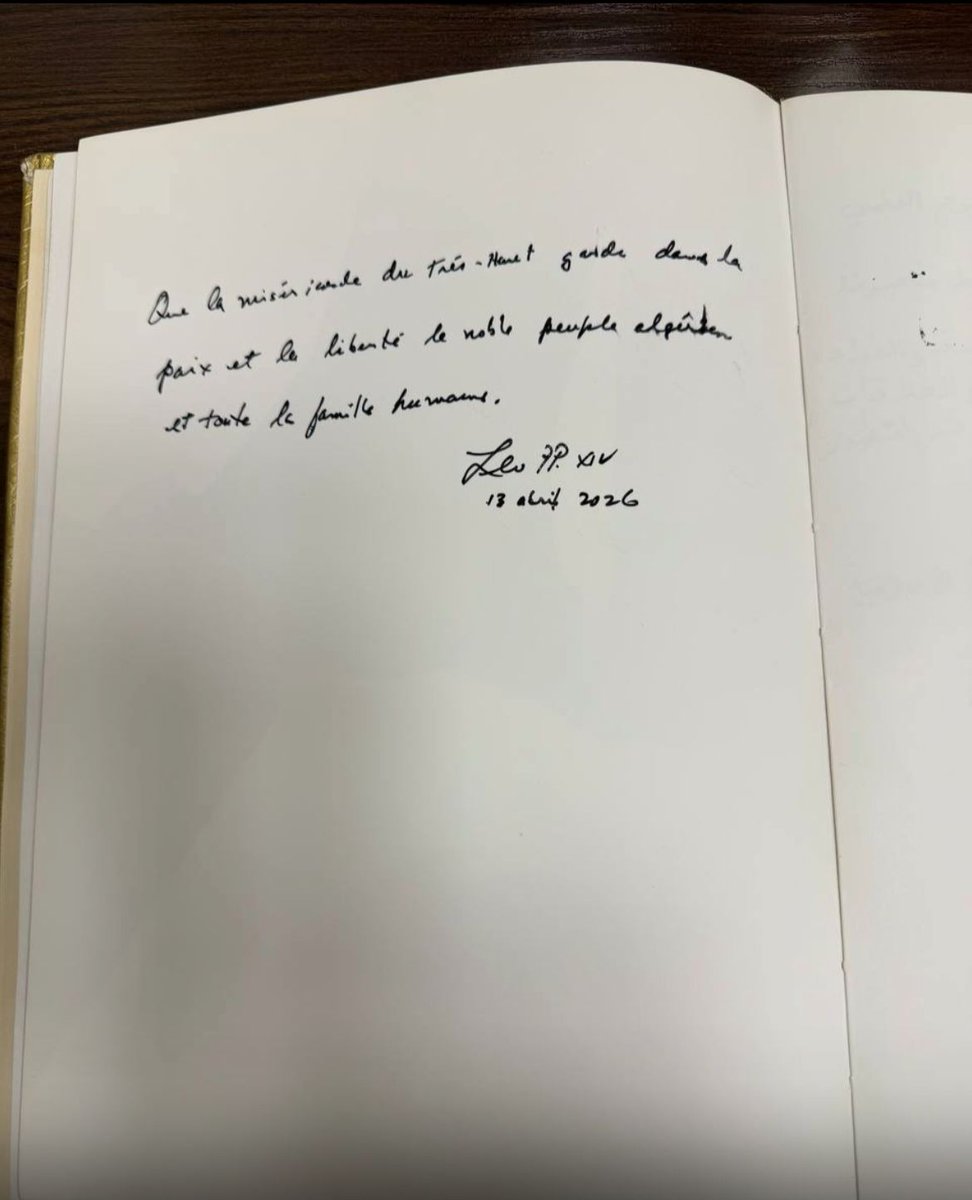
Le message laissé par le Pape Léon XIV dans le livre d'or de la Grande Mosquée d'Alger : « Que la miséricorde du Très-Haut garde dans la paix et la liberté le noble peuple algérien et toute la famille humaine. »
Communion between Christians and Muslims takes shape under the mantle of Our Lady of Africa. Here, in #Algeria, the maternal love of Lalla Meryem gathers everyone as children, within our rich diversity, in our shared aspiration for dignity, love, justice, and peace. In a world where division and wars sow pain and death, living in unity and peace is a compelling sign. #ApostolicJourney
🇮🇷 La réponse ironique du ministre des Affaires étrangères iranien à l'annonce de Trump à propos des négociations en cours :
« Qu’est-ce qu’on est censés négocier, au juste ?! On n’a plus de direction, plus de programme nucléaire, plus de stock de missiles, plus de chaînes de production d’armes… Notre marine est détruite, et on a été rayés de la carte. »
Ils ne jouent pas dans la même cour.
I don't think people realize just how extraordinary what we're witnessing with Iran is.
I was arguing with a dear journalist friend of mine yesterday who was telling me that Iran was winning, yes, but only on the strategic level, not tactically.
The type of thing a skinny kid getting stuffed in lockers in highschool tells himself to make himself feel better: "These people will BEG to work for me in ten years. Everyone knows jocks peak in highschool. They'll literally beg." 😏
I think that's precisely wrong, and that's what makes the Iran war different. As of now, Iran is in fact holding its own tactically too.
Think about other U.S. wars of aggression these past few decades. Take Vietnam, Afghanistan, Libya, Iraq, Serbia, etc. (the list is unfortunately very long). The pattern was roughly always the same with an immense power differential between aggressor and victim. These wars were, by and large, imperial: the empire attempting to crush a much weaker people whose only realistic recourse was guerrilla resistance. And that is when they actually had the will to resist: some - like Libya - barely even bothered, just resigning themselves to their fate (despite being, at the time, the richest country in Africa).
As spectators of these wars, if you had any moral sense, the dominant emotion was a kind of helpless disgust: you were watching a giant stomp through someone else's house.
Sure, the U.S. actually lost many - if not most - of these wars, famously replacing the Taliban with the Taliban or being expelled with their tail between their legs from Vietnam, but the power differential was no less real for it.
It's just that power doesn't always guarantee victory: sometimes the giant can't kill everyone, and eventually tires of trying. But the “victories” won this way were always pyrrhic at best: the people endured, yes, but what they were left with was a country in ashes that takes decades to rebuild. Meanwhile, in the grand scheme of things, the giant walked away with little more than a bruised ego.
Iran is - remarkably - proving to be an entirely different beast: when others were merely surviving a giant, Iran appears to be able to compete with one.
What just happened over the past 48 hours is the best illustration of this. You had the President of the United States issue a formal ultimatum: reopen the Strait of Hormuz within 48 hours or we "obliterate" your power grid.
Iran's response was essentially: we dare you, if you do this we'll make all your Gulf allies uninhabitable within a week.
And, as we saw, Trump backed down: pretexting non-existent "VERY GOOD AND PRODUCTIVE CONVERSATIONS" with Iran, he said his ultimatum no-longer applied (or, rather, became 5 days). Adding he now envisaged the Strait of Hormuz being “jointly controlled by me and the Ayatollah.” To the amusement of Iran’s diplomacy (https://t.co/o4JnJJoAGS).
That, folks, is a textbook tactical victory. It is, remarkably, Iran demonstrating in this instance that it had escalation dominance over the United States of America. That is, the ability to credibly threaten consequences so severe that the US - for perhaps the first time since the Cold War - found it preferable to stand down.
That's no skinny kid being locked in a locker dreaming of revenge fantasies. That's the kid grabbing the bully's wrist mid-shove and watching his face change.
And it's not the only tactical victory in this war so far. Take the episode over the Israeli attack on Iran's South Pars gas facility. Iran had warned that if that happened U.S. allies in the region - including Israel - would face a symmetrical response.
And they delivered: famously devastating Qatar's Ras Laffan facility - which produced roughly 20% of global LNG supply - and leading, according to Qatar themselves, to a $20 billion loss of annual revenue for the next 5 years (https://t.co/Myd3QZDbYf).
Not only that but they also managed to hit Israel's Haifa refinery (https://t.co/XvFqewBZPZ), one of the country's most strategic and protected sites.
The result was Trump distancing himself from the South Pars attack, saying that Israel had "violently lashed out" unilaterally and that "NO MORE ATTACKS WILL BE MADE BY ISRAEL pertaining to this extremely important and valuable South Pars Field." Israel then said it wouldn't strike Iran energy sites anymore (https://t.co/tk0rA5NaWS).
From where I stand, that's another tactical victory. It is, at least, Iran demonstrating that is can fight back **symmetrically** against the U.S. and its allies. Not through asymmetric resistance with IEDs hidden in the roadside or traps hidden in the jungle, but eye for eye, and against some of the most heavily protected sites on the U.S.'s side.
That's qualitatively different from any other adversaries the U.S. has directly fought in recent wars.
There's plenty more, such as the pretty relevant fact that Iran has gained control of the single most strategic energy chokepoint on earth and the U.S. is finding it impossible to break that control.
To the point where Trump has been reduced to publicly begging China - of all countries - for help, which given Trump's ego mustn't have been easy to do. Only to be told no. By China. And by everyone else he asked.
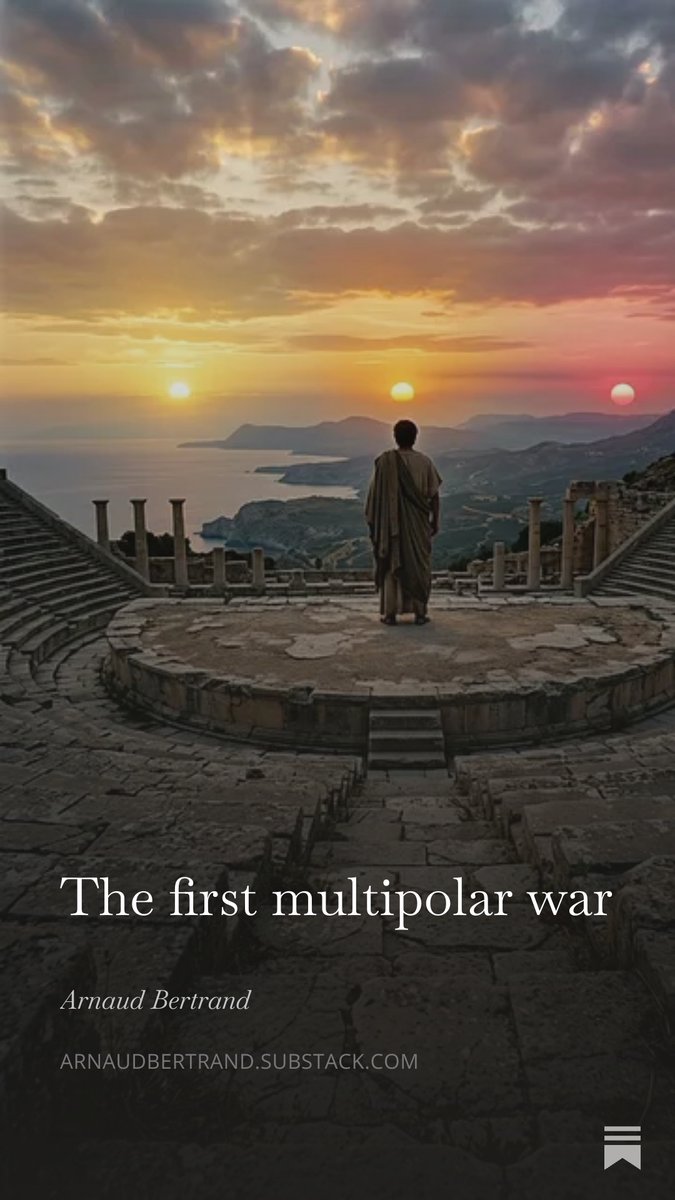
This is the topic of my latest article: how this is, in fact, the first genuine "multipolar war."
First, in the narrow sense: because Iran is revealing itself to be a genuine pole of power - not a superpower, but an actor that cannot be submitted, which is all multipolarity is.
And second, because the war itself is accelerating multipolarity everywhere else: the U.S. has never been more isolated, never looked weaker and its security guarantees have never been more hollow.
In my article I lay out the full scoreboard - military, economic, political - and explain why this war has already changed the world, regardless of how it ends.
Enjoy the read here: https://t.co/FoB8dIKwTb
🚨 LE PLUS GROS BRAQUAGE DE DONNÉES DE L'HISTOIRE S'APPELLE POKÉMON GO.
Pendant 8 ans, 143 millions de personnes ont marché dans la rue pour attraper un Dracaufeu.
La réalité ? Ils travaillaient gratuitement.
Niantic vient d'avouer que les caméras des joueurs ont scanné les parcs, les vitrines et les trottoirs du monde entier sous tous les angles.
Le butin ? Une base de données visuelle de 30 MILLIARDS d'images réelles.
Ce n'était pas un jeu. C'était la construction secrète du plus grand dataset d'IA au monde.
Aujourd'hui, Niantic utilise vos balades du dimanche pour vendre des systèmes de navigation visuelle aux robots de livraison (sans GPS).
Aucune entreprise, même Google, n'aurait pu payer une flotte de véhicules pour faire ça.
Vous pensiez jouer à un jeu vidéo, vous étiez le sous-traitant bénévole de la robotique mondiale.
The last time a Chinese lab open-sourced something this big, Nvidia lost $600 billion in a single day.
It's happening again.
DeepSeek panicked Silicon Valley in January. Crashed Nvidia's stock $600B in one day. Made Sam Altman rewrite his entire business plan.
Now there's a second one.
Kimi just made AI notably cheaper to run. Open-sourced it. Put it out for free. Meanwhile OpenAI is asking people to pay $200 a month to use a model that already feels behind the curve.
Two Chinese labs. Both open source. Both doing more with less. Both giving away for free what American companies charge billions for.
The AI race isn't US vs China anymore... It's closed vs open. And closed is losing.
And the wildest part? Nobody in Silicon Valley will quote tweet this.. Because admitting a Chinese lab just moved the field forward for free destroys the entire "we need $10B to build AGI" fundraising pitch.
C'EST FOU.
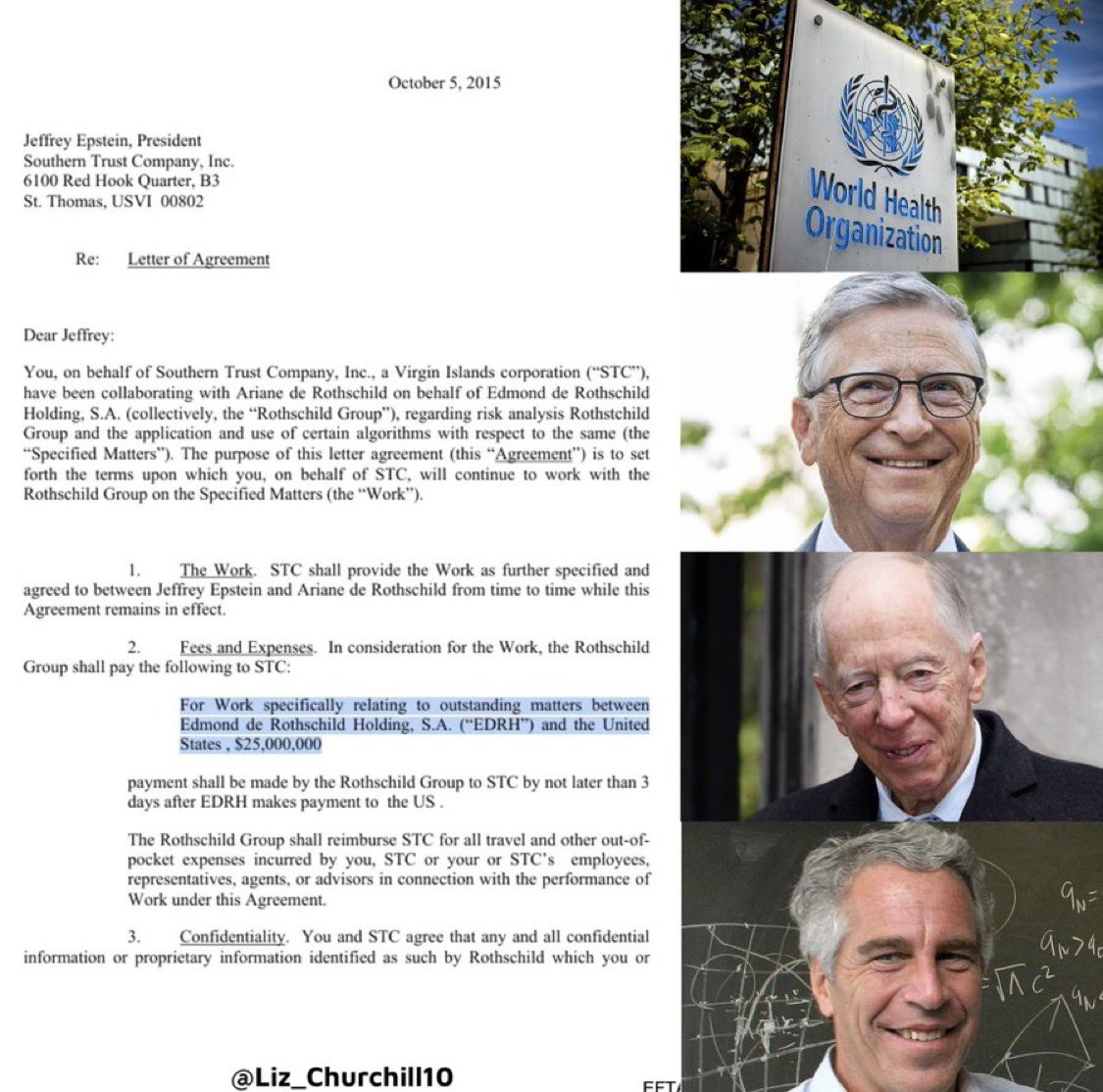
2011 : Epstein met en place un fonds d'investissement dédié aux vaccins pour Bill Gates
2015 : Les Rothschild recommandent des mesures à tous les gouvernements
2017 : Epstein supervise la simulation privée d'une pandémie organisée par Bill Gates
2019 : La pandémie « éclate »
LA PANDÉMIE A ÉTÉ PLANIFIÉE IL Y A DES ANNÉES PAR DES CRIMINELS DIABOLIQUES
L'ancien Premier ministre malaisien Mahathir Mohamad déclare : En 2004, la Malaisie a acquis huit avions de chasse F/A-18 Hornet auprès des États-Unis, qui figuraient parmi les appareils les plus performants de l'époque.
Le montant de cette transaction a dépassé 640 millions de dollars. Après avoir reçu les appareils, la Malaisie a constitué une équipe d'experts et d'ingénieurs pour mener une étude détaillée de leurs caractéristiques et de leurs capacités de combat.
👈 Les experts malaisiens ont découvert que l'avion transmettait les informations de chaque vol à une base militaire américaine, telles que : - Altitude de vol - Vitesse - Emplacement - Itinéraire - Détails de la mission — Et les communications du pilote avec la salle de contrôle au sol De plus, le système d'exploitation et le pilotage automatique de l'appareil pouvaient être contrôlés depuis une base américaine. Ainsi, un officier américain au sol pouvait modifier la trajectoire de l'avion, le faire s'écraser, voire changer la cible de l'attaque. Lorsque la Malaisie a tenté de modifier le système d'exploitation de l'appareil, les États-Unis et le constructeur McDonnell Douglas s'y sont fermement opposés. Ils ont même menacé d'interrompre la fourniture de pièces détachées et la maintenance, et d'imposer des restrictions. Même lorsque la Malaisie a demandé des pièces spécifiques pour activer certaines capacités de l'appareil, la société a également rejeté cette demande. Finalement, la Malaisie s'est rendu compte qu'elle avait acheté des avions qui ne pouvaient pas être utilisés au combat sans l'approbation des États-Unis. Ce problème ne se limite pas à la Malaisie ; de nombreux pays arabes et musulmans sont confrontés à la même réalité. ** La leçon est claire :** Tant qu'une nation n'aura pas développé sa propre technologie de défense, elle restera dépendante des autres. »
(Source : Interview télévisée de Mahathir Mohamad sur Al Jazeera)
Unreal... The man literally breaks the global energy supply, directly affecting the lives of billions of people and then is like "wait, should we even be there? It's not our problem after all."
The level of thoughtlessness and hubris is genuinely off the charts.
🇮🇱 The weird thing about this video with Netanyahu is (real or not) that instead of just giving a speech from his office, as he always does, and carrying on with business, he goes to some remote café and proves that he has five fingers.
As if the whole purpose of the video is to debunk the social media conspiracy.
What leader does that? This scenario is kinda weird.