@RuxandraTeslo Do you think stringent trial inclusion criteria can also be useful? If you can minimize confounders (comorbidity etc), you may have a better chance at detecting an effect?
@AdamRochussen Lots of this kind of stuff in longevity research sadly. For example, in the Sardinia “Blue Zone” results were massively skewed because many “centenarians” turned out to just be missing good quality / real birth certificates, and by people committing pension fraud
In the coming years we’re going to see a lot of claims about “autonomous labs” accompanied by videos of cool-looking robots.
I’m extremely bullish about this space and I’m rooting for all these companies to succeed. But right now it’s hard to know who is succeeding because the word “autonomous” has no fixed meaning.
It’s lowkenuinely a problem that robots look so cool. It's easy to see a video of robots in motion and be convinced that the future has arrived. If you haven’t worked on an automated lab floor, frontier tech looks about as cool as useless arm-flailing.
So here are some quick heuristics you can use to get a sense for how “autonomous” the lab you see in a video really is.
- Compact form factors. Physical space is at a premium in the lab. Mature automation systems use it efficiently. If a robot has lots of open space around it, that’s a sign that it requires a lot of human support.
- Cold storage. Almost all biological protocols need some kind of refrigeration. Automating sample retrieval from freezers is particularly annoying, because frost interferes with mechanical gripping, barcode reading, etc. If you don’t see a freezer near the robot, it means humans are doing the sample management off-camera.
- Sample transfer. Real lab protocols require the operations of many different devices (PCR machines, incubators, liquid handlers, centrifuges etc) - too many to fit in a single workstation. An autonomous lab needs a way to shuttle samples around. If you don’t see plates moving around the room, humans are doing that.
- Inventory and waste. Biotech eats a lot of reagents and makes a lot of plastic waste. Managing inventory is labor intensive but unglamorous - the last thing most buzzy startups want to care about. A true autonomous lab demo will include robots doing boring and unsexy things.
With these tips, you too can become a cynical jerk who looks at a startup’s tech demo and says “that’s not REALLY an autonomous lab!”
But don’t do that. Instead, root for success and watch as more automation teams check off more items from this list over time. I’m expecting fully autonomous labs, even by my high standards, before 2030.
Only one chance in this lifetime…
Like watching sunset at the beach from the most foreign seat in the cosmos, I couldn’t resist a cell phone video of Earthset. You can hear the shutter on the Nikon as @Astro_Christina is hammering away on 3-shot brackets and capturing those exceptional Earthset photos through the 400mm lens. @AstroVicGlover was in window 3 watching with @Astro_Jeremy next to him.
I could barely see the Moon through the docking hatch window but the iPhone was the perfect size to catch the view…this is uncropped, uncut with 8x zoom which is quite comparable to the view of the human eye. Enjoy.
@josiezayner I’m pro democratizing science. But the claim that at-home science right now is replacing academic research is just wrong. Your kits may teach people how to transfect some HEKs but that’s barely touching the surface and not discovery science.
@josiezayner I think it’s great for hobbyists to run experiments at home and make discoveries but we can’t claim that this is revolutionizing biology today
@josiezayner You really underestimate the ease with which wet lab work can be automated. @owl_posting wrote a great piece on it. It’s pretty clear that even very impressive liquid handlers aren’t worth using for most lab tasks
@_inc0_@jrkelly Agreed you can do that, and this has some value. But most biology isn’t learned from sequencing and publishing genomes. I don’t think adding a few more soil bacterium genomes to the millions already published really moves the needle on discovery science
Everyone that wants to will be able to be a scientist. Just like everyone that wants to now can be a programmer.
Cloud labs will enable this far more than home labs (lots of scientific equipment is crazy expensive so much cheaper to share), but I'm happy to see it happening.
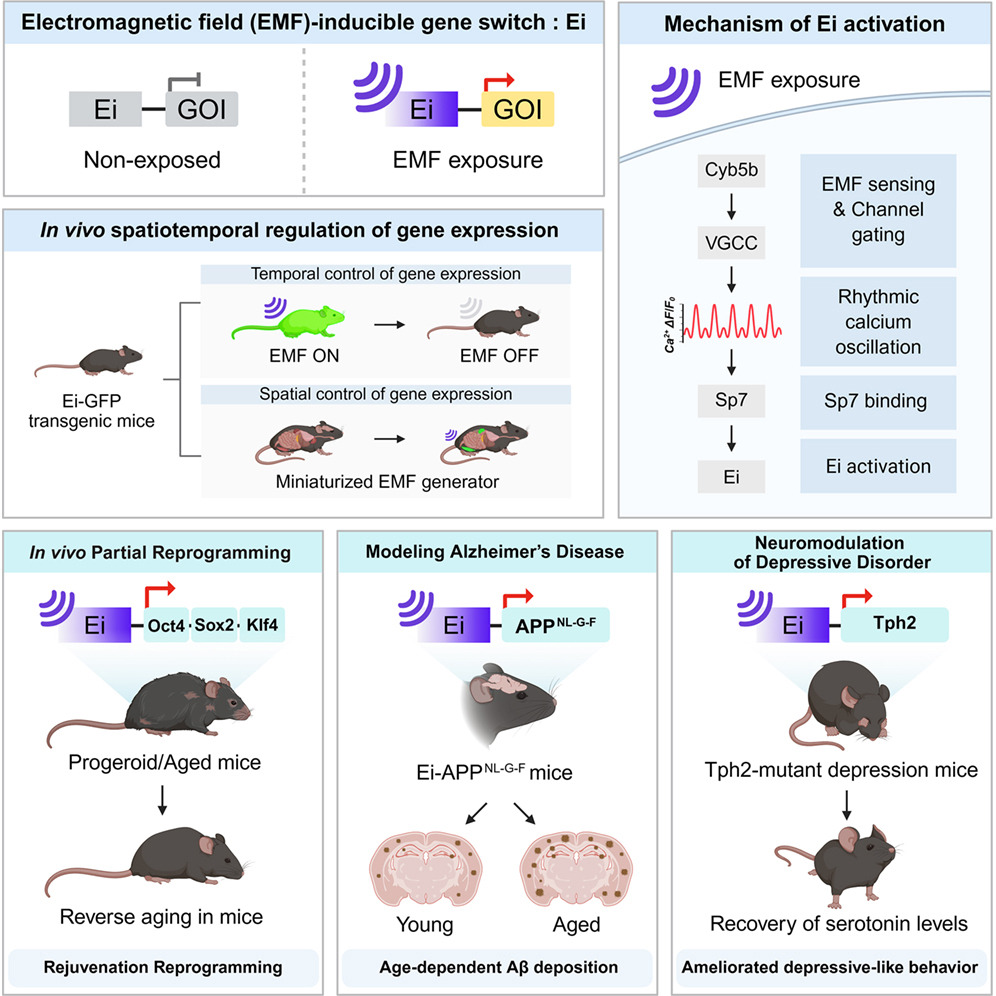
Really amazing new paper by Kim and colleagues in Cell today describes a protein Cyb5b that acts as an electromagnetic field sensor allowing remote control EMF-inducible gene switches... This opens up all kinds of exciting possibilities for biotechnology
🦖 Something HUGE just hatched.
Plasmidsaurus now offers RNA sequencing for gene expression analysis with:
• As fast as 3 day turnaround
• $50/sample for academia, $80 for industry
• Up to ~10M unique transcript 3’ end reads per sample
• Interactive results that let you explore changes in genes and pathways
Explore Plasmidsaurus RNA-Seq today.
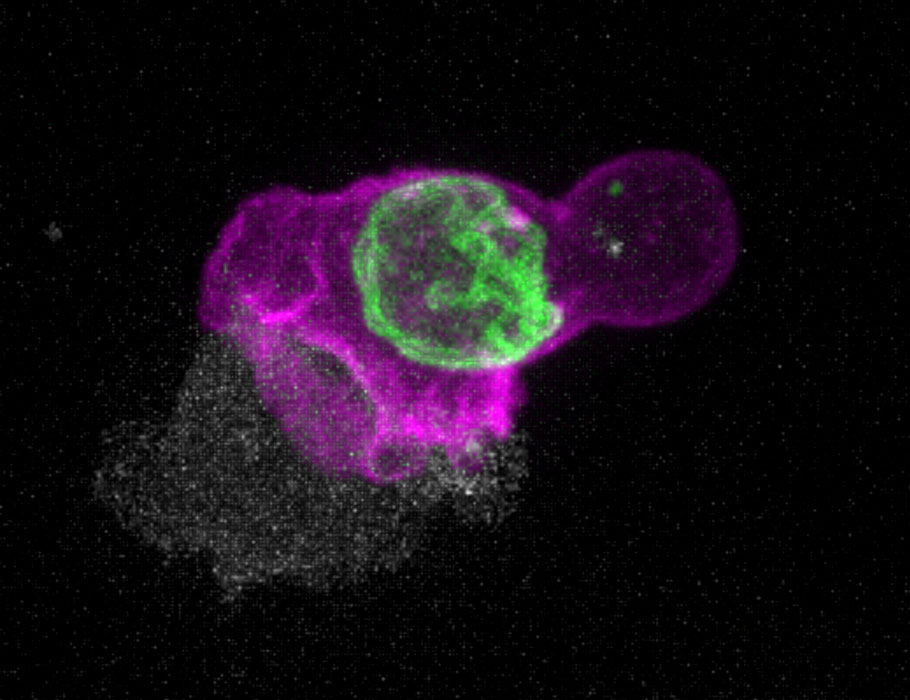
New research suggests that cytotoxic #Tcells’ nuclei move towards the #ImmuneSynapse to support the delivery of newly synthesized proteins during target cell killing. @TheCIMR@YaleCellBio
Learn more in Science #Immunology: https://t.co/OEtAQeNk58