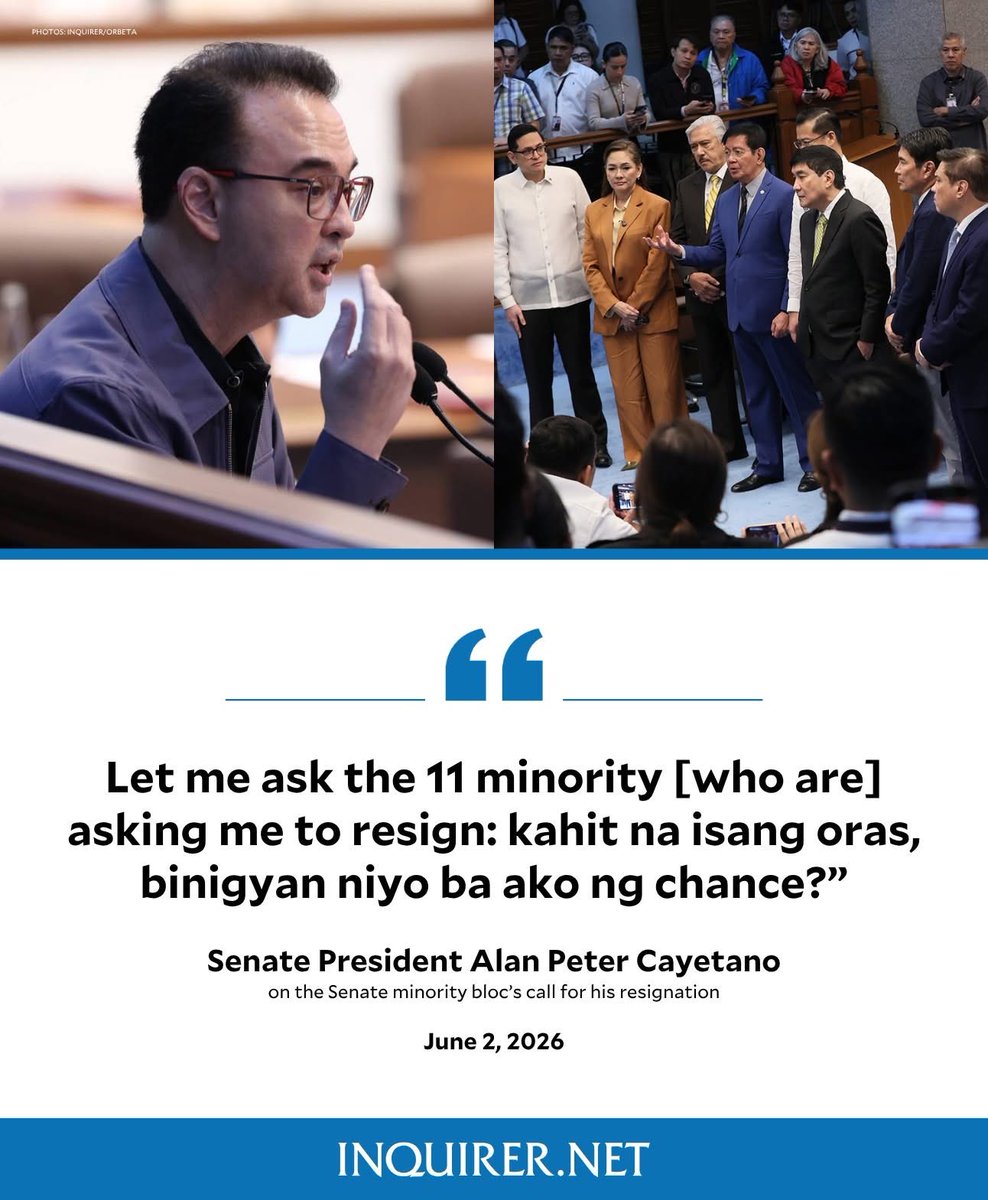
@RichHeydarian Thus does political redemption play out (temporarily, at least: he will find a way to lose his own recovered luster); as they say you are only as good as your last mistake.
This shouldn’t go unnoticed:
the Secretary refused to call the roll, forcing Sen. Sherwin Gatchalian to tap the Deputy Secretary for Legislation to proceed.
Who’s this guy?
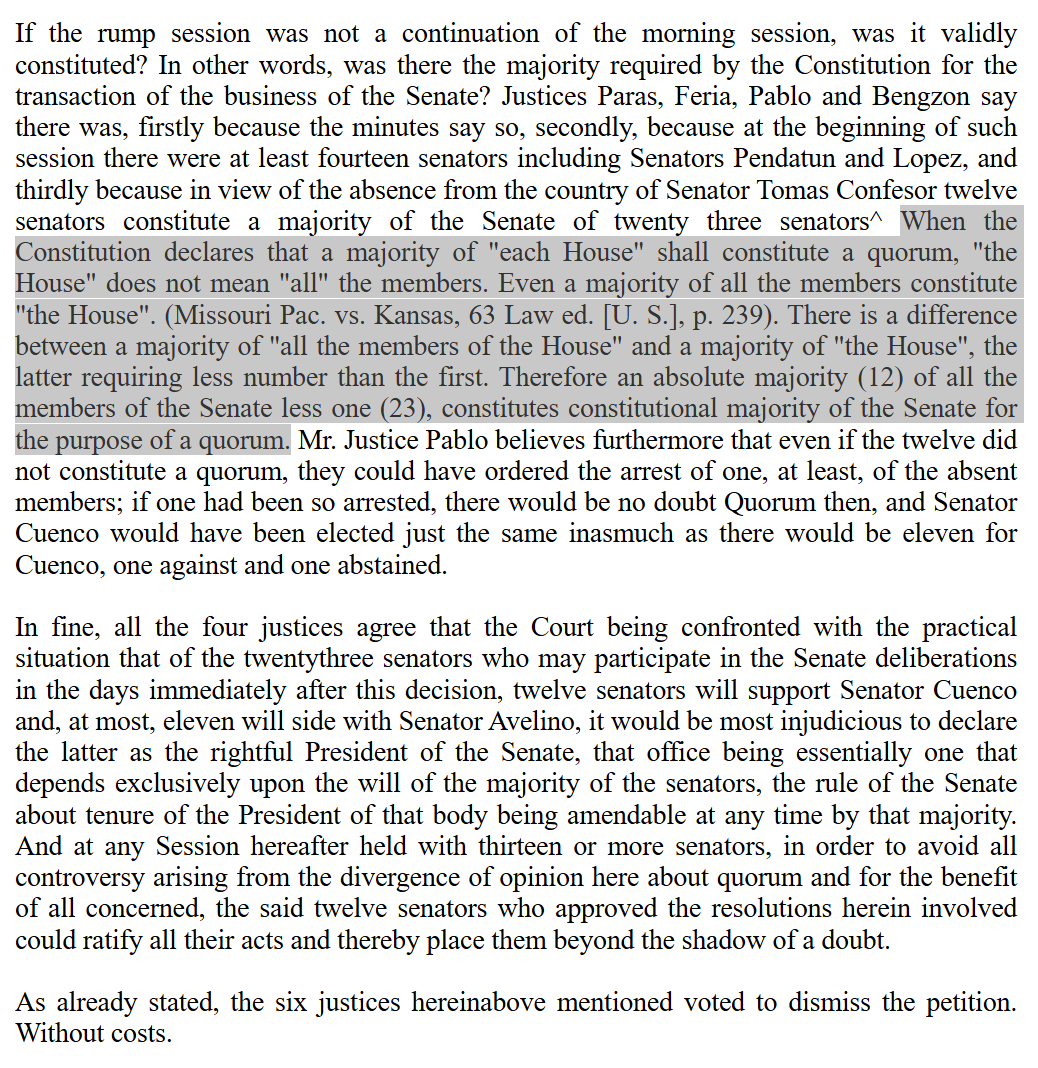
Text from Avelino v. Cuenco, 83 Phil. 17 (1949), which the new Senate leadership relies on for the position that their 12 Senators are sufficient to constitute a quorum.
https://t.co/1jg2CPIFvV
I wish I could find Luis Mauricio’s old columns where he revealed it was he, and not Cabrera, who eavesdropped on the Palace meeting in which Jose Avelino complained to Quirino about investigations.
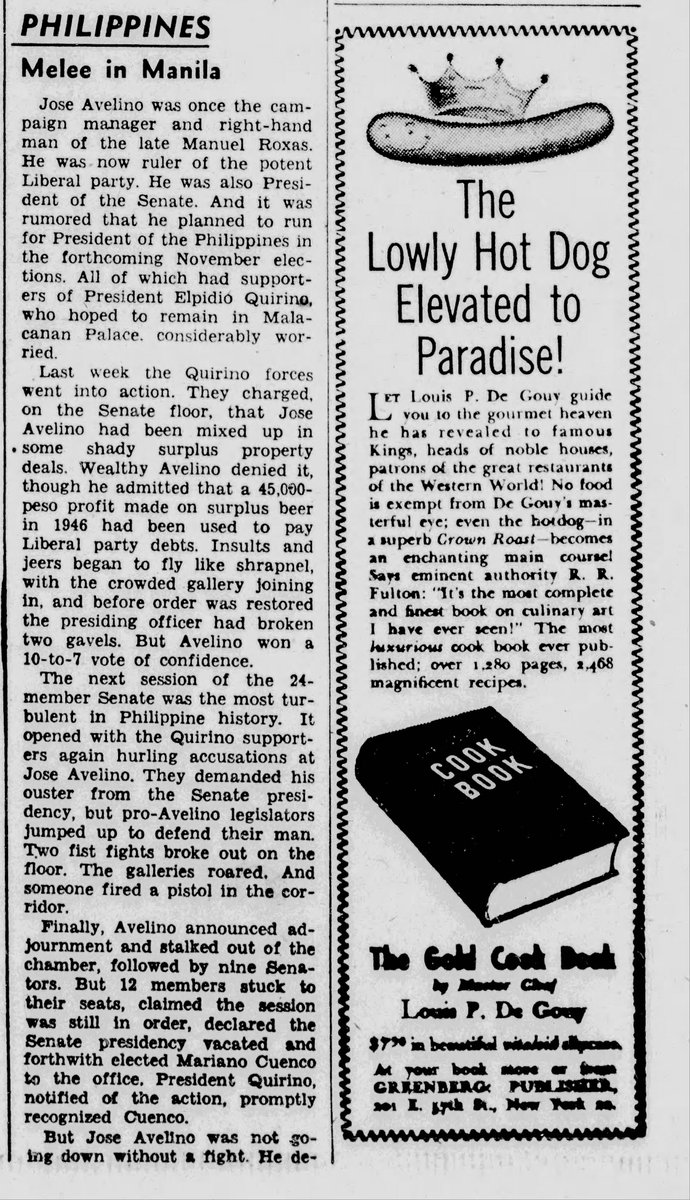
Lahat ng recent issue ng Senate may parallel sa article na ito from 1949:
> “forthwith”
> pistol shot
> galleries roared
> insults and jeers
> Senate Presidency vacated
> walkout
> Quorum issue
Welcome back to 1949, everyone!!!
Ganito na lang.
I-assume natin na pumasok kahapon ang lahat ng 22 Senators na maaaring pumasok, dahil bayad naman sila ng taumbayan para pumasok.
May quorum? Yes.
Ilan ang kailangang bumoto para makagalaw ang Senado sa isang ordinary motion? 12, dahil iyon ang majority ng 22 Senators present. Ngayon, kung may motion si Senator Sotto na i-declare na bakante ang lahat ng posisyon sa Senado, at 12 Senators ang bumoto pabor, ano ang resulta?
Mababakante ang mga posisyon, kasama ang Senate Presidency. Ganito rin nabakante ang mga posisyon nung huling namuno si Senator Sotto at nag-motion si Senator Villanueva nung May 11, 2026 to declare all Senate leadership positions vacant.
Makakahalal ba sila agad ng Senate President? Hindi, kung walang makakuha ng 13 votes. The Constitution requires the Senate President to be elected by majority vote of all the Members of the Senate.
Pero makakahalal ba sila ng Senate President Pro Tempore? Yes.
Bakit? Dahil ang Constitution mismo ang nagsasabi na each House shall choose such other officers as it may deem necessary. Ang Senate President Pro Tempore ay hindi Senate President. Isa siyang ibang officer na kinikilala ng Rules of the Senate na dapat ihalal ng majority of all members of the Senate.
So ano ang dapat gawin? I-harmonize ang Constitution at ang Rules of the Senate.
Dapat ba ang interpretation ay hahayaang walang mahalal at maparalisa ang Senado? Hindi. A reading that leaves the Senate unable to organize or transact business should be avoided, because the Constitution contemplates a functioning Senate, not a paralyzed chamber.
Hindi hinalal si Senator Gatchalian bilang Senate President Pro Tempore para pumalit kay Senator Legarda personally. Hinalal siya para punan ang posisyong nabakante dahil sa lehitimong motion ni Senator Sotto.
Hindi rin siya nahalal na Senate President by 12 votes.
Ang nangyari ay ito: nabakante ang Senate Presidency; walang nahalal na Senate President dahil walang 13 votes; ngunit may valid election ng Senate President Pro Tempore under the Constitution and the Rules of the Senate. By operation of the Rules of the Senate, the Senate President Pro Tempore acts as Senate President while the office is vacant.
Hindi lamang sinabi ng Avelino v. Cuenco na hindi kasama sa pag-determine ng quorum ang mga Senador na hindi maaaring i-compel na umattend. Sinabi rin ng kaso na makatwiran na bigyang-bisa ang nais ng nakararami, lalo na sa pagpili ng mamumuno sa Senado, dahil ang pagpili ng Senate leadership ay nakadepende sa will of its members.
Higit sa lahat, hindi pinapayagan ng Constitution na paralisado ang kahit isang Kapulungan ng Kongreso. Kailangan pa ba talagang isulat iyon? Kahit ang taumbayan, hindi papayag na hindi magtrabaho ang mga pinapasweldo nila sa gobyerno.
Kahit grade 1 student, pumapasok nang walang bayad dahil alam niyang tungkulin niyang mag-aral. Ang mga senador pa kaya? Sila itong may malaking budget para kumuha ng magagaling na abogado na magpapaliwanag kung ano ang maaari at hindi maaaring gawin sa Senado.
Loren Legarda was about to join Chiz Escudero to be with the new majority but she wanted to have Energy Secretary Garin ousted from the Cabinet. This is because of Leandro Leviste’s solar power scandal. Malacañang declined.
Since former Senate President Jose Avelino is back in the news, worth reiterating that the fantastic song written about him by his granddaughter Coritha is part of the Great Pinoy Songbook.
https://t.co/Zb5hKZSerm
There’s another reason that supports the actions taken by the minority bloc on Wednesday, June 3: a 2015 session where the Senate recognized the quorum of 12. https://t.co/aFQAAZnGoQ
Senate Pro Tempore Win Gatchalian : no official business in the Senate tomorrow June 4.
Work from home set up to ensure neutrality for the Senate bureaucracy.
Good move.
For 250 years, Japan maintained an extraordinary peace by forcing the entire warrior class to live in the capital Edo, a city that was essentially a giant consumption machine that produced nothing.
Half its population were samurai pensioners doing busywork, while the daimyo (the ruling elite) were burning money on mandatory mansions and endless processions between their estates. The whole city ran on agricultural surplus extracted from the rest of Japan.
Some surprising facts:
1) The city functioned as a hostage system. The daimyo (regional lords) were required to leave their families permanently in Edo as de facto hostages. Most noblewomen never once visited the lands their husbands governed. Instead, they spent their entire lives in the capital as insurance against rebellion.
2) Half the city were warriors with nothing to fight. At any given time, nearly half of Edo's population were samurai, which were living as state pensioners in a country at total peace. Most did little beyond civil administration and calligraphy lessons, since most work was considered beneath them.
3) It was probably the world's largest city, centuries before Tokyo's modern fame. Edo likely exceeded a million people by 1700. London didn't hit that mark until 1800, New York did not until 1880.
4) It had very high population density, almost entirely in single-storey buildings. Some commoner districts hit twice Manhattan's current density.
5) The poor were taxed at up to 70% of their harvest. The agricultural surplus flowed up through public taxation rather than rent, making the state the direct intermediary between peasants and the elite.