O Muses, O high Genius, help my brain!" --- The Inferno of Dante Alighieri (trans. Ciaran Carson, Granta 2002)
My muse-motto as I write up my research on creativity in translating poetry.
(I had to repost to correct a misquote, sorry. Only one Genius, sorry for that too!)
I met the legendary translator Linda Asher after the FAF Awards Ceremony-- she held my hand for a long time, it felt like a transmission. She told me translation is a "magical experience" that no one who isn't a translator can know. Very grateful to have met her.
From 1881 onwards, when van Gogh was making a serious start on becoming an artist, and before he “discovered” colour, he moved constantly, assiduously chronicling the neighbourhoods where he lived ~ Parsonage Garden / Sien’s Mother’s House / Carpenters’ Yard & Laundry
For this week’s #TranslationTuesday, we present a selection of poems by Juhan Viiding (tr. Miriam McIlfatrick-Ksenofontov).
A literary giant in his home country of Estonia, Viiding writes with a striking blend of irony, melancholy, and formal precision:
https://t.co/YlV2o1giBM
Four years before John Constable painted this in 1821, John Keats was writing about 'Negative Capability: 'when man is capable of being in uncertainties, mysteries, doubts without any irritable reaching after fact & reason.' This is what negative capability looks like in paint.
If you get a chance, go to see the brilliant 'Stanley Spencer in Suffolk,' exhibition at Gainsborough House in Sudbury, the show finishes 29th March. This is 'Southwold,' (1937) a favourite resort of Spencer's first wife Hilda Carline.
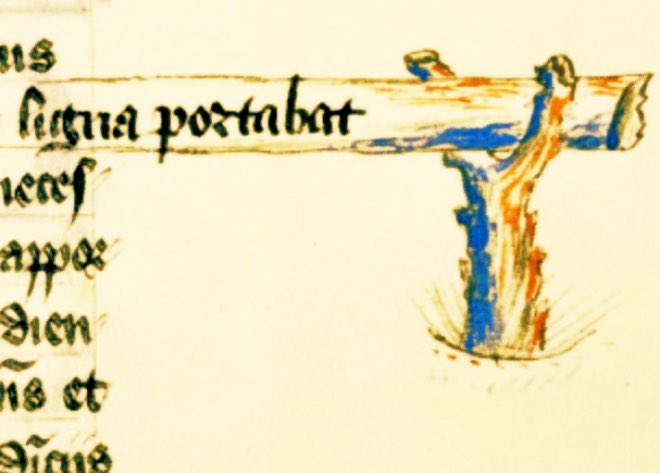
A wooden prop in the margins, used to ‘support’ the text that overruns the end of the line - 15th century, Birgitta of Sweden, British Library, Harley MS 612, f. 50r


![MMcilfatrick's tweet photo. lõosilm - [lark's eye] - forget-me-not
tallinn, 17.05.2026 https://t.co/3npiekYAoj](https://pbs.twimg.com/media/HIigjpeWAAAqANp.jpg)


![ArdraManasi's tweet photo. ~Day 33~
"To My Own Poem" by Wisława Szymborska
[translated from the Polish by Clare Cavanagh & Stanisław Barańczak]
#PoemADay2026_AM https://t.co/VmrFsfIu5e](https://pbs.twimg.com/media/HFeeQ50WAAAYW-S.jpg)