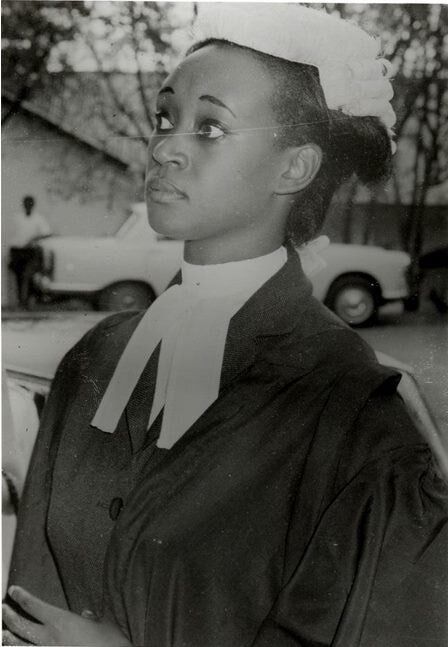
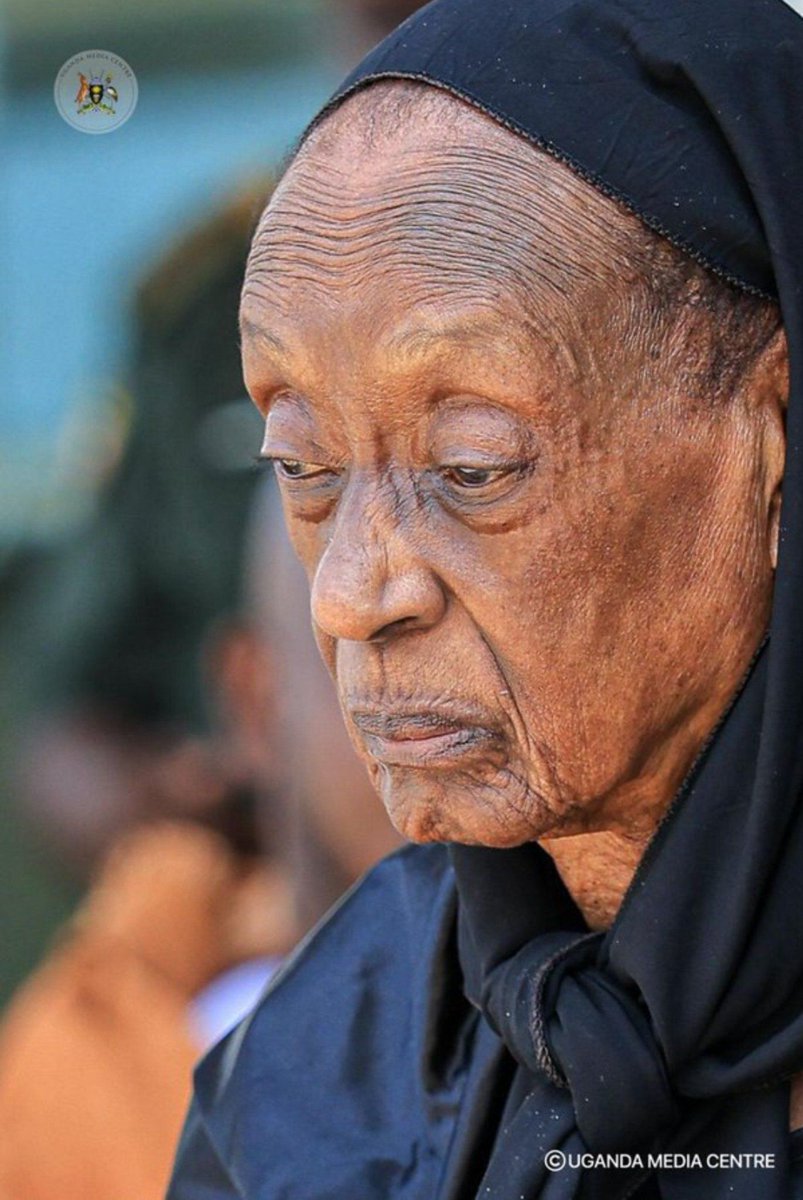
First female lawyer in East Africa and first East African woman admitted to the English Bar.
I saw the beautiful photos of Princess Elizabeth Bagaaya of Tooro Kingdom trending online after King Oyo's death, and realized she has lived an incredibly interesting life.
One photo, she is looking forward with her chin up like the future belongs to her. In the other, she is 90 years old and looking down, not defeated, just full of everything that came after. That gap between the two photos is a whole life lived.
She was even Idi Amin's Foreign Minister in the early 1970s. He wanted to marry her but when she refused, Amin dismissed her, placed her under house arrest and forced her to flee into exile.
A woman of many firsts, admitted to the English Bar in 1965, the first East African woman to do so. She was also an international model and actress, starring in films in the 1970s and 80s. Even at 90, her mind is razor sharp. She is still composed and speaks very fluently.
This is the kind of character you'd find in great literature, a woman time moved through like a river with a strong current, empires rising and falling around her while she remained standing.
What a life!
Now the goodies are coming.
What Truphena Muthoni will be taking home tomorrow after hugging a tree for 72 hours:
1. Kes 1M from OdiBets
2. SAMSUNG Galaxy Fold 7 from Her Eminence Damaris Wa Dama Spares Original
3. Fully paid 3 nights holiday to Mombasa courtesy of Adequate Safaris.
What is she getting next?
HELB now cannot be able to add interest and penalties beyond double the original loan after a High Court ruling that protects students from runaway debt.
The Supreme Court held that justice is a three-legged stool, it must serve the accused, the victim and the society. The Court reiterated that where a miscarriage of justice has occurred, a retrial is the lawful remedy.
-CHIROMA v. STATE (2025) 15 NWLR (Pt.2008)325.
A Case Every Criminal Law Student Must Read and Understand
The Supreme Court’s judgment in Nandkumar @ Nandu Manilal Mudaliar v. State of Gujarat (2025) is a powerful reminder of how intention and knowledge operate in homicide cases. If you are new to criminal law, this case is a near perfect illustration of the mental element that separates murder from culpable homicide.
The incident dates back to 1998 in Ahmedabad. After an altercation, the accused went to the deceased’s house, abused him, and inflicted stab injuries. The victim was treated for nearly two weeks and eventually died of septicemia. The trial court convicted for murder. The High Court confirmed it. The Supreme Court did not.
The bench of Justices K Vinod Chandran and NV Anjaria held that the facts did not show a premeditated intention to kill. The Court found the assault arose out of impulse, anger and self-provocation. This nuance is central to criminal jurisprudence. Intention is never inferred lightly. Courts examine the surrounding behaviour, the lead up, the nature of the weapon, the blows, and whether the act shows a conscious aim to end life.
The Court relied heavily on Kesar Singh v. State of Haryana (2008) 15 SCC 753. Culpable homicide is the broader category. Murder is a narrower category within it. Where the special elements that elevate an act to murder are missing, the law treats it as culpable homicide not amounting to murder.
The Supreme Court mapped the facts carefully onto the Kesar Singh framework. The accused undeniably had knowledge that stabbing someone could likely cause death. What was missing was intention to cause death or intention to cause such injury as would likely cause death. Knowledge alone takes the case under Section 304. Intention elevates it to Section 302.
Another critical factor was the medical evidence. Death was not immediate. The deceased died 13 days later and due to septicemia. Courts do not treat delayed death as conclusive, but it is treated as an indicator. Here it supported the view that the assault was not carried out with the object of killing.
Once the Court concluded that intention was absent but knowledge was present, the legal consequence was clear. Section 304 Part I applied. The appellant had already undergone 14 years, which the Court said was sufficient.
For students of criminal law, this case is a valuable study tool. It shows how classification between Section 302 and Section 304 never depends on the severity of the act alone. It depends on the mental state behind the act. The distinction often decides whether a person spends life in prison or walks free after time already served.
This judgment gives a simple but vital lesson. Criminal courts are not only fact finders. They are interpreters of human behaviour. They read actions, emotions, impulses and reactions to determine the degree of culpability. The law of homicide lives in these fine distinctions.
A must-read for anyone trying to learn how courts actually apply intention and knowledge in real cases.
Same here. I posted formal admission portraits, but the DMs and some quotes I got were extremely scary & disrespectful. Honestly, Idk how professional girls survive. 😭😀
https://t.co/Kd4kI0ZjBW
There's a lady advocate who was complaining that she posted very professional admission photos and got many messages on X but not even one prospective client. Ati, "they all want one thing, and not my highly trained brain." Even some prospective employers started with complimenting her beauty. 😀😀