Reflections on My 65th Birthday
Today, July 19, 2026, marks my 65th birthday. At sixty-five, birthdays should naturally become moments of deep reflection - moments to look back with gratitude to Almighty God for His abundant graces, examine the journey so far, and ask how the remaining years can be devoted more meaningfully to the service of God and humanity.
Perhaps in countries where basic human needs have largely been met, where institutions function effectively, and where citizens enjoy a greater measure of security and dignity, such attainments may rightly call for elaborate celebrations. In Nigeria, however, our reality compels a different kind of reflection.
Our nation is blessed with enormous human and natural resources, yet millions of our people continue to struggle with challenges that demand our collective attention. We cannot afford to celebrate ourselves excessively while many around us are burdened by poverty, ill health, unemployment, and limited opportunities. Rather, occasions such as this should remind us of our responsibility to contribute towards building a nation where future generations can genuinely celebrate.
This is why I have always seen birthdays not merely as occasions for personal celebration, but as opportunities for sober reflection, thanksgiving, and a renewed commitment to service.
As I reflected today, I came to a simple conclusion: the greatest celebration of life is not what we receive from others, but the lives we can touch positively.
This conviction has guided my approach throughout my years in business, in the corporate world, and as Governor of Anambra State. In each of these roles, I have tried to see every privilege not as a personal entitlement but as an opportunity to improve the lives of others.
Whenever people or institutions sought to celebrate me with expensive gifts or elaborate ceremonies, I encouraged them instead to redirect those resources towards projects that would have a lasting impact. Over the years, this philosophy has resulted in the building of schools, hostel blocks, support to schools, and other facilities that continue to benefit the less privileged. I have always believed that resources meant for personal comfort can often be transformed into instruments of hope for many.
The greatest honour anyone can receive is not found in gifts, ceremonies, or public admiration, but in knowing that one’s life has contributed, however modestly, to making another person’s life better.
Today, therefore, I give thanks to Almighty God for the gift of life and for bringing me to this important milestone of 65 years. I began the day with a Mass of Thanksgiving in Onitsha, thanking God for His grace, protection, guidance, and the countless blessings He has bestowed upon me over the years.
After the Mass, I proceeded to St. Raphael’s Hospital, Umueri, a small rural hospital in Anambra East Local Government Area. In furtherance of my belief that birthdays should be occasions for service rather than self-indulgence, I donated the sum of ₦10 million to support the hospital’s work of providing quality healthcare to the people.
As I was conducted around the hospital and saw patients in their moments of vulnerability, I was reminded again of our shared humanity. Some of those receiving care may not even have the financial means to settle their hospital bills, yet they deserve compassion, dignity, and access to quality healthcare. Their condition was a reminder that leadership, in its truest form, is about caring for people, especially those who cannot repay our kindness.
Hospitals and schools remain two of the greatest investments any society can make. A hospital preserves life; a school shapes the future. Supporting both is, therefore, not just an act of charity - it is an investment in humanity and in the future of our nation.
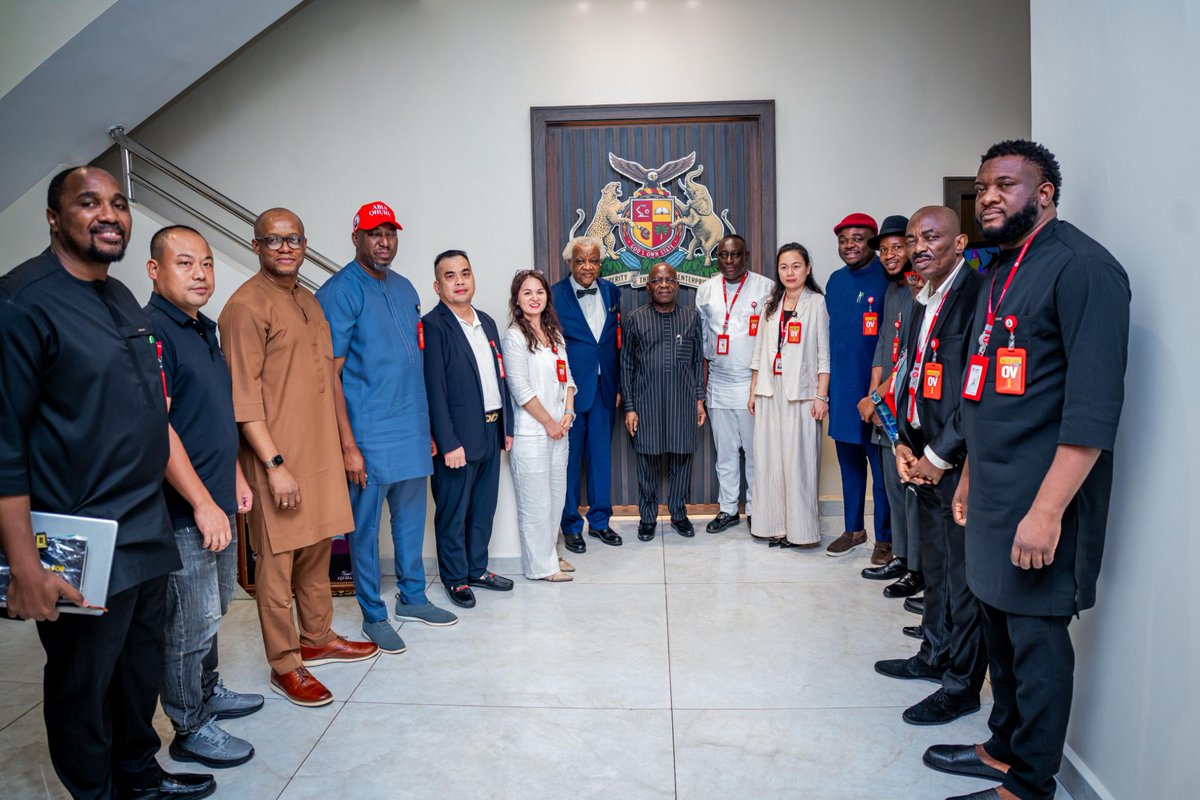
Yesterday, we were pleased to receive a delegation of investors led by Dr. Oko Jaja, alongside Mr. Dennis Madu Nwakanma, CEO of MD Nwakanma Nigeria Limited. Dr. Jaja briefed me on the significant progress made towards the establishment of a $145 million solar manufacturing plant at Umuelele, Isiala Ngwa South LGA, in partnership with their Chinese counterparts.
I am delighted that the project has reached the Final Investment Decision stage. This is a resounding vote of confidence in the improving business environment we are building in Abia State. It further validates our vision of making our State a preferred destination for local and international investment.
We remain committed to providing every support necessary to ensure businesses thrive and investments are protected. We have done everything required to make the land available for the project, and we stand ready to provide every necessary support to ensure its successful implementation.
Beyond the investment itself, the project promises jobs for our young people, skills development, increased economic activity, and greater prosperity for our State.
I commend Dr. Jaja, the investors, and MD Nwakanma Nigeria Limited for their confidence in Abia. I am particularly encouraged that the first tranche of funding is expected by September 2026, with factory construction projected to commence before the end of the same month.
I am also pleased that young Abians are already being trained in solar installation and related technologies, with plans for selected workers to receive advanced training in China once operations begin.
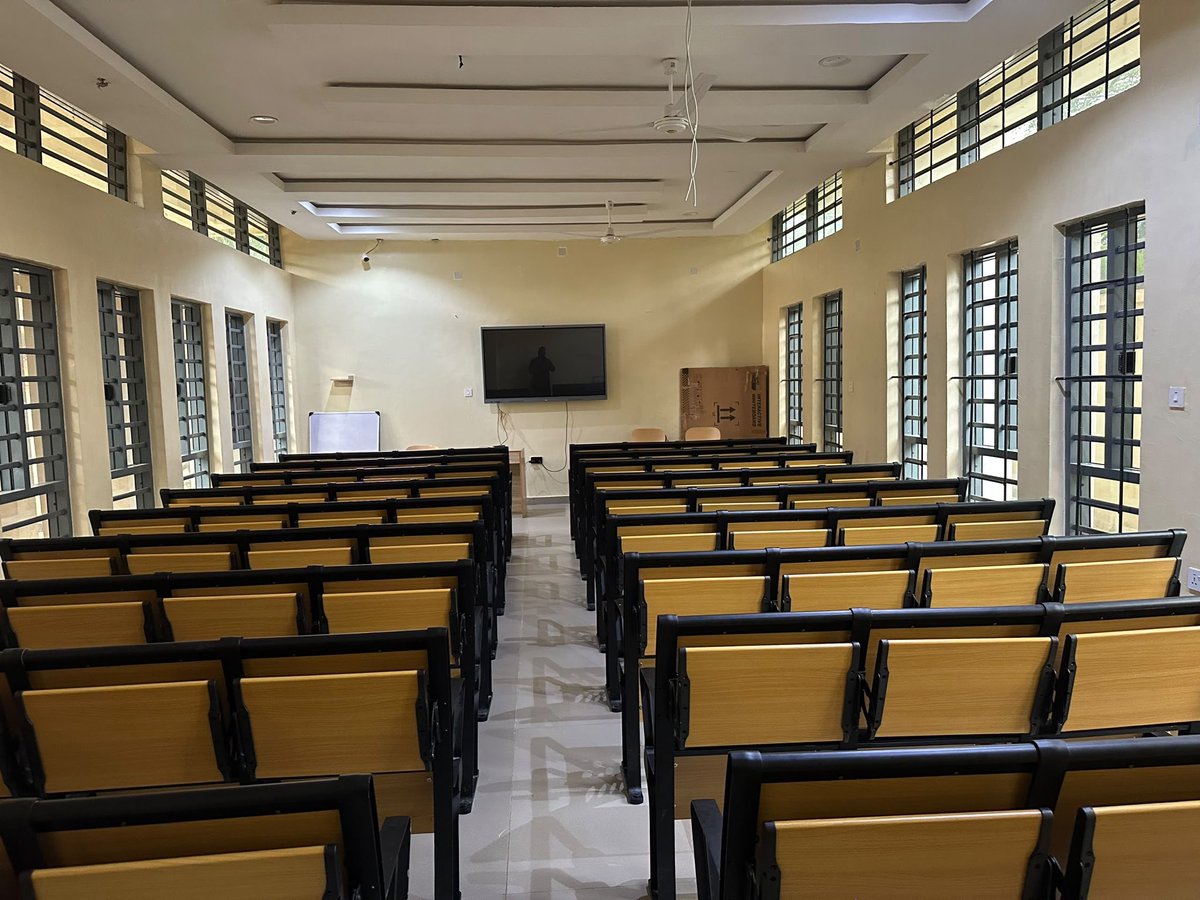
Today, the T.N. Onodingene Family of Abor, Udi LGA, Enugu State, made this facility available for free to serve as one of the 2027 South East Mathematics Olympiad Preparatory Centre and also one of the official examination venues.
The facility features a 60-computer CBT centre, 24/7 internet access, a physical library, an 80-seat conference hall, and three dedicated workstations.
Students from any part of the country are welcome to use the facility free of charge.
This is the kind of investment in education that transforms lives and creates opportunities for generations to come.
We hope to see more families, individuals, organizations, and communities make similar contributions across the South East and beyond.
Please join us in appreciating the T.N. Onodingene Family for this remarkable act of generosity and their unwavering commitment to advancing education and empowering the next generation.
I've been thinking about this almost every day.
What would it actually take to ensure every single child in the South East is in school?
I don't mean reducing the number of out-of-school children.
I mean ZERO.
I'm setting myself a target:
Zero out-of-school children in the South East within the next 24 months.
And within 4 years, I want us to drive illiteracy as close to zero as possible.
I know it sounds ambitious.
There are children out of school because of poverty. Some because of culture. Some because of religion. Some because they have to work. Others because there are barriers we've not even identified yet.
But I genuinely believe this is a problem we can solve if we stop treating it as someone else's responsibility.
So I'm asking for your help.
If you had to achieve this, what would you do?
I want practical ideas. Bold ideas. Crazy ideas. Lessons from other countries. Community-based solutions. Technology. Policy. Anything.
I'll read every suggestion.
If we can solve this in the South East, we'll create a blueprint that the rest of Nigeria and maybe even Africa can learn from.
Education Crisis: Calls for Fundamental Change, Not Just Policy
The Federal Government has finally admitted to its poor management of the education sector. Recently, the Minister of Education acknowledged that the policy separating junior and senior secondary schools has failed to improve educational outcomes. This is evident in recent examination results. In 2024, the West African Examinations Council (WAEC) reported that only 38.32% of candidates passed English and Mathematics in the WASSCE. In 2025, only 32% passed the computer-based WASSCE. This poor performance has been consistent across major examinations over the past two years.
This admission is tragic because education is the most vital contributor to human capital development, which forms the foundation for growth and economic development of any society. We cannot overcome economic stagnation without prioritising education, healthcare, and job creation to lift millions of unemployed youths out of poverty. As successful Asian nations have demonstrated, educational excellence requires sustained investment in curriculum development, motivated teachers, and better learning environments.
Unfortunately, the government continues to neglect the sector. In the 2026 budget, education received only ₦3.52 trillion, just 6.17% of total expenditure, down from 7.87% in 2025, and well below UNESCO’s recommended 15–20%. This low allocation indicates a failure to recognise education as a driver of sustained economic growth.
Education advocate, Mr Alex Onyia @winexviv , recently revealed that Nigeria failed to sponsor students to the International STEM and Mathematics Olympiads due to a lack of funding. It is heartbreaking that the government can sponsor hundreds to irrelevant international conferences yet fail to support its brightest students on the world stage.
The Minister’s admission reflects a broader failure of public leadership. The issue is not the JSS/SSS policy itself, but the lack of commitment to properly fund, manage, and deliver quality education.
In Anambra State, we proved that committed leadership can transform educational outcomes. Through effective funding, oversight, provision of laptops, generators, internet connectivity, and other learning aids, we turned the sector around. For example, our effort in providing computers across all secondary schools (public and private in the state) was recognised by HP Africa Head, who declared that Anambra had procured the largest number of laptops for school children of any subnational government in Africa.
For the future of our society, we must deliberately invest in education, healthcare, and job creation. As I have always said, failing to do the right things is equivalent to abusing society, and the society we abuse today will take its revenge on us and our children tomorrow.
A New Nigeria is POssible. -PO
The Role of the Diaspora African in Sustainable Development
On Friday, July 10, 2026, I had the honour of delivering the keynote address at Mandela Hall, African Union Permanent Observer Mission to the United Nations in New York, on _The Role of the Diaspora African in Sustainable Development across Africa.
Africa is a continent of immense riches. Indeed, it is the richest continent in the world, not only because of its vast mineral resources but also because of its greatest asset, its people. It is the second largest continent by landmass, after Asia, covering more than 30 million square kilometres. It is also the second most populous continent, with over 1.5 billion people. Significantly, more than one billion of these are young people in their productive years, making Africa home to the largest youthful workforce in the world.
When this demographic advantage is combined with nearly one billion hectares of arable land, about 60% of which remains uncultivated, it becomes clear that Africa possesses everything required not only to feed itself but also to become the food capital of the world.
Regrettably, despite this enormous potential, Africa remains home to the largest concentration of the world’s poorest people. Of the approximately 800 million people living in extreme poverty globally, nearly 60% are in Africa. That is about 480 million people, with Nigeria and the Democratic Republic of the Congo among the countries most affected. In other words, nearly one in every three Africans lives in extreme poverty. Likewise, in multidimensional poverty, Africa continues to bear the greatest burden.
The question, therefore, is simple. With all these advantages, why has Africa not been able to lift its people out of poverty?
It means there is a missing link. That missing link is Competent Leadership with Capacity, Compassion, Character, and Commitment to good governance.
What Africa needs is leadership that will rise to the challenge and drive the continent in the right direction. This means competent leadership with character, capacity, compassion and commitment to begin turning the continent around. When we get leadership right, everything else begins to change. We start realising our true potential.
So, what is the role of the Diaspora African in this journey?
You have an enormous role to play.
Because you live in societies where institutions largely work, where democracy is strengthened by accountability and where systems function more effectively, you have both an opportunity and a responsibility to help build Africa. It is time to become stronger advocates for good governance. Even where you cannot vote, your voices matter. They should be heard both at home and abroad whenever things are going wrong on our continent. Stand firmly for what is right. Speak truth to the leaders who visit you. Let them know where they are getting it wrong. That is what some of us have continued to do.
The contribution of the African diaspora extends far beyond advocacy. History teaches us that many of the world’s great economic transformations were driven, in part, by their diaspora communities.
Japan offers one example. Following the Meiji Restoration of 1868, the country embraced modernisation and benefited immensely from Japanese scholars, professionals and citizens who studied and worked abroad, especially in Germany, before returning home to drive the technological transformation for which Japan is admired today.
China presents another remarkable example. It was under Deng Xiaoping’s reforms, beginning in 1978, that China embraced education, innovation and global engagement. These reforms created opportunities for the Chinese diaspora to contribute significantly to the country’s extraordinary economic transformation. In 1980, China had more people living in poverty than Africa. Today, China has reduced extreme poverty dramatically, while Africa continues to struggle with the challenge.
Roadmap to a New Nigeria That Is Possible – Part II
Education and Healthcare: The Foundation of a Renewed Nigeria
Recall that on July 1st, in Part 1 of "My Vision for a Productive and Prosperous Nigeria," I outlined the broad framework of my proposed roadmap for national renewal. In it, I emphasised that the transformation of Nigeria must begin with rebuilding our human capital through quality education and healthcare, supported by reforms in Technical and Vocational Education and Training (TVET), character and civic education, and strategic investments that will move our nation from a consumption-driven economy to a production-driven one. I promised to follow up with other parts in the coming weeks and months.
Today, July 16th, in the middle of July, I wish to expand on these two critical pillars - education and healthcare - because they are the bedrock upon which every prosperous nation is built. They are the cornerstones of the foundation that will ensure that a son of nobody can become somebody and remove many from the ranks of the disaffected who often become tools in the insecurity challenges confronting us.
Evidence from around the world shows that quality education and accessible healthcare are among the clearest distinctions between thriving nations and lagging ones. Princeton University Nobel Prize-winning economist Angus Deaton highlights this reality in his book, “The Great Escape: Health, Wealth, and the Origins of Inequality.”
Nothing, therefore, could be further from the truth than the claim by some young people that “education is a scam.” Education, when combined with good health, provides the ladder for individual upward mobility and drives economic growth for the nation.
We must become more intentional about aligning education with our national priorities, as Singapore did, and challenge our country to value education in the same way Deng Xiaoping repeatedly urged China to do from 1978 onwards, with the remarkable transformation we see today.
We will work through commissions that strengthen collaboration among the tiers of government, ensuring that primary education is domiciled at the community and local government levels, with strong parental involvement and curricula that are sensitive to local economic factor endowments and the value chains derived from them.
State governments will be supported to expand high-quality Technical and Vocational Education and Training (TVET), as well as general secondary education, through targeted grants and incentives.
We are also developing schemes that will enable universities to focus more deliberately on specialised areas of teaching and research, making them globally competitive while producing a workforce equipped for the demands of the future.
A NEW Nigeria is POssible. -PO
Suspension of Examination Fees: A Victory for the People
I received the welcome news of the suspension of the newly introduced examination fees with relief. This is a victory for the Nigerian people.
While I commend the authorities for listening to the widespread public outcry and suspending the policy, it must be said that the fee was an unnecessary burden that should never have been introduced at this time of great hardship, when we should be doing everything possible to invest in basic education and reduce the millions of out-of-school children in Nigeria.
At a time when many families are struggling to make ends meet, access to education should be expanded, not restricted. Education is a fundamental right and a public good, not a source of government revenue.
Imposing multiple fees at the basic education level risks denying many children their right to education. At that stage, the State has a duty to invest in educating and preparing its citizens for productive lives, not to erect financial barriers that keep them out of school.
True leadership is demonstrated not only by making decisions but also by having the humility to reverse policies that impose unnecessary hardship on the people. Many other anti-people policies deserve similar reconsideration.
I thank the citizens, parents, and advocacy groups whose voices made this reversal possible.
A New Nigeria is Possible. -PO