Brain, mind, mental illness, medicine, neuroscience, neuropsychology, psychiatry. All based on science+evidence+research. ps...the NHS needs your help!
We have simplified permission to try the EmotionThermometers scale. Usage to date: 30 studies, 15 translations, 100 centres! If its clinical use or unfunded research use this link: https://t.co/rPrUYXQLxd and you will receive permission to use it immediately. #emotionthermometers
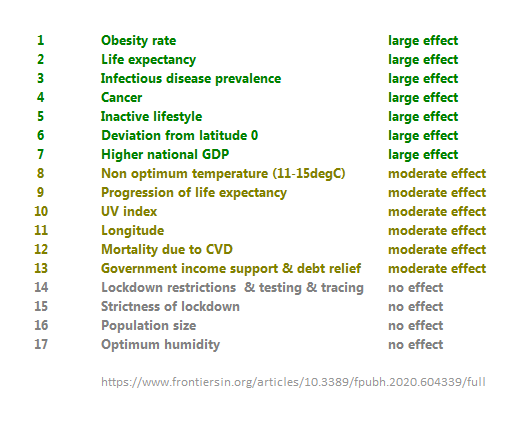
After studying #COVID19 mortality across 188 countries & 846,395 deaths, here are factors linked with premature death. NB: lockdowns appear to have no effect whereas exercise, environment and comorbidity do (Ref https://t.co/M3nXUEVQnz) @carlheneghan@ProfKarolSikora@FatEmperor
@pamruthers Hi I was on AITM in 2011. I am trying to contact you re my COVID delirium/long COVID experience (https://t.co/4fuBsNFzT2). Are you still available on [email protected]? regards Prof Alex Mitchell
Risk of Suicide After Cancer Diagnosis in England: 20% increase in suicide in 4million patients with cancer. Patients with mesothelioma, pancreatic, esophageal, and lung cancer had the highest risk. https://t.co/8RBkG3sh2b
Adherence to Antipsychotics Measured by Electronic Adherence Monitoring in Schizophrenia: Meta-analysis Excellent free full text https://t.co/oTUXcAG57d
@BanTheBBC So many things wrong here. Breaking in disproportionate, police not distancing themselves, no ppe, no de-escalation, no warrant, no apology, no door repair. If there was a gathering damage would have been done...adding four more unprotected people into mix would make it worse.
New study tracking cognition in 13,462 participants with normal cognition at
baseline. Depression and subjective memory impairment were both risks for later MCI/dementia (HR 1.4
and 2.0 respectively & HR 2.8 with both). https://t.co/s3M3lRUqHb
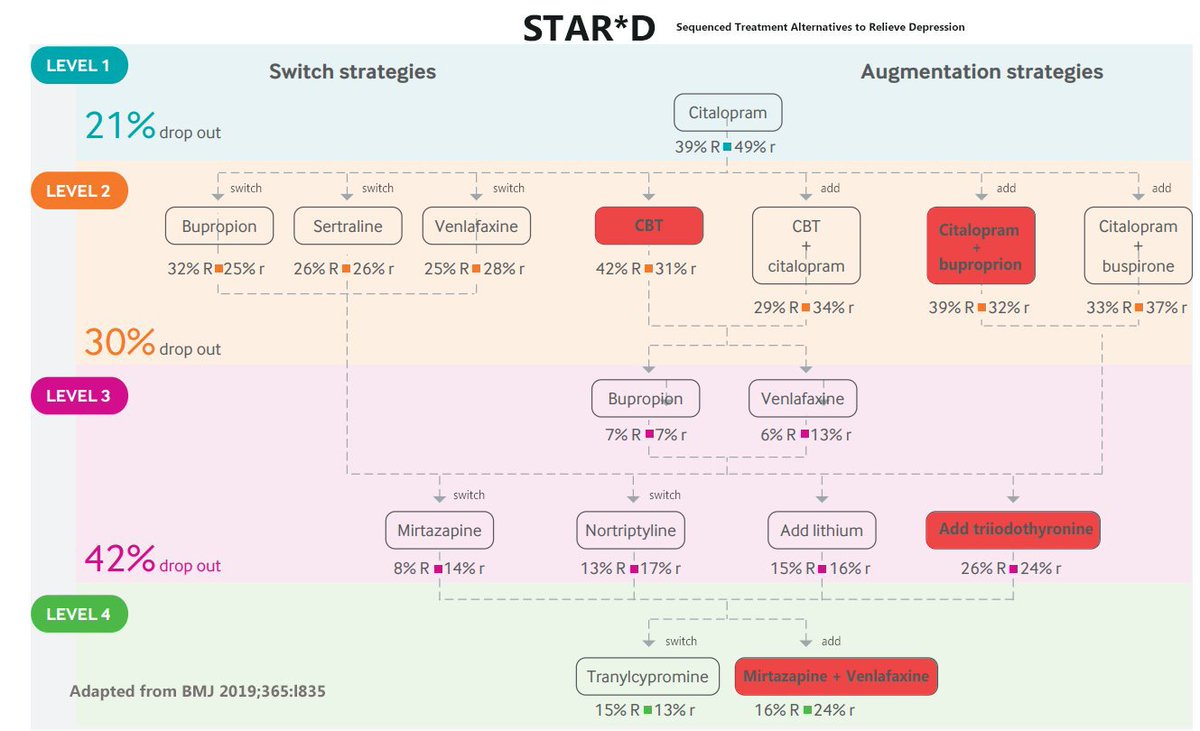
Finally a visual summary of STAR*D algorithm for treatment resistant depression that everyone can understand! (2,876 patients) RED = most favourable option (adapted from BMJ 2019;365:l835)
Wow impressive: "a systematic review on the use of the *emotion thermometer* in individuals diagnosed with cancer" is out! 17 studies #emotionthermometers Free PDF here: https://t.co/p1nFWIdVVE
@TIME OK so its 94% accurate in detecting a change which is in itself 88% accurate, so *at best* its 82.7% accurate in actually detecting the condition. (see https://t.co/vTIetgzLXd
In new VitalSign6 primary care study: 25k patients were screened using the PHQ2, 17% screened positive; of those: 52.0% dropped out, 9% refused treatment and clinicians failed to document a diagnosis in 28%. Only 12% attended 3x follow ups. #shocking; link https://t.co/Whx2KPnfPQ
@quizicist I see your point but we are being judged by certain metrics by employers. How much difference we make to patients and colleagues is the gold standard but hard to measure. Any suggestions how to evaluate this?
Congratulations to Prof Alex Mitchell @mndsci and Prof Sir Nilesh Samani @UoLCVS for being in the @webofscience Highly Cited Researchers of 2018! https://t.co/HKGsk6oUru