Crazy that this is getting barely any coverage. This year’s European Press Prize was just awarded to an investigative report by the Dutch newspaper De Volkskrant. It is entitled “What the Wounds Tell” and in it the journalists Maud Effting and Willem Feenstra document the cases of 114 children in Gaza under the age of 15 who were struck by a single bullet to the head or chest. Almost all of them died or were left severely disabled. They chose to document only the cases of boys and girls under the age of 15 (though often much younger: aged 3, 4 or 7) because these are children who can be immediately identified as such. “A single bullet in these parts of the body is a clear indication that these children were deliberately targeted“, the two journalists write.
This is the article: https://t.co/YkZrpqBWBQ
I used to think the most remarkable thing about Gaza was how people survive death.
Lately, I have begun to think it is how they survive life.
For the past two days, I have found myself walking through the streets, studying the faces of strangers. I was trying to understand a contradiction that exists nowhere more clearly than here:
How do people continue to laugh after burying those they love?
How do weddings still happen?
How do mothers still buy sweets for their children?
How do people keep searching for small fragments of happiness while carrying so much grief?
Yesterday, I saw a crowd gathered around an elderly woman on the side of the road, she looked as though she was about to collapse.
I approached and introduced myself as a doctor, but before I could ask what had happened, a young woman standing beside her spoke.
“It is the sadness,” she said.
Then, after a brief pause: “Whenever there is a happy occasion, she remembers my brother who was killed in the war.”
“She starts crying. Sometimes she loses consciousness.”
I checked on her and continued walking.
But I carried the scene with me.
A while later, I heard a young man shouting for water.
I turned and saw another elderly woman being held upright by two men.
Her body had not failed her. Her grief had.
I walked over and asked only one question:
“Was she remembering someone she lost?”
The young man looked at me and nodded.
“Yes. My brother.”
The same story.
Twice, within less than thirty minutes.
Two women. Two families.
One wound.
And this is the truth,
Gaza exists in two realities at the same time.
The first is visible.
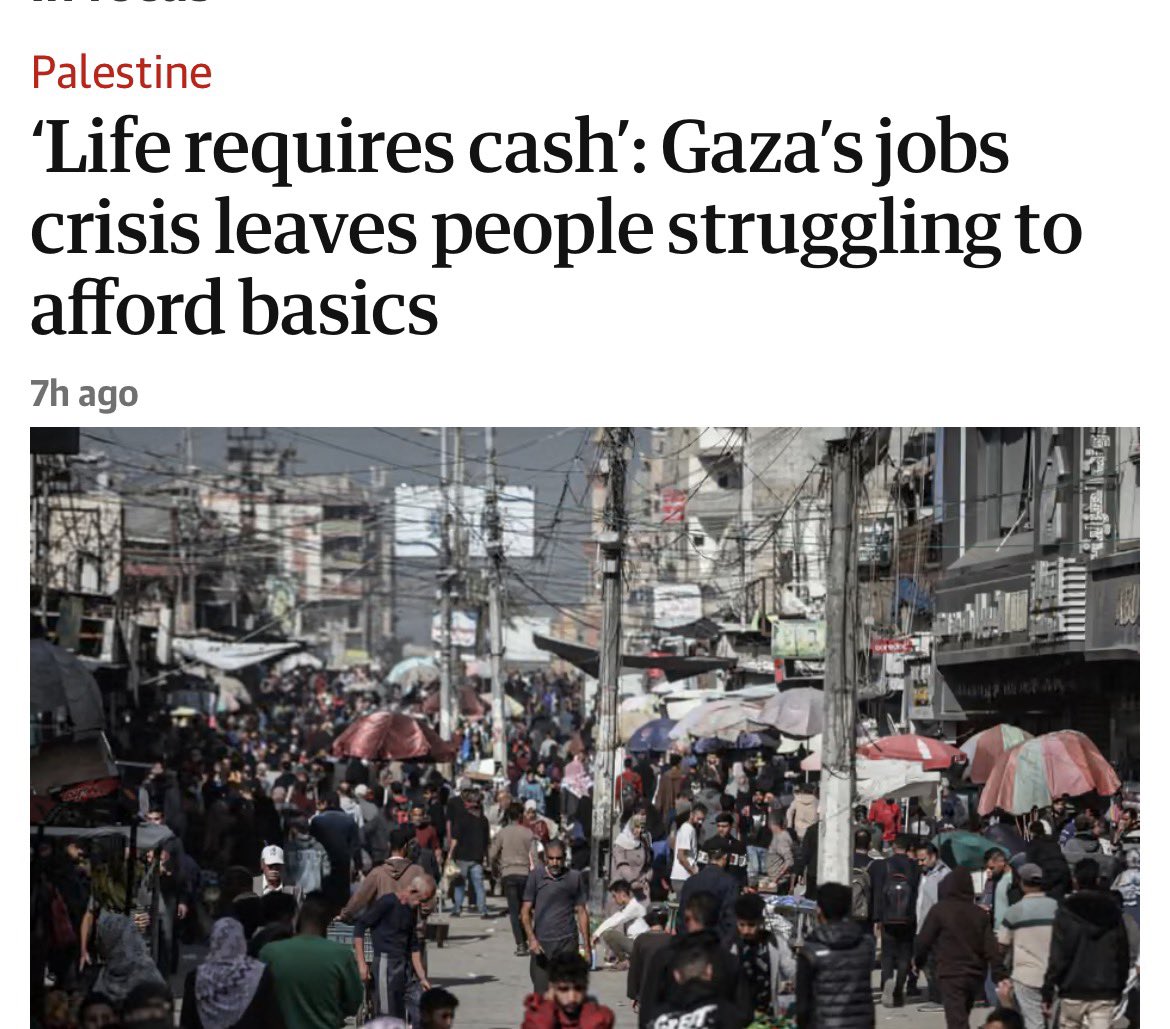
Children playing, markets crowded with people, families attending weddings, mothers preparing meals.
Life insisting on itself.
The second reality is hidden beneath the surface.
A city of empty chairs, unanswered phone calls, bedrooms preserved exactly as they were the day their owners never returned.
A city where every moment of happiness accidentally steps on a memory.
Perhaps that is why joy feels different here.
It never arrives alone, it drags sorrow behind it like a shadow.
Every celebration has an absent guest, every smile carries a name.
Every mother who watches children play sees one child that nobody else can see.
And yet people continue, that is the miracle. Not that they are strong. Not that they have healed.
But that they continue.
They gather, they laugh, they fall in love, they make plans for tomorrow.
All while carrying losses heavy enough to stop a heart.
And this is what Gaza truly is:
A place where people keep planting flowers in the ruins, while beneath their feet, the graves are still fresh.
#WoundedGaza #EidMubark
sebenarnya tak patut merendahkan bapak2 ni dijadikan trend
tapi kita semua tahu kenapa ianya makin trending & dijadikan bahan jenaka
kalau fikir kesannya ni tak elok pun utk satu family / umat
respect akan hilang. autoriti mak2 akan menebal. anak2 slow2 jadi takde prinsip
.
I can’t leave this alone.
We all have mental loads.
Every single human on the planet has a mental load.
I do not carry the mental load that my husband carries all day long while he provides for us, deals with money, bank accounts, health insurance, retirement, investments, car loan, mortgage, yard things, car, repairs, etc., etc.
He, therefore, is not expected to carry the load of what is in our refrigerator. He is not expected to know what is in our pantry. He’s also not expected to know what size clothes our kids wear, or even what reading level they are at, cause that’s my job.
The expectation that both a husband and a wife have to carry the entire load of the entire family together is a recipe for disaster.
Maybe your family splits up the tasks differently. Some families I know the wife takes care of the finances, and the man takes care of the groceries/cooking. Our marriage tends to fall along super traditional lines, probably because our parents were super traditional.
The point is not about who carries what part of the mental load, the point is that expecting both spouses to carry each other’s full mental load is a stupid way to live.
I am not saying that the other person should never know anything about the things that you do on a daily basis, and in fact, my husband knows all about the things that I do on a daily basis because I tell him about them constantly. And if I wanna know all the ins and outs of the insurance or the money or whatever, he would happily sit down and explain it all to me, and in fact does.
But please, release yourself from this idea that the mental load is only the woman’s, and rest in the trust that spouses can have when both of them carry their own mental loads and do their best for the other person/family without being constantly up in each other’s business and picking at the other for “not doing enough”.
There are things in this world that should never happen
and yet, they are happening.
This story sounds like fiction.
But this is our life.
Two and a half years ago, when the Israeli army entered Al Shifa Hospital,
they took a number of newborn babies from the maternity ward.
Newborns.
They were separated from their mothers, from the only warmth they had ever known and sent to Egypt.
Without names.
Without families.
Without anyone to claim them.
They disappeared.
For more than a year, there was no news.
No answers.
No certainty about whether they were even alive.
Yesterday, some of them were returned.
And I cannot stop thinking about one moment.
A mother standing there.. trying to describe her child.
Describing the face of a baby she had only known for less than a week.
Trying to recognize her own son through memory alone.
Through fragments.
Through hope.
Through pain.
Then, suddenly.. he is in front of her.
Alive.
She breaks.
A joy so overwhelming it almost looks like grief.
And the child?
He looks at her .. without recognition. Without memory.
Without the instinct that should have guided him back to her arms.
He does not know her !!
And perhaps what is even more devastating
he does not know what a mother is.
What kind of world separates a child from his mother
before he even learns her face?
What kind of war steals not only lives,
but the most basic human bonds?
This is not just loss.
This is something deeper.
Something colder.
Something that tears at the very meaning of being human.
This ..
is what hell looks like.
#WoundedGaza
Allah describes the human experience with a single, heavy word:
"Kabad" (کبد)
It doesn't mean peace.
It doesn't mean happiness.
It explains exactly why you are tired.
“i wish children would be temporarily elevated to the skies until the war ends
then they would return home safe
and when their parents would ask them,
where were you? they would say,
we were playing in the clouds” - ghassan kanafani, a palestinian poet
i just dont understand how in 3 years people went from knowing how to google to forgetting google even exists.... like why r we using chatgpt as a search engine ITS NEVER BEEN A SEARCH ENGINE
Scientists put kids through 100 hours of reading, then scanned their brains. New wiring had physically grown inside the language regions. Communication between brain areas sped up by a factor of 10. Kids who didn't read showed zero change.
That was a 2009 Carnegie Mellon study. It gets wilder.
In 2013, Emory University scanned 19 students every morning for 19 straight days while they read one novel chapter each night. Mornings after reading, the brain areas responsible for understanding other people's emotions lit up with new connections. So did the region that processes physical sensation. Their brains were simulating what the characters felt, as if it were happening to them. Those changes stuck around for 5 days after they finished the book.
Now flip to scrolling. A massive review published in Psychological Bulletin last September pulled together 71 studies covering 98,299 people. Heavy short-form video use (TikTok, Reels, Shorts) showed a clear pattern: worse attention, weaker self-control, and more anxiety. Consistent across teenagers and adults, across every platform tested. Oxford didn't name "brain rot" its 2024 Word of the Year for nothing.
A 2024 brain wave study found that people hooked on short-form video had weaker activity in the front of the brain, the part that controls focus and impulse control. Separate brain scans showed the same thing: heavy scrollers had less activation in the exact regions that deep reading strengthens.
UCLA neuroscientist Maryanne Wolf has been studying this for decades. Humans were never born to read. There's no gene for it. Reading is something we invented, and it hijacked neurons that were originally meant for recognizing faces. Over time, it built entirely new brain circuits connecting language, vision, and emotion. But those circuits only survive if you use them. Stop reading, and they fade. Wolf's conclusion is simple: screens built for speed produce a speed-wired brain. Books built for depth produce a depth-wired brain.
One honest caveat: most of these studies are snapshots, not long-term tracking. People who already struggle to focus might just prefer short videos. But the same pattern showing up across nearly 100,000 people is hard to shrug off.
The tweet repeats the line seven times. The research backs it up with brain scans, EEG data, and white-matter imaging across tens of thousands of people.
Btw if we as Muslims are explicitly warned against wasting water even while making wudhu, even if we're next to a fast-flowing river, how are some of you justifying the obscene wasting of water involved in gen AI
Kanafani rightly pointed out that a key part of zionist propaganda was making the zionist movement sound braver, more intelligent, and more enlightened than it is. Richard does that here in this tweet.
Israel slaughters people in mass. That is their "trick". Hope that helps.