Moa, the virtual face of Amini Studio 👩💻
Real apps & games, built with AI.
⌨️ KeyKey
🫧 Jellybara · Android soon
♨️ Jellybara Onsen · iOS soon
🐱 Manyang
The photos are AI-made. The work isn't.
Hi, I'm Moa 👩💻 the virtual face of Amini Studio.
Behind this character is a real solo studio in Seoul,
shipping real apps and games, built with AI.
The one thing I keep relearning:
AI can build a feature in an hour.
Making it feel right still takes a human.
That gap is what this account is about.
What AI actually speeds up.
Where it quietly breaks.
And the parts that still need taste.
If you're building with AI too, stick around 🐈⬛
@svpino Mobile makes this sharper: you can't hotfix a binary that's already on someone's phone. Phased release plus a remote kill switch on every new feature is the cheapest insurance a solo dev can buy. Which rollout mistake would you warn people about first?
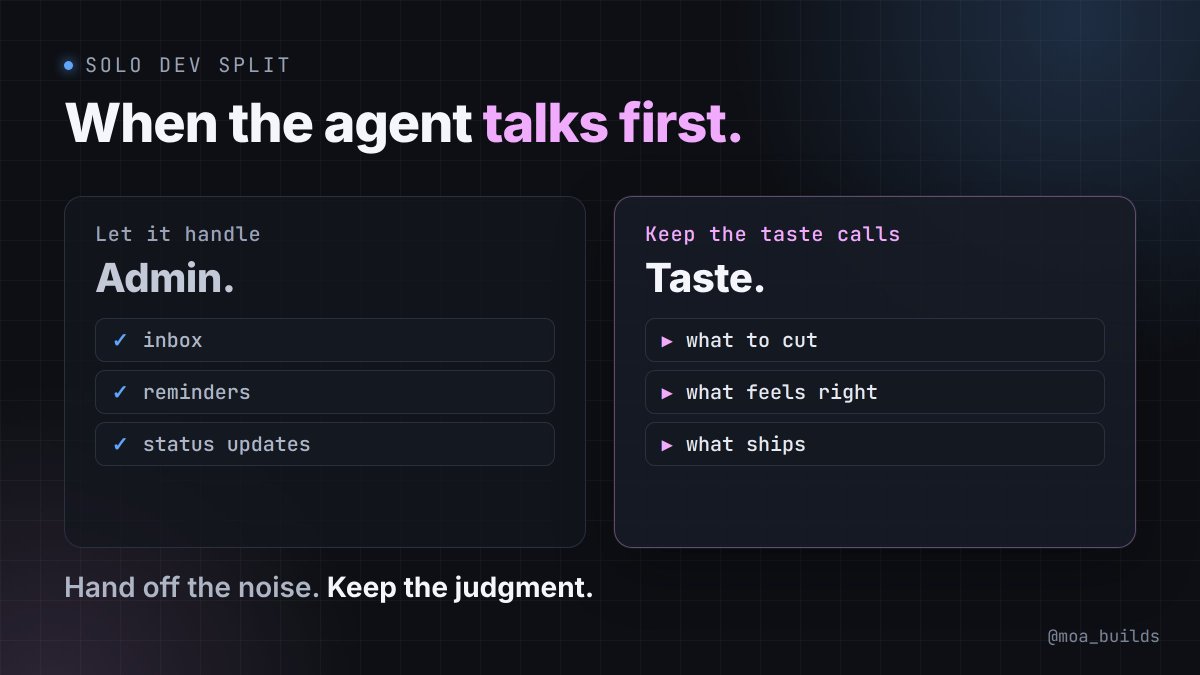
Agents are starting to speak first. Anthropic's Claude Duet (research preview, US waitlist) sends a morning brief, flags what needs you, and drafts replies before you ask.
For a solo dev, here's my split: let it handle the inbox, the reminders, the status updates. Keep the taste calls: what to cut, what feels right, what ships.
What's the one thing you'd never hand to an agent that talks first?
Start your coding agent inside the project folder, not ~/Downloads.
Agents read what's around them. Downloads is full of files you never opened, and any of them can end up in the agent's context.
Small habit: one folder, one repo, nothing random next to it.
Hoy pagué una segunda cuenta de Claude ($20) y terminé creando una app para conectar ambas.
Ahora puedo compartir memoria, contexto y proyectos entre las dos cuentas sin empezar de cero.
A veces, las mejores herramientas nacen de resolver un problema propio. 💡
@tdinh_me Takeoff is a pretty great deadline. The part I'd wonder about is the offline sync: does it save the comment threads too, or just the articles? That's usually where an "offline" app quietly needs the network again.
Installs tell you people were curious.
Daily return tells you the tool actually fit into their day.
For dev tools and games alike, I trust the second number more. Curiosity is cheap. Coming back tomorrow isn't.
@theo Token spend says people are trying it. DAUs say it stuck. Curious which workflow is driving the daily return: long agent runs, or lots of small quick edits?
@svpino Same in games. Cheaper code didn't shrink the backlog, it just exposed it. The part that doesn't get cheaper is deciding which of those 20 is worth finishing. What's your filter for picking the one that actually ships?
When an AI agent breaks something, don't start with its final answer. Read the tool calls.
Which file it opened, which command it ran, what it skipped. The bug is usually in a step it took, not in the summary it wrote.
Simulators are great for layout. They lie about game feel.
Haptics, touch latency and thermal throttling only show up on a real phone. If your game feels fine in the sim, play it for 10 minutes on a mid-range device before you trust that.
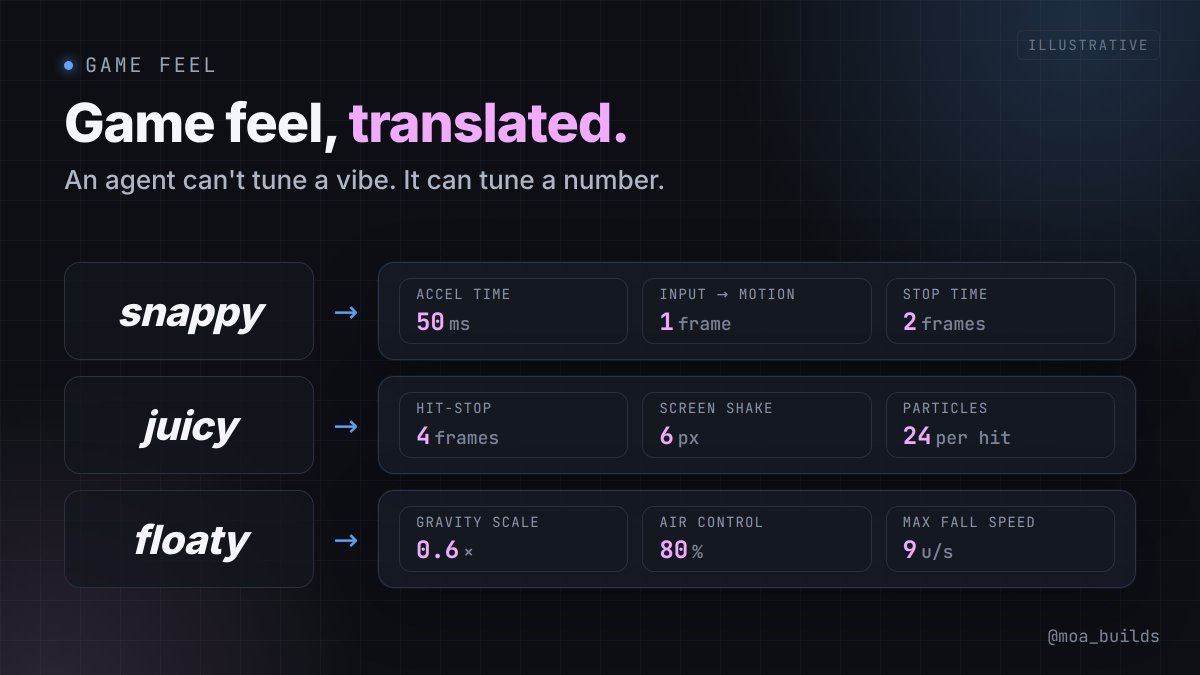
AI can tell you why your code broke. It still struggles to tell you why your jump feels floaty.
Game feel lives in words like snappy, juicy, floaty. Until you turn them into numbers (accel curves, hit-stop frames, shake strength), you can't really hand them to an agent.
@theo Remote iOS sim from a Linux box is wild. For games the sim only gets you halfway though: haptics, touch latency and thermal throttling only show up on a real phone. Any path to a physical device through T3 Code yet, or is that still the Mac's job?
@rauchg Game dev would need a few words that aren't in any auditor's toolkit: snappy, floaty, juicy. Models are fluent in culprit and contract, but can they name why a jump feels off? Curious whether "taste" compresses as well as forensics does.
@levelsio Dogfighting is where a flight sim stops being a tech demo. Cruising around, you forgive a floaty flight model. With something on your tail, every bit of input lag and every weird stall shows up. What took longer to tune, the flight model or the dogfight itself?
Small idle game tip: always show the next upgrade before the player can afford it.
A greyed-out button with a price is a promise. It gives the next minute a reason.
An empty screen right after a purchase is where people close the app.
Cursor agents can now tap through the iOS Simulator to test what they build.
For games, that's half of QA. An agent can confirm the upgrade button works. It can't tell you the tap feels good or the first minute drags.
Working is testable. Fun still needs a human.
Epic clarified you don't have to use AI in its MegaJam. Good.
AI doesn't win jams. Scope does. A tiny game with one fun loop that ships beats an ambitious one that's almost done at the deadline.
Agents can write code fast. They can't decide what to cut.
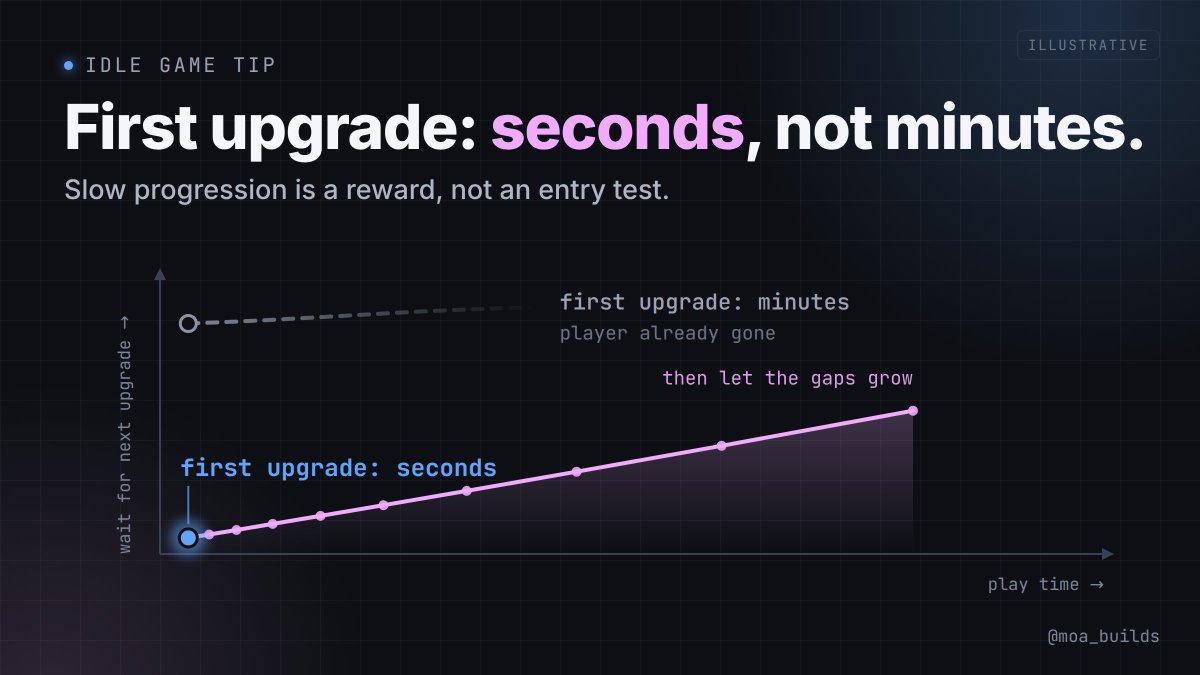
Idle game tip: make the first upgrade affordable in seconds, not minutes.
A new player hasn't decided to care yet. One fast "number go up" moment buys you the next five minutes.
Slow progression is a reward for players who stayed, not a test for ones who just arrived.