Striving to improve crop production through technology and sound reasoning. Agronomy Service Rep at Syngenta. Views are my own, not necessarily my employers.
@WiscWeeds If there was solid grass right up to field edge, the waterhemp would really struggle to get established due to the competition, but if you remove that competition, the waterhemp can explode.
@WiscWeeds In cases like this being careful to not hang your boom outside of your planted area when spraying could make a big difference.
Herbicide applications, in the absence of crop canopy, select for weeds like waterhemp that can escape and thrive in the absence of competition.
Glufosinate alone 😀 Mesotrione alone 😕 Glufosinate + mesotrione 🔥😎
That’s the power of effective herbicide tank mixtures.
Deploying synergistic tank mixes with multiple effective sites of action is critical for improving weed control and helping delay herbicide resistance evolution. But stewardship matters: rotate those mixtures and avoid over-reliance on the same chemistries… otherwise we know where that road leads.
Synergistic tank mixes help, but overreliance on the same mixtures still selects for resistance. Diversity and stewardship remain key for long-term weed management success.
We are evaluating 150+ potential tank mixtures for foliar #waterhemp (Amaranthus tuberculatus) control. Stay tuned. 👀
#WiscWeeds research by Sabeel Abuhakmeh, Ahmad Mobli, et al. 🌱
🚨 NEWS ALERT 🚨
#Waterhemp spotted emerging in southern Wisconsin (April 24, 2026).
Earliest waterhemp emergence I’ve observed or heard of since arriving in Wisconsin in 2018.
Observation by @ModernCropGroth in a field with undisturbed, dark soil and known heavy waterhemp pressure.
@WiscWeeds@BadgerCropNet@badgerbean Another example of how this weed has become so difficult to control! Glad to hear some residual herbicide applications were made this week. As applications are made this weekend and through the next few weeks please keep in mind the potential for emerged waterhemp!
When the same question comes up several times in a week, it’s a sign it deserves a post.
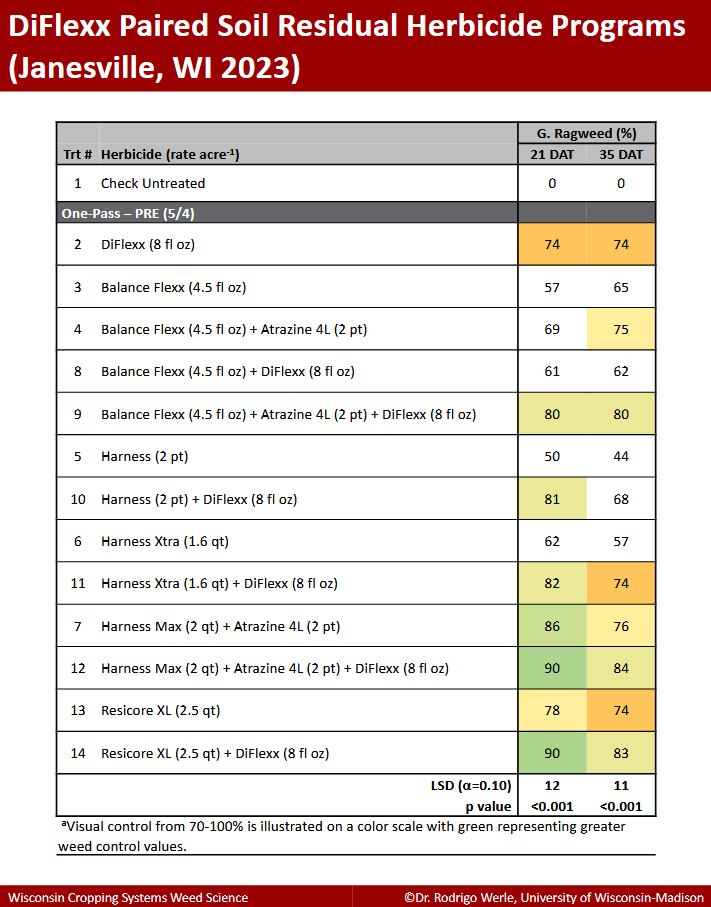
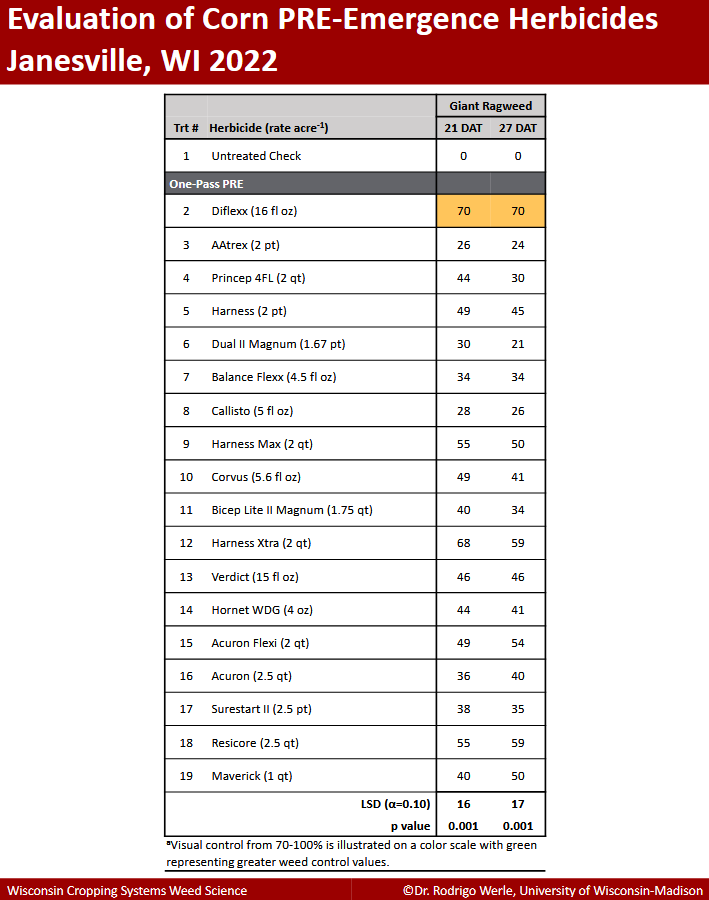
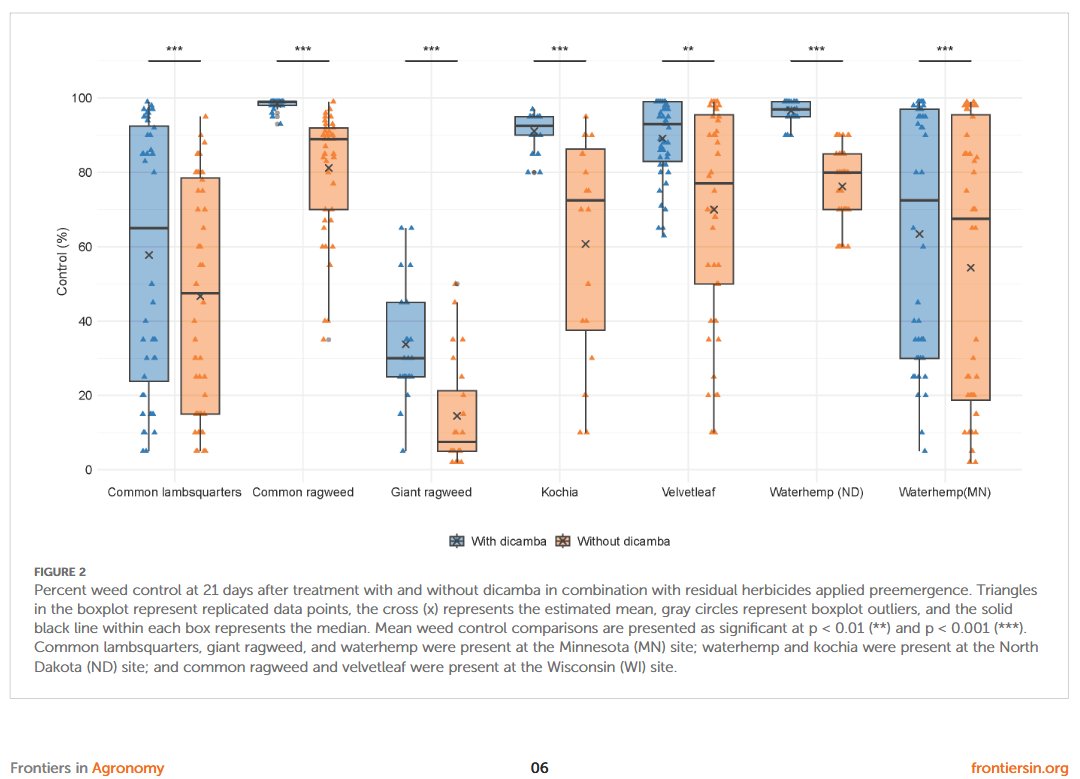
Q: “I planted #corn and I’m about to spray my PRE-emergence herbicide program. The forecast shows no rain for 7–10 days. Should I add #dicamba to my PRE mix on corn fields with consistent giant ragweed pressure?”
A: Based on our research, adding dicamba can improve residual control of giant ragweed and other weeds, especially when a timely activating rainfall is unlikely. Dicamba’s residual activity can provide a helpful buffer until rain arrives to activate other corn PRE herbicides.
For more details, check out the visual research reports from @derff53 and the publications listed below:
2023 report: https://t.co/PGrIgSi0Sh
2022 report: https://t.co/tIHpvL38wY
2021 report: https://t.co/muDexeJbx5
@Tatianesevero16 et al. 2023. Preemergence herbicide premixes reduce the risk of soil residual weed control failure in corn. https://t.co/HMecd7oFlS
@sachin__dhanda@UMNweeds@NDSUWeeds et al. 2025. Dicamba-based preemergence herbicide tank mixtures improved residual weed control in dicamba-resistant soybean. https://t.co/vq9Y70NL8s
@WiscWeeds If you get behind (as I did), and the waterhemp is emerged before your PRE residual is applied, make sure you include an effective knockdown herbicide with your PRE pass. This could be especially important in beans as we move later into May, and these plants grow in size!
@WiscWeeds Very timely article. On these heavy soils, with this population, I’m thinking the earlier the PRE the better. We can always re charge with additional residuals in season if needed.
POST #waterhemp & grass control in #soybean with Liberty (glufosinate; group 10), Cobra (lactofen; group 14) & Flextar (fomesafen; group 14):
✅ Liberty mixed with group 14 resulted in better POST weed control
✅ Cobra-based POST treatments caused higher crop injury
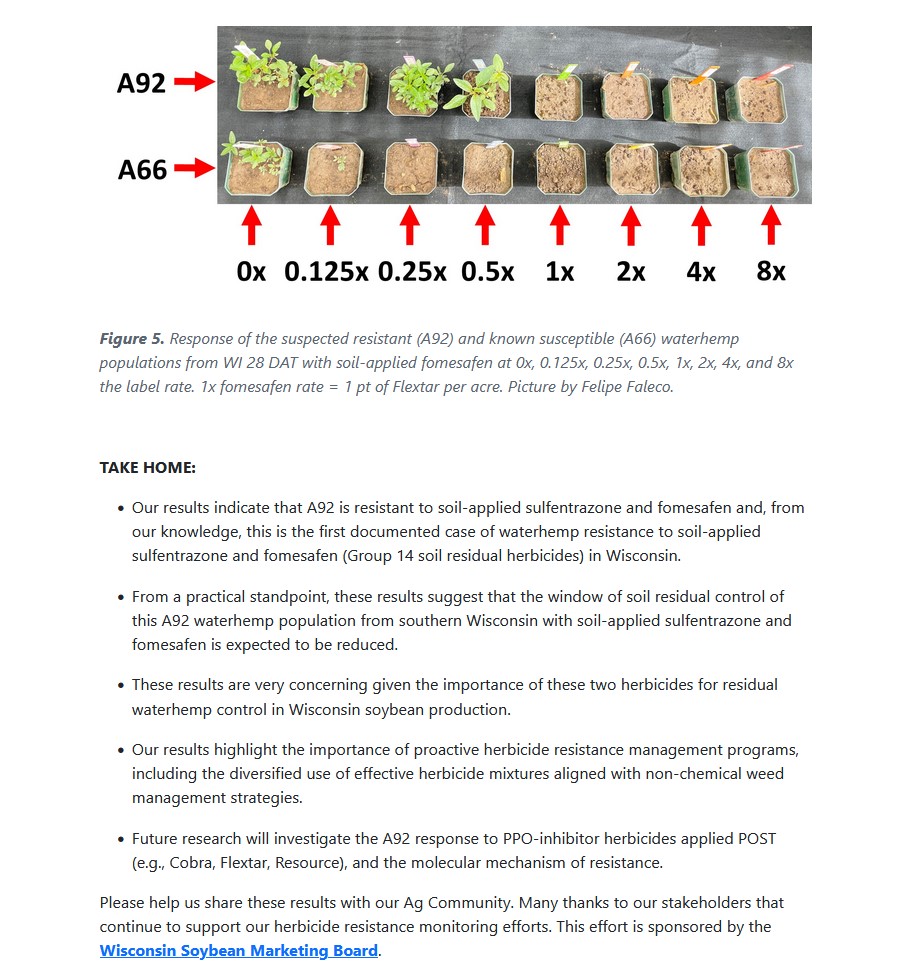
Check the latest #WiscWeeds blog post led by grad student @FFaleco (not good news!):
Lack of effective #waterhemp control with soil-applied PPO-inhibitor (Group 14) herbicides further highlights the need for integrated weed management practices
🔗https://t.co/uZOrIzzxC7
New paper by @_arsenijevic et al. (2022):
1) reducing soybean row spacing enhanced waterhemp suppression.
2) soybean canopy completely suppressed late emerging waterhemp.
3) corn canopy did NOT provide complete suppression of late-established waterhemp.
https://t.co/snsovdG2oZ
Check out the first installment of “Groth at Grow More” on the value of seed treatments. My hope is to use this platform to share some of the interesting things I learn at the WI Grow More Site #SyngentaUS#GrowMore#Plant22#CruiserMaxxAPX https://t.co/Mf36DXqBjW via @YouTube
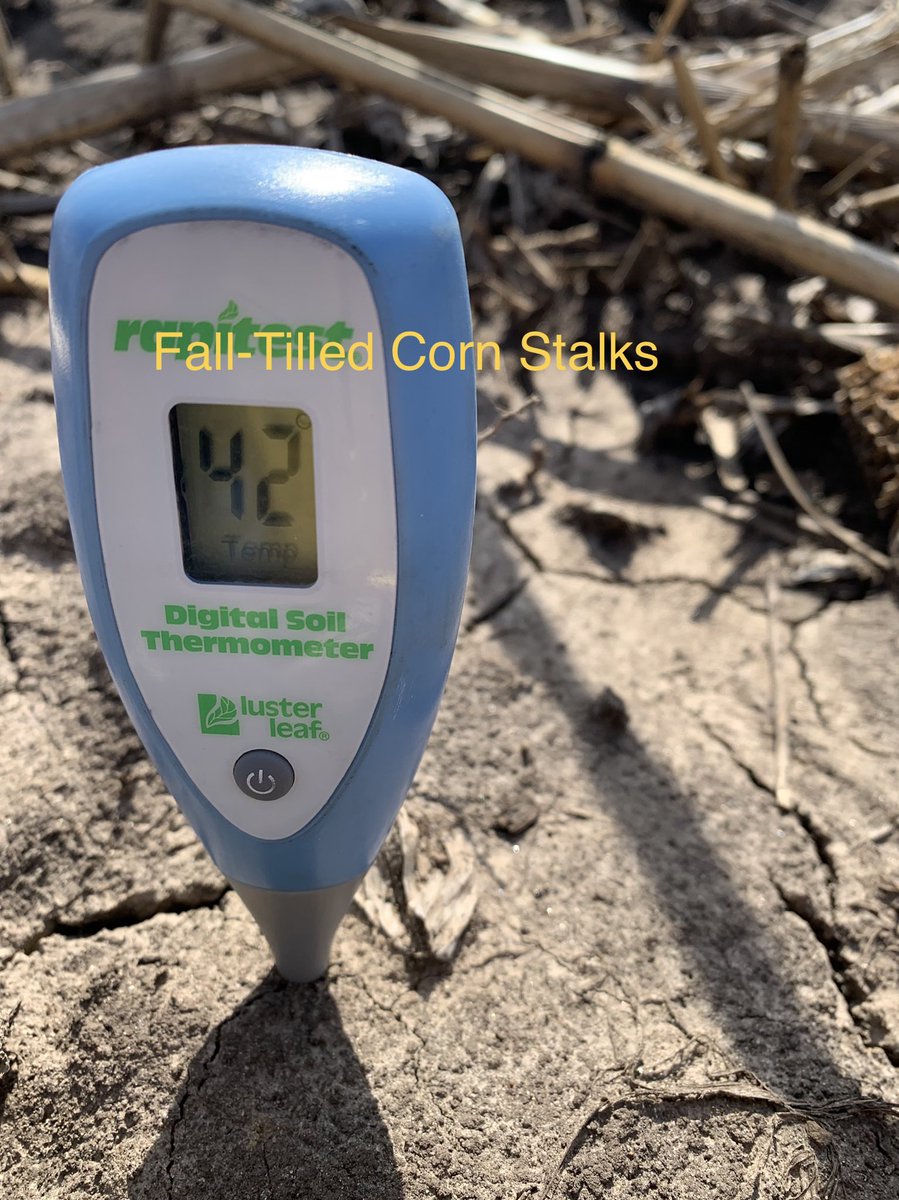
Little soil temp update in southern WI. These were all taken within 20’ of one another, right on crop line. Stark differences between what kind of soil exposure each spot had! Soil conditions are getting close to being dry enough in most spots #rootedin @GldnHarvest
Just speculating here, but it probably wont be too long until we start hearing about “Enlist E3Xtend” or “XtendFlexE”!
Next it will probably be “Enlist E3Xtend27” or “XtendFlexE27”. In other words, #corn 🤯
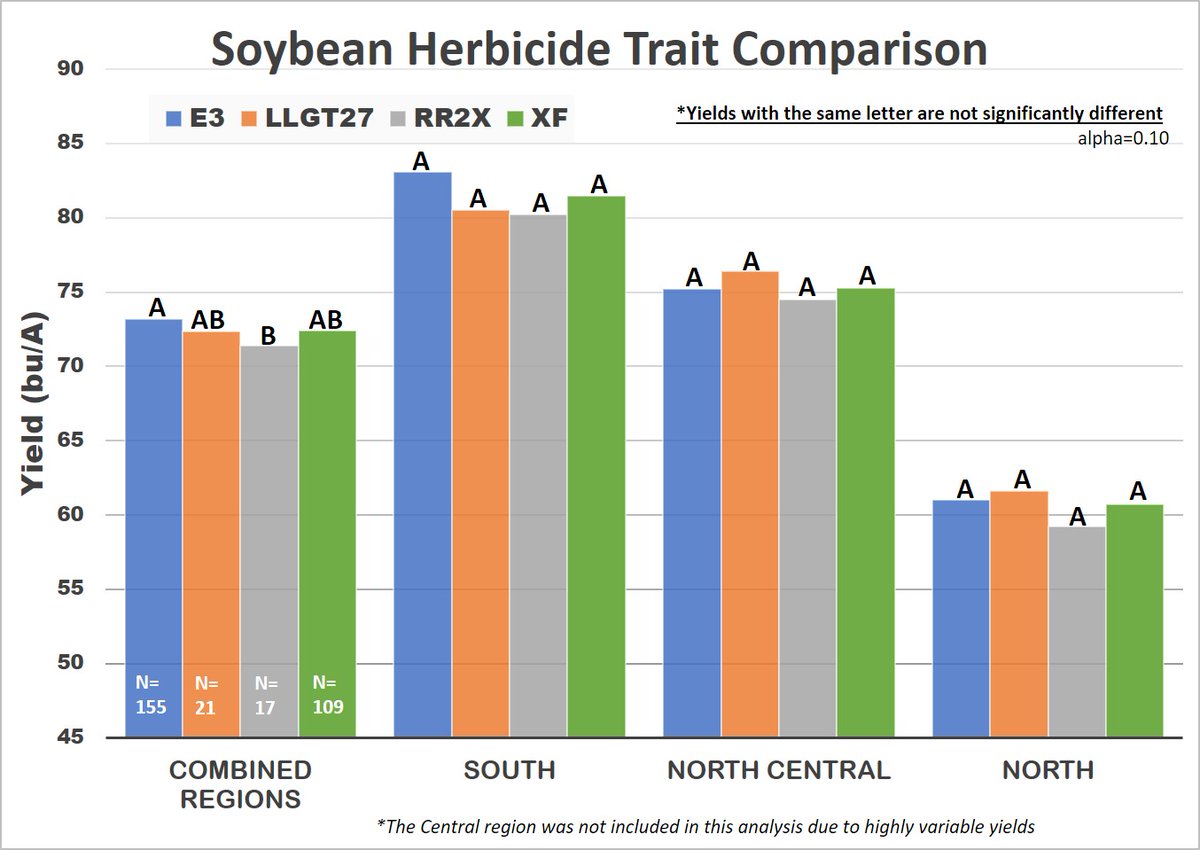
Our 2021 WI #soybean herbicide tolerant trait comparison. No differences across platforms for pooled E3, LLGT27 or XtendFlex varieties. That's great news for WI farmers! Check out individual variety performances here: https://t.co/6CLWw5Tsiz
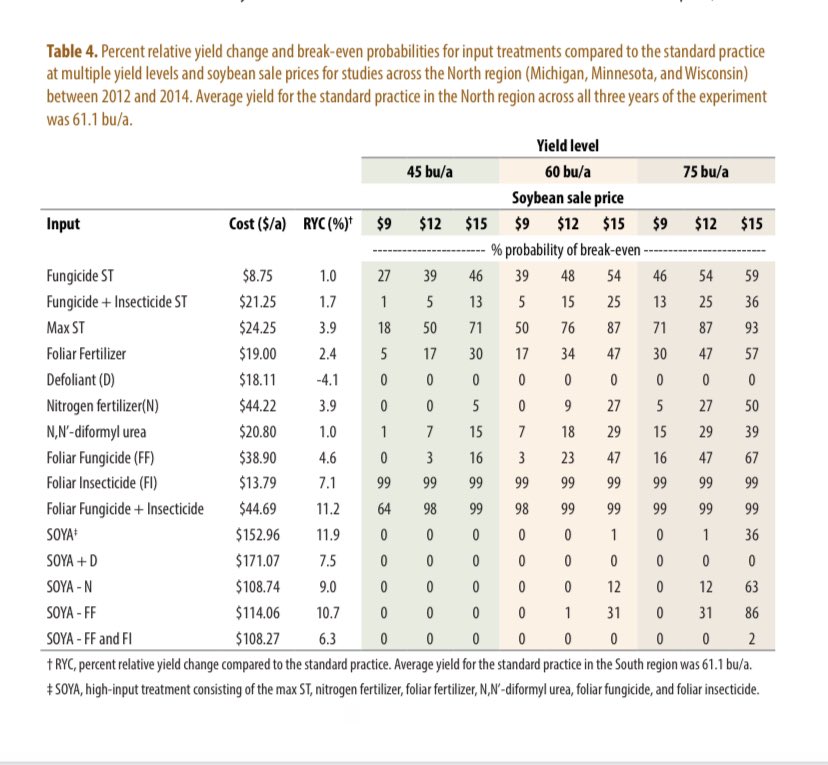
@badgerbean The kitchen sink approach may not be a winner, but at least in the northern geography there are definitely additional management strategies to consider to maximize ROI!