I gave a talk about computing education in the age of AI at the University of Seville today: Seminarios “La informática en la encrucijada” https://t.co/byHBE21iqC via @YouTube
I’m super excited to spend next week with researchers at the University of Seville, Spain, talking about Software Engineering and Computational Thinking. I’ll also give 2 public talks about Snap! at ETSII on Tuesday https://t.co/hCJlG73bI3 and Wednesday https://t.co/ByoRUzn8rU
Today I can’t get over the beauty of this recursive function, and that it actually works in @SnapCloud without overflowing the stack. This, friends, is what made me give up the Law for CS. Before you go back playing with Claude, tell me if you recognize it!
Did you know that @SnapCloud's IDE is also its debugger? You can pause, set breakpoints, trace, inspect and step through programs, either manually or at your chosen execution speed.
example “Bauhaus” puzzle: https://t.co/bV9eK93wVh
Today’s @SnapCloud release supports composing pictures programmatically, a new way to introduce and explore Higher Order Functions.
https://t.co/t8aOrGfLth
Liebe https://t.co/ZaeL7IR7pV - Gemeinde, Ihr habt euch gewünscht, dass jedes Puzzle seine Anleitung immer anzeigt, nicht nur beim ersten Mal. Daran haben wir fieberhaft programmiert, und jetzt ist es so. Vielen Dank und viel Spaß damit in der Schule!
https://t.co/a45HgCstYU
Computer scientist Margaret Hamilton passed away at 90 on Sep. 30th. Considered an icon at MIT, she designed the flight software for the Apollo missions to the moon.
More on her groundbreaking work: https://t.co/rpSx0HljsD
Video v/MAKERS
We’ve lost an icon. Margaret Hamilton, a computer science pioneer best known for her work at MIT leading development of the flight software for the Apollo missions to the moon, has died at 90. Read about her legacy via MIT News: https://t.co/ODkbdIsoHw
Jetzt neu bei https://t.co/ZaeL7IR7pV : Alles, was ihr für den IuM Unterricht in Baden-Württemberg für die 5.-7. Klasse braucht. Zum Programmieren und für die Medienbildung. Datenschutzkonform, frei, offen, kostenlos.
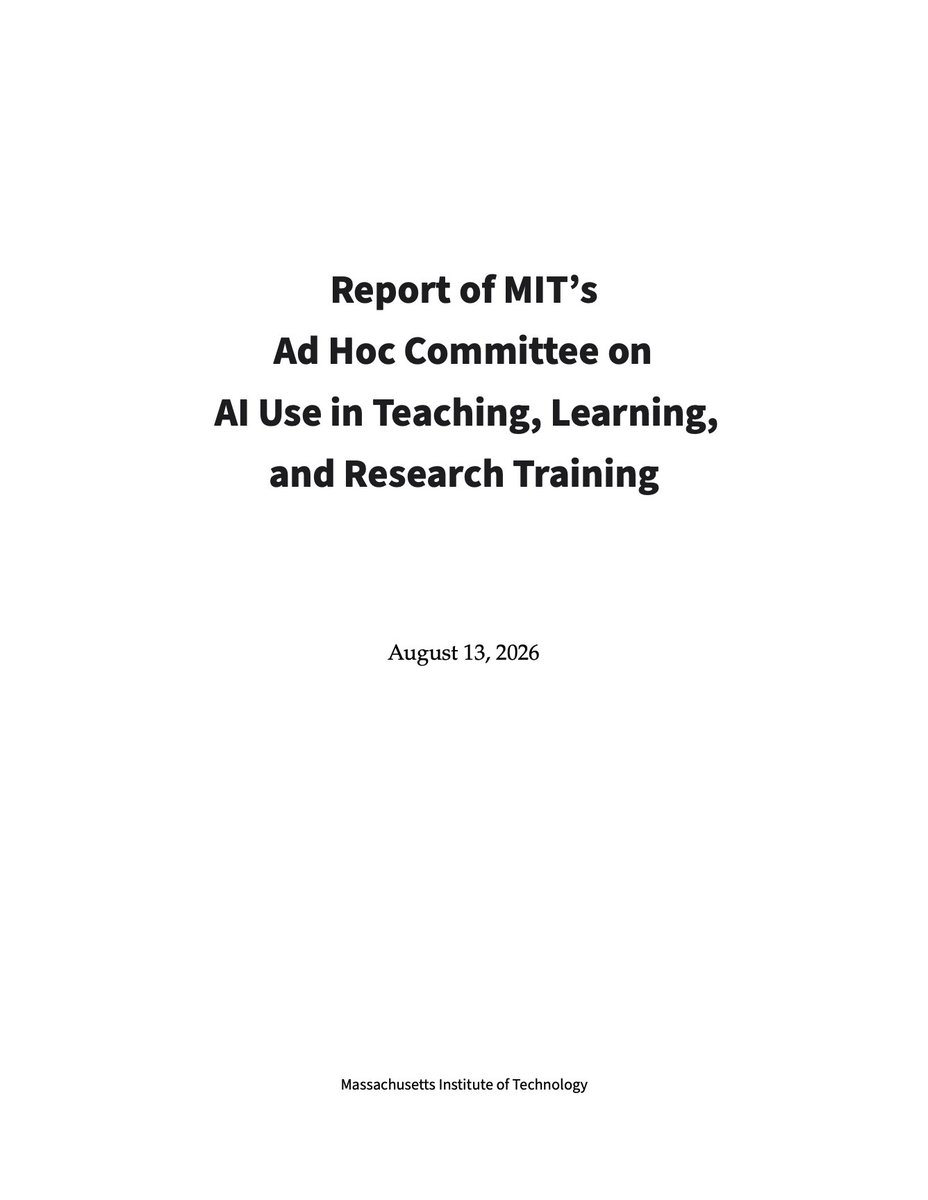
MIT published a brutally honest report on what AI is doing to students.
A committee of professors and students spent five months studying how AI changed learning on campus, and the findings read like a warning to every university on the planet.
Study groups are disappearing. Office hours are emptying out. Problem sets and take-home exams no longer prove anything, because AI can produce credible solutions to almost any written assignment in the undergraduate curriculum. Students who lean on chatbots lose mastery and confidence, and some slip into what the report calls cognitive surrender, reaching for AI at the first hint of struggle.
The numbers are rough. 46 percent of surveyed MIT undergrads use LLMs daily. 90 percent worry about their own overreliance. Undergrads who feel AI makes them replaceable now outnumber those who feel it makes them capable.
The committee's answer surprised me. They refused to fight AI with surveillance. The report calls AI detectors unreliable, says lockdown browsers feel like spying, and warns that policing students builds a classroom atmosphere of mutual distrust.
Instead, MIT wants to rebuild education around the things AI can't replace. That means oral exams, semester portfolios, in-person project work, and a required social component in every subject. The report even floats the idea of rethinking grades entirely, since without a GPA to optimize, much of the incentive to cheat with AI evaporates.
The committee warns professors against replacing undergrad research assistants with AI agents just because they're cheaper, because a university exists to grow people, not output.
The most famous tech school on earth admitted the machines broke its way of teaching. Its answer is more humans, not more software.
Traut sich irgendwer, nach dem neuerlichen PISA-Absturz die offensichtliche Frage nach einer Evidenzkrise der Didaktik zu stellen? Inwiefern verhelfen quantitative Methoden aus “Hirnforschung” und kognitiver Psychologie wirklich zu gutem Unterricht?
new @SnapCloud puzzles for 6th & 7th grade!
We've been developing interactive programming puzzles to introduce CS concepts - command, sequence, loop, expression, conditional, encoding, decoding - to 6th and 7th graders in Germany. Here they are in English:
https://t.co/b0uHpskIh0
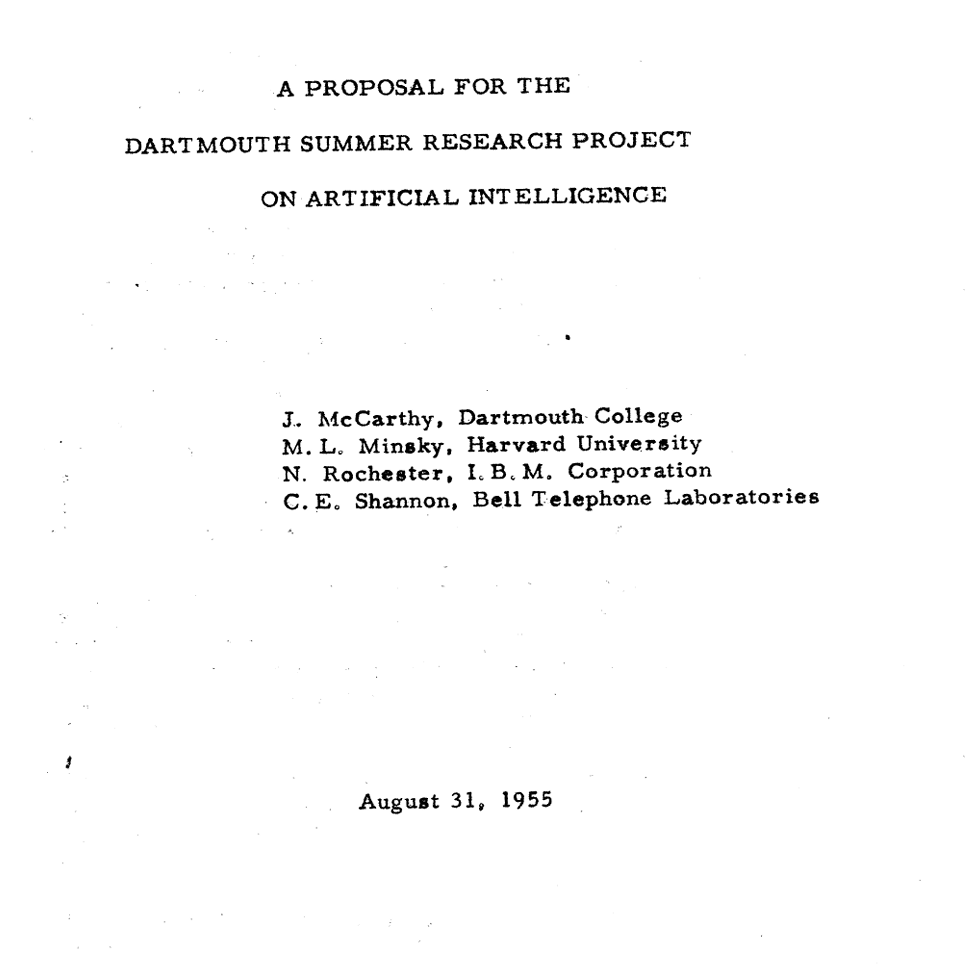
On this day in 1927, #ACMTuringAward recipient John McCarthy was born. He received the award in 1971 for his work in the area of Artificial Intelligence.
John McCarthy played a foundational role in shaping modern computing by coining and popularizing the term "artificial intelligence" at the landmark 1956 Dartmouth conference. At MIT in 1958, he created LISP (LISt Processor), a programming language that became a primary tool for AI research, while also pioneering the concept of general-purpose time-sharing systems that laid the essential groundwork for ARPAnet and the modern internet. https://t.co/eH27S66FkO
We've just released @SnapCloud v12.1 featuring new blocks for recognizing Body Language, Bauhaus-style shape compositions, first-class Processes and international translation updates.
release notes: https://t.co/TCAlBQ78fp
Snap!: https://t.co/Nh1lxTPEyn
Happy 90th birthday to Margaret Hamilton, an MIT computer scientist who helped design the flight software for the Apollo missions in the 1960s.
Image v/MIT Museum