مراكش تبعث برسالة لا يستطيع العالم تجاهلها! 🇲🇦🇺🇸🇦🇪🇮🇱
المغرب والولايات المتحدة والإمارات وإسرائيل تحت سقف واحد. من يخاف من التعاون، ومن يستفيد من الانقسام؟
المغرب لا يطلب الإذن من أحد للدفاع عن مصالحه الوطنية. إنه يبني الجسور، لا الجدران.
فيديو من تصوير الصديقة : Einat Levi
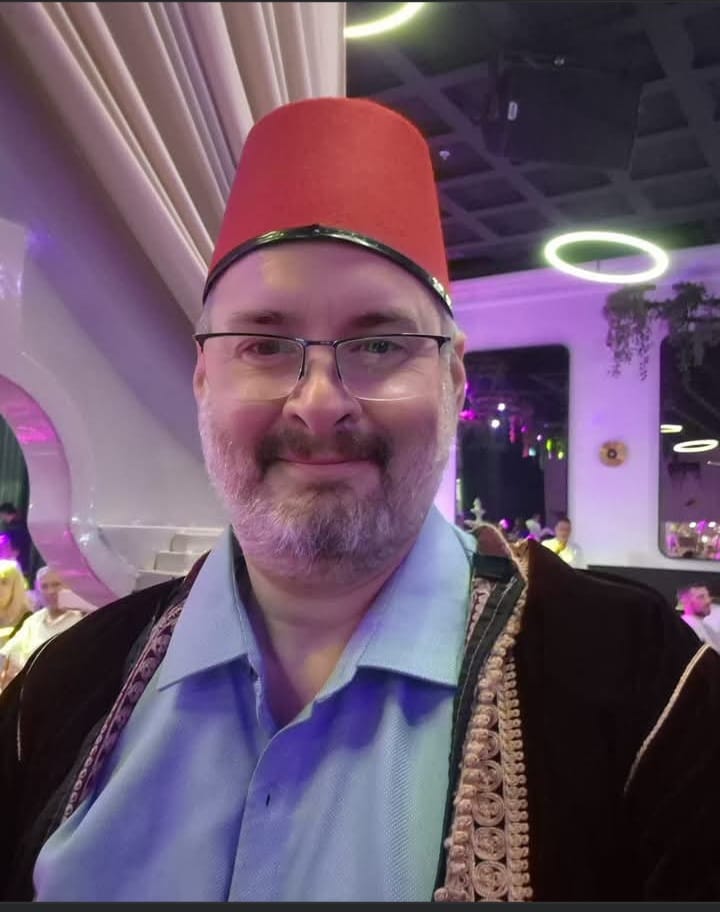
"Tom Wegner… The Moroccan Groom"
Text by Mohamed Iken @mohamedike63193 (Translated from Arabic after a photo of me in traditional Moroccan attire from a Henna ceremony in Israel generated interest across Moroccan social media)
"When Tom Wegner wears traditional Moroccan attire, he is not merely wearing a kaftan or a djellaba; he is wearing the story of a nation that does not easily let strangers into its heart, but when it opens its doors, it embraces the guest as one of its own.
In this photo, Tom looks like a groom emerging from a Moroccan night where ululations embrace the music, and the aroma of mint tea blends with the fragrance of memory. But he is a different kind of groom: a groom of an idea, a groom of a bridge, and a groom of a dream seeking to leave room for love in an era exhausted by conflict.
A Moroccan does not measure a guest by what he wears, but by what he carries in his heart. And when Tom chooses to wear our clothes, even before the fabric, he chooses to wear a piece of the spirit of #Morocco
Morocco is not just a country to those who truly love her. She is a mother when she embraces, a memory when she tells a story, a home when she opens her doors, and a table that never asks a guest where he came from before telling him: "Welcome, you are among family."
And that is why I love seeing him in this picture.
Not because a person becomes Moroccan simply by wearing Moroccan clothes, but because the image captures something far deeper: that a person can cross borders without a passport, step into another culture without losing his identity, and love a country he was not born in until he becomes part of its story.
Tom Wegner comes to Morocco with an idea, but here he finds something even greater than an idea: he finds a Judeo-Moroccan memory, a deeply rooted Moroccan Islam, and a culture that knows how to gather those who are different around a single table.
And from this, the title "The Moroccan Groom" becomes much more than just a phrase.
For in our culture, a groom does not come merely to take; he comes to build a relationship, to bear responsibility, and to promise to remain faithful to the home whose door he chose to knock upon.
And perhaps the most beautiful thing about this photo is that Tom does not look like a stranger in it.
He appears as though he is saying to Morocco, without words:
"I am not coming to change you… but to get to know you, and to carry with me something of the warmth of this homeland."
And in this exact moment, when so many are building walls between human beings, perhaps we need more people who put on the attire of the other, listen to their music, taste their food, and honor their memory, and then say to them:
"Our differences do not prevent us from sharing a single table, a single sky, and a single dream of peace."
Tom Wegner — The Moroccan Groom who chooses to wear Morocco before he speaks about her."
Thank you for these kind words, my brother Mohamed.
ماذا أنتجت آلاف مظاهرات الكوفية لفلسطين؟
غضبٌ أكثر… أم سلامٌ أكثر؟
الكوفية رمز، لكنها ليست سياسة. والشعارات لا تبني دولة ولا تصنع سلامًا.
المغرب يستطيع أن يدعم حقوق الفلسطينيين، ويتعامل مع إسرائيل، ويحوّل العلاقة إلى أداة تأثير لا أداة تطبيع أعمى.
@IsraelArabic
Tel Aviv a city where people of different religions, backgrounds, and identities live, work, create, dance, love and argue freely. A city of lights, music, beaches, nightlife, technology, freedom and equality where diversity is not merely a slogan, but part of everyday life.
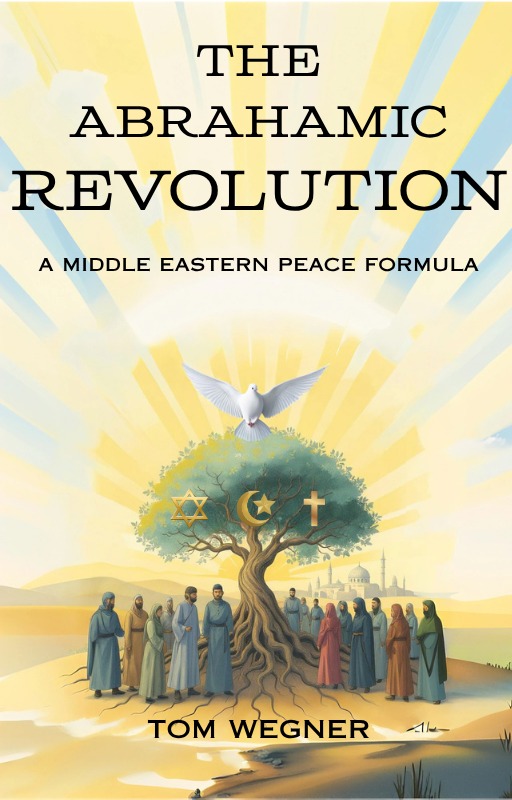
A fairly remarkable thing is happening ahead of the publication in Lebanon of the Arabic edition of "The Abrahamic Revolution": The article "Who Stole Abraham From Us? Tom Wegner's Question in the Face of the Era of Hate" was published on the website "Manba' al-Sahra' al-Maghribiyya" (Source of the Moroccan Sahara).
*Translated from Arabic, by: Mohamed Iken @mohamedike63193
"To everyone who needs an enemy in order to feel like a believer, and to everyone who has convinced themselves that hating the different is a sacred duty, that canceling the other is a victory, and that peace is betrayal: this article is not intended for your comfort.
For 'The Abrahamic Revolution' by Israeli thinker Tom Wegner puts its finger on the wound that extremists have been trying to hide for decades: what if a person discovers that the hatred they inherited is not a sacred destiny, and that the 'enemy' they were raised to fear is not necessarily the monster that propaganda painted for them?
Here begins the problem.
The extremist is not afraid of the different so much as they are afraid of knowing them.
Because when the other becomes a face rather than an image, a human being rather than a slogan, a neighbor rather than an enemy—the machine that generates hatred begins to break down.
And that is precisely what makes talk of 'The Abrahamic Revolution' provocative.
We are not merely living through a conflict over land; we are living through a conflict over consciousness. Each side wants to convince its children that its narrative is the only narrative, that its memory is the only memory, and that its victims are the only victims worthy of tears.
And so pain becomes exclusive property.
And tragedy becomes an identity.
And death becomes political fuel.
And then a new generation arrives, which does not know why it hates, but knows very well whom it ought to hate.
And this is the most dangerous moment in history: when hatred becomes a heritage whose owner no longer needs a reason for it.
Wegner's book raises, in one way or another, the question that the extremist mindset does not want to hear: what if the children of Abraham are capable of being divided without turning their differences into a perpetual war?
Why do we need an enemy to prove our faith?
Why does a Muslim need hatred of the Jew to be a Muslim?
And why does a Jew need hatred of the Arab to be a Jew?
And why does a Christian need the exclusion of the other to be a Christian?
Nothing in true faith requires humiliating another person to feel worthy.
This is not a call to blur identities.
Nor a demand that anyone abandon their faith.
Nor an attempt to erase history or distort it.
It is a call to put an end to the most toxic idea in the region: that difference grants us the right to strip the different of their humanity.
And here Abraham becomes more than a religious figure in collective memory; he becomes a moral question.
If Muslims, Jews, and Christians view Abraham as part of their spiritual heritage, how did this shared memory turn into arenas of hostility?
Was Abraham mistaken?
Or are we the ones who erred in reading his legacy?
Perhaps the world today does not need more speeches on peace.
Perhaps it needs the courage to confront those who live on its opposite.
But confronting extremism does not mean generating counter-extremism.
And hatred cannot be fought through new hatred.
And injustice done to one side cannot become a justification for injustice against another side.
And here we must say the things that bother everyone: there is no peace without justice, but no true justice can be based on eternal revenge.
Gaza is a prime example of this.
The tragedy of Palestinian civilians cannot be denied and cannot be turned into a footnote in any serious discourse on the future. And at the same time, this tragedy does not grant anyone the right to turn Jews, as a religious or ethnic group, into a collective enemy.
Similarly, the fear and pain experienced by Israelis cannot be exploited to justify stripping Palestinians of their humanity or rights.
If we reject the killing of innocents when they are 'ours,' we must also reject it when they are from the other group.
Otherwise, we are not protecting morality; we are protecting our tribe.
And this is precisely what Abrahamic logic rejects.
The problem is not that we have different identities.
The problem is that we have turned identities into walls.
And the problem is not that we have different historical narratives.
The problem is that we decided the other's narrative must die so that our narrative may live.
And here #Morocco can offer an important lesson.
Moroccan #Jews are not passing guests in Moroccan history, nor a footnote that can be erased from memory. They are part of Morocco's history, its cities, its markets, its culture, its economy, and its popular memory.
And anyone who reads Moroccan history fairly knows that Moroccan Judaism is not a foreign body in the country.
Therefore, restoring Moroccan Jewish memory is not a betrayal of Morocco's Islamic identity, as some try to paint it, but rather an acknowledgment that Moroccan identity itself is far richer and more complex than any discourse seeking to reduce it to a single color.
And here the Arabic translation of the book 'The Abrahamic Revolution' becomes more than just a cultural work.
It is a real test of Arabic consciousness.
Are we capable of reading a book by an Israeli thinker without judging it before we have even read it?
Are we capable of disagreeing with him without cursing him?
Are we capable of taking one idea from him and rejecting another?
Are we capable of understanding Israel without becoming Israelis, and understanding Arabs without giving up our identity?
If the answer is yes, then we have begun to emerge from the tribal mindset.
But if the answer is no, the problem is not in the book.
The problem is in us.
To read the other does not mean surrendering to them.
And to understand them does not mean agreeing with them.
And to conduct a dialogue with them does not mean giving up your rights.
Rather, dialogue may be the most mature form of self-defense.
Because whoever has nothing but insults when encountering a different idea has no argument.
And whoever is unable to see the humanity of their opponent will not be able to build peace with them.
And whoever demands that the world recognize their pain, and then refuses to recognize the pain of others, is not seeking justice; they are seeking a monopoly on victimhood.
And this is the illness we must rid ourselves of.
We need memory, yes.
But we need a memory that does not turn into a blood feud.
We need justice, yes.
But a justice that does not turn into revenge.
We need identity, yes.
But an identity that does not need hatred of the other to prove its existence.
And perhaps for this reason, love is more provocative to the extremist than bullets.
Because a bullet can end a human life.
But knowledge and dialogue can defeat the idea that made killing a human possible in the first place.
Therefore, 'The Abrahamic Revolution' is not just a call for us to love one another.
It is a call for something harder: to acknowledge that the other exists, and that they have dignity, memory, fear, and rights, even when we disagree with them.
And this is not romanticism.
This is realpolitik (realistic policy).
Because the alternative we tried for decades was clear: more hatred, more fear, more death, and more children inheriting questions they did not choose.
Until when?
Until when will we let the past decide the future of our children?
Until when will we educate a child that there is a nation they must hate before they even know why?
Until when will we treat peace as if it were a crime, dialogue as if it were betrayal, and tolerance as if it were weakness?
Perhaps the time has come to flip the equation.
To say to the extremist: I will not give up my religion to live with you, I will not give up my identity to respect you, and I will not give up my rights to conduct a dialogue with you.
But I will also not hate you just because you were born different from me.
And right here begins the revolution.
Not a revolution against Islam.
Nor against Judaism.
Nor against Christianity.
Nor against identity.
Rather, a revolution against using religion, identity, and history as tools to generate hatred.
A revolution that begins with the simplest and most troubling question:
If Abraham unites us, who convinced us that the children of Abraham must be enemies?
Perhaps the answer is the true campaign we must conduct.
For the East does not need a new generation that excels even more at hatred.
It needs a generation with the courage to break it.
And here, perhaps, love truly becomes a revolution...
(Coverage: Saham Ait Maamar)
ايران تحكم برجل ميت.
اصبح بحكم المؤكد ان "المرشد" الحالي "ميت".
وهناك صراع بين جناحي الصقور والحمائم داخل النظام.
الصقور يقومون بهجمات لانهم يعلمون ان لا مرشد، بينما الحمائم تريد المفاوضات والسلام للخروج من المأزق.
ايران: بلا مرشد، هو في عداد الموتى والا ما حدثت الهجمات من الاساس
ماذا لو كان أخطر ما يواجه العالم الإسلامي اليوم ليس خصومه... بل خوفه من الأسئلة؟
في هذا الحوار لعدد الغذ على صحيفة الحديث العربية، تفتح سليمة المسالمة ملفاتٍ شائكة بلا مواربة: الإسلام المعاصر، وحقوق المرأة، والتصوف، والحركة الإبراهيمية، ومستقبل السلام في الشرق الأوسط.