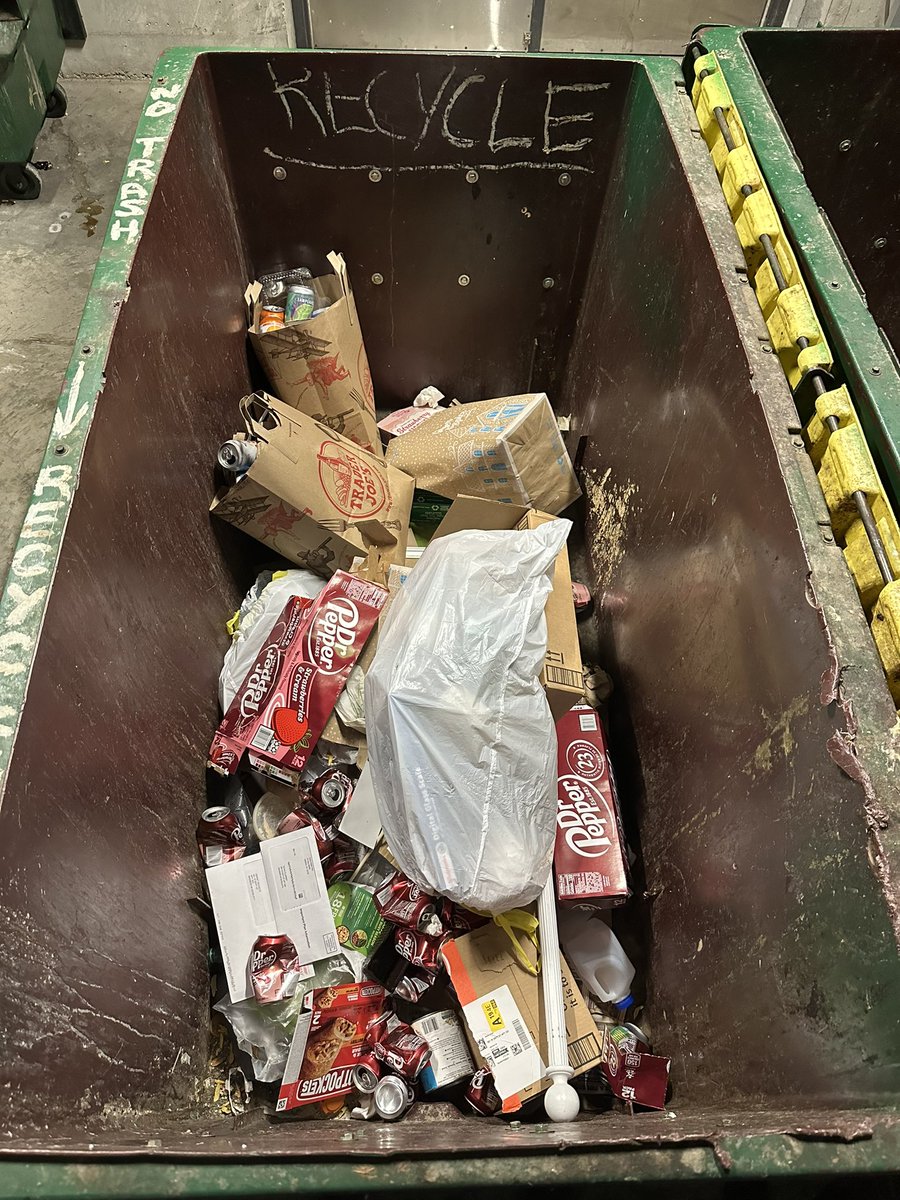
@gwhuber2@CharDreizen I learned that accepted Aluminum includes cans and foil. For glass, clear, green, and brown bottles or jars (no lids). Lastly, Cardboard and mixed paper like corrugated cardboard, newspaper, paperboard, and office paper are all recyclable.
@gwhuber2 I learned that the RNG plant at the Dane County Landfill required an investment of $29 million to construct but had a rapid payback period of only 5 years. It now produces an impressive 90 percent clean methane, a significant increase from the initial 40 percent.
@gwhuber2 I learned that PIGE quantifies total fluorine content but cannot distinguish between inorganic and organic fluorine. That can be done through chemical analysis, including the examination of CF bonds.
@gwhuber2@houqian_li I learned that liquid coloring is the preferred coloring method in plastic packaging production due to its space efficiency, as it comes in a compact box and is easier to blend into the plastic.
@gwhuber2@AuroraMunguia09 I learned that LCA is used in order to reduce plastic waste and eliminate any possible environmental impacts in the industry.
@gwhuber2 I learned that Howard Curler, who earned a CBE bachelor's degree at UW-Madison, modernized cheese packaging by incorporating a flex fatigue resistance layer into the cellophane layer.
@gwhuber2 I learned about gas barrier packaging, which serves three key functions. It protects products from oxygen to extend their shelf life, controls moisture to keep products dry or moist, and retains aromas while preventing odors from escaping or entering the package.
@gwhuber2@amcorpackaging In today’s class, I learned that Amcor ranks among the world’s largest packaging companies, operating in over 40 countries through roughly 225 locations. Also, I learned that packaging varies from country to country due to countries having different regulatory requirements.
@gwhuber2@chevronphillips I learned that the UNIPOL Polyethylene Process is the industry's most widely adopted technology, with 165 licensed production lines in 28 different countries.
@gwhuber2 In this class, I hope to learn how economics relates to polymer engineering, especially in production, processing, and recycling, as well as gain knowledge about different polymer types and their environmental impact.
@gwhuber2 I learned the difference between spot and contract prices in the plastic industry. Spot price represents the current market price for plastic. Contract price, on the other hand, is the mutually agreed-upon price between a buyer and seller for plastic over a specific period.
@gwhuber2 Today's lecture highlighted the massive plastic consumption in the US, totaling 37 million tons annually, with polyethylene as the most widely used type. Notably, energy sources differ globally in plastic production; the US relies on natural gas, while China depends on coal.