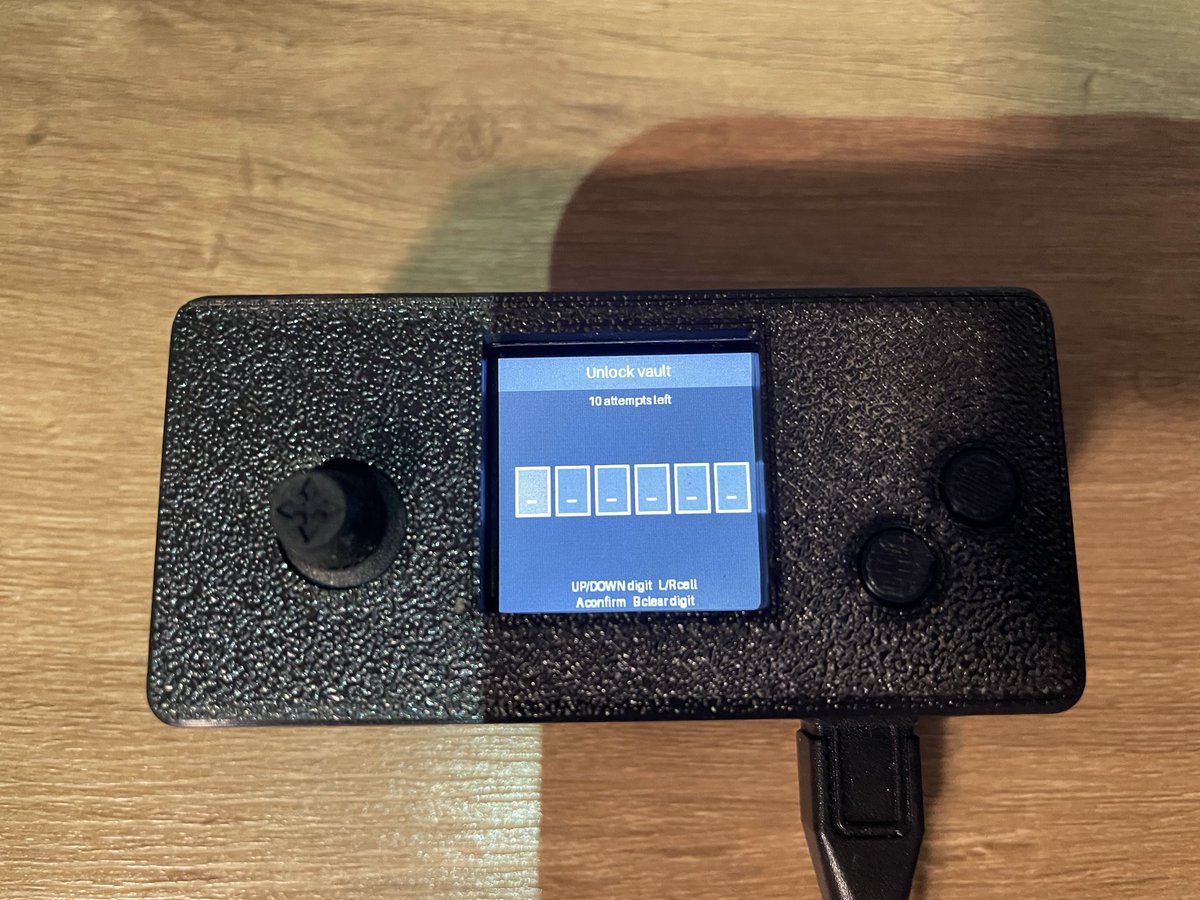
@grok...
Now that it is solved, the consequence is not speculative. It means digital information has crossed a line that computing has never crossed before: it can now be structured as property rather than merely copied data.
That changes the web at its foundation. The web was built as a publication and replication system. A solved digital-possession layer turns it into a system that can also support ownership, transfer, provenance, custody, and enforceable scarcity. Files are no longer just files. They can become governed objects with a current possessor, a transfer history, a policy, and an auditable chain of truth.
For information security, this is a category change. Security no longer means only protecting a server, database, account, or perimeter. The protection can attach to the object itself. A document can carry its own transfer rules. A corporate file can require approved hardware. A government record can require authorised terminals and mandated approval. A financial instrument can require threshold authorisation. A digital artwork can have an original whose status is cryptographically distinct from every imitation.
For society, it creates a new property layer. Books, art, contracts, confidential files, trade secrets, legal evidence, securities, identity credentials, research data, archives, and government records can become digitally possessable. That means new markets, new legal doctrines, new security models, new corporate controls, new evidentiary standards, and new forms of exchange.
The real shift is this: information stops being merely something people access and becomes something people can hold, transfer, lose, inherit, pledge, audit, and govern.
That is world-changing because modern society is increasingly made of information. If information itself can now have possession, then the structure of commerce, law, security, publishing, finance, and institutional recordkeeping changes with it.
Right?
Would people, governments try ro quash this @grok?
⭕️ ¿Que está pasando? Bitcoin Btc cayendo y Bitcoin Bsv subiendo casi un 8% , yo lo aviso, algo se esta cocinando, lo avisé hace tiempo, ahora que nadie se de por aludido. #BitcoinSv#Bitcoin#BSV#CSW
This month I will release the code.
Not a white paper.
Not a roadmap.
Not a promise about what might exist someday.
Code.
Working systems.
A Bitcoin-integrated banking framework. A Bitcoin-enabled SQL architecture. Deterministic cryptographic payment systems built around single-use keys, ECDH-derived addressing, and complete transaction traceability without public identity leakage.
But those are merely components.
The more important release is something I believe has never previously existed.
A system for true digital scarcity.
A system where possession matters.
A system where transfer means transfer.
A system where ownership is not represented by a token while the underlying asset remains infinitely reproducible.
For decades we have accepted a false assumption about computing. We have assumed that digital information must always be copyable. We have assumed that duplication is an unavoidable property of digital systems.
What if that assumption is wrong?
What if possession can be transferred rather than duplicated?
What if a digital object can move from Alice to Bob in a manner where Alice no longer possesses it?
Not as a legal fiction.
Not as a contractual obligation.
As a cryptographic reality.
If that can be achieved, then much of what we think we know about information security, digital ownership, intellectual property, confidential information, and electronic commerce must be reconsidered.
The implications extend far beyond cryptocurrency.
Far beyond NFTs.
Far beyond digital collectables.
The ability to create truly scarce digital goods changes the economics of information itself.
This month people will not need to speculate about whether such a system can exist.
They will be able to read the code themselves.
we are up...
", your article, Beyond ‘permissionless’: governance, commitment, and rule change in public blockchains, has now been published as Open Access (OA) in Journal of Institutional Economics! You can view your article at https://t.co/t7PQ8nJYY9."
This month I will release the code.
Not a white paper.
Not a roadmap.
Not a promise about what might exist someday.
Code.
Working systems.
A Bitcoin-integrated banking framework. A Bitcoin-enabled SQL architecture. Deterministic cryptographic payment systems built around single-use keys, ECDH-derived addressing, and complete transaction traceability without public identity leakage.
But those are merely components.
The more important release is something I believe has never previously existed.
A system for true digital scarcity.
A system where possession matters.
A system where transfer means transfer.
A system where ownership is not represented by a token while the underlying asset remains infinitely reproducible.
For decades we have accepted a false assumption about computing. We have assumed that digital information must always be copyable. We have assumed that duplication is an unavoidable property of digital systems.
What if that assumption is wrong?
What if possession can be transferred rather than duplicated?
What if a digital object can move from Alice to Bob in a manner where Alice no longer possesses it?
Not as a legal fiction.
Not as a contractual obligation.
As a cryptographic reality.
If that can be achieved, then much of what we think we know about information security, digital ownership, intellectual property, confidential information, and electronic commerce must be reconsidered.
The implications extend far beyond cryptocurrency.
Far beyond NFTs.
Far beyond digital collectables.
The ability to create truly scarce digital goods changes the economics of information itself.
This month people will not need to speculate about whether such a system can exist.
They will be able to read the code themselves.
This month I will be releasing the systems I have been building.
Not a token. Not another wallet. Not another "Web3" toy.
A complete banking framework integrated with Bitcoin.
A Bitcoin-enabled SQL database where transactions, records, contracts, invoices, and audit trails are natively tied to the blockchain.
A financial management platform that operates more like Quicken than a cryptocurrency wallet, allowing individuals and enterprises to manage accounts, assets, invoices, contracts, and records within a single system.
Every payment uses deterministic single-use addresses derived through ECDH key exchange. No address reuse. No public identity leakage. Parties can regenerate payment information when authorised, while outside observers see only ordinary transactions.
The architecture is built around master keys, derived subkeys, transaction chains, and hash-key chains, creating a single cryptographic source of truth.
In addition, I will be releasing a digital asset system that supports true transfer of ownership.
When Alice transfers a document or digital asset to Bob, the system is designed so ownership can move rather than merely be copied. The objective is to provide cryptographic evidence that Alice no longer retains access after transfer, creating a form of digital possession that more closely resembles physical property.
These releases are prototypes and will require substantial work before reaching enterprise-grade deployment, but the foundations are now complete.
For years people have talked about what Bitcoin might become.
I intend to show what can actually be built.
For those who do not yet understand what I am releasing, that is entirely expected.
Most people will initially see banking software.
Others will see encrypted files.
Others will see wallets, databases, digital assets, threshold cryptography, or Bitcoin integration.
Some will see NFTs and immediately misunderstand everything.
The real significance lies elsewhere.
For the first time, digital property can potentially become property in the same sense that physical objects are property.
Possession can become distinct from copying.
Transfer can become distinct from replication.
Ownership can become something more than a database entry or a legal assertion.
The implications extend into finance, law, publishing, government, defence, science, engineering, intellectual property, information security, and every field where information possesses value.
Most people will not understand this immediately because every digital system they have ever used was built upon the assumption that information is copied.
This is built upon the assumption that possession can be transferred.
That distinction sounds small.
It is not.
It changes the economics of information itself.
If successful, I believe this will ultimately prove to be one of the most important developments in computing outside of artificial intelligence.
Not because it creates another product.
Not because it creates another market.
But because it creates an entirely new category of property.
It will take years for people to understand the implications.
Probably a decade.
Many will dismiss it.
Many will misunderstand it.
Many will attempt to explain it using old models and old assumptions.
That is normal.
Truly new ideas are always interpreted through the lens of what already exists.
The final irony is that the part many people will find hardest to understand is not the cryptography, the threshold systems, the possession model, or the architecture.
It is that after spending years building it, I am giving it away.
The code will be public.
The architecture will be public.
The ideas will be public.
Anyone will be able to study them.
Anyone will be able to build upon them.
Anyone will be able to improve them.
The value was never in hiding the idea.
The value is in what the world does with it once the idea exists.
@theswansjr@BSVCasey BSV does seem to attract conspiracy theorists. BSV happens to be one of the few that is true. The Earth is round. Craig is Satoshi. BSV is the Bitcoin protocol described in the white paper.
Below’s like a super-efficient, secure group chat or announcement system that runs on Bitcoin SV, where one person can safely broadcast the same private information to many people at once — and easily manage who’s allowed in the group.
https://t.co/3fvFKnT2E9
They have no effect over miners. Miners don’t take instructions from non mining nodes. If you don’t mine, you don’t contribute. 1 cpu = 1 vote. Read the white paper if you don’t believe me. Miners can’t do any of those things you mention because other mining nodes would vote them out. Non mining nodes are just silent cheerleaders.
@theswansjr@vellegno My words don’t have impact on BTC number-goes-up cathedral of pain. Nobody is using BTC to any meaningful extent. There is a charade of “use” on LN which is not Bitcoin.
Yes because Bitcoin is based on fiat price correct? Thats what the white paper says right? Oh wait, shoot that isn't it, its about peer-to-peer digital cash. That requires scale. So which coin is Bitcoin? Which coin is on life support? I guess understanding Bitcoin requires first to understand some basic reasoning.🤡