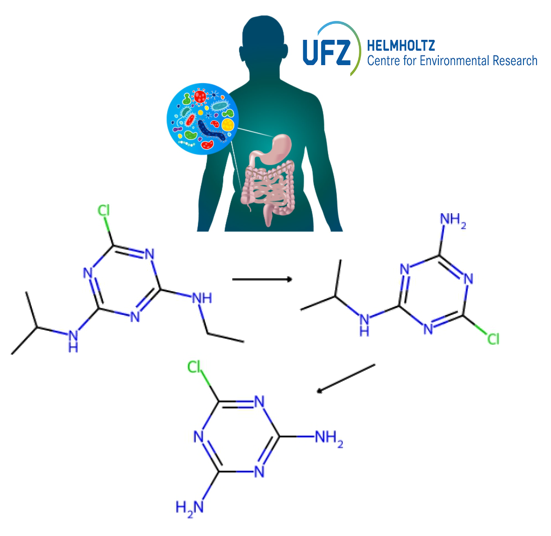
Can we predict transformation of xenobiotics by the human microbiome? Try out and propose solutions in a competition featured by @kaggle:
https://t.co/oR3ClpgrE1
@vicastanedam@NicoJehmlich@UFZ_de Congrats for winning the Young Researcher Award! Well deserved! And it seems that the impact of xenobiotics on the microbiome is a hot topic.
Chemical mixtures affect the intestinal microbiome at environmentally realistic concentrations. To learn more, you might have a look at our latest paper in the Journal of Hazardous Materials: https://t.co/O6eGaEEYdA
Here's news on how the plasticiser MINCH affects adipocytes. And congrats to Cornelius Goerdeler on his first paper (10.1016/j.envres.2024.118847 ), showing that MINCH affects lipid accumulation by an at least partially PPARG-independent mechanism.
Excited to share my 1st PhD paper! 🎉
Curious about how 90 xenobiotics affect a human gut microbiota model? We explored this with proteomics & metabolomics. Check it out and let's discuss the findings!
@UFZ_CITE @molsyb
https://t.co/qj0vHvAaVs
New approach methodologies in human regulatory toxicology – Not if, but how and when!
For further information look at the nice paper summarizing the results of a workshop about NAMs organized by BfR (@bfrde) in Environment International.
https://t.co/UdQfMDJJFk
How to use Novel Assessment Methods (NAMs) in hazard assessment? And how to define non-adversity? If you are interested, read more here in Archives of Toxicology:
doi: 10.1007/s00204-023-03522-3.
We enjoyed the meeting of projects funded by the Ministry of Agriculture (BMEL) @bmel Germany focussing on bee health (both honey bee and wild bees) in the beenovation https://t.co/wlTV5OLYvp framework. Many cool ideas in monitoring and insect-friendly agricultural practice.
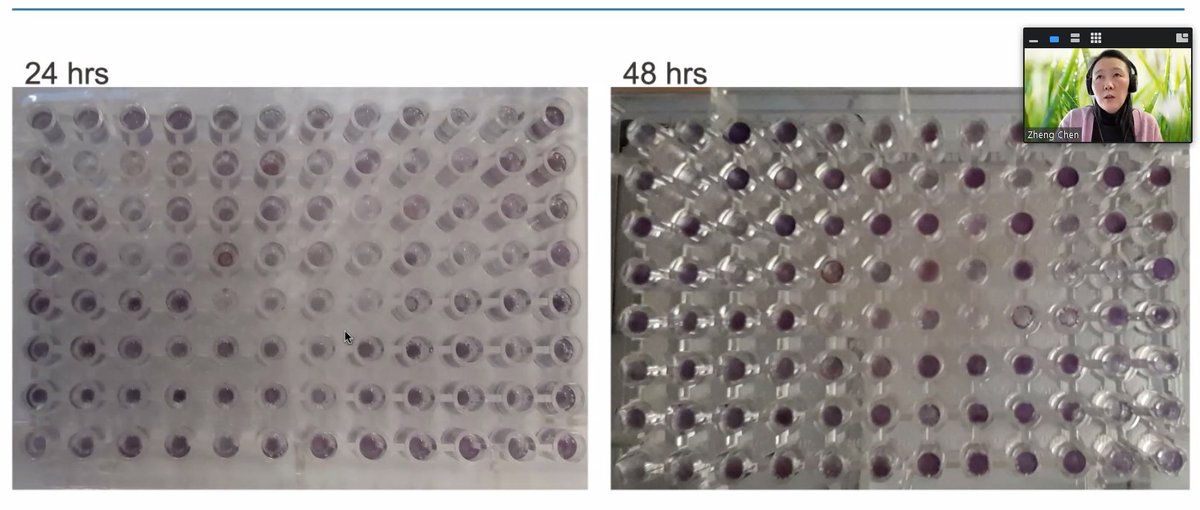
Great updates from the @MATOMIC_21 team today, with a presentation from Yaoyao Chen @UFZ_de with color change (purple) due to #Carbon#metabolism on different Carbon sources. More updates in the coming months! @novonordiskfond
Buzzing in the beehive, how can acoustic and vibration monitoring track biological relevant features? Congrats to Cassandra for this highly informative review,
https://t.co/BEmyeSo2sh
and thanks to funding by the @BMEL of the project Sens4bee!
Congratulation Alexandra, Chapeau!
SUMMA CUM LAUDE for you @alexschafft and your work (funded by @dbu, done at @ufz, supervised by @K_SchubertLab) on the effects of substitution products of BPA and DEHP on developing and adult adipocytes. CONGRATS!
The gut barrier and mucins are important gatekeepers for a balanced gut health. New findings reveal changes in mucus viscoelasticity involving gut microbes can lead to inflammation and ulcerative colitis progression via @PNASNews https://t.co/T6QSGCn5t3
Congrats to Kristin Schubert and her group, they provided proteomics and multi-omics data integration for unravelling the features of epiploic fat tissue, a fat depot directly in the gut, now published in Gut.
https://t.co/jq1bKSgP2g
One clue of super healthy food like Opuntia ficus- indica might be the rapid digestion of flavonoid glycosides rapidly leading to an increase of gallic acid by the intestinal microbiome.
https://t.co/y68Oezxnft
Bacteria can detoxify bile acids and thus support other species in co-culture. Congrats to Kristian who unravelled effect of bile acid modification by E. lenta in cocultures in the framework of @CRC1382 and @MATOMIC_21 . For more details, see here:
https://t.co/IXuPIUZhlj