@energygovuk@Miatsf@ofgem Open the gas 🔥 and oil 🛢️ fields in the North Sea. Yes we know it will not bring energy prices down but the tax take is incredible at 78%. Furthermore decouple the wholesale gas price from our domestic energy bills. Start the legislation now!
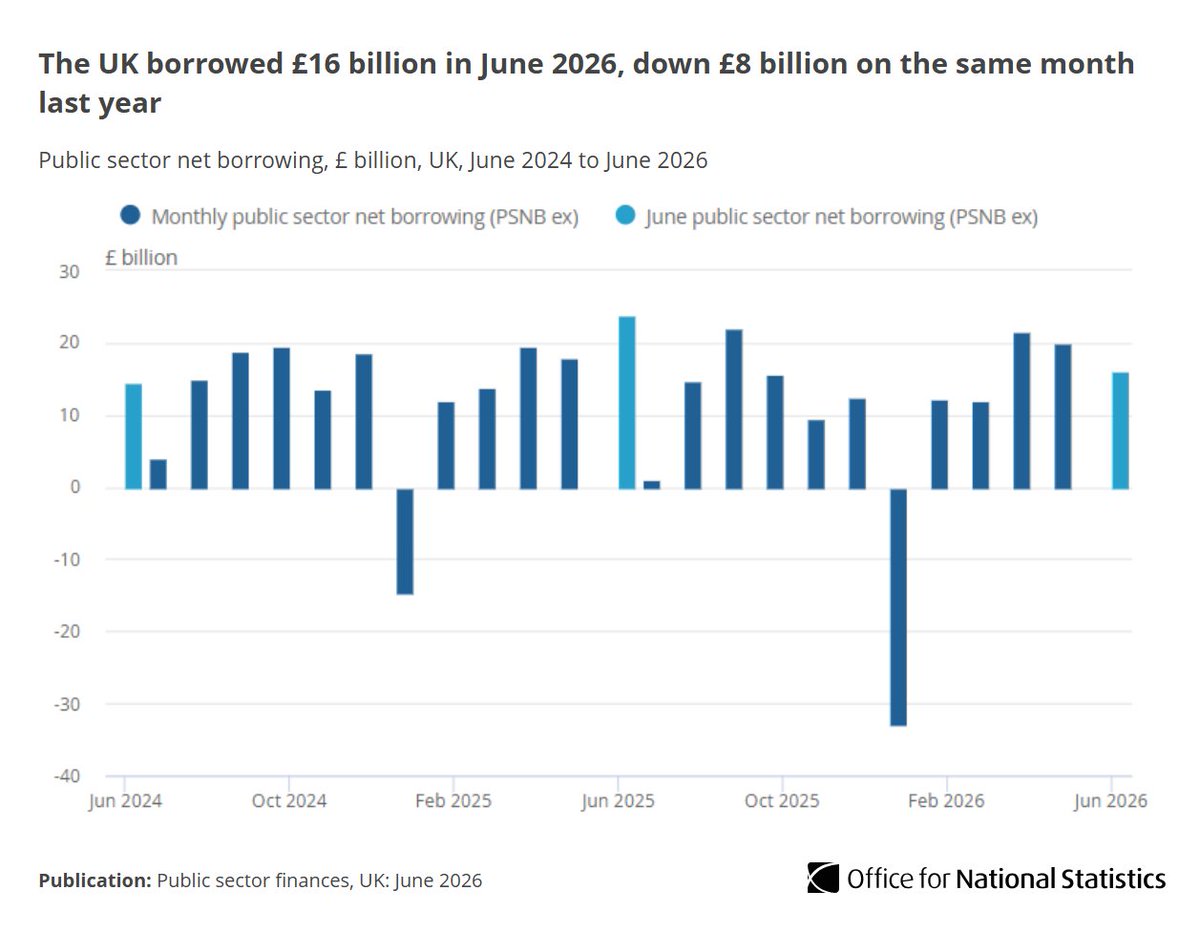
Public sector net borrowing excluding public sector banks was £16.0 billion in June 2026, £7.9 billion (33.1%) less than in June 2025.
Read the full article ➡️ https://t.co/ZABoCcSOpe
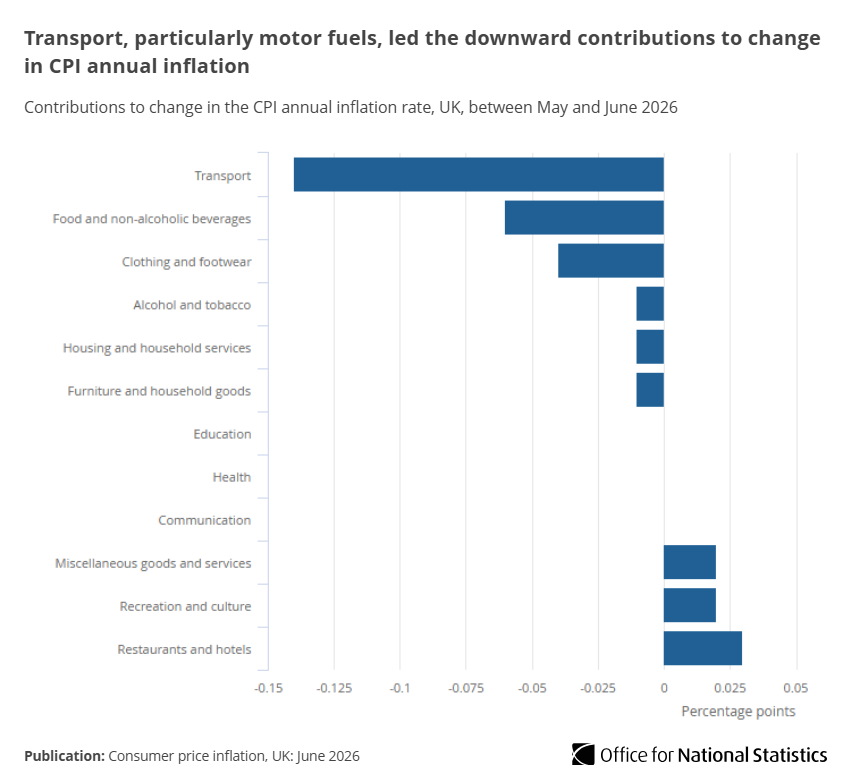
The Consumer Prices Index (CPI) rose by 2.6% in the 12 months to June 2026, down from 2.8% in the 12 months to May 2026.
Read the full article ️➡️ https://t.co/tEsyKjjlXA
BREAKING: Thames Water issues hosepipe ban from Thursday, prohibiting all customers from using them to water gardens, clean cars, fill paddling pools, or top up hot tubs.
https://t.co/PAiZ4D1jU3
📺 Sky 501, Virgin 602, Freeview 233 and YouTube
The XPENG L03 just awakened European streets.
Global media experienced NGP for the very first time,
unlocking a new era of urban smart driving
and leaving them in absolute awe of the future of mobility.
$XPEV
Read this brilliant piece on 23 June and Britain's near-miss grid crisis 🧵 https://t.co/rx5jWAwVWK
Summary:
→ Gas & nuclear outages (partly because of hot weather)
→ Solar great, then gone
→ Wind forecasts way off
→ Demand forecasts too national
→ Interconnectors saved us — barely
Gas and nuclear had huge outages that day — some sudden. Solar was brilliant, then died with the sun, exactly as it always will. We need way more batteries, especially in homes, to fill that gap.
Wind forecasts were miles out — not because wind is unpredictable, but because the central models used to plan the system are. Demand forecasts were even worse: a single national number can't capture where power is actually needed. London fell 472MW that evening while the model expected it to rise 1,138MW. That's not a rounding error, that's a system flying blind on geography.
Interconnectors saved us that night — but only after frantic phone calls, not because the market was built to use them well. With zonal pricing they'd work with the grid instead of against it every single evening.
The real lesson of 23 June: a grid built on one national price for everywhere is guessing at a national scale about problems that are actually local.
The crisis wasn't "not enough power" — it was too little power in exactly the wrong place, behind wires that were already full, while other regions had headroom to spare. A single price can't tell a battery in Kent to discharge and a battery in Scotland to wait — it just tells everyone the same story at the same time.
Zonal pricing fixes that: it makes location visible in the price itself, so flexibility shows up where the grid actually needs it. Pair that with batteries everywhere — homes, street corners, substations — and a genuinely digital grid that dispatches by the second rather than buying its safety margin in one panicked burst at 2pm, and near-misses like this stop being near misses at all. We have the technology. We just need the market design to use it.
@BethRigby you just made the point that @ShabanaMahmood doesn't really have any financial expertise or qualification. Let's us not forget the BOE governor #AndrewBailey@bankofengland holds history degrees and yet he has a firm grip of his brief. Just sayin 🤷🏽♂️
Scrapping ID cards is major backwards step. It should have been mandatory for anyone accessing welfare benefits. Criminals are laughing all the way to the bank.
@andyburnham
I heard that dozens of convenience stores, mobile phone shops and bazaars on Whitechapel Road in East London are sponsoring skilled worker visas.
I went there yesterday to investigate this scam.
Here’s what I found:
What 8 in 10 of the public want is PUBLIC OWNERSHIP - not some fudge
Real public ownership, with service users, experts and local leaders on the boards
Where we end up owning 100% of our services and reinvest profits
Here is why [WATCH]