The fourth Estate should be careful with their captions meant to mislead the public‼️
Research found that 1,301 out of 1,441 Roads Ministry projects were awarded through open and competitive tendering, contrary to sole sourcing claims.
Government of Ghana’s strong reservations and high stakes diplomatic interventions following the Canadian Visa Refusal of Thomas Teye Partey of the Black Stars FIFA World Cup team.
Finance Minister Cassiel Ato Forson boasts #Ghana has moved “from the intensive care unit to the wellness centre.” Ratings agencies agree. #Fitch upgraded Ghana’s sovereign rating to B, while #Moody’s shifted its outlook to positive.
https://t.co/NZwivxZcMW
Despite Middle East tensions, #Ghana appears less exposed than many peers. Strong remittances from the US, UK and Asia, coupled with relatively low #oil import dependence provides an important economic buffer. #Economy
https://t.co/NZwivxZcMW
Economic growth surged to 6.4% in the first quarter of 2026, up significantly from 4.9% in the same period of 2024 and 6.2% in 2025.
Ghana’s economy is accelerating strongly!
Contrary to claims that Dr. Cassiel Ato Forson is not releasing funds to key ministries such as Agriculture, the Ministry of Finance has already released GH¢1.677 billion to the Ministry of Food and Agriculture this year alone, representing 85% of its budget for Goods and Services and Capital Expenditure.
The funds released include:
• GH¢581.4 million for 50 Farmer Service Centres • GH¢110 million for irrigation infrastructure projects • GH¢515.3 million for fertilisers and certified seeds • GH¢244.9 million for the Nkoko Nkitinkiti programme • GH¢200 million for the National Food Buffer Stock Company
Government is backing its agricultural transformation agenda with real investments and timely budget releases.
My keynote address at the Ishmael Yamson & Associates Business Roundtable on the theme “unlocking the next quarter century: harnessing Africa’s digital infrastructure, trade & integration, energy & industry, governance, and societal development for global relevance”
1. Thank you very much for the warm welcome. Let me congratulate Ishmael Yamson & Associates for twelve years of consistency and intellectual leadership on this important platform.
2. I am pleased to join this distinguished gathering at a moment of profound consequence for Ghana, Africa, and for the future of emerging economies within a rapidly changing global order.
3. Over the past twenty-five years, Africa has not stood still. Across the continent, we have expanded infrastructure, deepened digital connectivity, strengthened institutions, educated more of our people, and created one of the most dynamic consumer and enterprise markets in the world.
4. Yet, we must also confront the reality that this progress has not sufficiently translated into transformation.
5. Africa still stands at a defining historical crossroad.
6. For centuries, we supplied the world with raw materials, labour, and strategic resources. However, we captured only a fraction of the value created from them.
7. Today, the pattern risks repeating itself in a new form. Our raw materials still leave. Increasingly, our data leaves.
8. The tragedy of Africa’s economic history, therefore, is not the absence of resources. It has been the persistent export of value and the import of dependency.
9. But this history is not our destiny. We must change the narrative.
10. The next quarter of a century presents Africa with perhaps its greatest opportunity since political independence.
11. The defining question before this generation for the next quarter of a century is this: will Africa finally become a production and value addition force within the world economy?
Ladies and Gentlemen,
12. Africa is entering this new era with extraordinary strategic advantages.
13. Our continent is home to more than 1.4 billion people, with one of the youngest populations in the world. The African Continental Free Trade Area creates a combined market exceeding US$3.4 trillion, making it the largest free trade area in the world.
14. And yet intra-African trade still accounts for only about 15 percent of Africa’s total trade, compared to nearly 70 percent within Europe and over 50 percent in Asia.
15. That statistic alone should provoke urgency reflections. Why should it take longer and cost more to move goods from one African border to another than across oceans?
Ladies and Gentlemen,
16. The next phase of Africa’s rise will be driven by infrastructure.
i. Commercial Agriculture infrastructure;
ii. Energy infrastructure;
iii. Transport and logistics infrastructure;
iv. Digital infrastructure;
v. financial infrastructure; and
vi. Human capital infrastructure.
17. Without these, integration will remain a dream.
18. Today, the global economy is increasingly digital. Artificial intelligence, cloud computing, fintech, digital payments, e-commerce, and data governance are reshaping competitiveness.
19. The nations that control data infrastructure and digital ecosystems will shape the future global economy.
20. Africa cannot afford to become just a consumer in the digital age. We must ask ourselves:
i. Who owns Africa’s digital rails?
ii. Who stores Africa’s data?
iii. Who finances Africa’s fibre backbone?
iv. Who controls Africa’s payment systems?
21. These questions transcend technology. They are economic transformation and sovereignty questions.
22. Africa requires a continental digital strategy that supports:
i. regional data centres and cloud infrastructure;
ii. Affordable broadband expansion;
iii. Cross-border digital payments systems;
iv. Cybersecurity and digital trust;
v. AI readiness; and
vi. Digital skills for millions of young Africans
Finance Minister Dr. Cassiel Ato Forson has announced that Government will not borrow to finance the Accra–Kumasi Expressway.
Instead, petroleum revenues will be channelled into priority infrastructure projects like the Accra-Kumasi Expressway as part of a more sustainable and disciplined approach to national development.
Dr. Forson explained that the era in which petroleum revenues were spread across recurrent expenditures such as newspapers, air tickets, fuel coupons, workshops, capacity-building programmes, and other administrative expenses is over.
Going forward, oil revenues will be strategically invested in transformative infrastructure projects that deliver long-term economic value.
An update on the phenomenal work being undertaken by the Ghana Armed Forces on President Mahama’s transformational Accra-Kumasi Expressway project.
So far, about 51km of the entire stretch has been successfully cleared.
In June, following assessments by the relevant state agencies, the Ghana Armed Forces will commence the payment of compensation to affected citizens.
Steadily, deliberately, and with remarkable professionalism, the foundation is being laid for what will become one of Ghana’s most strategic and economically transformative corridors.
The progress made so far is truly impressive.
“Whilst some countries are expelling fellow Africans and making them feel unwelcome, Ghana proudly welcomes them and affirms this is your home”
Words of President Mahama shortly after Ghana’s new e-visa portal went live allowing applicants from across the world to apply for Ghanaian visas completely online. Africans will not pay for visas issued
In his speech at the Kempinski Hotel, he said the system is integrated with advanced security and verification mechanisms to ensure proper screening and monitoring of travellers entering the country.
To the new and upcoming crop farmers, do you test the quality of the soil before selecting a farming site?
If so, where do you send the samples for testing?
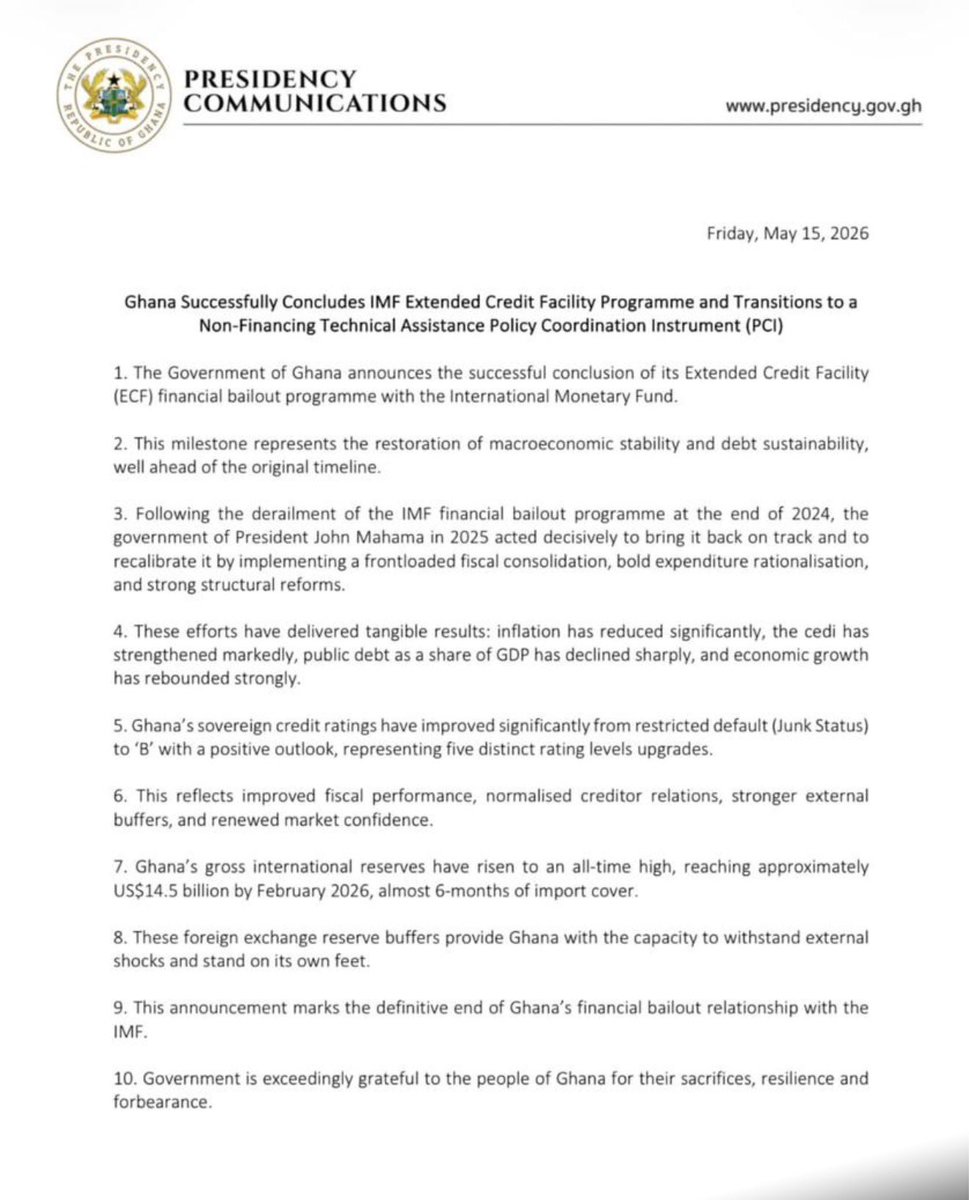
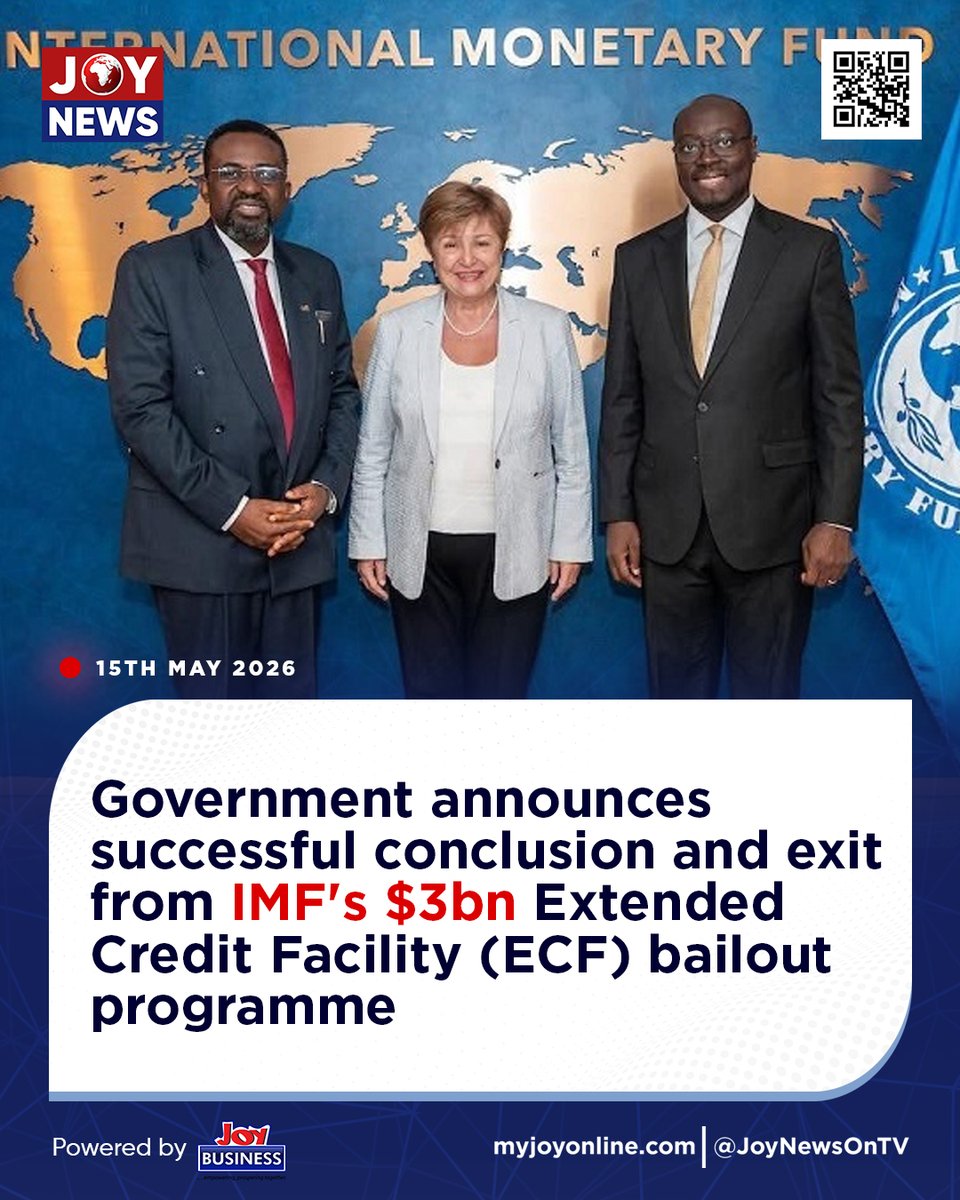
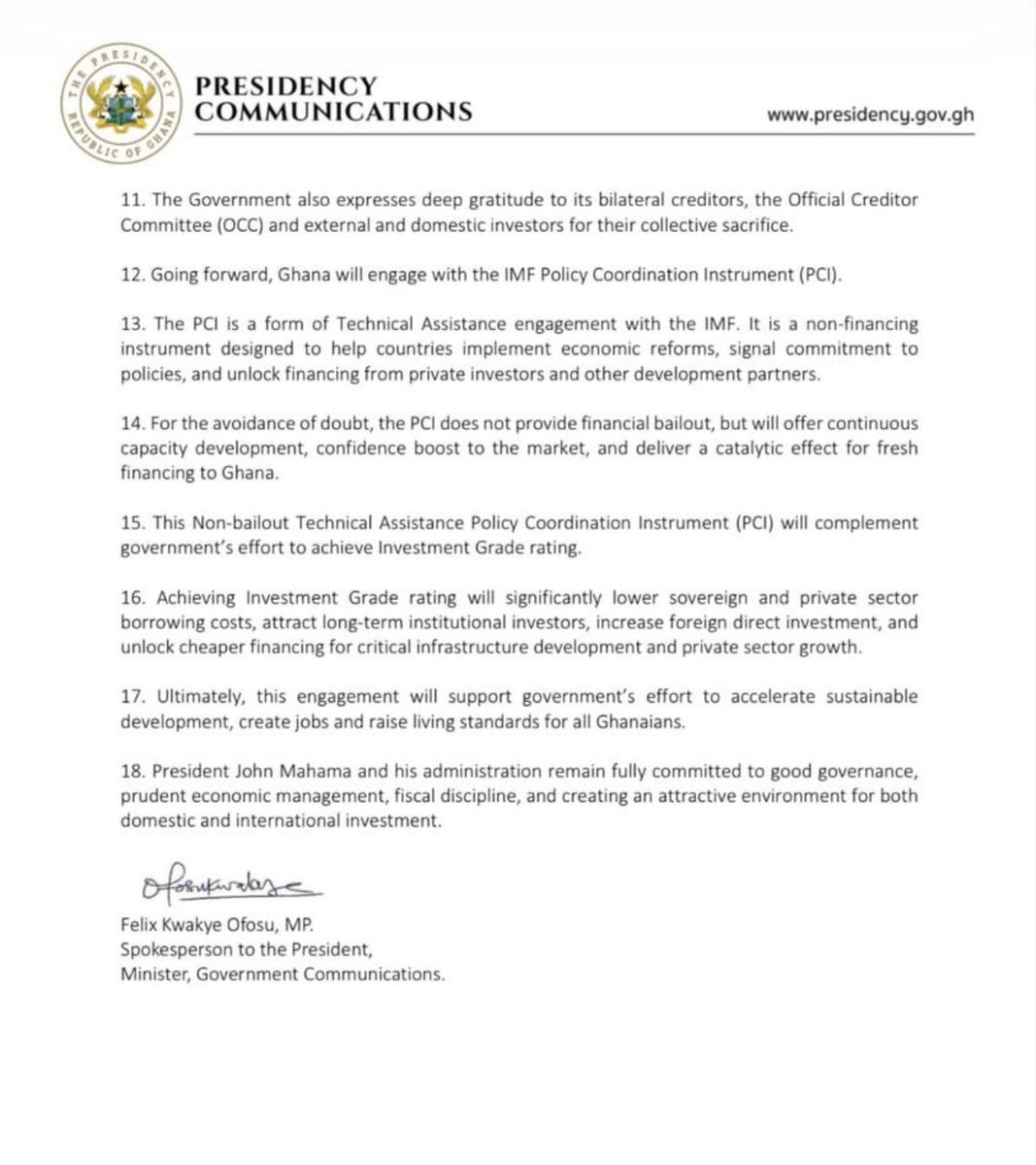
Government of Ghana announces official conclusion of IMF Extended Credit Facility and Transitions to Non-Financing Policy Coordination Instrument(PCI).
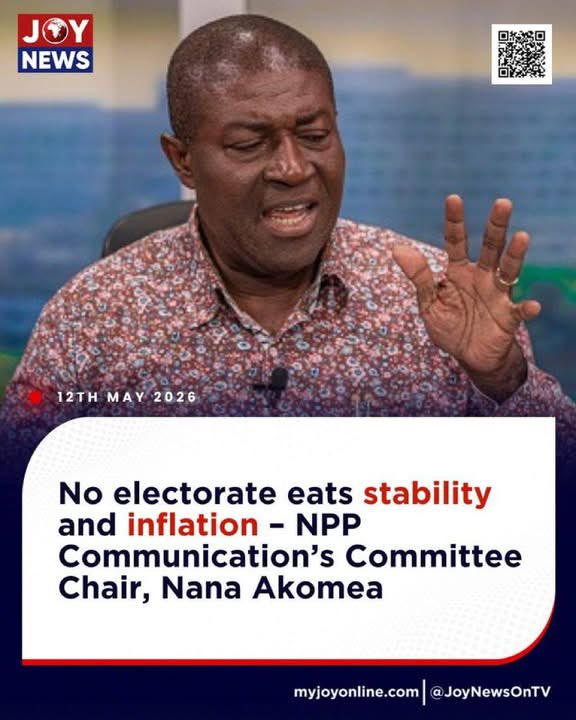
Akomea et al are clearly not interested in the data.
The numbers are interrupting a very good political story, and that appears to be the real problem.
Good morning.
Let me help my senior bro with this data which was taken in October 2024 nearly 3 months before the election. The poll asked voters to rate the performance of the Nana Addo's government on a number of key areas including economy and inflation/cost of living. 41% of voters rated the government on economy as poor/ very poor. 56% also rated the government's management of inflation/cost of living as poor/very poor.
When voters were asked to compare their standard of living compared to a year before, 46% said it had gotten worse 3 months before the election and finally, when they were asked whether they are optimistic their standard of living will improve in the next 12 months when the government was still in power, only 40% said "Yes", 20% said "No" and 40" were not sure.
We all saw what happened in the 2024 elections.
Available of data provided by @GlobalInfoPolls has made it easier for us to look at the data when we interrogate political statements.
Earlier today, President John Dramani Mahama assented to the bill establishing the Office for Value for Money.
This office will help stop the inflation and padding of contracts, strengthen accountability, and ensure that the Ghanaian taxpayer gets real value for every pesewa spent.
The Office for Value for Money will pay for itself through the savings it will generate by reducing wasteful expenditure and improving efficiency in public procurement.
Most importantly, it will create fiscal space that can be redirected into critical sectors of the economy, including infrastructure, health, education, and social protection.
This is another important step in our efforts to strengthen public financial management, protect public resources, and ensure fiscal discipline.