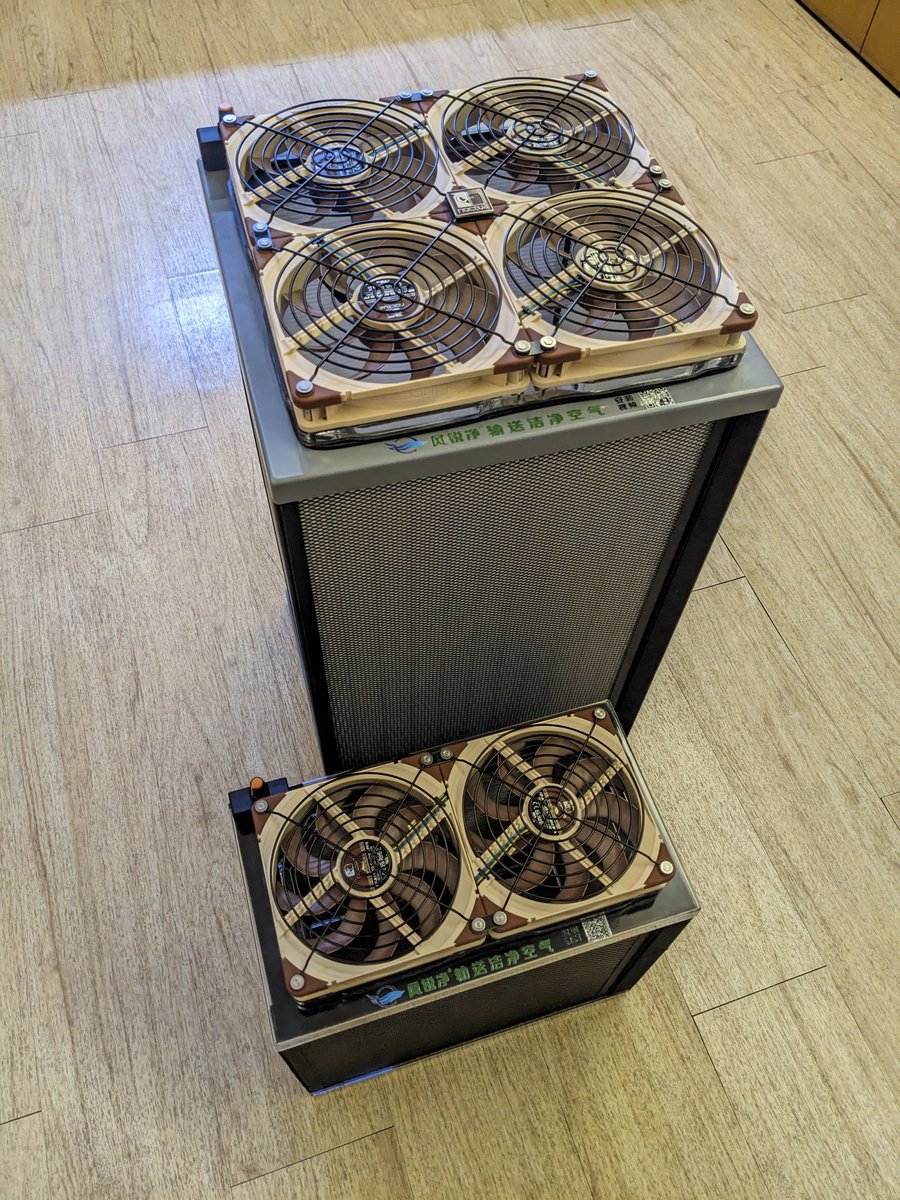
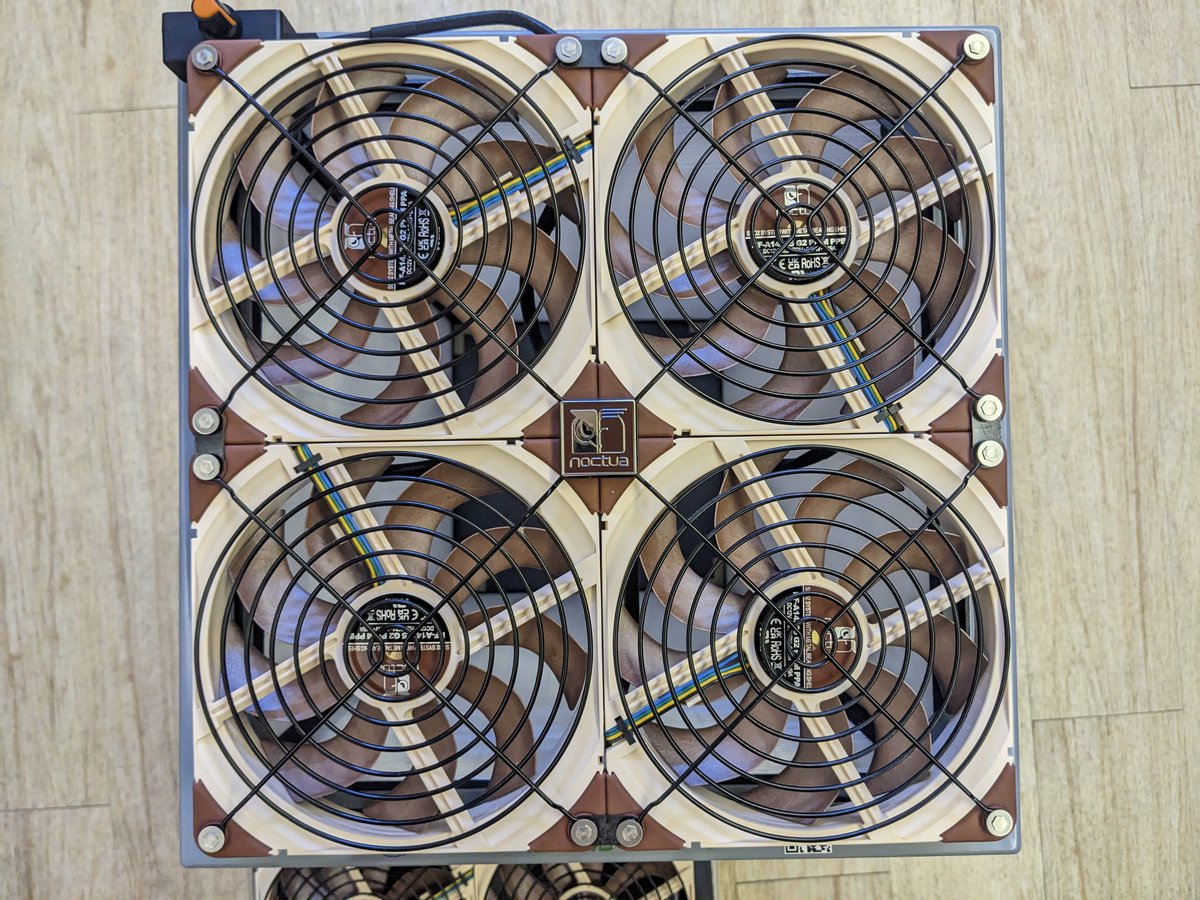
@Noctua_at@FrameworkPuter@printablescom Since you're using 3D printing, would it be possible to further optimize the vent in terms of 3D structure (e.g. cross section of struts)? Right now, the design seems to be purely 2D.
@Noctua_at@computex_taipei May I learn more about the USB inline fan controller? Does it step up voltage? Can it negotiate different voltages from the power source?
@Engineer_Wong I've seen some purifiers that claim that their filter only needs replacement after something like 3 or even 10 years. What's your thoughts on these? Are these estimates realistic at all?
@Aquilae_X Although definitely not to the extent of the intlet side, obstacles at the outlet side also affect noise. This is especially apparent if the outermost region is blocked. You can try moving your fingers around the outlet side and hear how noise changes.
@Aquilae_X Also, LS-PWM variants behave no differently than manually capping the fan speed via software means. It will not solve your issue.
What you should look forward to instead is perhaps the A12x25 G2.
@Aquilae_X In your case then, A12 seem to be the better choice.
Aside from sound signature differences, it could be due to the fact that your case is not optimized for 140mm fans - the mounting rails block 140mm fans much more than 120mm ones, which block airflow and also increase noise.
@Aquilae_X I recommend running some thermal tests at similar noise levels to see which fans are better for your use case. If the A14 G2 does offer better noise-normalized performance, what you should do is to set up custom fan curves to cap the fan speed, as it has higher noise ceiling.
@Aquilae_X In general, the larger the diameter, the noisier fans get at the same RPM, but airflow per RPM also increases. Basing your opinion on RPM is meaningless. You should focus on noise-normalized performance (or the other way round - how quiet you can get at identical performance).
@Aquilae_X According to HWcooling's tests, when noise-normalized to 31 dBA, A14 G2 is 590rpm, whereas A12 is 787RPM, so you're spot on with the noise level. That said, even though there's a notable RPM difference, A14 G2 offers higher airflow at the same noise level.
https://t.co/7DVYR5vOr8
@VentiloAngel@Engineer_Wong@dannyashton Some of the best sources on fan performance are https://t.co/5eqzESmmZo (noise-airflow data on various obstacles) and https://t.co/IzdrLhctE8 (PQ curves).
As for SanAce fans, the reputation is based on anecdotes. They do provide PQ curves on their official site though.
@Mr_Inquisitr@RalfIniert@Engineer_Wong@Noctua_at The A14 G2 max out at 1500RPM. In terms of airflow, a 1500RPM fan has no chance beating a 2900RPM one. The peak performance of these Noctua fans should be around 6V level of the stock fans (~1900RPM).
I cannot stand the stock fans above 5V anyway, so it doesn't matter for me.
@VentiloAngel@Engineer_Wong@dannyashton The Noctua A14 (G1) are very average fans, I can't recommend them.
If you're after performance only, stick with the stock fans.
If you want both peak and noise-normalized performance, Silent Wings Pro 4 or P14 Max.
Ultimate option: SanAce 9RA1412P1G001 - 140x38mm, 4250RPM, pricy.
It is from someone who copied my design. Unfortunatly he uses 12cm fan instead of 14cm, makes the CADR 40% less. I didn't bring this model to the US because it has 55% CADR of 3Pro, but 75% cost. But it is half wide of 3Pro after assembled , can fit into a small room. I am not sure how many of you would need this smaller one in particular? I can ship some to the US.
@ulc2020@Engineer_Wong@Noctua_at For tools, you only need a screwdriver. The fans are mounted using regular fan screws.
The original fans are powered by a regular DC barrel plug, so you need a DC to 4 pin fan adaptor to reuse the DC adaptor. Or, you can provide your own power source and add PWM control.