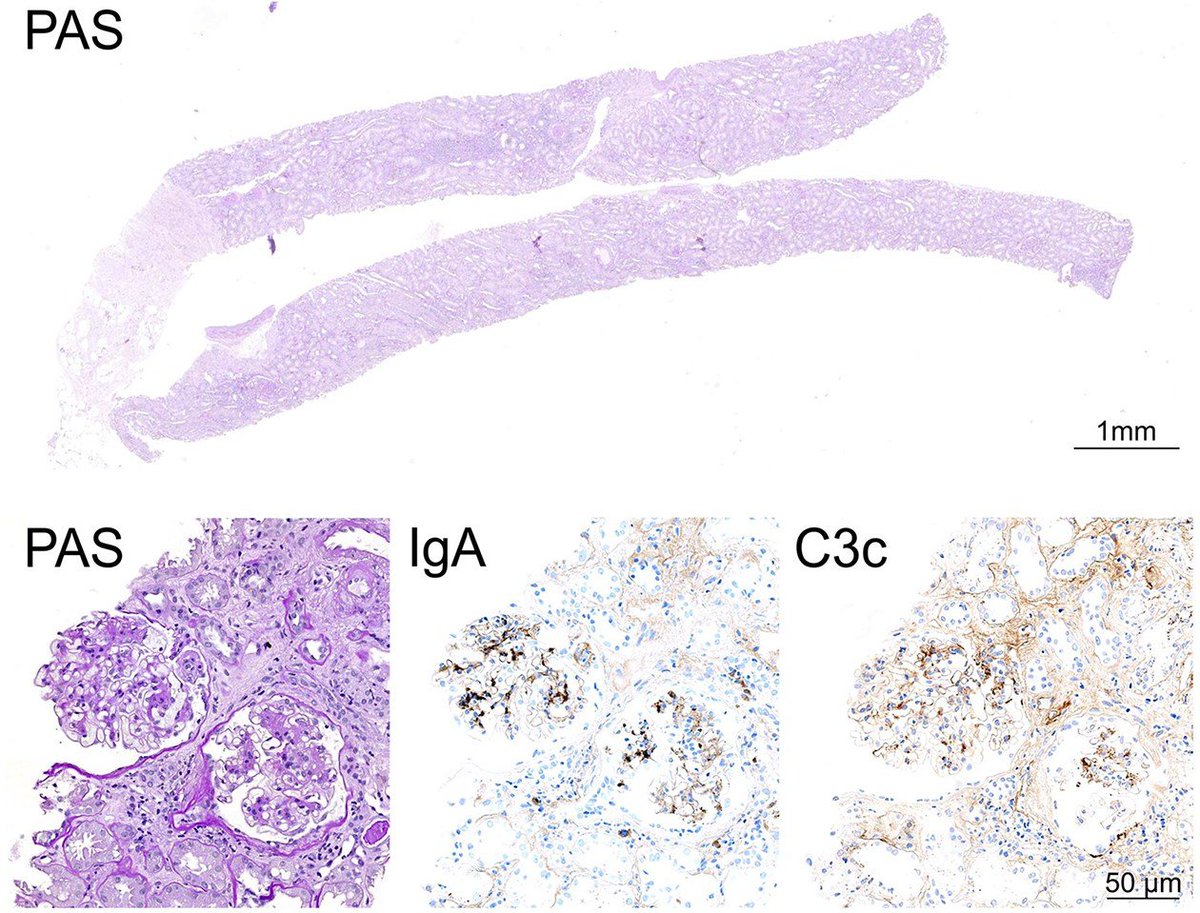
Complete summary and more of IgA nephropathy using mass spectrometry.
1. Majority of IgA is IgA1.
2. Smaller amounts of IgA2 are also present.
3. Both IgA1 and IgA2 colocalize with IgG, showing that the deposits are composed of IgA1/IgG and IgA2/IgG.
4. Dominant IgG subclass is IgG1.
5. J chain that binds monomers of IgA into dimers is present in majority of cases, indicating that the IgA is mucosal derived (as circulating IgA is monomer and doesn’t have J chain)
6. Absence of PIGR indicates that IgA is not derived from secretions such as saliva, tears, etc. PIGR is a peptide in IgA (present in secretions), that prevent the breakdown of IgA by bacteria.
Taken together: IgA immune complexes in IgA nephropathy are made up of antigenic (galactose-deficient) mucosal-derived IgA and IgG.
7. Complement: Large amounts of C3 and C9 indicating alternative and terminal pathways of complement activation.
8. Minimal classical/no lectin pathway proteins.
9. Some correlation with MESTC score but bottom line= all IgA nephropathy shows lots of C3 and C9.
10. Abundant CFHR5 indicating that there is breakdown of C3 into inactive C3=iC3b.
11. Complement is a major player in the inflammatory process in IgA nephropathy.
https://t.co/06ukMk01ss
🧐Exceptional Case:
Differing effects of Nefecon and Sparsentan in a patient with recurrent IgA nephropathy post-kidney transplantation
https://t.co/pADrktOZ8q
1/15
🤔Does end-stage renal disease (ESRD) make diabetes disappear?
No, but in some patients with ESRD, insulin needs fall. A1c drops. Diabetes medications can be stopped.
This has been called “burnt-out diabetes.”
Let's examine why.
A night of magic and enchantments…
A reunion of colleagues, friends, and mentors…
A celebration of blessings and an honoring of our departed…
A journey back to the home where it all began!
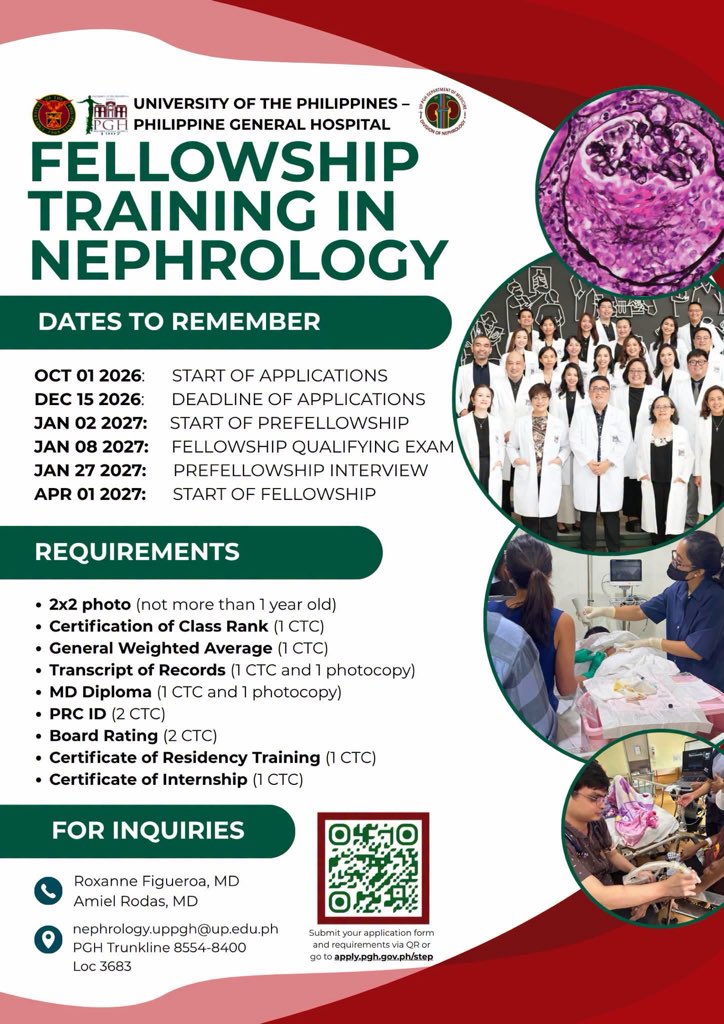
UP-PGH Nephron Alumni Homecoming
April 24, 2026
#TatakPGH#Hogwarts
Onconephrology focuses on management of kidney disease in cancer, which manifests itself in a variety of clinical syndromes, including AKI, CKD, hypertension, proteinuria, and electrolyte disorders
#Nephpearls#Onconephrology 🦀
👉🏼 https://t.co/h85eQul8Br
🩻Contrast-induced AKI:
one of the biggest myths still shaping clinical decisions
For decades we were taught:
👉 “Contrast damages the kidneys”
👉 “Avoid CT with contrast in CKD”
👉 “Hydrate, protect, delay imaging if needed”
But what if… most of this is wrong?🤔
->The uncomfortable reality
Modern evidence shows:
👉 Low-osmolar contrast rarely causes true nephrotoxicity
👉 Even in CKD, AKI, and ICU patients
👉 The risk is often overestimated—or nonexistent
So where did the fear come from?
📍 1950s high-osmolar contrast (actually toxic)
📍 Poorly controlled observational studies
📍 “Creatinine rise = contrast injury” assumption
👉 Correlation became causation
👉 And the dogma stayed
⚠️What recent data tells us
✔ No difference in AKI rates with vs without contrast
✔ No benefit from bicarbonate, NAC, or aggressive hydration
✔ Even ICU and AKI patients show no worsening outcomes
->Translation to real life
👉 The patient was going to develop AKI anyway...Not because of contrast!!
->The real problem: “Renalism”
👉 Avoiding necessary imaging
👉 Delaying diagnosis
👉 Choosing inferior tests
And that leads to:
❌ Missed PE
❌ Delayed sepsis source control
❌ Worse outcomes
->Clinical mindset shift
Instead of asking:
👉 “Will contrast harm the kidneys?”
We should ask:
👉 “Will NOT doing the scan harm the patient?”
->Who still deserves caution?
✔ eGFR <30
✔ Severe hemodynamic instability
✔ Multiple nephrotoxins
Even then:
👉 Optimize volume
👉 Minimize dose
👉 Don’t delay critical imaging
🤓Bottom line
✔ Contrast nephrotoxicity exists… but is rare
✔ The fear is bigger than the risk
✔ The harm of NOT imaging is often greater
In critical care
👉 We don’t treat creatinine
👉 We treat patients
And sometimes…
👉 The most dangerous thing is NOT the contrast
👉 It’s hesitation.
📃Reference
Florens N, Demiselle J.
Kidney360 7: 445–449, 2026. doi: https://t.co/CWzi7WC9Wx
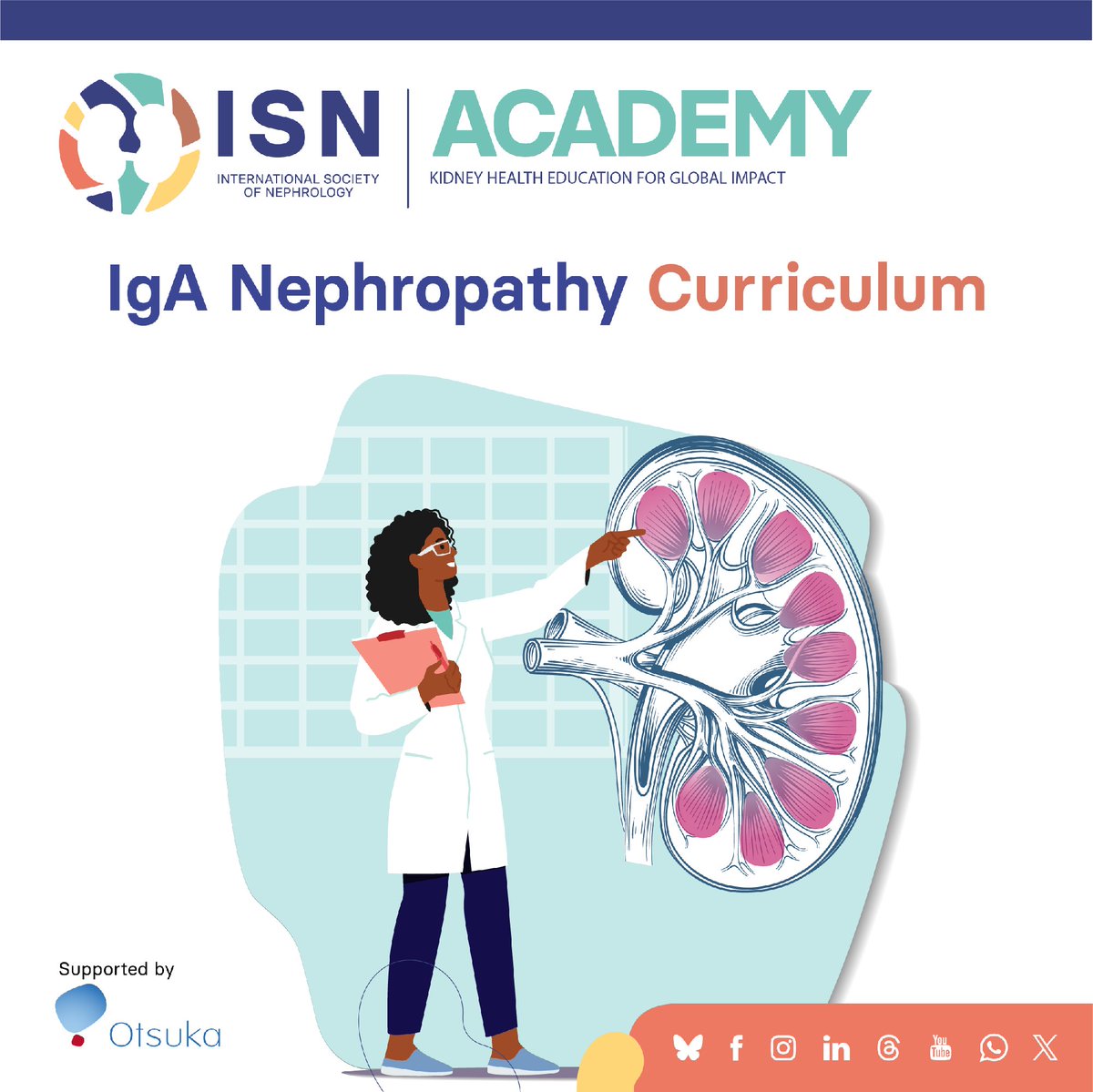
The IgAN Nephropathy curriculum provides a comprehensive review of the pathogenesis, treatment, and prediction of disease progression to help clinicians in their work.
Access the new curriculum, supported by Otsuka: https://t.co/KPQtAz86g0
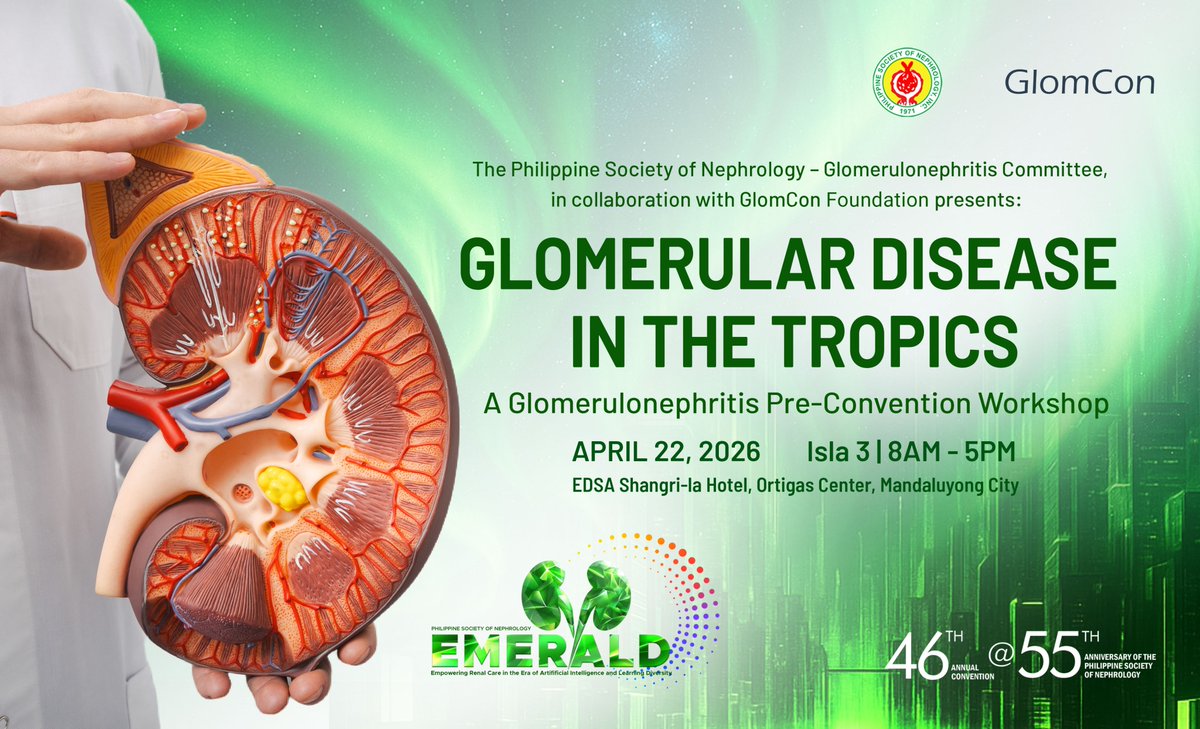
🌏 Bridging Global Standards with Local Realities.
Join PSN-GN & @GlomCon for a workshop on Glomerular Disease in the Tropics. Expert faculty from 🇦🇺 🇸🇬 🇮🇳 🇵🇭 discuss IgAN, LN, & biopsy trends.
📅 April 22, 2026
Elevate your clinical practice. 🩺
#Nephrology#GlomConPH
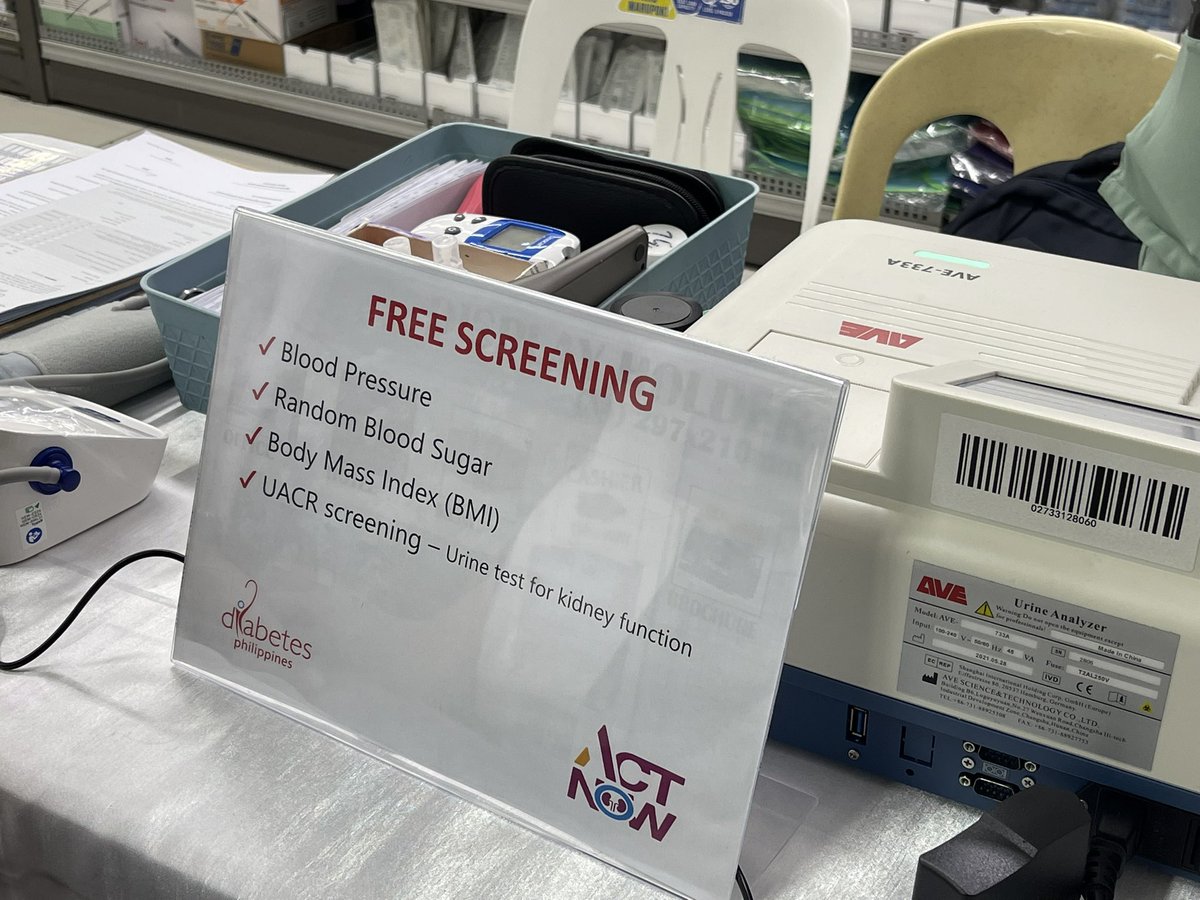
LOOK: Mercury Drug, together with AstraZeneca and Diabetes Philippines, launches free Urine Albumin-to-Creatinine Ratio (UACR) testing to promote early CKD detection.
The free test is available at Pavilion Mall, Shangri-La Plaza, TriNoma Mall, and Noveleta branches. @bworldph
@Kidney_Int ➡️ KDIGO 2026 Clinical Practice Guideline for the Management of Anemia in Chronic Kidney Disease: Executive Summary https://t.co/Ksg4nr90qL
With the recent data showing (dramatic) cardiovascular benefit of Omega 3 supplements in dialysis patients, I looked at the current landscape of prescription fish oil medications. The study looked at a 2:1 ratio of EPA:DHA in ethyl-ester formulation at a dose of 1600mg EPA + 800 mg DHA per day.
EPA might be a more potent anti-inflammatory and might drive more of the cardiovascular benefit while DHA might be more protective for brain/eye health, though effects overlap.
Prescription Omega 3's are better than OTC for a couple of big reasons -
1. Cost: Lovaza (omega-3 ethyl esters at an EPA:DHA ratio of 1.2:1) costs ~$30/month generic if taking 4g a day, much less than equivalent dosages in most OTC brands.
2. Purity: lower risk of contamination and higher chance of proper dosages (though brands like Nordic Naturals have pretty solid reputations). Usually more concentrated through mass spec and purification.
The downside is that none of the prescription meds exactly match the 2:1 ratio seen in the study (unless you mix/match different prescriptions).
Currently there are only two prescription Omega 3's on the market.
1. Lovaza and Omtryg (omega-3 ethyl esters at an EPA:DHA ratio of 1.2:1).
- A prescription dose of 3-4g daily would approximate doses in the study
2. Vascepa (icosapent ethyl which is EPA ONLY)
The study compared omega-3 to corn oil, so I'm waiting for the carnivore "hot take" that the increase in cardiovascular events seen in the placebo arm was actually due to the corn oil intake (@paulsaladinomd).
I’d like to highlight an updated handout of generic advice we give to our kidney stone formers. Individualized care based off 24 hour urine is best (ie most people don’t need a low oxalate diet) if this helps others!
#kidneystone@OSU_Urology
https://t.co/PmtQ4RCHuf
Presented at #KidneyWk:
In an interim analysis, sibeprenlimab, a humanized IgG2 monoclonal antibody that inhibits the proliferation-inducing ligand APRIL (a key driver of IgA nephropathy), reduced proteinuria as compared with placebo. Full VISIONARY phase 3 trial results: https://t.co/zSyiaVVPlQ
@ASNKidney
IgA Nephropathy: An Overview of the Clinical Trials
🔹 Summarizes ongoing & emerging therapies for IgAN
🔹 Highlights DR-budesonide, sparsentan, and complement inhibitors
#NephX#Nephpearl#Nephrology@KidneyMed
👉🏻 https://t.co/7Nat5dq8P0
An upgraded approach to the new Hypertensive patient. At baseline:
1. Do Urine Alb/Creat Ratio
2. Also do Plasma aldosterone, esp in the younger patient
3. Don't neglect the SBP consistently in the 130s. The 10 Yr PREVENT CV Risk calculator is a great guide
4. Don't refrain from starting with dual therapy
5. Alcohol 🍸 is not protective
https://t.co/Jx9cg0MaRb
https://t.co/UafxOO05D5
@rkalyes1@UgandaPhysician@DrJNELLY95@ChefKarim02@Ug_kidneyf@graekan
I feel like I need to process the entire Run Seokjin concert experience -- no, an ADVENTURE -- now that it has truly come to an end. One thing is for sure: I love being a Jin bias and I will never go wrong being one 💜