The High Court has ordered the release of teacher Enoch Burke from prison.
He has spent almost 700 days in prison since September 2022 for refusing to use gender bending ideology pronouns in the classroom.
A man of integrity.
“When I was in college, I wanted to be involved in things that would change the world.” — Elon Musk
From writing code as a kid, to sleeping in an office, showering at the YMCA, and building Tesla, SpaceX, Starlink, Neuralink, xAI, Starship, Optimus, Cybercab, and the path to Mars…
The vision never changed:
Build things that move humanity forward
Comes the XPENG Robotaxi road test fleet!
Powered by industry-leading onboard computing power, it is China’s first fully self-developed, factory-fitted mass-produced Robotaxi.
Five months of limited road testing in Guangzhou confirms VLA 2.0 supports L4 autonomous driving.
🇷🇺 Russia has ten strategic bombers in the air.
Three Tu-160M bombers took off from Ukrainka Air Base in Amur Oblast a while back, and now the picture's bigger.
Ten strategic bombers are up in total, seven Tu-95MS and three Tu-160M, flying near launch lines in Vologda Oblast.
These are Russia's long-range heavy bombers, the platforms built to fire cruise missiles from deep inside its own airspace.
Launches of Kh-101 cruise missiles, the long-range weapon these bombers carry, are expected within the hour.
Ten heavy bombers don't go up at once for a drill.
Source: TABZ ( Telegram ) / Writer: Daniyal
🚨Update: President Trump is furious that Iran has walked away from negotiations and is keeping the Strait of Hormuz closed, and he is planning a massive attack, but only after the Wood Cup Final Game….. Set for Sunday, July 19….. bookmark this post!!
A Giant Planet Cheated Death… and Then Moved Closer!
In a plot twist worthy of the best sci-fi, astronomers have uncovered how a massive gas giant not only survived its star’s violent death — but later spiraled inward for a closer orbit around the stellar corpse. Meet WD1856b: a Jupiter-sized behemoth (4–11 times Jupiter’s mass) circling a tiny Earth-sized white dwarf just 80 light-years from Earth. It whips around its dead star every 1.4 days — so close that the planet is roughly eight times larger than the star it orbits. When the original star ballooned into a red giant billions of years ago, it should have swallowed everything nearby. Most inner planets don’t survive that fiery phase (our Sun will eventually engulf Mercury, Venus, and possibly Earth). Yet this giant world lived to tell the tale. How Did It Pull Off the Ultimate Escape?Using NASA’s James Webb Space Telescope (JWST), an international team (led by the University of St. Andrews with Northwestern University astrophysicists) finally cracked the mystery. The planet stayed at a safe distance during the star’s red-giant death throes ~5 billion years ago.
Then, 3 to 5.5 billion years later, gravitational nudges from companion stars in the triple-star system pulled it inward.
As it migrated closer, intense tidal forces reheated the planet to ~400 K (127°C / 260°F) — way hotter than the faint white dwarf’s light could explain. It’s been slowly cooling ever since.
The atmosphere? Rich in methane and hazy clouds, giving it a Titan-like golden hue. JWST even captured a record-breaking transmission spectrum: the planet blocks a whopping 56% of its star’s light. “This is one of the most bizarre planetary systems we know of,” said Christopher O’Connor of Northwestern. “Stellar death is not the end — some planets get a vibrant second act.” A Glimpse of Our Own Solar System’s FutureIn about 5 billion years, our Sun will die and become a white dwarf. This discovery shows that outer planets might not only survive… they could keep evolving for billions of years afterward. As lead researcher Ryan MacDonald put it: “It’s like using a time machine to peer into the distant future of our solar system.” Bottom line: The universe is full of surprises. Even after a star’s dramatic finale, its planets can find new life in the cosmic sequel. (Study published today in Nature)
(credit: NASA, ESA, CSA, Ralf Crawford (STScI)) — a gorgeous gas giant with hazy, Titan-like skies orbiting a cooling orange-white dwarf. What a wild ride the cosmos has in store for us!
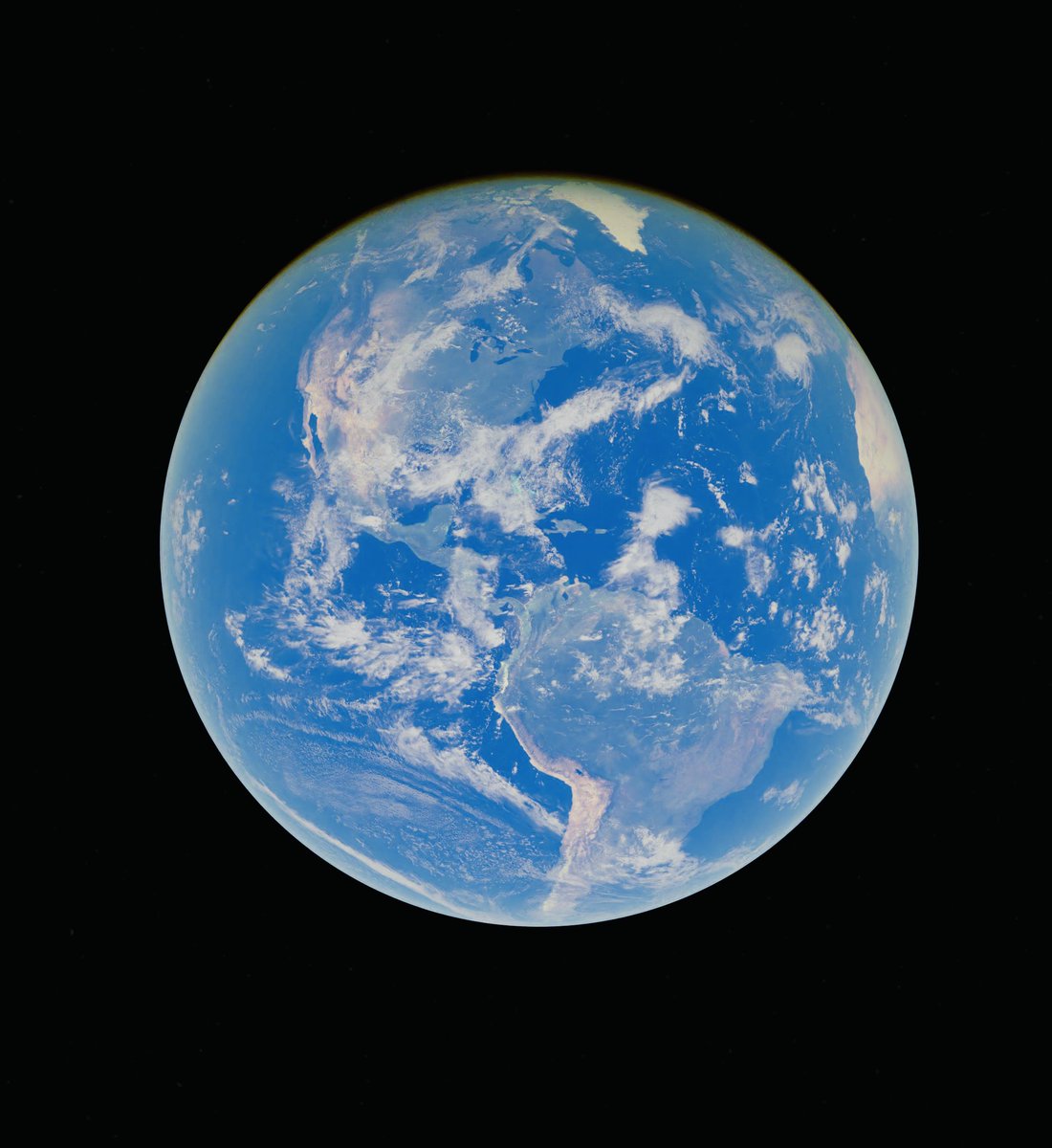
The Earth’s ozone layer is on track to completely heal itself by 2066 across most of the world, following the historic global phase-out of ozone-depleting chemicals.
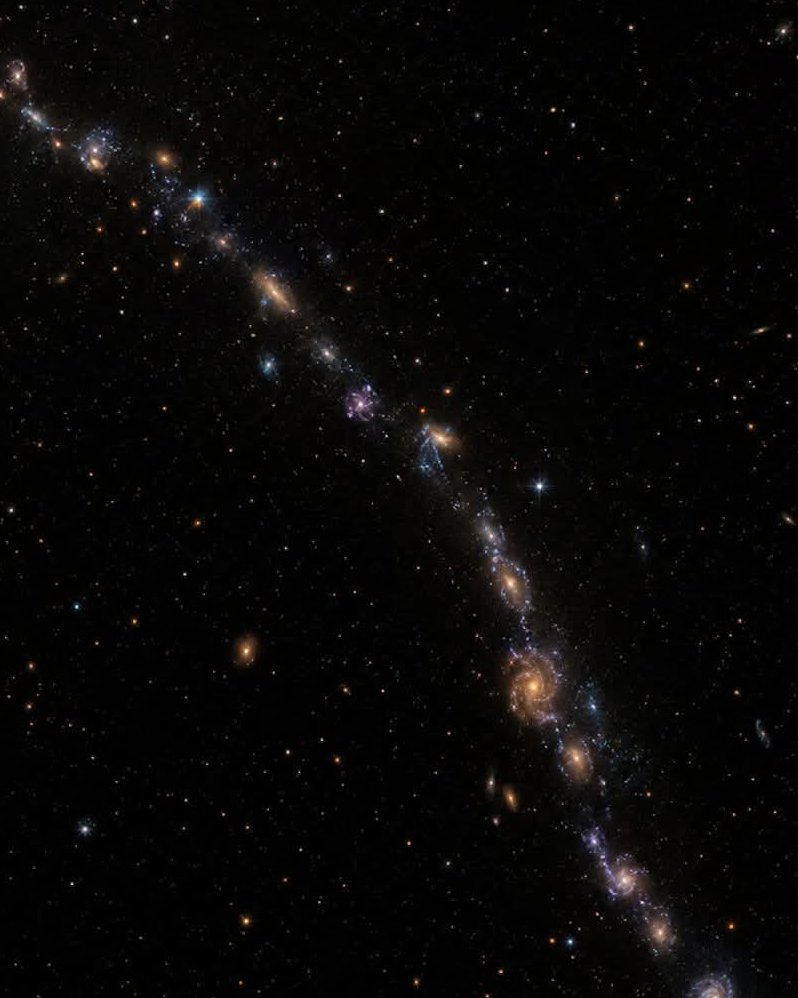
The Cosmic Vine: A Giant Chain of Baby Galaxies Using the powerful eyes of the James Webb Space Telescope, astronomers have discovered a remarkable structure in the early universe: the Cosmic Vine.Stretching across a staggering 13 million light-years, this cosmic chain consists of roughly 20 young galaxies linked together like pearls on a glowing necklace. It existed when the universe was still in its childhood — just a few billion years after the Big Bang.This discovery beautifully illustrates a fundamental truth: galaxies are not scattered randomly across space. Gravity has been sculpting matter for billions of years into vast filaments, walls, clusters, and superclusters — the grand cosmic web that forms the backbone of the universe.The Cosmic Vine is an extraordinary snapshot of this process in action. It shows how gas, dust, and dark matter flowed along these immense filaments, feeding the rapid growth of early galaxies. Some of these galaxies are already forming stars at an intense pace, while others are merging and evolving right before our eyes.More than just a line of distant galaxies, the Cosmic Vine is a living fossil — a rare glimpse of the universe actively learning how to organize itself on the largest https://t.co/FY2Sf5g52s’s a stunning reminder that the majestic large-scale structure we see today didn’t appear overnight. It was built, one cosmic vine at a time.
BREAKING: Two people climb to the top of the Empire State Building spire holding flag reading "When the power of love beats the love of power the world knows peace"
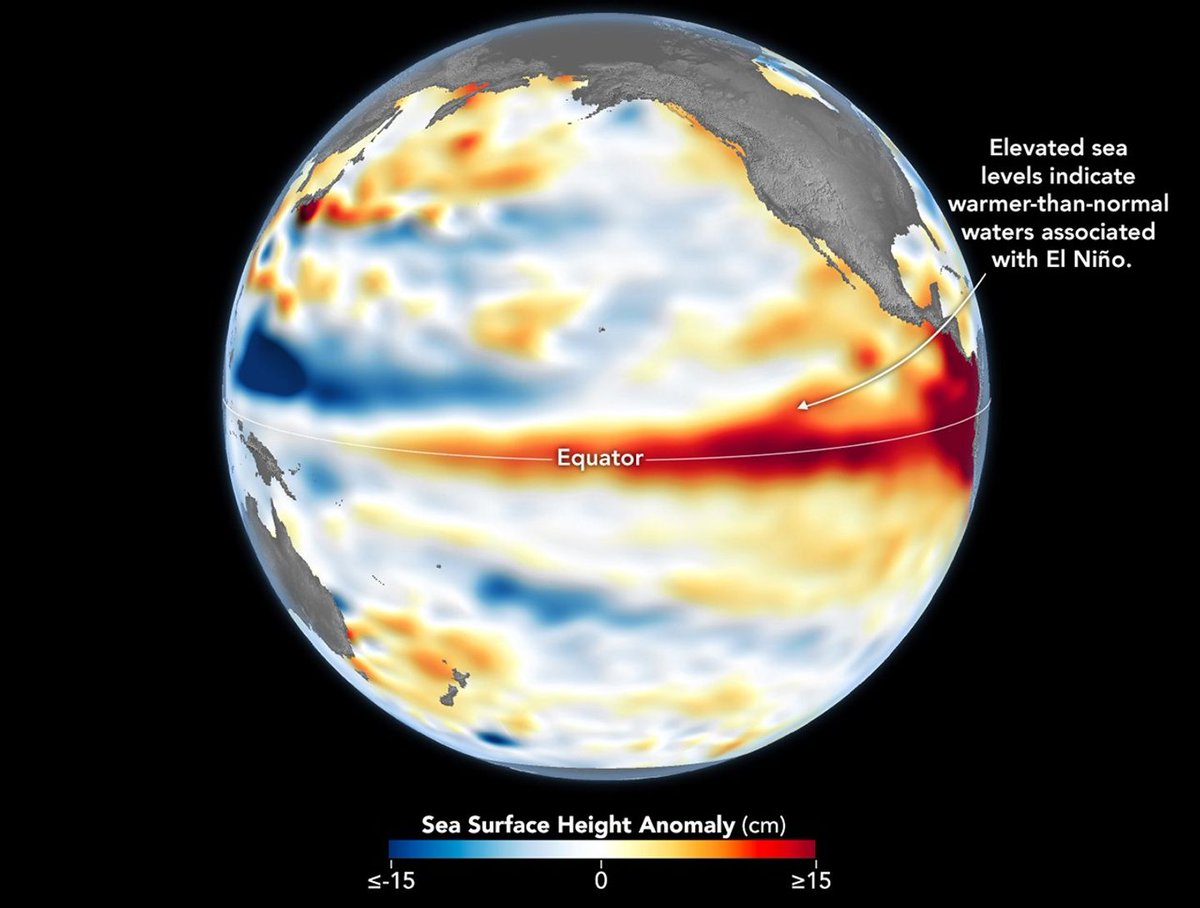
Recently @NOAA announced the return of El Niño, as ocean temperatures in the tropical Pacific remained above average for several months. NASA scientists are seeing a complementary sign of El Niño: rising sea levels as warmer ocean water expands.
🇮🇶🇮🇷 Iraq PM Ali al-Zaidi set a deadline: all pro-Iran militias must fully disarm by September 30 or face the law.
This lines up perfectly with the U.S.-led coalition wrapping up its anti-ISIS mission.
PM Ali al-Zaidi is under heavy U.S. pressure ahead of his Washington trip, and some factions are already starting to hand over control.
After 20+ years of these Iran-backed groups running the show since the 2003 invasion and ISIS fight, Baghdad is finally trying to take back control.
Source: The Times of Israel / Writer: Claudio
China is Building a Cosmic Shield Against Asteroids – Earth Just Got a Serious Upgrade!
Imagine this: On June 30th, International Asteroid Day, China’s National Space Administration (CNSA) announced the creation of a powerful new planetary defense system. It’s not just watching the skies — it’s a full space-and-ground integrated shield designed to detect, track, and ultimately deflect or destroy threatening https://t.co/ZtrItAY6Mh It WorksThe system combines:Orbiting satellites
Powerful ground-based radar stations
Together they create a real-time early-warning network. If a dangerous asteroid is spotted heading our way, humanity will have precious time to respond.Deflection methods fall into two epic categories:Kinetic Impact — slamming a high-speed spacecraft into the asteroid to knock it onto a safer orbit (think Armageddon, but real).
Gentle Push — using laser ablation (vaporizing surface material with lasers), gravity tractors, or other clever techniques to slowly nudge the rock away over time.
Why It Matters Right NowAs of June 2026, astronomers have cataloged over 40,000 near-Earth asteroids. No civilization-ending monsters have been found on a collision course yet, and discoveries of truly massive ones have almost stopped. But thousands of smaller, undetected objects still lurk out there — and China isn’t waiting for a surprise.This is more than a national project. It’s a major step toward real global planetary defense. In the spirit of International Asteroid Day, it’s a powerful reminder: space is beautiful… but it can be dangerous. And we’re finally learning how to fight back. China is proving that the future of Earth’s protection isn’t just written in Hollywood scripts — it’s being engineered in orbit right now.Ready for the real-life space thriller?
One in five of the world's species live in Brazil. With over 116,000 types of animals living across 6 unique landscapes, keeping this massive ecosystem safe is vital for the whole planet. 🌎🇧🇷