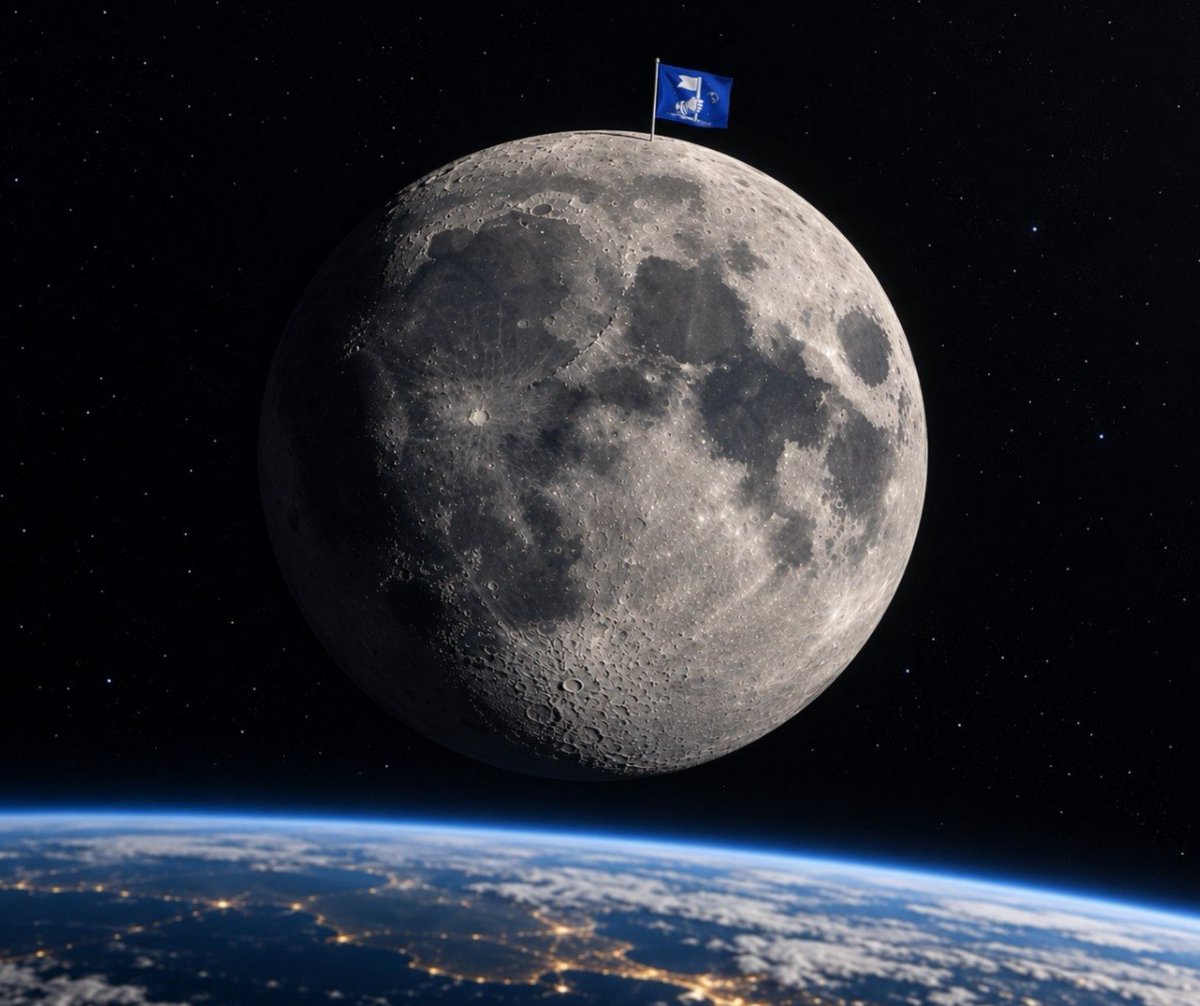
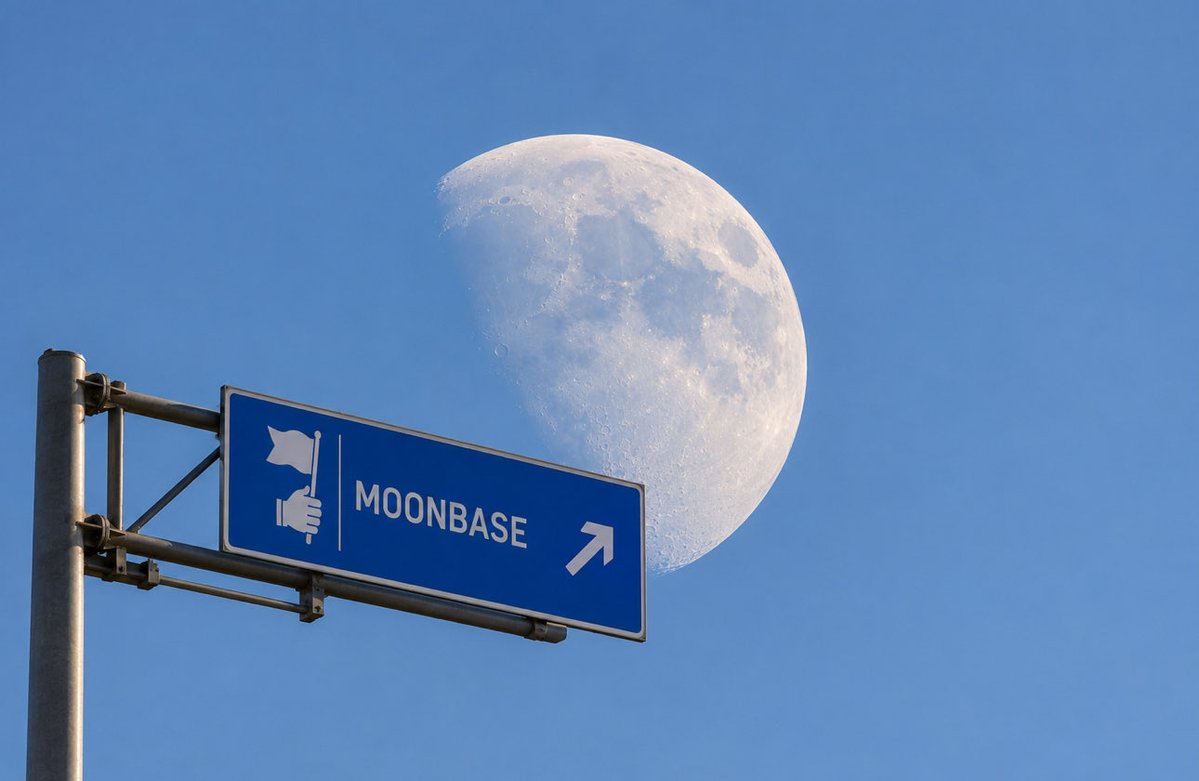
we are entering the next era of space exploration.
humanity’s first permanent outpost beyond earth will be on the Moon.
a base built for long-term stays, exploration, discovery, and eventually an economy that extends beyond our planet.
@SpaceX is building the infrastructure making that future possible.
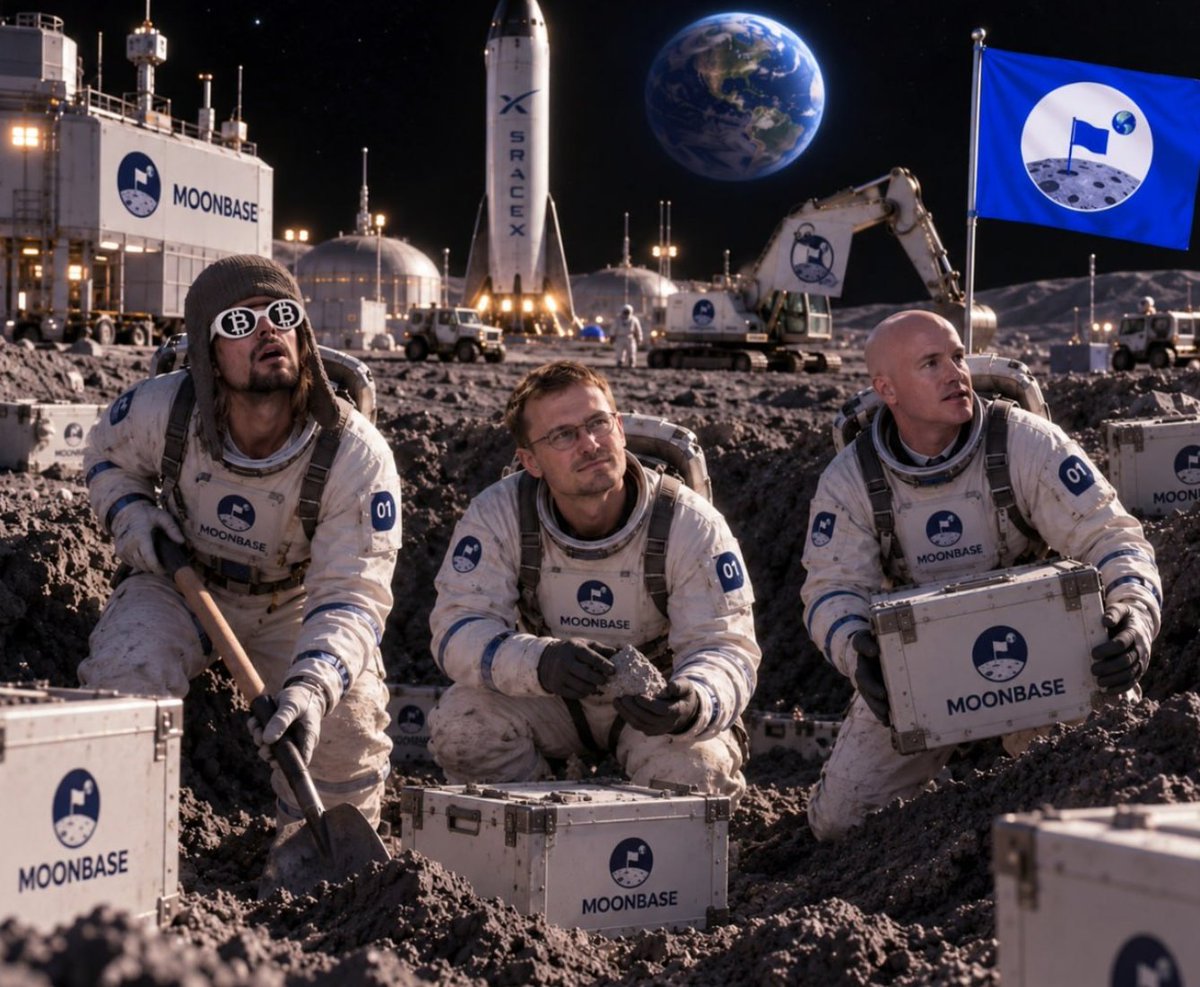
$MOONBASE is paired directly with SpaceX on @base.
the Moon is humanity’s next frontier.
Moonbase is where we begin.
$MOONBASE only on @Base.
Pretend you have never heard of a $Moonbase on @base. For most of human history, the Moon was somewhere we could only observe from afar. We reached it, walked on it, and left. Wow the idea is changing: not simply visiting the Moon, but learning how to stay.
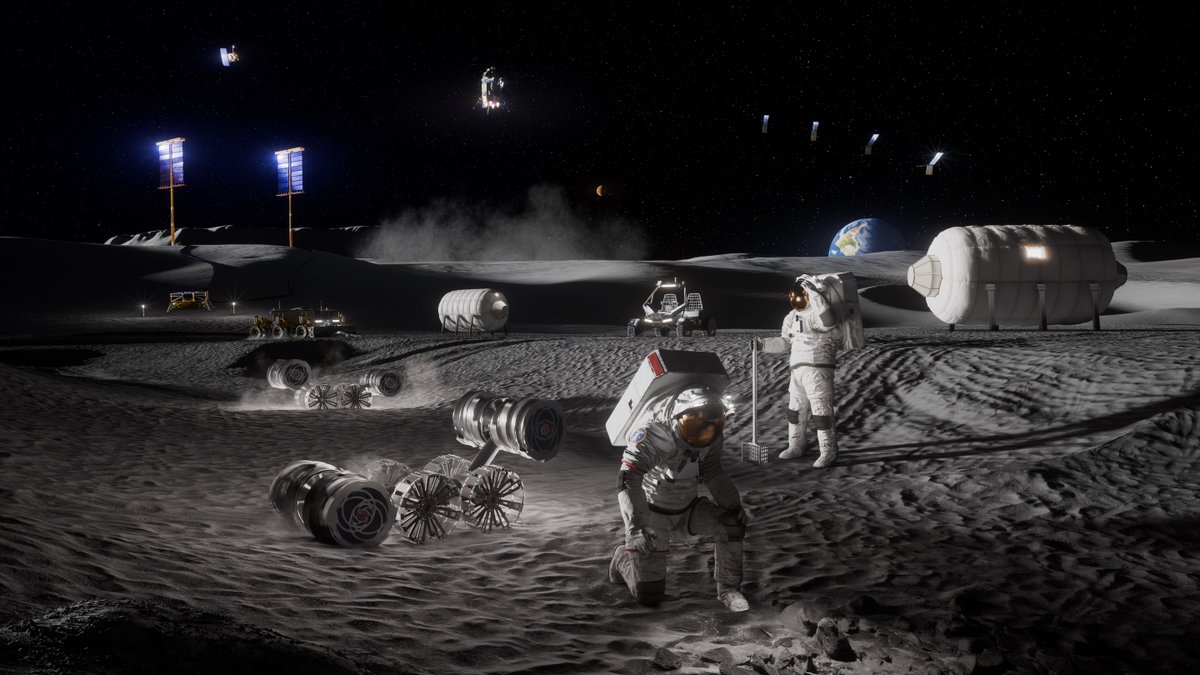
Near the lunar south pole, plans are taking shape for habitats, power systems, communications, rovers, cargo infrastructure, and the technologies needed for humans to live and work beyond Earth for extended periods. The region may also contain resources such as water ice, while offering scientists access to some of the Moon’s oldest terrain.
@NASAMoonBase describes the process as something that will happen step by step, robotic exploration first, infrastructure next, and eventually an enduring human presence. What we learn there is intended to reach even farther, helping prepare humanity for future missions to Mars.
For generations, a Moon Base belonged to science fiction.
Now we’re building toward one.
Plant the flag. 🌕
NASA has just launched a new website for its Moon Base missions, which aims to build a permanent $20 billion U.S. base on the Moon. @SpaceX's Starship rocket will play a big role in these missions.
"The Moon Base is a home away from Earth for Artemis astronauts who will live and work at humanity’s first lunar outpost. NASA is leading global teams of innovators across international space agencies, industry, and academia to build the Moon Base and establish an enduring human presence near the lunar South Pole for the benefit of all.
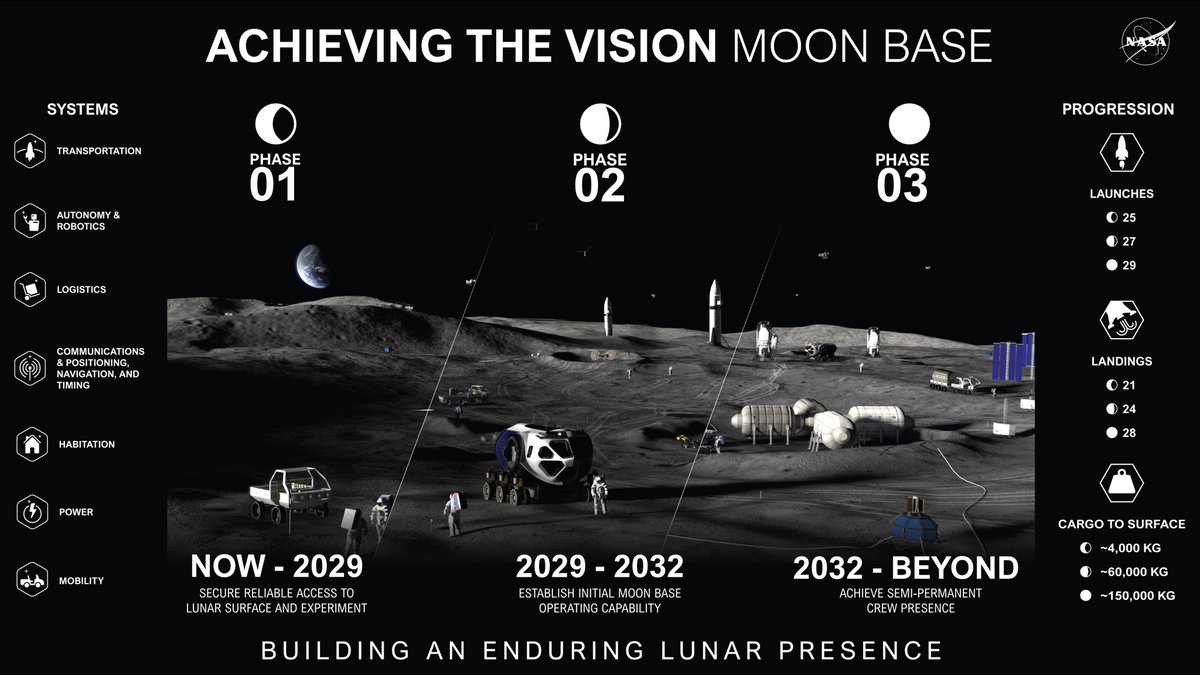
Phase One (Now–2029): Experiment and Learn
NASA will begin with a rapid series of robotic missions to scout the lunar South Pole region, test technologies, and prepare for surface operations ahead of future astronaut missions.:
• A major increase in lunar activity, with up to 25 missions, including 21 landings.
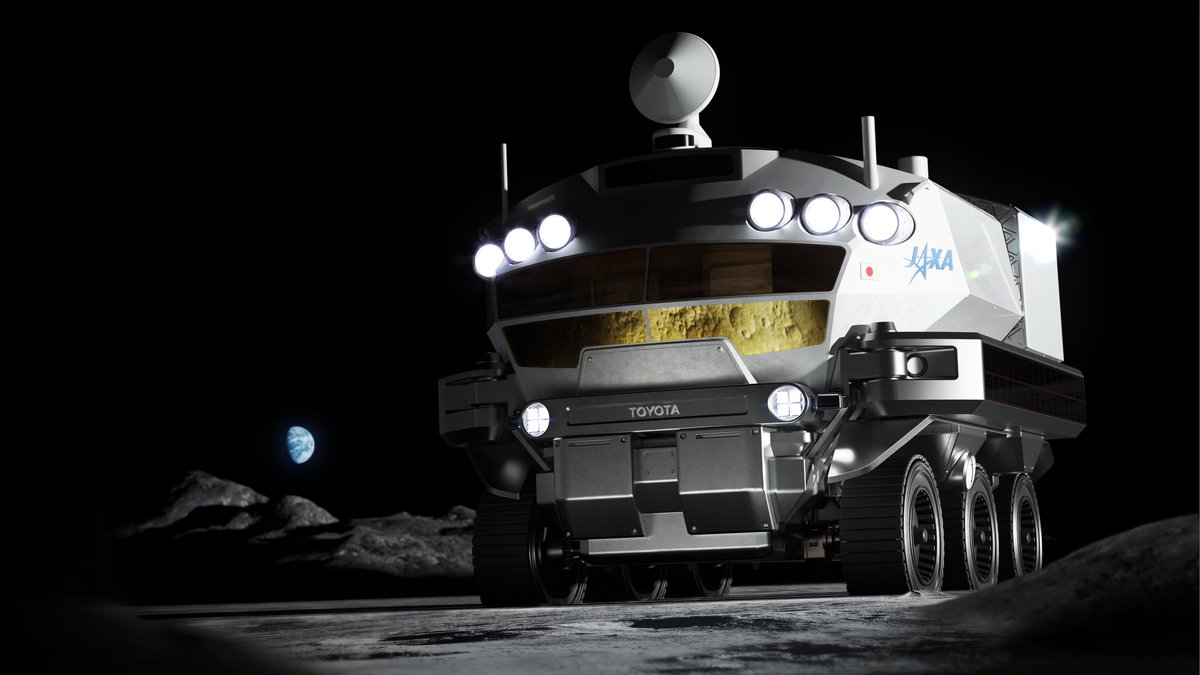
• Crewed and autonomous rovers for mobility demonstrations and surface preparation, along with four drones known as MoonFall and communications relay and observation satellites.
• Early demonstrations of power, navigation, communications, and nuclear radioisotope heater unit technologies designed to endure the long lunar night.
• Scientific payload opportunities integrated across landers and rovers.
• The first tangible footprint of Moon Base effort, with four tons of payload delivered to test what works on the lunar surface.
Phase Two (2029–2032): Early Habitation
By 2029, NASA will transition to assembling semi-permanent infrastructure and initiating early habitation and logistics operations:
• Deployment of expanded solar power systems and initial nuclear surface power capabilities, potentially including fission reactors and radioisotope power systems.
• Upgraded rovers, potential advanced MoonFall drones, and early habitation elements.
• Enhanced surface-to-orbit communications networks to provide reliable connectivity across the lunar South Pole region.
• Delivery of up to 60 tons of cargo through as many as 24 landings using low-, medium-, and heavy-class cargo landers.
Phase Three (2032 and Beyond): Sustained Human Presence
This phase will scale operations to achieve a true enduring presence, with routine crew rotations and continuous surface activity. This is when living and working on the Moon becomes a reality:
• Semi-permanent habitation modules with spacious interior for crew living and operations.
• Operational fission surface power systems capable of delivering steady, reliable energy through the long lunar nights, leveraging in situ resource manufacturing.
• Advanced logistics networks supported by crewed and autonomous rovers to keep the base supplied and functioning year-round.
• Delivery of up to 38 tons of cargo annually to sustain habitats, power systems, logistics operations, and major science outposts, enabled by low-cost reusable heavy-lift capabilities."
Moon base website: https://t.co/nefXl3J2FR