I lost my job yesterday.
Rent was due.
No backup plan.
Then I remembered I still had Claude.
Asked it:
“Analyze every top Polymarket wallet from the last 90 days and build me something”
$25 → $4,237 in one night.
It scanned 10,000 wallets.
Cross-referenced win rates, sizing, timing.
Found 7 traders whose edge wasn’t luck.
Then built an autonomous agent.
Not a script.
Not an if-then bot.
An agent that reads live news,
maps it to markets,
detects mispricing,
and exploits arbitrage across outcomes.
Sizes every position using Kelly.
I deployed it at 11:47PM.
Closed the laptop.
Woke up to:
$25 → $4,237
94 trades while I slept.
No input.
No hesitation.
No second-guessing.
That’s the game.
Information asymmetry at machine speed.
Wall Street pays millions for this.
I pay $20/month.
You only need Claude + laptop + 1 hour/day.
Giving This Free for 24 hours. To get it:
1. Comment the word 'AutoPilot'
2. Like and Retweet this post
3. Follow me
@techwith_fahim
(so i can DM you)
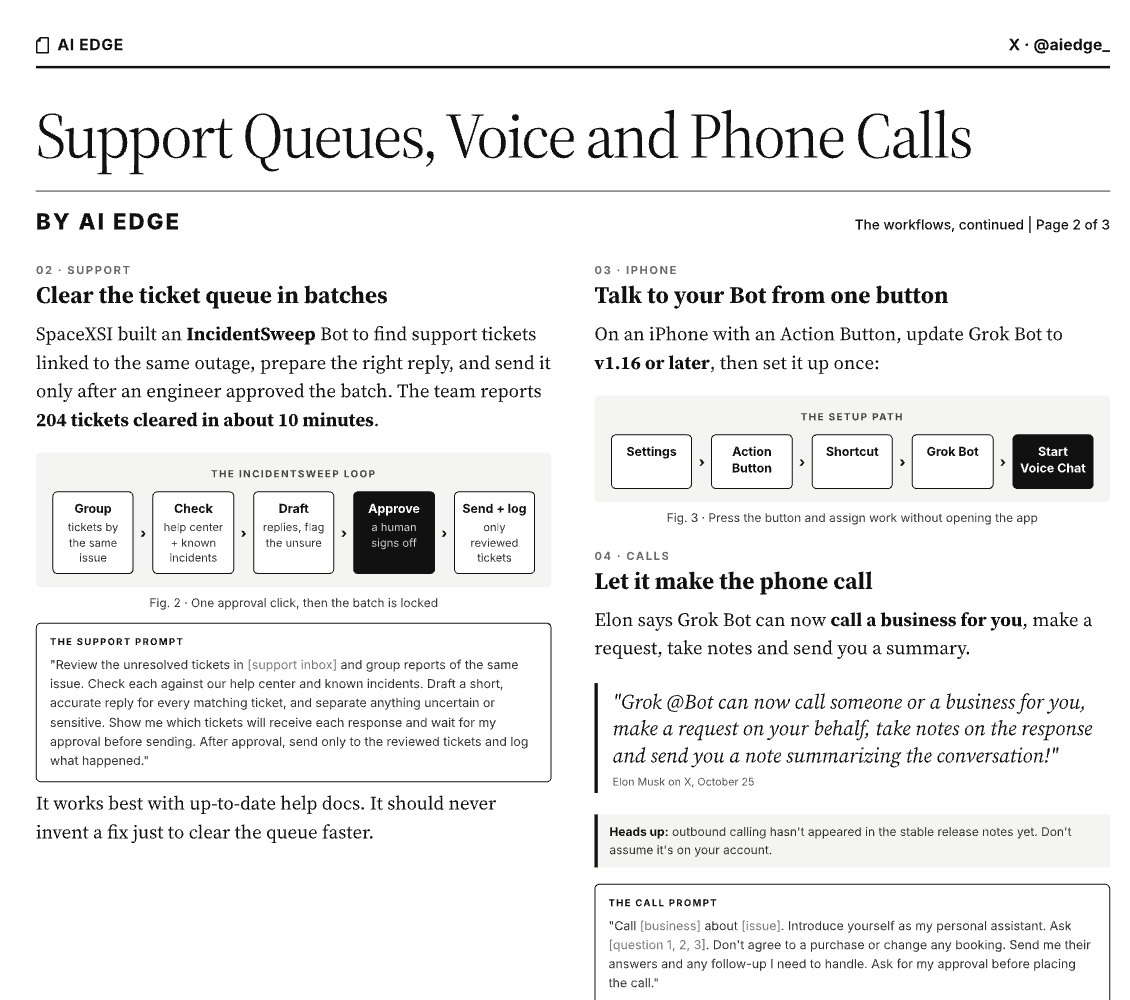
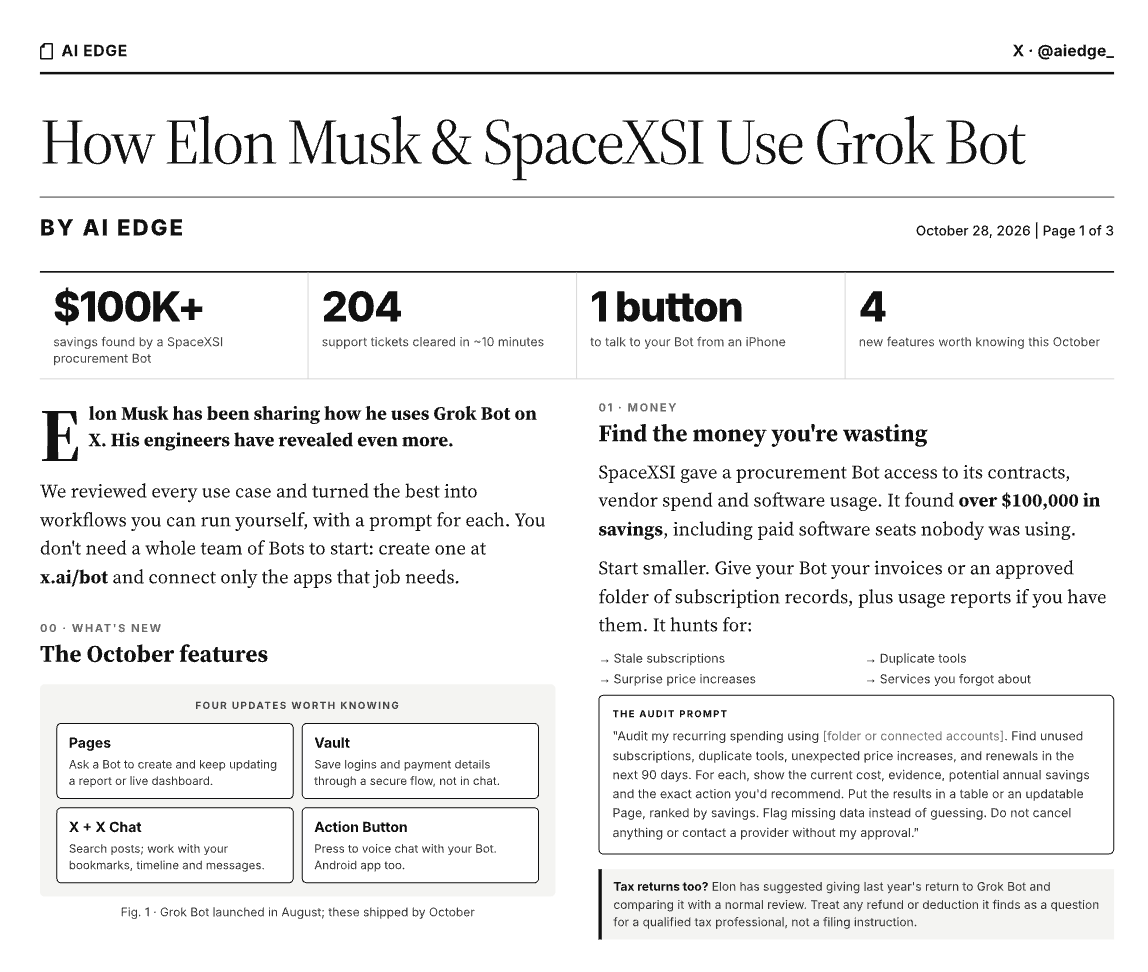
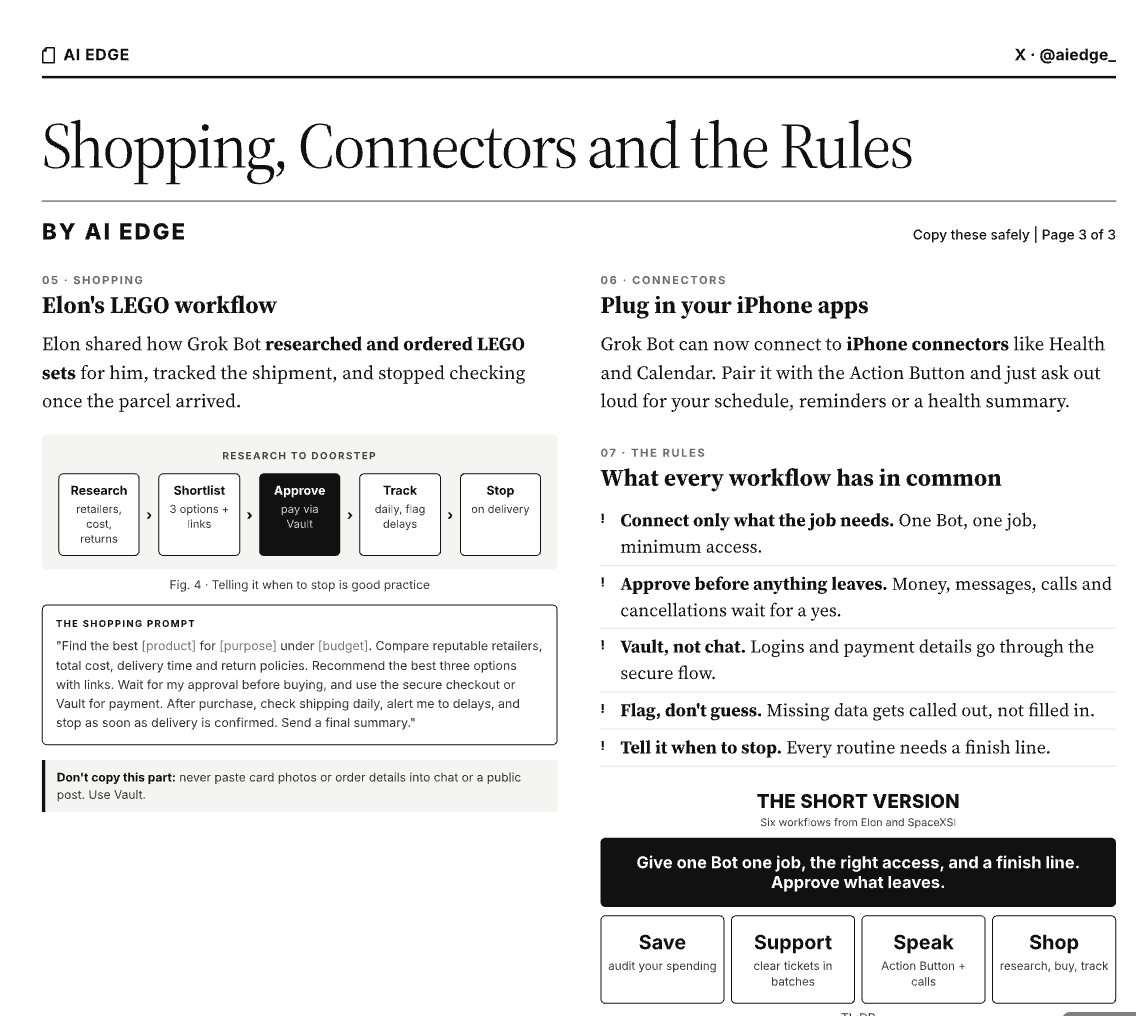
Elon Musk and SpaceX have posted dozens of tips for Grok Bot.
Most people have no clue that even 1/4th of them exist.
The smart Grok Bot users will tag their @bot to digest this:
holy f*ck, Anthropic put an entire Claude degree on GitHub for free...
7 repos, ~465K stars, and in the right order they take you from your first prompt to an agent that reviews your PRs while you sleep.
each repo is the next layer of the one before.
prompt-eng-interactive-tutorial -> how to talk to Claude
9 chapters, from basic prompt structure to cutting hallucinations
↳ https://t.co/0x6om0xmSU
claude-cookbooks -> copy-paste recipes
notebooks for RAG, tool use, vision, sub-agents and prompt caching
↳ https://t.co/OycSJH60Iq
claude-quickstarts -> full apps you can deploy
17 starter projects, from a support agent to Claude controlling a desktop
↳ https://t.co/aasswVCD8H
skills -> teach Claude your workflows
one folder with a SKILL.md and Claude does the task the same way every time
↳ https://t.co/QBDhmyGi9H
claude-agent-sdk-python -> your own agent
the Claude Code agent loop in Python, with your own tools and hooks
↳ https://t.co/e9urlxmzN5
claude-code -> the agent in your terminal
reads your codebase, edits files, runs commands and handles git
↳ https://t.co/IcZSEP81Lm
claude-code-action -> the agent in your repo
tag @claude on a PR or issue and it reviews the code or pushes a fix
↳ https://t.co/RPIjadCv58
build one agent with these and you become the person your team brings every AI project to, and that’s usually where the raise starts
the Opus 5.5 prompting guide that goes on top of all 7 is below ↓
🚨these github repos is SERIOUSLY DANGEROUS
Wall Street pays its engineers $500K+ a year to write code like this, 6 of the top firms put theirs on GitHub
6 repos built inside Goldman Sachs, JPMorgan, Jane Street, Jump, Morgan Stanley and Man Group, with 38.6k stars combined
First, get how it works:
1. Goldman Sachs' quants built gs-quant for pricing, risk and backtesting. JPMorgan's python-training is the exact course it uses to train its own traders and analysts.
2. Jane Street's magic-trace traces every function call at ~40ns. Morgan Stanley's Xpedite profiles low-latency trading code, "where latency directly translates to profitability". Jump's Firedancer runs Solana on a design taken from low-latency trading.
3. Man Group's ArcticDB stores and queries market data across billions of rows. Together it's a full desk: data, research, risk and speed.
Here's how you can run it for free yourself:
1. Open Claude Code and start with JPMorgan's trader course, python-training. Have Claude run the notebooks with you
2. Install Goldman Sachs' library: pip install gs-quant
3. Add the skill that teaches Claude Code to use it: python -m gs_quant.skills install --global
4. Have Claude pull 5 years of daily prices for GS, JPM and MS with free yfinance data
5. Store it in Man Group's database: pip install arcticdb
6. Run Goldman's risk math on it: volatility, max drawdown, z-score, beta to SPY. Then backtest one rule with fees. Claude writes the code and runs it
7. On Linux, trace your backtest with Jane Street's magic-trace and see where every microsecond goes
8. Moving to C++? Measure every critical path the Morgan Stanley way with Xpedite
9. Have Claude walk you through how Jump built Firedancer's pipeline (net, verify, dedup, pack, bank), then apply the same ideas to your bot
i won't say anything more:
Elon Musk just released a prompt that turns Grok Bot & Opus 5.5 into an entire first principles strategy team.
It's f*cking unreal...
Send it to Grok Bot & Opus 5.5, and thank me later. Then read the full playbook with examples below.
Don't Tell Claude
“Make me a dashboard”
“Make it look premium”
“Add some features”
You're leaving out the details that turn a basic interface into a functional dashboard.
Here are 15 Claude prompts to copy and paste👇👇
(Save now Build Professional Dashboard later)
holy sh*t. SpaceXAI just gave everyone 146 free employees and nobody's talking about it
i went through all 146 and built a team out of 8:
> Projects Manager hands out the work
> Researchy digs up the facts
> PM bot decides what ships
> figma bro turns designs into a build spec
> Lingxi's Engineer Bot writes the code
> QA bot breaks it before your users do
> Stills & Clips Desk makes the launch content
> Outbound Prospecting finds the customers
8 bots. 1 team. zero hires.
no interviews. no salaries. no "quick sync" meetings.
they pass the work down the chain and only ping me when something needs my yes.
the other 138 are still sitting there for free.
This hit me f*cking hard: a handful of people taught Claude to remember everything they know, and not one of them bothered to show the rest of us how
meanwhile everything you read goes into tabs, bookmarks and chats that never talk to each other
the people building the best AI setups right now are using this, and you can set it up in 20 minutes with Claude and Obsidian:
→ a vault with three folders: raw, wiki, output
→ open it in the Code tab of Claude Desktop
→ let Claude interview you and write its own CLAUDE.md
→ drop one article into raw and tell it to ingest
then open the graph. pages that didn't exist five minutes ago, already wired to each other
one scheduled task and it files everything you save while you sleep. you wake up to a log of what it learned
a week in, you ask one question and Claude connects sources you'd never have put together yourself
keep "using only wiki/" in your questions, or Claude fills the gaps and hands it back as yours
full build in the article below
save it so you don't lose it
It’s getting f*cking ridiculous: people are still building their Claude second brain by hand while Obsidian’s own CEO already open-sourced the shortcut
4 repos that do the setup for you, all checked on GitHub:
→ obsidian skills by kepano, Obsidian’s CEO. 49.8K stars. teaches Claude how Obsidian actually works
→ claude obsidian. 15K stars. wiki, ingest, query and lint as ready-made commands
→ obsidian second brain. 4.8K stars, 48 commands, runs in Claude Code, Codex and Gemini
→ second brain starter. interviews you and writes a 9-phase build plan for your exact setup
half the guides going around still quote old star counts and an install script that doesn’t even exist anymore
the full guide is in the article below, install commands included
save it so you don’t lose it
holy sh*t. Karpathy's second brain pattern runs on Grok Bot now: stop explaining your life to AI from zero every chat, keep a wiki that writes itself
three bots in one group chat, each with its own memory:
the reader takes every link, PDF and voice note you drop and never edits it
the librarian rewrites every wiki page that source touches, usually 10 to 15 of them
the checker wakes up on a nightly routine and hunts contradictions, stale claims and pages nothing links to
→ you ask a question: the answer gets filed back as a page, so the brain grows from use, not only from reading
→ a new source contradicts an old page: the checker tags you instead of quietly overwriting it
→ a page goes 30 days without a fresh source: it gets marked unconfirmed
a second brain can sound sure while remembering the wrong thing
Reader collects. Librarian writes. Checker doubts.
every page has to show:
> the claim
> the source it came from
> the date it was last confirmed
paste this into Grok Bot:
"Build me a second brain with three bots in one group chat. Keep my sources untouched in raw/, maintain wiki/ yourself, file good answers back as pages and run a nightly check for contradictions. Show me the structure first. Do not create anything until I confirm"
start with one topic you actually work on, not your whole life
full setup below
claude + REA can rebuild software features without copying a single line of code
opus 5.5 reads what REA finds inside a program, then rebuilds the feature in a separate clean-room setup.
here's how to do it:
1. run npx rea-agents setup to connect REA to Claude Code
2. pick a feature and let REA figure out how it works. save the behavior and rules in a spec file
3. start a fresh Claude session with only that spec. rebuild the feature without touching the original code
4. use /goal to run the tests and check 3 intentionally broken versions. all 3 must fail
one project recovered 697 functions in just 12 days, with 696 exact matches.
the real trick is building tests that catch mistakes before they become part of the finished software.
holy sh*t. Official Anthropic tip for Claude Code: stop burning Opus 5.5 context on tasks Haiku 5.5 can swarm, while Sonnet 5.5 builds
put the architect on call with /advisor
claude --advisor opus --subagents haiku
Sonnet 5.5 drives the primary session on high effort, writing diffs and running test suites
Haiku 5.5 subagents swarm the repo in parallel at 340 tok/s, handling file discovery and spec docs lookup
Opus 5.5 stays on call in the background as the advisor, only stepping in at three critical moments:
→ before a plan locks: does the implementation plan miss auth invariants or schema contracts?
→ when a test breaks twice: are we fixing the root cause or falling into a recursive rabbit hole?
→ before calling done: did the full diff introduce hidden regressions or break pre-flight rules?
Opus 5.5 reviews. Sonnet 5.5 builds. Haiku 5.5 swarms
Jev engineering runs the identical pattern one layer down: mechanical decisions that need no reasoning (which file to open, which tool to invoke, retry or abort) execute in 16ms, so the frontier models only wake up when execution paths actually diverge
Plan on high. Delegate on medium. Keep Opus on call.
- the full advisor setup
> Opus 5.5 on call reads full session history and catches deep architectural traps
> Sonnet 5.5 lead drives edits, writes core logic, and executes test harnesses
> Haiku 5.5 subagents swarm AST parsing, grep scans, and API docs in parallel
> JEV micro-fork layer resolves 1,500+ mechanical routing branches in under 16ms
> advisor stays completely silent on routine bash execution to protect context
paste the setup and this prompt into Claude Code below:
"Configure my Claude Code workspace for hierarchical advisor orchestration:
1. Audit ~/.claude/settings.json and project config for model roles fitting lead, subagents, and advisor:
> Pin main session model: sonnet with effortLevel: high for primary execution
> Pin subagents model: haiku with effortLevel: medium for parallel file discovery and docs retrieval
> Pin advisor model: opus on call for strategic review
2. Enable the advisor tool in ~/.claude/settings.json:
> Set advisorModel to claude-opus-5-5
> Enable subagent parallel dispatcher pool (3x workers)
3. Configure automatic advisor consultation checkpoints in ~/.claude/CLAUDE.md:
> Consult /advisor opus before finalizing multi-file architecture plans
> Automatically summon /advisor opus when the same test or compiler error fails twice
> Enforce advisor diff contract audit before declaring tasks complete or staging git commits
4. Constrain subagent scopes:
> Haiku subagents return structured AST summaries and docs snippets only without modifying main session context
Show every configuration diff first. Do not apply edits until confirmed"
↳
https://t.co/gvAWk6KbDn
Andrej Karpathy (ex-OpenAI, ex-Tesla) just released a prompt that turns Opus 5.5 into a 24/7 quant research desk that actually researches markets instead of just making shit up
It’s f*cking unreal...
send it to Opus 5.5 and let it build the entire research pipeline. then read the full guide for 24/7 Quant Trading Desk with Opus 5.5
Andrej Karpathy (ex-OpenAI, ex-Tesla) just released a prompt that turns Opus 5.5 into a harness that actually finishes the any job.
It's f*cking unreal...
send it to Opus 5.5, and thank me later. Then read the full guide for Opus 5.5 Harness Engineering.
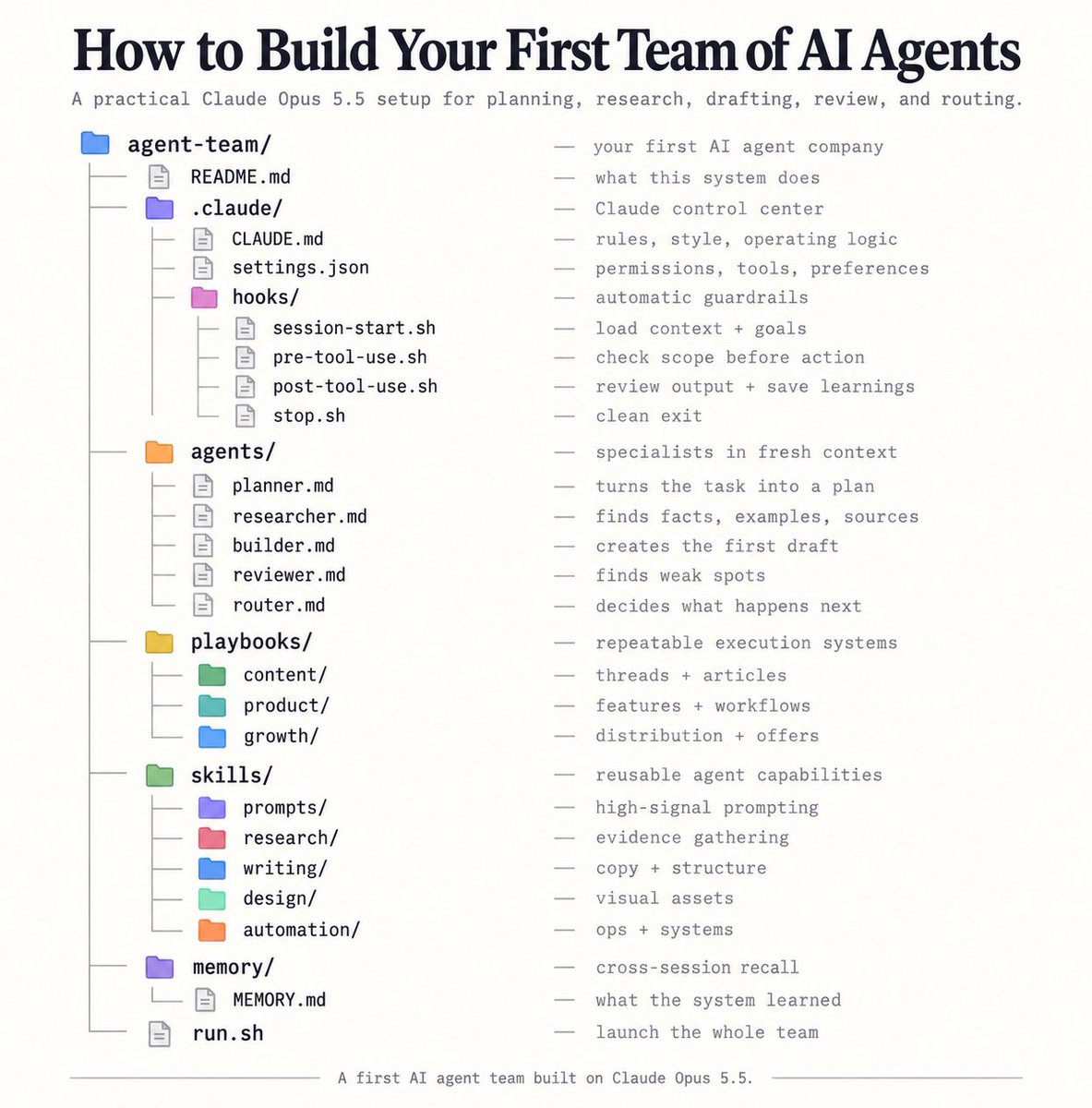
most people are still using Claude like a chatbot
this setup turns Claude Opus 5.5 into an operating system for AI agents
Planner → Researcher → Builder → DOTS + JEV
this is what your first Claude AI agent team looks like in 2026
send this to Claude to set it up:
Part 2, the build. Five controls that reported success while doing nothing:
https://t.co/nrKr75kBRa
Part 3, the approval. The threat model, and what to tell an auditor:
https://t.co/MEQz9cs7tX
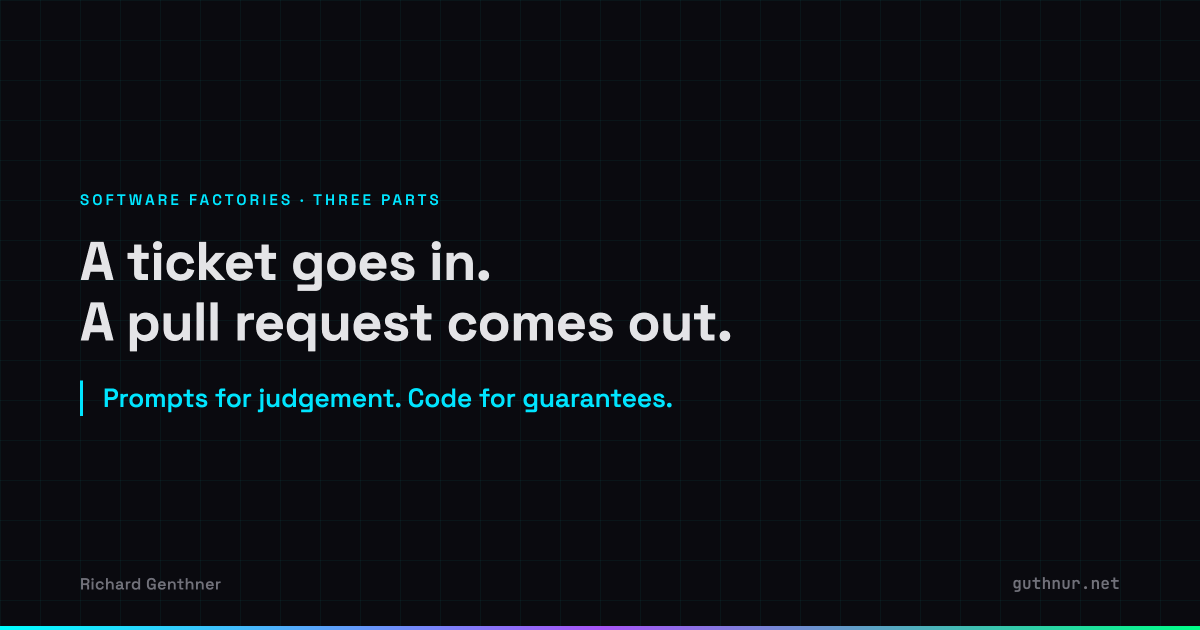
I built a software factory. A ticket goes in. A pull request a person can review comes out.
59 pull requests, median $5.84. Tokens were cheap. Review was not. Five controls reported success while doing nothing.
Part 1, the decision:
https://t.co/3wBp9prc9t