She said she wasn’t going to sleep with him.
Then she spent the whole night in his bed.
This is not a “MIND GAME.”
This is a woman who wants the closeness without the consequence and a man who may get blamed for reading the room she created.
Clarity is kindness.
Confusion is expensive.
Discipline beats games. Every time.
Men: would you stay after that?
Women: why do we do this?
C & Q ✍️🏾
𝑳𝒊𝒇𝒆 𝒅𝒊𝒅𝒏’𝒕 𝒃𝒓𝒆𝒂𝒌 𝒖𝒔 - 𝒊𝒕 𝒕𝒂𝒖𝒈𝒉𝒕 𝒖𝒔. 𝑮𝒖𝒂𝒓𝒅 𝒚𝒐𝒖𝒓 𝒑𝒆𝒂𝒄𝒆 𝒅𝒂𝒊𝒍𝒚.
A friend of Nkomo’s, Tiny Rowland, was Chairman of Lonhro, a big multinational company. He told me, Go to Harare and meet this guy Nick. Nick will give you money so you can buy tickets for Nkomo’s family to get out of the country. So when I got to Harare, I met with this Nick at the Meikles Hotel. It’s a big five-star hotel. He gave me the money and I got on the plane to go back to Bulawayo that same day. The plane was full of businessmen. I remember the mayor of Bulawayo was on the plane, too, and the town clerk and several businessmen, black and white. Soon after we landed, just as I entered the terminal in Bulawayo, I was surrounded by armed police, twenty or thirty of them, plainclothes but making sure to show their guns. They put me in the back of a truck while somebody was driving my Mercedes behind and took me to Stops Camp. Thandi, her mother (Nkomo’s wife), and her brother were already there when I arrived.
John Ndhlovu—Hope Deferred: Narratives of Zimbabwean Lives
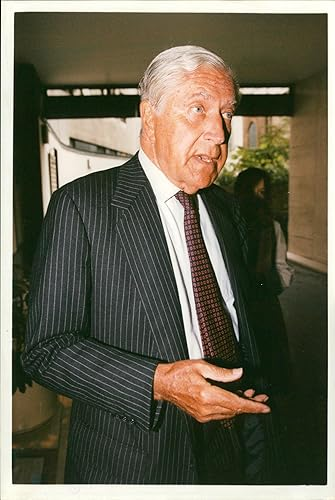
Enos Nkala, who has died aged 80, helped to mastermind the suppression of the Matabeleland region of Zimbabwe in the 1980s, inflicting torture and terror at the behest of his master, Robert Mugabe.
The bitter twist was that Nkala came from Matabeleland and was himself Ndebele, the minority tribe singled out by this brutal campaign. Mugabe, supremely cynical and manipulative, gave Nkala the task of ravaging his own homeland and tormenting his own people.
As home affairs minister, he shared personal responsibility for a campaign which claimed at least 8,000 lives, making it the bloodiest episode in Zimbabwe’s post-colonial history. In a rare moment of introspection shortly before his death, Nkala predicted that his crimes would consign him to “eternal hell”.
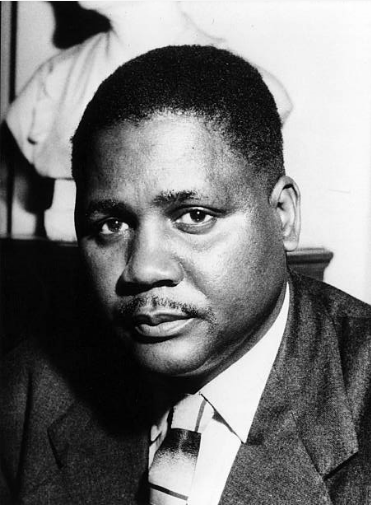
Nkala became Mugabe’s most feared enforcer after the collapse of an uneasy coalition between the ruling Zanu-PF party and Joshua Nkomo, the leader of the Zapu party. This was essentially a truce between Zimbabwe’s two largest tribes: Mugabe’s majority Shona people and Nkomo’s Ndebele. The deal fell apart in 1982 when Nkomo was ejected from the cabinet and accused of planning armed rebellion.
This supposed plot was almost certainly an invention, but Mugabe retaliated in January 1983 by sending a special army unit to Matabeleland, the home of the Ndebele in western Zimbabwe. The Fifth Brigade’s task was to wage war on the population, eradicating Zapu and enforcing support for Mugabe by terror and violence.
Nkala became an ardent accomplice for two reasons: first, he nursed an obsessive personal hatred of Nkomo dating back to 1963, when the black nationalist movement split between Zapu and Zanu-PF; second, he clearly hoped that his loyalty would be rewarded.
The news of Nkala’s appointment as home affairs minister in 1985 was received with dread in his homeland. “There could not have been a more irresponsible person in whose hands to place the sweeping authority of the Emergency Powers Regulations,” the Catholic Commission for Justice and Peace noted in a study, Breaking the Silence.
Within a week of taking office, Nkala had ordered police to raid Nkomo’s home in Bulawayo and arrest the politician’s personal staff. “We want to wipe out the Zapu leadership. You’ve only seen the warning lights. We haven’t yet reached full blast,” said Nkala. “The murderous organisation and its murderous leadership must be hit so hard that it doesn’t feel obliged to do the things it has been doing.”
Nkala’s next act was to revive the Police Internal Security Intelligence Unit (PISIU), a thuggish organisation that reported directly to him. This specialised in “disappearing” anyone targeted by the minister. On Nkala’s orders, people would be plucked from street-corners in Bulawayo or remote villages in Matabeleland and never seen again.
The PISIU became his personal intelligence agency, working in bitter competition with the established Central Intelligence Organisation (CIO). Driven by Nkala’s singular vindictiveness, it became “even more ruthless and brutal than the CIO,” according to Breaking the Silence. Those who survived its clutches routinely endured torture and assault – all on the minister’s orders.
Nkala did not conceal his aims. At one rally, he told his fellow Ndebeles: “If you support Zapu or dissidents, you shall die or be sent to prison.” In a BBC interview, he said his goal was “to liquidate” Zapu.
Nkala carried out this promise on September 22 1987, issuing an order that closed all Zapu’s offices and banned the party from holding rallies. Drawing a comparison with a rebel army then laying waste to a neighbouring country, he declared: “From now on, Zapu would be viewed in the same manner as the MNR bandits in Mozambique.”
A combination of Nkala’s terror and Fifth Brigade’s military campaign achieved its purpose in December 1987 when Joshua Nkomo wearily surrendered. He signed the “unity accord” which formally dissolved Zapu and brought him into Mugabe’s government as a powerless vice-president.
The killing stopped almost overnight – and Nkala lost his usefulness almost as quickly. Whatever reward he hoped to gain from tormenting his own people at Mugabe’s behest proved illusory.
Nkala lingered on as home affairs minister, but as the full horror of what had taken place became clearer, Mugabe increasingly treated him as a marginalised embarrassment. Anxious to shift the blame for the bloodshed onto other shoulders, Mugabe found it imprudent to single out the Fifth Brigade’s commanders, for they had the option of retaliation by means of launching a military coup. Nkala, unable to hit back and entirely beholden to his master, became the defenceless repository for odium.
He was eventually exposed for joining a scam whereby ministers bought their official vehicles for a discount, before selling them for a fabulous profit. In truth, almost every member of Mugabe’s government was corrupt or compromised in some way – and only those who fell out with their leader were ever punished. Nkala was duly sacked for corruption in 1989.
Enos Mzombi Nkala was born in the Filabusi area of Matabeleland South province on August 23 1932, the son of a Methodist preacher. After attending a mission school, he worked variously as a factory labourer and newspaper-seller.
He moved to the capital, then known as Salisbury, and joined the campaign against white Rhodesian rule. Nkala would later claim that Zanu-PF was founded in his house in Highfield township.
Ian Smith’s white regime jailed the leading black nationalists in 1963 and Nkala spent the next 11 years behind bars. When he was released in 1974, Nkala did not follow Mugabe into exile, with the result that he was locked up again, only finally being freed six months before Rhodesia became independent Zimbabwe in April 1980.
He had a reputation for being a violent rabble-rouser. Lord Soames, the last British Governor of Rhodesia, banned Nkala from standing in the first free election in 1980. But Mugabe, the winner of this contest, simply appointed Nkala to the Senate and made him Zimbabwe’s first black finance minister.
After his sacking from the home affairs ministry, Nkala gave the impression of being haunted by his past. Sometimes, he would blithely deny that he had done anything wrong; on other occasions, he would claim (with some truth) that he was only obeying Mugabe’s orders. Once, he talked ruefully of the “hell” that awaited him.
Ordinary Zimbabweans, anxious to forget the most painful episode in their history, preferred to ignore Nkala.
In his last years, he became a faintly pitiful figure. It took him a while to realise how he had been shamelessly used and manipulated by Mugabe. When the penny finally dropped, Nkala was brave enough to speak out against the man for whom he had committed terrible crimes with total loyalty.
During the bloodstained and shamelessly rigged presidential election of 2008, Nkala publicly called on Mugabe to go. By then, however, he was a despised and toothless figure whose words carried no weight.
Enos Nkala is survived by his wife, Thandiwe, and several children.
Enos Nkala, born August 23 1932, died August 21 2013
In early March 1983, during the Matabeleland North curfew of Gukurahundi, Joshua Nkomo escaped by the skin of his teeth from being assassinated by the Fifth Brigade and CIO in Bulawayo’s high-density township of Pelindaba. About a month before that I stood at Bulawayo International Airport and watched the immigration people confiscate his passport as he was trying to leave on a flight to the UK. The police supervised the confiscation while we in the CIO stood by and watched. Nkomo created a bit of a fuss—with some of his bodyguards getting quite anxious, resulting in their arrest and detention under the emergency regulations. They were held in Stops Camp for a couple of months before being released.
Nkomo was not detained and was driven off in a huff a couple of hours after his passport was seized. Under orders from Minister Herbert Ushewokunze, a month later, the police sealed off Pelindaba while the Fifth Brigade soldiers searched for Nkomo, who was well aware that his life was in great danger and frequently altered where he slept at night. As his passport had been seized a month earlier he couldn’t go anywhere, so he had to be in town. He was a very well-known man, and because of his enormous 130-kilogram frame he found it impossible to disguise himself. When the soldiers discovered that Nkomo was not at home and after searching his house, during which they destroyed as much property as they could, they went crazy, shot three people, and smashed the windows of Nkomo’s vehicles which were parked in the driveway. His chauffeur, Yona Ncube, was one of those killed.
The Fifth Brigade platoon who searched Nkomo’s house said that Ncube had pulled a gun on them soon after they broke the front door down, but the driver’s blood-splattered bed in a side room told a different story. Another person, a pedestrian who was simply walking past the house and happened to be in the wrong place at the wrong time, was also shot dead. Pelindaba’s high-density township falls in the police area of Western Commonage. Nkomo’s house is probably two kilometres as the crow flies from Western Commonage, whose officers refused to attend the shooting and murder of the driver and his friend at Joshua Nkomo’s house that night.
The Kevin Woods Story: In the Shadow of Mugabe's Gallows Hardcover
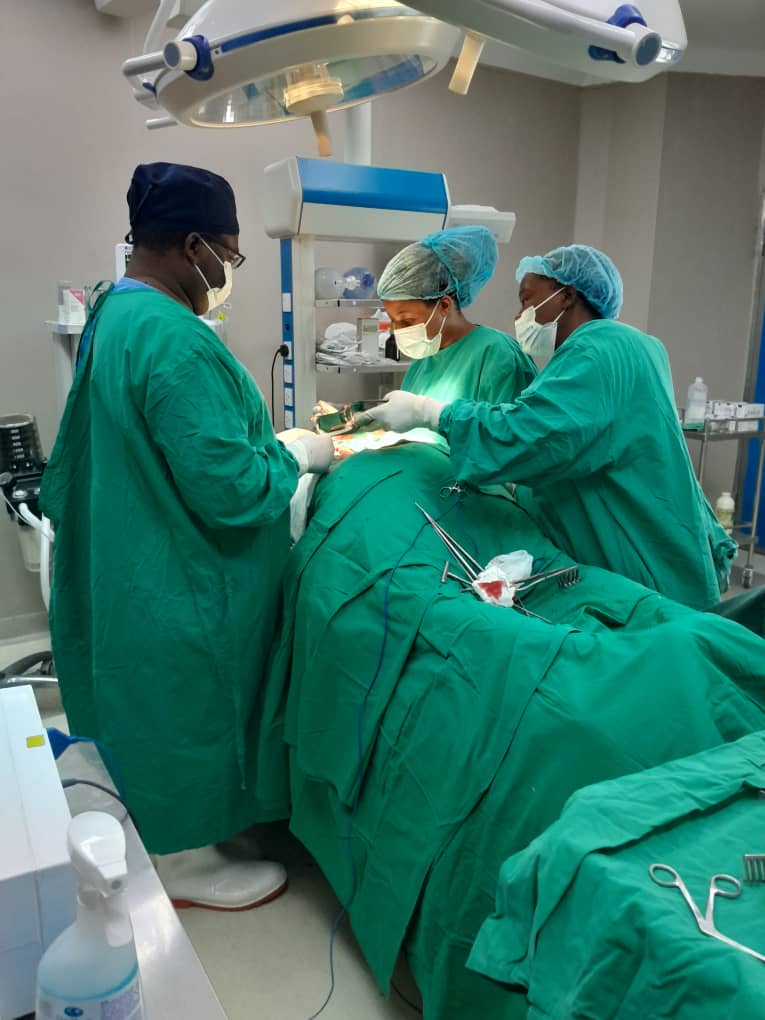
Meet Dr Lawrence Hlatshwayo a United Bulawayo Hospitals (UBH)-based neurosurgeon. He performed a historic spinal cord operation on Thandekile Mpofu in Bulawayo with success. Join me in celebrating this champion and his team.
📸 Credit: @DailyNewsZim
I never found it instructive that one of my dad’s best friends hailed from Matabeleland. It wasn’t VaNleya’s ethnicity that I regularly appreciated on Saturday afternoons, but his liberal, dynamic and jovial character. Mr Nleya loved to drink beer and talk. And although my dad didn’t drink alcohol, he got along extraordinary well with VaNleya.
Whenever he was around, our home would be filled with diverse, stimulating conversations and wonderful music blaring from the brown vinyl player in the sitting room. We would always play our treasured 12-inch records and enjoy the pleasure of a small, basic liberty in life: friendship.
Right about the same time, I had developed a voracious appetite for reading, history and politics. Besides perusing the dogmatic Herald every day, I read the Financial Gazette on Thursday evenings. But it was my dad’s subscription to parliament’s Hansard that I found most valuable.
I really loved the fiery contributions the late Sydney Malunga made to parliamentary debates. Yet, I never found it instructive that Malunga represented Mpopoma on a Zapu ticket, spoke Ndebele as his mother tongue and came from Bulawayo.
My infrequent visits to Mpopoma never disappointed me, as I had family living there. My late nephew, Weston Mayimbo, had grown up in Bulawayo. There, he had raised a family and started a string of businesses, including a butchery in Mzilikazi. So, when our family travelled to Hwange or Kamativi, via Bulawayo, we often visited SaMayimbo’s home.
It was indescribably great to have family engrained in the heart of Bulawayo’s urban landscape, steeped in the traditions of Matabeleland and rooted in the underbelly of a pulsating melting pot. Yet I never found it instructive that SaMayimbo, an affable SaManyika to the core, had raised a wonderful family over 600 kilometres away from his ancestral home in Honde Valley.
I just mingled enthusiastically and enjoyed the cultural ebbs and flows that a young, fluid and developing society provided. So I must admit that the 1987 Unity Accord took me by surprise, because the Matabeleland massacres had been shrouded in absolute secrecy.
They in fact existed beyond the moral realm of the daily interactions many of us actively sought and enjoyed.
We refused to define ourselves through a contrived prism of tribal hate, political opportunism, repression or murder. So to portend that prior to 1987, Zimbabwe had been divided, was merely propaganda. Worse still, I found the suggestion that the so-called unity arrived at on paper, included me, rather mystifying, maddening and demeaning.
It wasn’t my decision to hound, rape and kill pregnant women, and dump their lifeless bodies in mass graves. I honestly played no part in supporting moves to target and murder young men in Matabeleland. In fact whatever former president Robert Mugabe may have said, claimed, signed or purported to do for ‘us’ in Matabeleland and Midlands, only to subdue Zapu, I’m sorry, but he didn’t represent me on any logical, tribal or political level.
By December 1987, many of us loathed his presidency and had silently jumped onto Edgar Tekere’s anti-establishment bandwagon. We just weren’t allowed to publicly voice our massive disgust at the government’s totalitarian rule or question the authenticity of the Unity Accord’s stated intentions.
Its aftermath has been similarly very disappointing, as the Unity Accord has given expression to simmering disunity.
The agreement has provided a foundation to whitewash brutalities and stifle political talent from Matabeleland. Yet, we celebrate our negotiated togetherness every December, basically clueless about and insensitive to the physical and mental wounds imposed by Gukurahundi atrocities on thousands of innocent men, women and children’s lives.
Under the permeable umbrella of the Unity Accord, things have become so bad, people are pleading with the government to apologise to the victims of Gukurahundi. They are not demanding a deserved apology, but are begging for a public expression of formal pretence from a sullied, unsympathetic and unrepentant president.
Still, demanding that government finds a resolution to the Gukurahundi injustices shouldn’t be the sole preserve of the Matabeleland Civic Society or Matabeleland chiefs. It shouldn’t be a local or provincial affair that draws limited oxygen from an oppressive Zanu-pf government.
It should actually be a progressive national imperative. Time and again Zanu-PF has adopted a kill and negotiate strategy as a means to a political end. Many a time it has employed divisive nationalist philosophy to foment considerable distrust, violence and political chaos amongst us, and many have taken the bloody bait. That shouldn’t be allowed to persist, as a resolution to Gukurahundi is unendingly tied to our struggle for a stronger democracy and economic parity.
It’s a shame our brothers and sisters were killed in the name of Zimbabwe, only for where they lived and who they were. Nonetheless, today, it remains a festering embarrassment that, many among us, who masquerade as woke activists and progressive leaders, have not really stood up to demand justice and compensation for the disappeared, tortured, raped and slain.
Indeed, they have not gone the distance to fight for our moral sustenance vis-à-vis Gukurahundi.
However, I sympathise with every individual’s unsolicited struggles, and owe my many of my greatest friendships and special moments in life to embracing ethnic diversity across the length and breadth of our beautiful nation.
I owe my identity to many impassioned souls who defied conventions and demonstrated that genuine unity could flourish free from dubious political agreements and traditional beliefs.
Suffice it to say that it is impossible to fully appreciate the gorgeous tapestry of ethnic diversity without resolving our government’s violent impunity during Gukurahundi once and for all. Indeed, it’s time to dump the Unity Accord and conclude a new, progressive pact.
5. And for the avoidance of doubt @nickmangwana, here is the late Zimbabwean Economist John Robertson explaining that if you don’t service your loan, and a bank stops giving you more money, that is not sanctions, that is just good banking practice.
But Mthuli Ncube wouldn’t understand that because he collapsed Barbican Bank and ran away with depositors money!