Ideas for reversing the collapse in global fertility, the greatest challenge of our age. Humanity is precious.
HT to many great demographers and data analysts.
The economics of population aging are impossibly dire. Government debt levels have exploded around the world, largely due to spending on seniors.
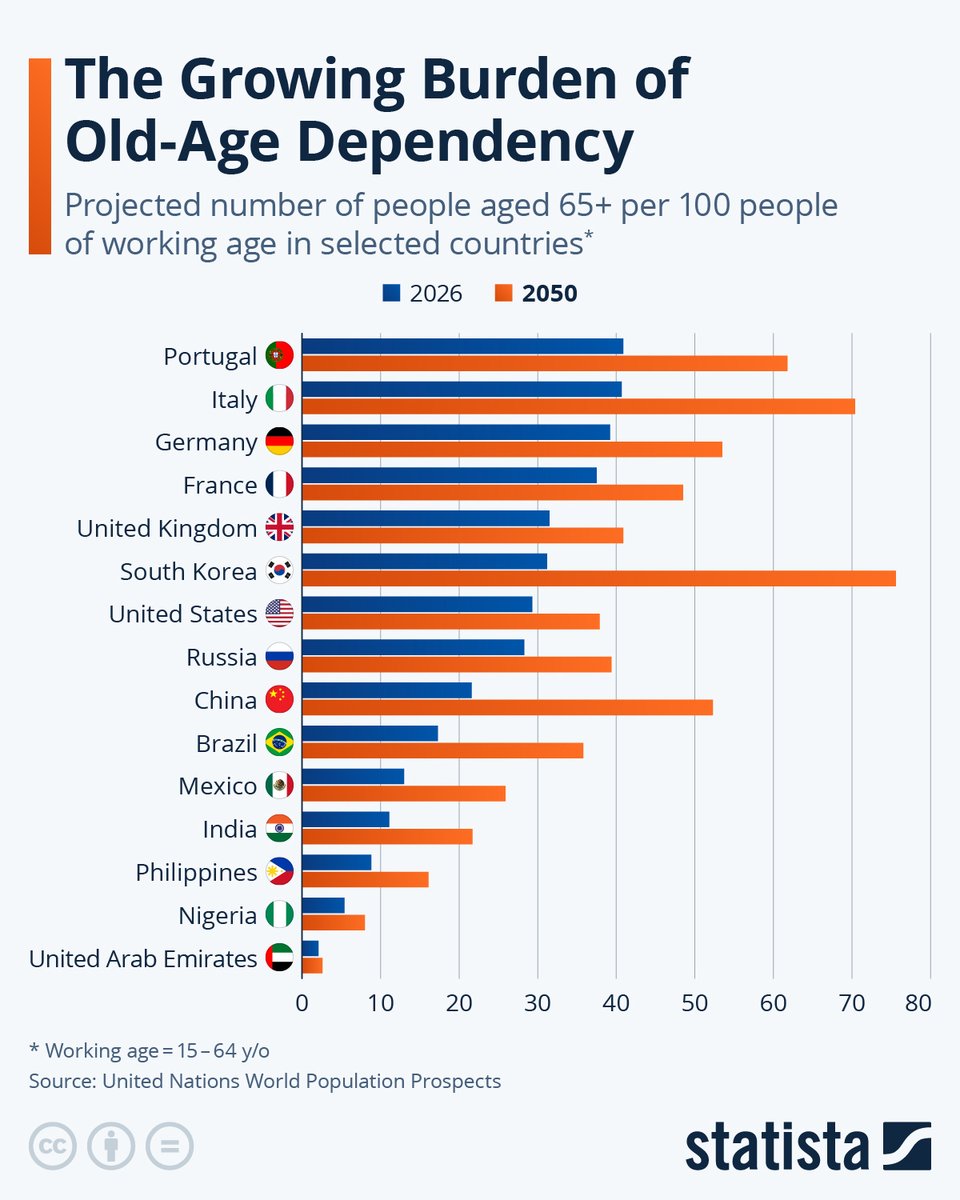
But if things seem bad now, budgets are about to get incomparably worse as old-age dependency skyrockets to 2050. 🧵.
Meanwhile the claim immigration will fix things runs into a big problem.
Most high fertility countries have very low average human capital. Low-skilled immigration actually increases dependency and worsens deficits. 3/3
(Chart: US Career Inst.)
The economics of population aging are impossibly dire. Government debt levels have exploded around the world, largely due to spending on seniors.
But if things seem bad now, budgets are about to get incomparably worse as old-age dependency skyrockets to 2050. 🧵.
Spending PER SENIOR is far larger than ever before (@FT). That might work if there were many workers for every retiree.
But soon there will be barely 2.5 people of working age for every senior in the US and much less than 2 in China, Germany, Italy and Japan. 2/3
An excellent analysis of how Laestadian Lutherans have been vital for Finland's demographic health.
Though only a small minority of the Finnish population, Laestadians boost fertility by quite a lot in the areas where they have a presence.
So I have finally taken the time to assemble an article on the Demography and Fertility of Finland’s Laestadians.
As most of you know, this has been my main interest for years.
I hope that it will answer most of the questions that people can have on the topic.
So I have finally taken the time to assemble an article on the Demography and Fertility of Finland’s Laestadians.
As most of you know, this has been my main interest for years.
I hope that it will answer most of the questions that people can have on the topic.
Spending on Seniors is Swamping Everything Else
Today @FT published several remarkable charts. In the US, UK, France, Spain and Italy consumption spending among those 60+ is now higher than any other age group. That is historically without precedent.
At the same time, the relative economic position of those in their childbearing years is lower than ever. In the recent election in the US, the Republican defeat was driven by a huge shift to the left by the youngest voters, who named the cost of living as their biggest issue. Republicans actually gained slightly among seniors.
Excessive Spending on Seniors Squeezes Out Families
Spending on the old seems to know no limit. Just days ago, a bill was put forth by Wisconsin Sen. Ron Johnson to allow transfers from the Treasury’s general fund to the Social Security trust fund once reserves run out. Observers say this would add an unfathomable $190 trillion to the US debt over 75 years. Already spending on seniors vastly exceeds all other government spending in the US and many other countries.
Young families pay for this in numerous ways. Rising prices are the direct result of the huge budget deficits caused by all this spending.
Meanwhile, a disproportionate share of single-family homes in the US and elsewhere are owned by empty-nester seniors while those who want to build families are priced out.
With birthrates at all-time lows, you would think we would be finding ways to help support families. But families are squeezed out by retirees in the competition for federal spending in the US and across Europe.
Seniors Didn't Earn All That
Most seniors are quick to declare that they've earned all the Social Security and other benefits they are getting. But that's not true. Baby Boomers will get out 2 to 3 times what they put into Social Security, adjusted for inflation.
Folks predicted that seniors would get squeezed as society aged. Instead, seniors are getting more than ever, while young people make up the difference. That's one reason young people are having so few kids, which will make our problems that much worse.
Democracy Became Gerontocracy
Some of the most perceptive thinkers have been asking if we can even vote our way out of this. Seniors are a huge political faction, especially in Europe. The mere hint of benefit cuts seems politically suicidal.
But the Great Blue Tsunami of 2026 showed that spending without limit on seniors while ignoring inflation is not a winning strategy either. We just witnessed a massive rebellion against the status quo, led by young people. But is there any political will to address the root of the imbalance, which is unaffordable spending on things like Medicare and Social Security?
If we want to get birthrates back up, and just have a sustainable society, we'll need to find ways to financially rebalance society away from the old and back toward the young. More on that below!
In fact, a major reason assimilation has gone so much better in the United States than in Europe is that historically in the US, births were always high relative to immigration. That meant there was a always majority culture to assimilate to. To have the capacity to assimilate more immigrants, higher fertility is important.
Low births = low capacity to assimilate immigrants.
https://t.co/JVTe8IfP73
Illiberal Cultures are Overwhelming Liberal Ones
The crisis of low fertility is very non-uniform in its effects. Liberal and progressive societies, which that embrace high education and modern values, are precisely the ones most impacted by low birthrates.
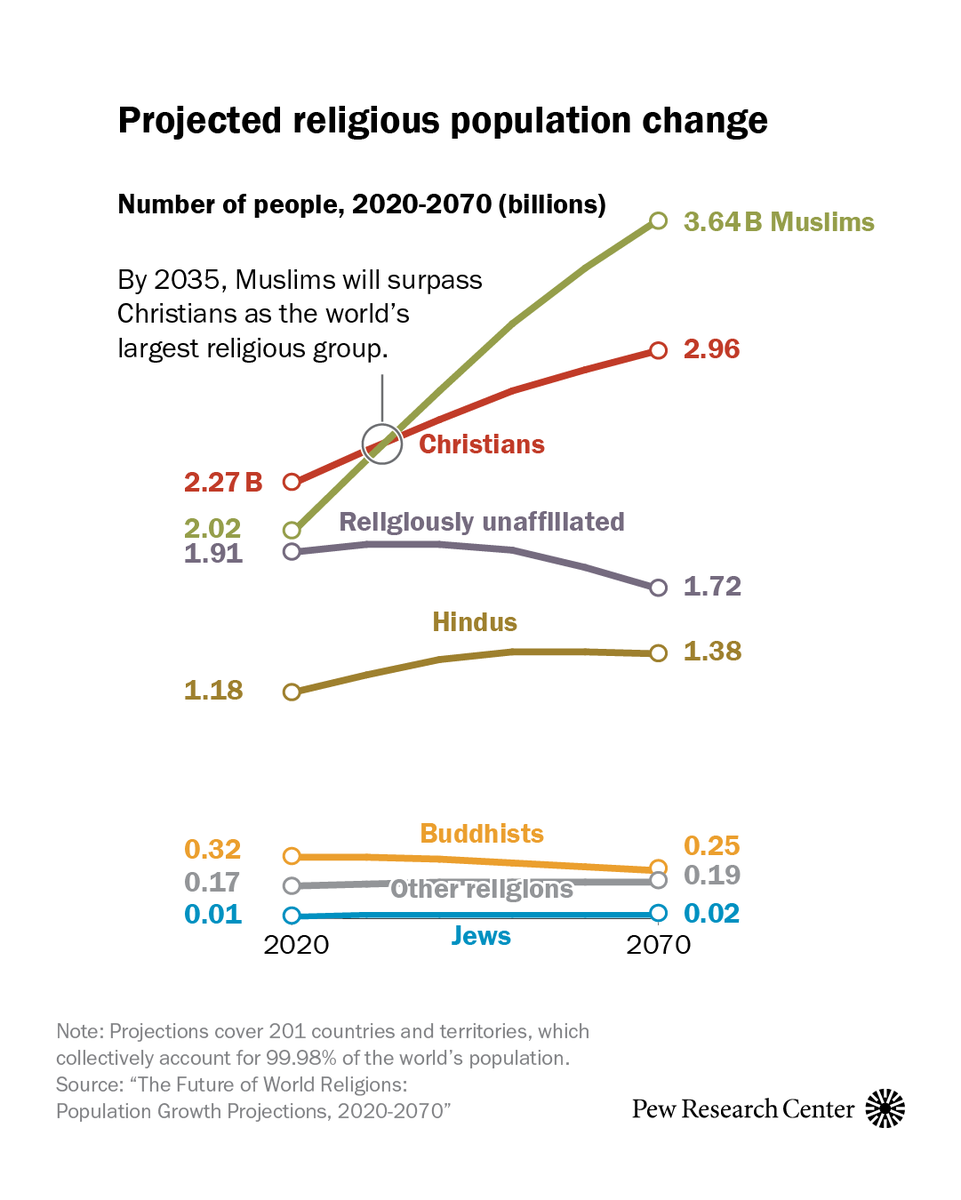
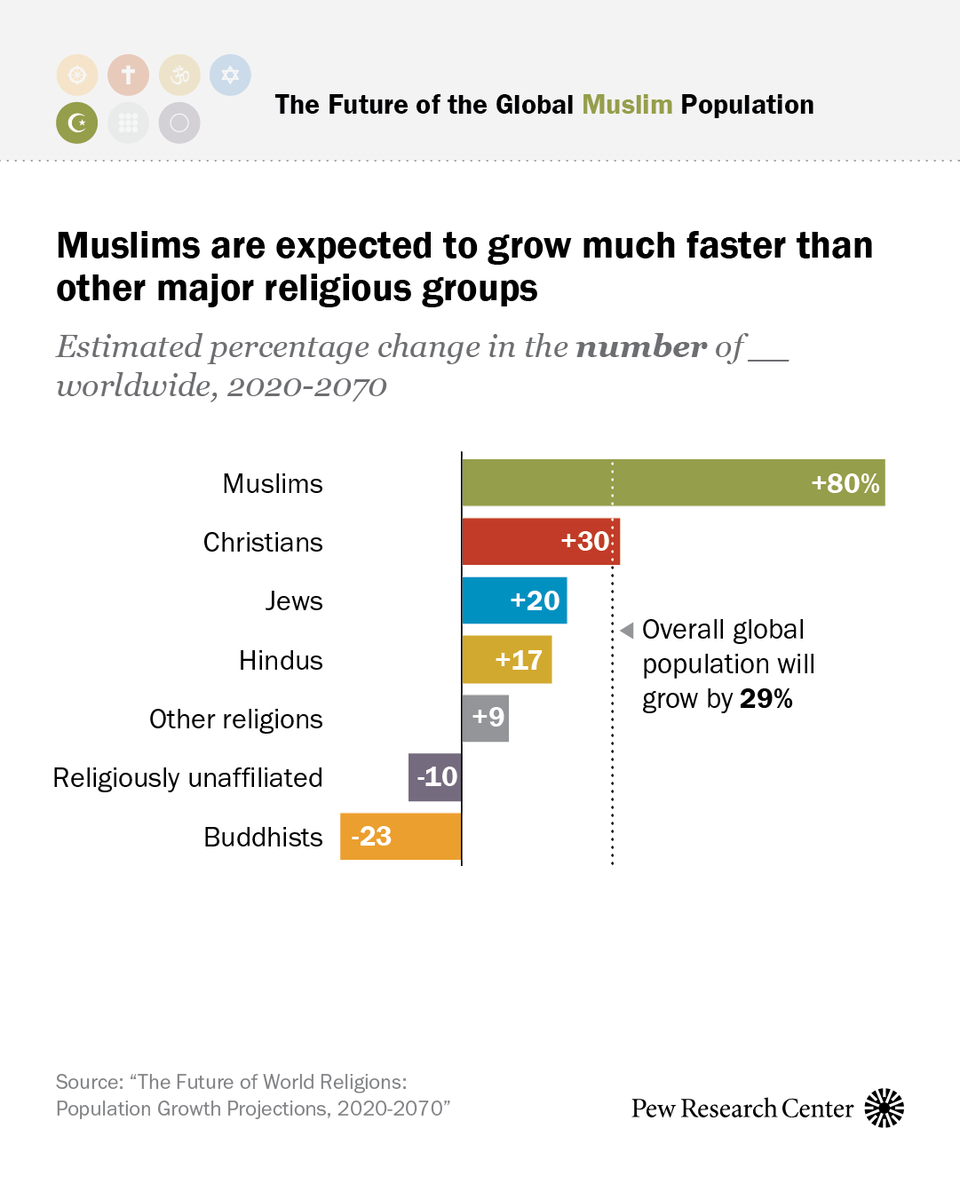
A new Pew study published today drives home the staggering imbalances. Very illiberal cultures hostile to education and women's rights will see explosive growth over the next fifty years.
Meanwhile cultures devoted to education, women's freedom and technological progress will see relative and even absolute decline.
The cause is extremely large differences in fertility. Ultimately, liberal societies will need to learn to combine progress and advancement with healthy birthrates. Until then, they risk being overwhelmed by illiberal cultures.
This is means for the time being, open borders are incompatible with liberalism. Cultures antithetical to liberalism will have the numbers to overwhelm liberal societies.
@ReidFravert Long education tracks, better birth control, smartphones, declining religiosity and less marriage are all causes of falling fertility. What does bad money have to do with any of those things?
@AlexNowrasteh That depends on your measure. Immigrants and their children have for generations voted far to the left of the country as a whole.
But relative to most of Europe, yes assimilation is going quite a bit better in the United States.
Why is Korean fertility so low? Writing for @JoongAngDaily , @PeterRFB and I offer a simple explanation:
KPOP is destroying Korea.
https://t.co/VpS2ggp5XQ
Senator Johnson says we have to "start addressing our entire looming debt and deficit before we plunge into a debt crisis."
Then he drafts a bill that will plunge us into a debt crisis. Will a single Republican Senator stand up for workers and families?
~75% of the drop in US fertility since 2007 is just fewer people getting married.
Married couples are still having kids at nearly the same rate they did in the 1970s!
So it’s not daycare costs. It’s not "kids are expensive." It’s not microplastics, AI, or climate doom either.
People can’t find what they want in the marriage market.
Jordan Peterson's life plan for women flips the usual order: kids first, then a 40-year career.
He thinks the standard script has it backwards.
Peterson: "Having your children before you're 30 is a wise move if you want to ensure that it's going to happen."
His math is simple. About three years of dedicated care per child, two or three kids, so five or six years in total.
Peterson: "If you started your career at 30, you could have 40 years of career, which is a lot."
Then he adds the twist most people miss.
Peterson: "Women live about six or seven years longer than men."
So in his version, women get the career and the family. Just not at the same time.
The line that will make people angriest is this one.
Peterson: "Some people have a career. Most people have jobs."
That's the part worth thinking about. Most career advice is written by and for people who love their careers. For everyone else, the job that took priority over kids at 25 is usually just a job at 45.
You can disagree with his order. But hardly anyone tells women in their 20s what the trade-off actually costs, on either side.
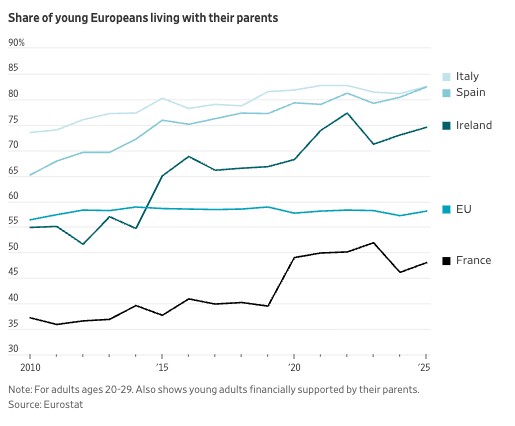
An incredible 85% of 20-somethings in Italy and Spain still live with their parents. The fertility rates of Italy and Spain in 2025 were 1.14 and 1.11 respectively.
These facts are closely related.
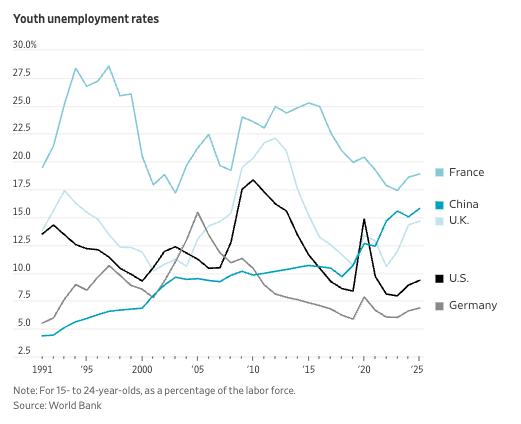
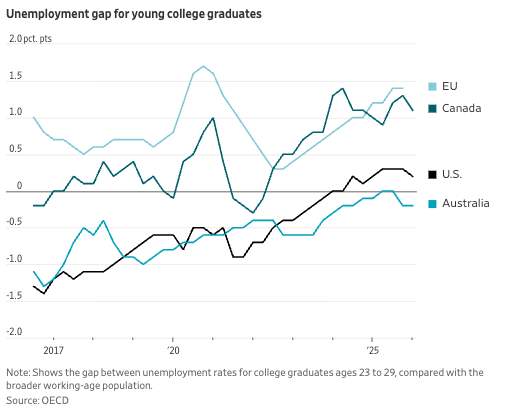
Young people around the world are not okay. Incredible graphs from WSJ
1. Unemployment rates for young college grads have been climbing compared with the broader population for years
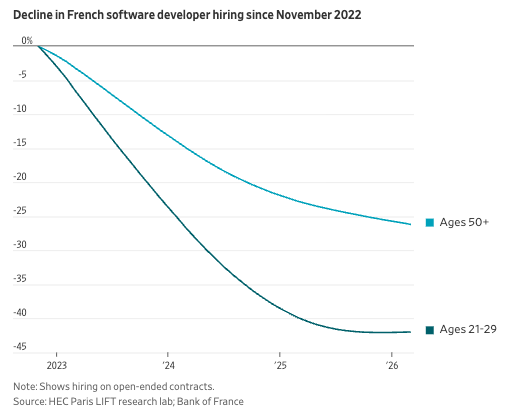
2. AI might be exacerbating the employment challenges for young ppl in software
3. In Italy and Spain, more than 80% people in their 20s live with their parents (!?!!?)
4. Youth unemployment in China has gone from non-existent to one of the highest in the world during a period when its poverty rate has plunged. Weird.
In Minneapolis, Chicago and Auckland, NZ, YIMBY-style housing reforms actually lowered birthrates.
Why? Because the housing that got built was unsuitable for families.
What families need is for cities to get rid of urban growth boundaries and allow more SFHs. Read more below!
@TPCarney@iloveyOOOOu1399@AboveTheGods_ Yes. In fact YIMBY reforms actually reduce fertility in Auckland NZ, Minneapolis and Chicago.
Families need SFHs, not more apartments.