🚨🚨🚨 Paper Alert!
We reported 361 medusozoan species in Cuban waters — the highest richness in the Caribbean — including new species records & expanded distributions.
Available: https://t.co/tEyvjkMF6C
#jellyfish#biodiversity#marinescience
🚨Paper Alert!
Our review explored the ecological roles of upside-down jellyfish Cassiopea - from photosymbiosis to pollution tolerance. A key bioindicator in changing seas.
Read more👉🏻 https://t.co/ge8yHrMebR
#jellyfish researchers interested in attending the 8th International Jellyfish Blooms Symposium in Cork 2026, a placeholder webpage is now live:
https://t.co/7MCfea5zvY
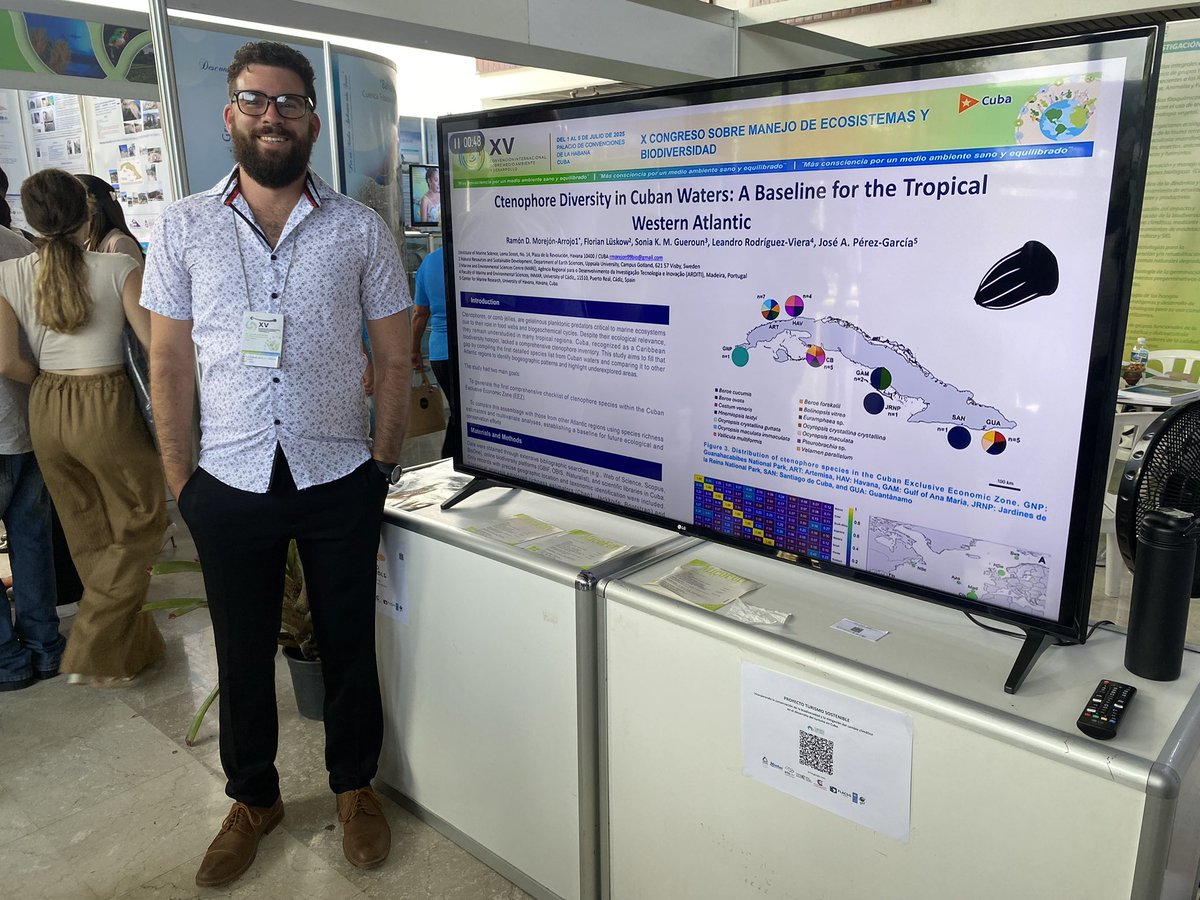
XV International Convention on Environment and Development, Havana, 2025
-🪼 rare record of an Hydromedusa in Cuba.
- Ctenophores in Cuba and baseline for the Atlantic.
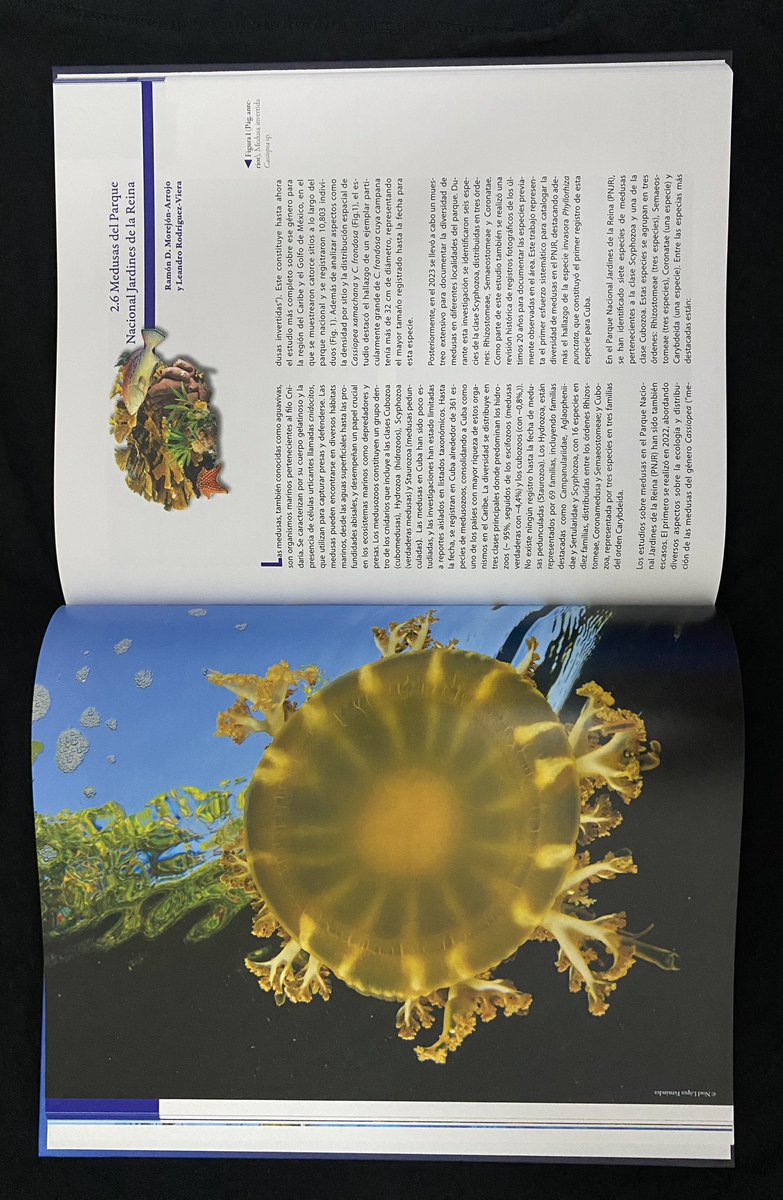
- Summary of jellyfish diversity in Jardines de la Reina
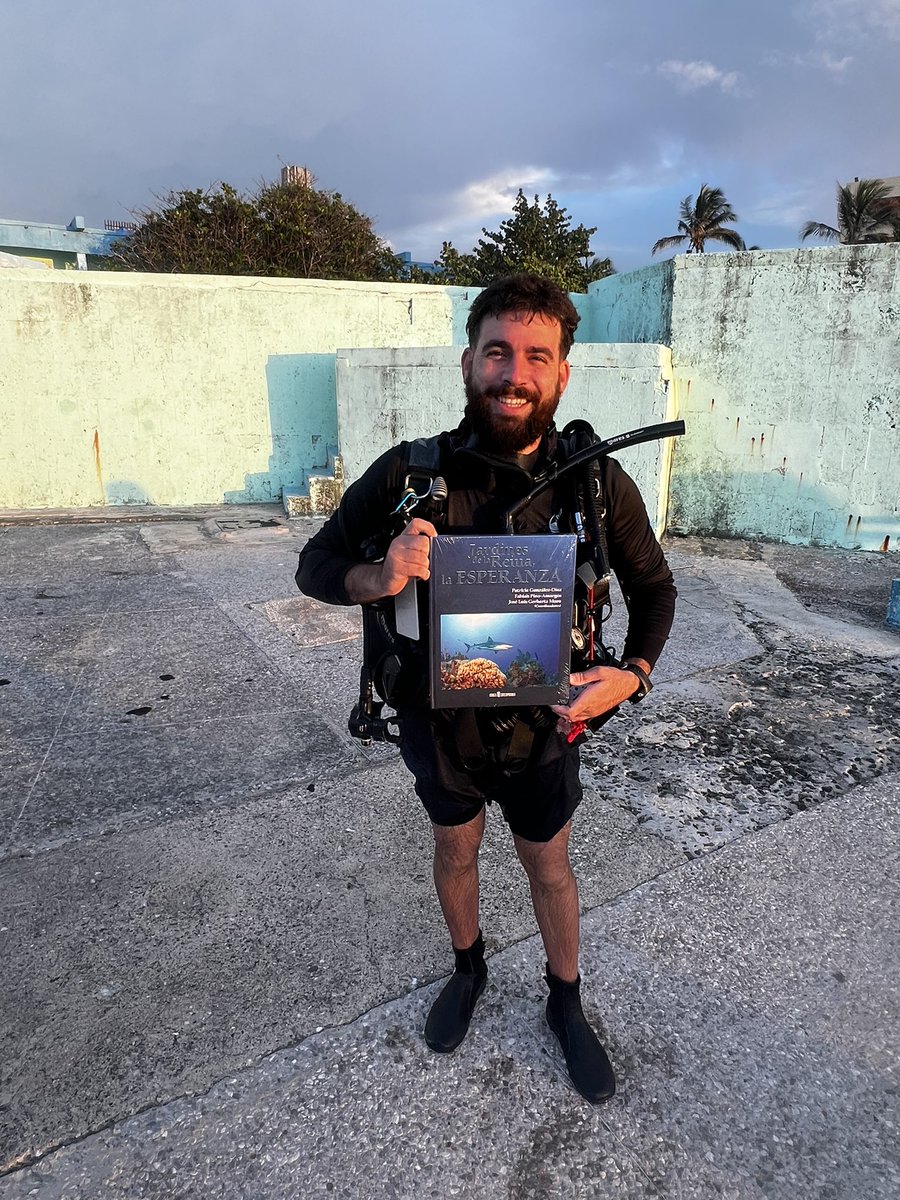
Finally in my hands... a tribute to Jardines de la Reina National Park on its 15th anniversary. This has been an opportunity to capture the uniqueness of this Protected Area, the place where the first ecological studies of jellyfish in Cuba were carried out.
🚨Paper Alert ‼️
Ctenophore richness in Cuban waters ranks among the highest in the Atlantic Ocean. Fantastic joint effort led by @morejon_d#FoodWebs#MarineBiology#CombJelly https://t.co/E7CxVLjS0l
🚨 Paper Alert ‼️ Gelatinous zooplankton in the central #Baltic: species, phenology, abundance, and FAIR data. A joint effort led by @FLuskow at @uppsalauni within the EU project @BioEcoOcean. #jellyfish https://t.co/OeZsPMq91i
🚨Paper Alert!
First record of Timoides genus in the Atlantic Ocean! A citizen scientist spotted T. cf. Agassizii in Cuban waters, expanding its know range from the Indo-Pacific. Could this be a new species or an introduced population? 📸: D. Pérez.
👉🏻: https://t.co/Et2zLTOcri
Paper alert‼️ First ever recorded mass occurrence of the cannonball #jellyfish in coastal waters of #Venezuela with environmental trigger analysis. Great collaborative effort led by @morejon_d https://t.co/q3d8ooibN5
New publication notice🚨‼️ Sharing our new paper led by Russel Corcino @Official_UPD IESM on the ectosymbiosis and predation by Philippine carybdeid box jellyfish species. https://t.co/tz5ysZVwaV
Now, we know a bit more about the ecology of these cnidarians.
CORAL REEF NEWS: Dredging has decimated regional coral reefs, says expert
https://t.co/w5BRqpCTZl
Renowned regional marine scientist Dr Tom Goreau has revealed the extent of the damage to marine environments all around the Carribean resulting from dredging for cruise berthing facilities and marinas or large ships stirring up sediment as they pull into docks. Speaking at the CPR rally on Tuesday, he said the massive amount of port and coastal development in the Caribbean has been devasting for coral reefs, the world’s most delicate ecosystems.
Goreau said that in almost every case where dredging and development has taken place around nearshore marine habitats in this region the projects have either directly destroyed coral or smothered it through the silt and sediment from subsequent day-to-day operations.
#coralreefs #coralhealth #habitatloss #coralreefecology #dredging #caribbean #caymanislands #marineecology #marinebiology
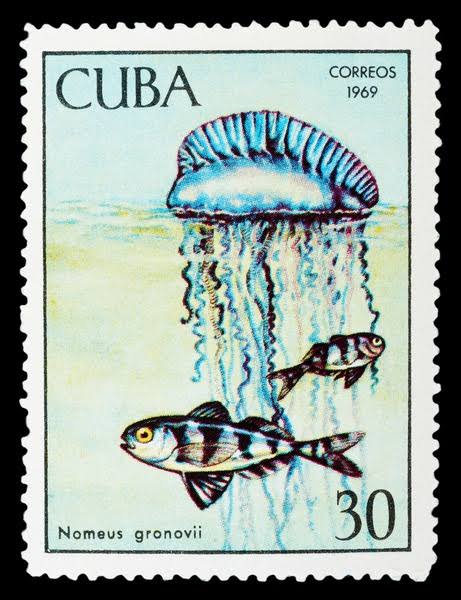
Nomeus gronovii is one of my favorite fishes!! It's a small fish that lives in the open ocean so forms a symbiosis with siphonophores, living among their stinging tentacles for protection. The genus name, 'Nomeus' means shepherd and it's nice and poetic! Love it, no notes.
Paper alert‼️ Energy content of a major #zooplankton species, the tunicate #Salpa thompsoni, varies between seasons and might be an important food item for predators like #whales and #penguins in the Southern Ocean. @UBCzoops https://t.co/hkkU6gSBiD
‼️Paper alert: The non-indigenous #combjelly#Mnemiopsis_leidyi reinvades Danish and German waters annually based on molecular evidence. Published in #Biological_Invasions by Steen Knudsen and myself!
https://t.co/9TrP5peEOb
🚨🚨🚨Paper Alert!
📃In this study, we reveal a surprising predator-prey interaction between the giant Caribbean Sea anemone and two jellyfish species: Aurelia and Cassiopea.
✨Many thanks to @DiversityMDPI 🙏🏻.
#jellyfish#marineecology
🔗 Full text: https://t.co/nZeTFhDWhz
NEW CORAL RESEARCH: Coral reef restoration can reduce coastal contamination and pollution hazards (OPEN ACCESS)
https://t.co/LwuxrxdHKN
Coral reef restoration can reduce the wave-driven flooding for coastal communities. However, this protection has yet to be assessed in terms of the reduced risk of flood-driven environmental contamination. Here we provide the first high-resolution valuation of the reduction of flood-related land-based environmental pollution provided by potential coral reef restoration. Along Florida’s 460 km-long coral reef-fringed coastline, coral reef restoration could reduce the risk of sewage and petrochemical contamination by preventing the flooding of petroleum storage tank systems (-9%), onsite sewage treatment and disposal systems (-4%), and wastewater treatment plants (-10%). The present value of critical infrastructure protection and contamination prevention benefits provided by coral reef restoration is $3,413,503, with some areas exceeding $1,500,000/km. Annually, 48,403 U.S. gal of petrochemicals, 10,404 GPD of wastewater treatment capacity, equivalent to $281,435, could be protected from flooding, demonstrating that coral reef restoration can provide environmental risk reduction and previously undocumented additional socioeconomic benefits.
#coralreefs #coralresearch #coastalprotection #pollution #conservation #reefrestoration #coralrestoration #coralreefecology #marinebiology
🚨Paper Alert!
Latest research on the diet of Cassiopea jellyfish!, leaded by @kmmuffett and @MartaMammone. We examined individual from diverse locations, revealing a strong preference for epibenthic crustaceans.
Available 👉🏻 https://t.co/ISYM06K4J7