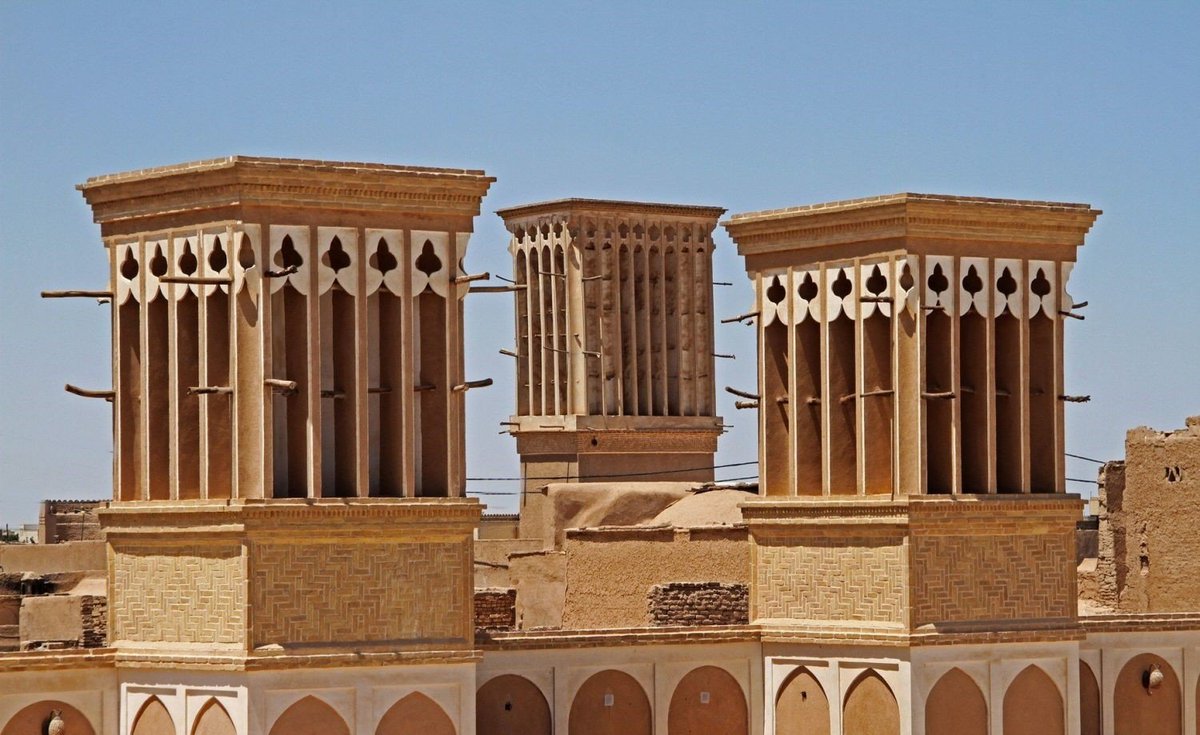
Dans le sud de l'Iran, où les températures peuvent atteindre 50°C à l'ombre, les habitants utilisent depuis plus de 2 000 ans un système d'architecture bioclimatique: les badgirs, ou tours à vent. Très répandues dans les régions désertiques du pays, notamment autour de la ville de Yazd, ces structures constituent un véritable système de climatisation naturelle.
Leur fonctionnement est ingénieux: la tour capte le vent en hauteur et l'achemine à l'intérieur du bâtiment. L'air traverse souvent un bassin ou un réservoir d'eau souterrain, ce qui le refroidit davantage par évaporation. En parallèle, l'air chaud est évacué par d'autres ouvertures grâce à l'effet de cheminée.
Grâce à ce procédé entièrement passif, l'intérieur des habitations peut rester étonnamment frais, même lorsque la température extérieure dépasse 45°C, et ce sans recourir à la moindre source d'électricité.
PODCAST | The sacrifice and death of Father Maximilian Kolbe
At the end of July 1941, the camp commander Karl Fritzch selected 10 hostages from among the prisoners in Block 14 in retaliation for the escape of a prisoner. He condemned them to death by starvation in the bunker of Block 11.
During the selection, a Polish prisoner who was a Franciscan monk and missionary, Maksymilian Kolbe (no. 16670), stepped out of the link and asked the camp commander to take him instead of a desperate selected prisoner Franciszek Gajowniczek (np. 5659). After a brief dispute with Father Kolbe, Fritzch agreed to the substitution, especially when he found out that Kolbe was a Catholic priest. The 10 selected prisoners were led off to Block 11. In the Bunker Register, the admission of them is noted without listing names, numbers, day of admission, or day of death.
Franciszek Gajowniczek survived the war and died in 1995.
Maksymilian Kolbe was murdered with a poisonous injection on 14 August 1941. He was canonized by Pope John Paul II in October 1982.
Teresa Wontor Cichy from the Auschwitz Memorial Research Center talks about Father Maksymilian Kolbe.
Spotify: https://t.co/3bSiR7OUIf
ApplePodcast: https://t.co/ZWsGwLoblq
YouTube: https://t.co/HbZznsn348
Transcript: https://t.co/QUp6hzKLQb
---
If you haven’t already, please give us a review and rate the podcast wherever you listen to it. Share it with others to help us reach more people with our online educational resources.
All podcasts: https://t.co/3pU9LwdER3
📸 Children's shoes.
"There were SS officers on the ramp, some with dogs, and many with staffs and clubs in their hands. While the groups were being arranged, people were beaten and had dogs set at them. At the time I was 11, but my father made me say I was 16. I didn’t understand why I was supposed to lie, but I said I was 16 when asked. I was quite a big boy and could pass for a 16-year-old. In this way I found myself with the group of men. (…) People were scared and terrorised. When we were ordered to undress, when our hair was shaved, and we got dressed in the camp rags from striped material – nobody asked about anything anymore, they were happy just to be alive."
(Hungarian Jewish Survivor Geza Schein)
---
Photo: https://t.co/sx0Vngehkc
Children at Auschwitz
📖 Lesson: https://t.co/q0qSVrI097
🎧 Podcast: https://t.co/NaEgs65cjE
En 1789, Francia estaba en quiebra.
La solución que encontró la Asamblea Nacional fue imprimir.
Crearon el assignat.
Un papel respaldado por tierras confiscadas a la Iglesia.
El plan sonaba sólido.
Las tierras existían, el respaldo era «real».
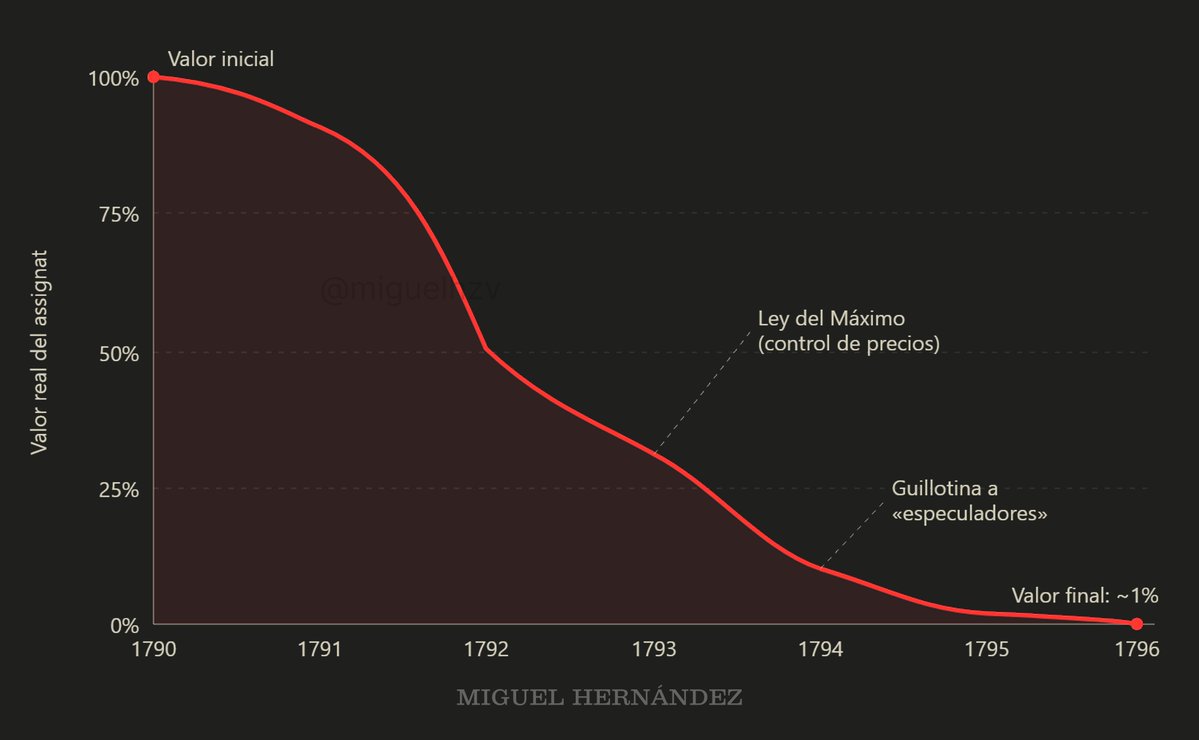
En seis años, el assignat valía menos del 1% de su valor original.
El mecanismo fue el de siempre.
Cada emisión devaluaba la anterior, los precios subían, la población se empobrecía y el gobierno emitía más para cubrir el déficit que la inflación misma generaba.
Un ciclo perfecto de destrucción.
La respuesta del Estado fue la Ley del Máximo de 1793.
Control de precios bajo pena de muerte.
Los comerciantes que vendían caro terminaban en la guillotina.
El resultado fue escasez inmediata, mercado negro masivo y hambre en las ciudades.
Cuando el precio legal de un bien cae por debajo de su costo de producción, ese bien simplemente deja de aparecer en los estantes.
Eso no es teoría, es lo que pasó.
Para 1796, el assignat había colapsado por completo.
Francia tuvo que volver al metal.
Lo que destruyó la economía francesa no fue la guerra, no fue el bloqueo inglés, ni fue la mala suerte.
Fue la creencia de que el Estado puede crear riqueza imprimiendo papel.
Esa creencia tiene doscientos treinta años y sigue siendo la política oficial de todos los bancos centrales del mundo.
Molta gent em pregunta per què segueixo editant la @Viquipedia ara que tothom fa servir Gemini, GPT o similars.
Jo ho veig així: la IA és com un barri ple de llibreries maques. Són elegants, maques i convenients, però poden tancar en qualsevol moment, convertir-se en espais de pagament o canviar el seu model de negoci d'un dia per l'altre.
La Viquipèdia és com la biblioteca pública del barri. És l'escala universal cap al coneixement i la garantia que l'accés a la informació continuarà sent lliure i gratuït per a tothom, independentment de la seva butxaca i la seva potència de càlcul. I ho serà en el seu idioma i amb el seu context cultural.
L'IA pot ser la interfície, però nosaltres en som l'ànima. Si no documentem el nostre món en la nostra llengua, qui ho farà? ✍️🌍
Som-hi