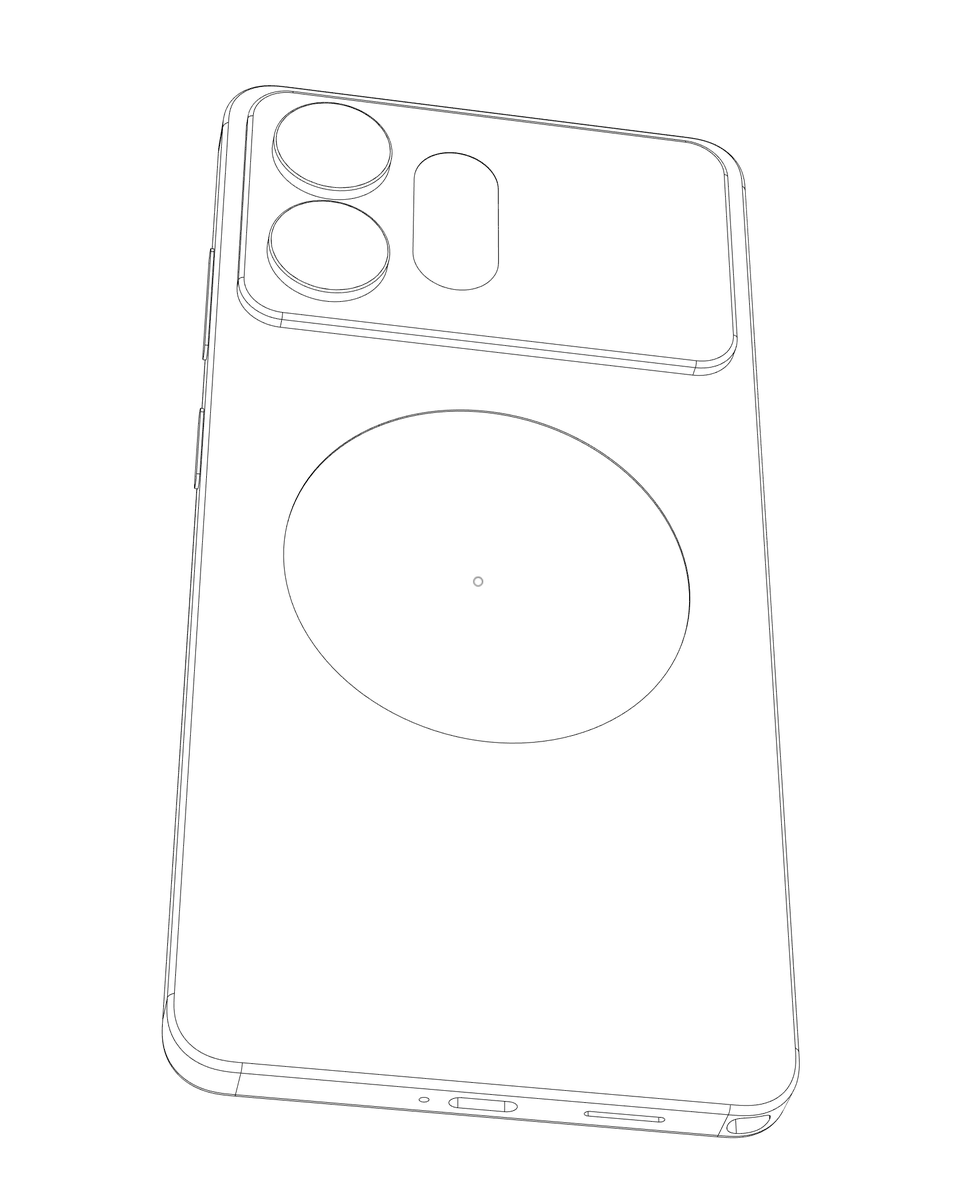
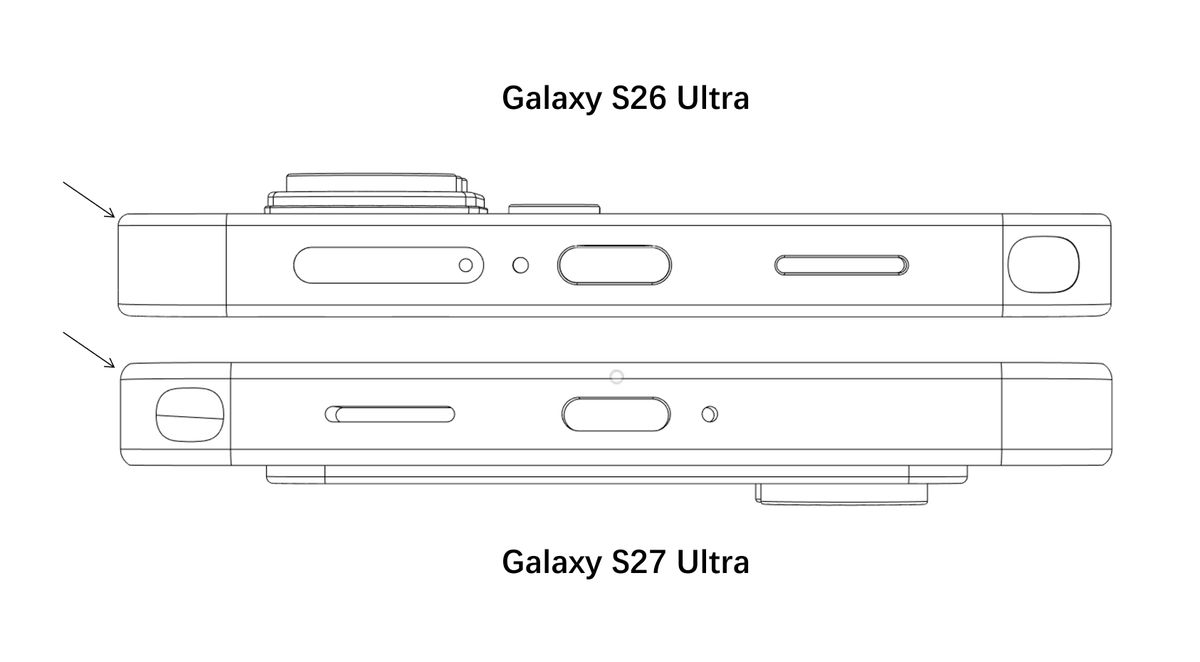
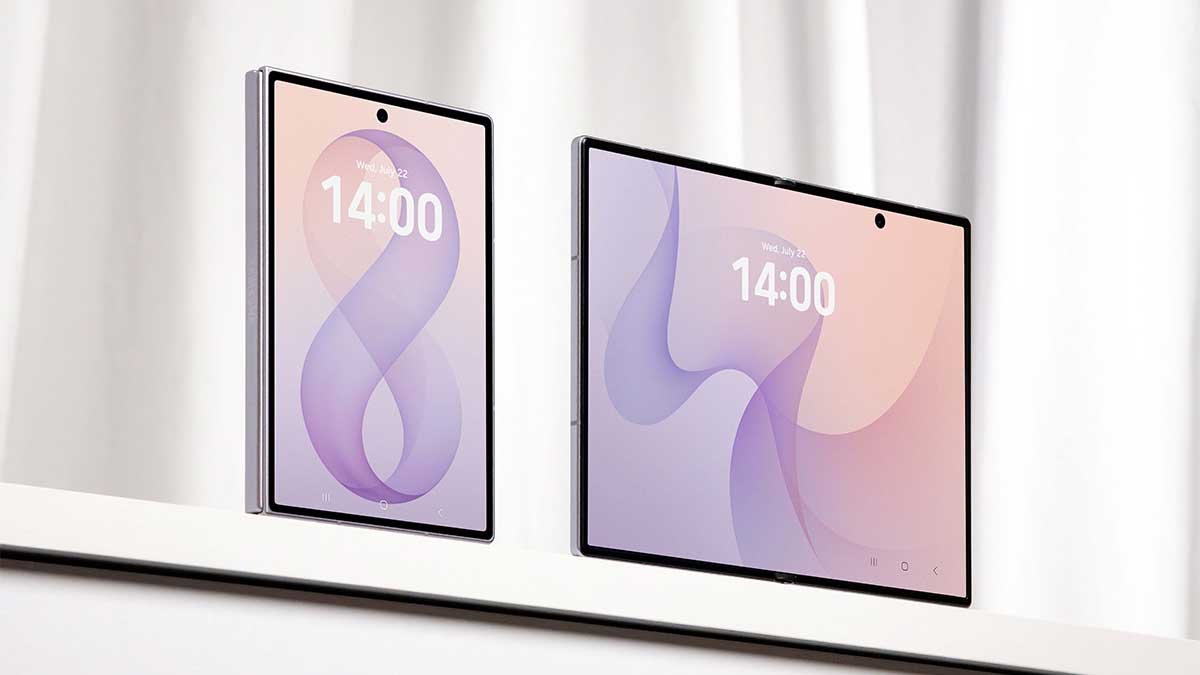
The Galaxy S27 Ultra will feature a more rounded frame, with softer edges than the S26 Ultra. This should make it feel more natural in the hand and improve overall grip comfort.
It’s a small design change that could make a noticeable difference in everyday use.
Hearing these renders came from Xiaomi. This isn’t a legitimate look at the foldable iPhone, which also doesn’t come in red or green. Just renders made by Xiaomi for some reason. Carry on.
So... Many asked me to confirm or refute the recent #GalaxyS27 Series leaks...
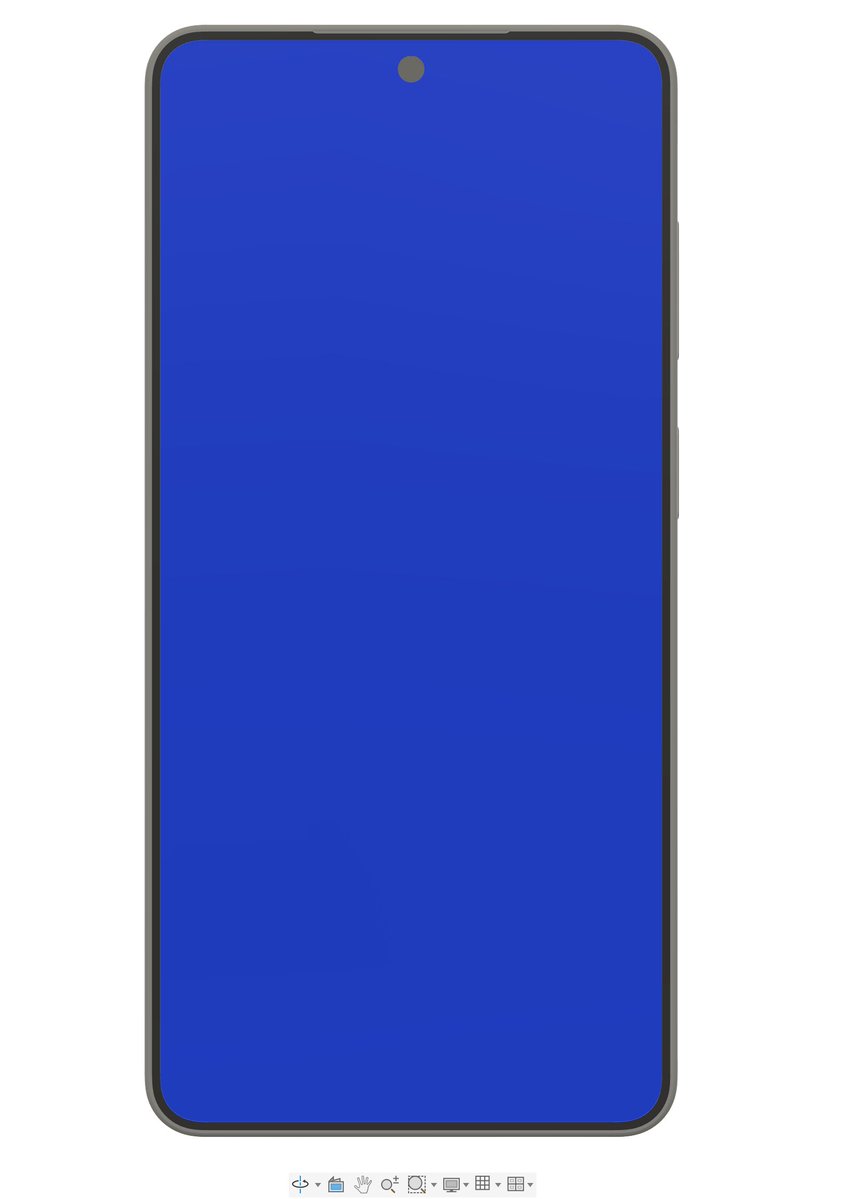
Well, here comes your most accurate and comprehensive look at the #GalaxyS27Ultra (360° video + sharp 5K renders + dimensions)!😏
On behalf of my Friends @Androidheadline 👉🏻 https://t.co/SUGOBqptUf
BREAKING!
Korean media reports that Samsung is highly confident in its next-generation flagship chipset, the Exynos 2700, which is reportedly targeting performance beyond Qualcomm’s upcoming Snapdragon 8 Elite Gen 6, including the higher-end Pro variant.
According to the report, the Exynos 2700 delivers impressive results across CPU, GPU, AI, and efficiency.
In Geekbench 6.5 multi-core testing, the Exynos 2700 is reportedly 19% faster than the standard Snapdragon 8 Elite Gen 6 and 9.5% faster than the Pro version.
GPU performance may be even more interesting. Peak GPU performance is reportedly 5% higher than the Snapdragon 8 Elite Gen 6 Pro. Under a 2.5W power limit, however, the advantage expands significantly: the Exynos 2700 is said to outperform the standard model by 24% and the Pro version by 22%.
This low-power result could be particularly important for smartphones, where sustained performance, heat, and battery life often matter more than short bursts of peak performance.
AI performance also shows notable gains. In Llama 3.1 8B testing, the Exynos 2700 reportedly generates responses 18% faster than the Snapdragon 8 Elite Gen 6 Pro, while prompt recognition and processing are around 5% faster.
Efficiency is another major highlight. In a test simulating real-world smartphone usage, the Exynos 2700 reportedly consumed 161mA, compared with 185mA for the Snapdragon 8 Elite Gen 6 Pro, representing approximately 12.7% lower power consumption.
The Exynos 2700 is expected to be manufactured using Samsung Foundry’s second-generation 2nm GAA process, SF2P. This makes the chip important for both Samsung’s semiconductor and smartphone businesses, as it could demonstrate the competitiveness of Samsung’s latest process technology while allowing Exynos to challenge Qualcomm again at the flagship level.
If these results translate into production hardware, Samsung could significantly expand the use of Exynos 2700 in the Galaxy S27 series.
There is also a major financial incentive. According to the report, Samsung spent approximately KRW 13.8272 trillion on mobile AP purchases in 2023. Increasing the share of its own Exynos processors could reduce dependence on Qualcomm and lower the enormous cost of purchasing external flagship chipsets.
Overall, the reported targets for Exynos 2700 are extremely ambitious: 19% higher multi-core CPU performance than the standard Snapdragon 8 Elite Gen 6, up to 24% higher GPU performance at 2.5W, stronger AI performance, and 12.7% lower power consumption than the Pro model.
If these figures hold up in production devices, the Exynos 2700 could become one of Samsung’s most competitive flagship chips in years.
For now, these remain early performance estimates. The final comparison will depend on production devices and real-world performance, thermals, sustained power consumption, gaming stability, and battery life.
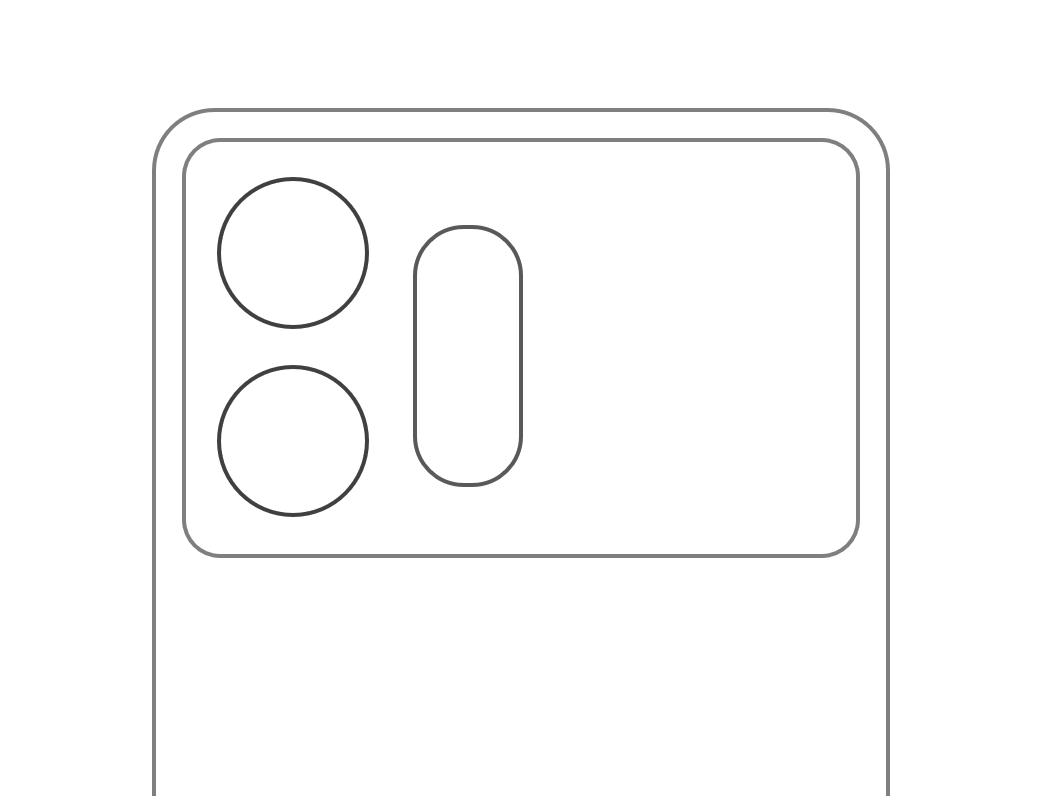
This is what I believe to be a reasonable comparison of the camera layouts between the Galaxy S26 Ultra and Galaxy S27 Ultra, which you can use as a reference for AI-generated renders.
Keep in mind that the 5x telephoto sensor replaces the previous 3x camera position, so the camera module in that spot should look noticeably larger.
Samsung MX’s Head of Product Design, Hubert H. Lee, you’d better brace yourself. I know it’s already too late to make any changes to the Galaxy S27 Ultra’s design. Now, you may have to prepare for what could be the most intense wave of criticism in Galaxy history.
The company expects to launch iPhone Pro models next year that will make use of a new glassy look. Glass is used on the front and back of the phones — known internally as V73 and V74 — and the material will curve into the sides of the devices, with a metal band in the middle.
NEW: Apple is still planning to offer a glass-centric overhaul of the iPhone for the device’s 20th anniversary next year, people familiar with the matter said, countering an analyst report that the move had been canceled. https://t.co/Tf8oxRFM7O
Samsung Display Develops CTG Technology: A New Material-Level Solution for Foldable Display Creases
According to Korean media reports, Samsung Display is advancing the development of a next-generation UTG (Ultra Thin Glass) technology called CTG (Center etched Thin Glass). The technology introduces a new thickness-gradient glass structure, allowing different areas of the glass to achieve different physical properties. By redesigning the glass structure itself, CTG aims to address one of the biggest challenges in foldable displays: the trade-off between crease reduction, durability, and thinness.
As foldable smartphones enter a more mature stage, the competition is no longer simply about whether a device can fold. The focus has shifted toward whether a foldable device can deliver an experience closer to a traditional flagship smartphone.
Among all remaining challenges, display crease remains one of the biggest limitations.
Over the past few years, manufacturers have continuously improved hinge mechanisms, flexible OLED structures, and support materials to reduce visible creases. However, a fundamental material conflict still exists: the cover glass must be rigid and flat enough to provide a premium touch experience, while also being flexible enough to survive hundreds of thousands of folding cycles.
Glass naturally offers excellent hardness, stability, and a premium feel, but it is not designed to repeatedly bend. Flexible materials can bend easily, but they struggle to provide the durability and surface quality of glass.
CTG represents a new approach by attempting to solve this contradiction at the material level.
The Core Principle of CTG: A Glass Structure Optimized for Different Areas
Current high-end foldable displays mainly use UTG (Ultra Thin Glass) as the cover material.
Compared with early CPI (Colorless Polyimide) solutions, UTG provides several advantages:
Higher hardness
Better scratch resistance
More glass-like touch feedback
Improved long-term stability
However, conventional UTG generally uses a uniform thickness structure. The entire glass layer has almost the same thickness from the folding area to the outer regions.
This design provides excellent flatness when the display is unfolded, but creates challenges during folding.
The folding area experiences the highest mechanical stress. During bending, the inner side of the glass is compressed while the outer side is stretched. The center folding region experiences the greatest deformation.
With a uniform-thickness glass structure, the entire panel must balance two conflicting requirements at the same time:
High rigidity for a flat, premium surface.
High flexibility for repeated folding.
CTG changes this approach.
Through precision chemical etching, Samsung Display reduces the thickness of the central folding area while maintaining greater thickness in the non-folding regions.
The result is a thickness-gradient structure:
The folding area becomes thinner and more flexible.
The surrounding areas remain thicker and stronger.
In simple terms, CTG allows the glass to become softer where it needs to bend and stronger where it needs to provide support.
This is similar to advanced engineering materials that optimize different regions of a structure according to their specific functions.
How CTG Could Improve Foldable Display Creases
The formation of foldable display creases is not only caused by visible bending. It is closely related to mechanical stress accumulated inside the materials.
With traditional UTG, the entire glass layer participates in the bending process. The folding center experiences concentrated stress, and repeated cycles may gradually create material fatigue and permanent deformation.
CTG reduces the thickness of the folding area, allowing that region to bend more naturally and reducing stress concentration.
The expected benefits include:
First, reducing permanent deformation and improving flatness after unfolding.
Second, slowing down crease development during long-term use.
Third, reducing the need for additional reinforcement structures, creating more possibilities for thinner and lighter foldable devices.
CTG Challenges: Maintaining Optical Uniformity and Surface Quality
Although CTG offers a promising direction, achieving mass production remains extremely challenging.
The biggest difficulty is ensuring that a glass structure with different thickness areas still looks and feels like a single piece of glass.
The first challenge is optical consistency.
Because the center area and surrounding areas have different thicknesses, the optical path of light changes. If not properly controlled, this could lead to:
Different reflection characteristics
Slight optical boundaries under certain viewing angles
Uneven visual appearance
Traditional foldable displays mainly struggle with visible creases. An immature CTG implementation could potentially introduce new optical differences.
Therefore, CTG requires not only mechanical optimization but also precise optical engineering.
The second challenge is surface flatness.
Simply making the center area thinner could create a height difference that users may feel when touching the display.
A mature CTG design requires a smooth transition between thick and thin areas, ensuring that the surface remains continuous and seamless.
The third challenge is filling materials.
The etched region may require special transparent materials to restore optical and tactile consistency.
Such materials must satisfy multiple requirements:
Similar refractive index to glass
High transparency
Long-term folding durability
Thermal stability
No impact on touch sensitivity
This creates a new challenge for materials science and manufacturing processes.
The Meaning of CTG: A Shift Toward Material Innovation in Foldable Displays
If CTG successfully reaches mass production, its significance will go beyond simply reducing creases.
It represents a fundamental change in the development direction of foldable displays.
In the past, manufacturers mainly tried to make existing glass structures survive folding.
CTG takes a different approach: redesigning the glass itself so that it is naturally better suited for folding.
The ideal future foldable display should not simply be a screen that can bend. It should be a smart material structure where different areas provide different functions.
When unfolded, it should deliver the flatness and touch experience of a traditional flagship smartphone.
When folded, it should provide flexibility and long-term reliability.
If Samsung Display can overcome the challenges of manufacturing precision, optical consistency, and material integration, CTG could become one of the most important display material innovations for the next generation of foldable devices.
From CPI to UTG, and potentially from UTG to CTG, foldable displays are moving from “making glass survive folding” toward “designing glass specifically for folding.”
This could become a key step toward the ultimate goal of foldable technology: a display that feels like ordinary glass when open, while folding naturally without compromise.
Galaxy S27 Ultra to Expand Inkjet Light Blocking Technology and Further Reduce Camera Module Thickness
According to ZDNet Korea, Samsung plans to expand the use of inkjet printing technology across multiple rear camera lenses on the Galaxy S27 Ultra. The technology was first mass-produced for the Galaxy S26 Ultra and is designed to optimize the internal light-blocking structure of camera lenses while further reducing the thickness of the camera module.
A smartphone camera lens usually consists of six to eight lens elements. In addition to the optical area responsible for image formation, each lens has an outer rib structure used for positioning and securing the elements. Some light entering at extreme angles can reflect off these areas, creating stray light that may lead to ghosting, flare, washed-out images and reduced contrast.
The traditional solution is to place black light-blocking films between lens elements to absorb unwanted reflections. This approach is mature and reliable, but the films, adhesive layers and assembly tolerances all occupy additional space. In a smartphone camera module only a few millimeters thick, even several dozen micrometers can be valuable.
Samsung’s new method uses inkjet equipment to print matte black light-absorbing material directly onto the outer rib surface of selected lens elements. This partially integrates the light-blocking function into the lens itself, allowing the distance between elements to be reduced. The result is a thinner module and more room for larger sensors, more complex optics and stronger optical image stabilization systems.
The Galaxy S27 Ultra will still retain conventional light-blocking films. According to the report, Samsung will apply the inkjet coating only to selected lens layers, while other areas will continue using the existing structure. This suggests a gradual introduction of the technology as Samsung balances thickness reduction, optical performance, manufacturing yield, cost and long-term reliability.
The technology may also improve night photography and backlit performance. Inkjet equipment can deposit light-absorbing material precisely on designated areas based on the shape of each lens, reducing internal reflections. However, ghosting and flare are also affected by lens coatings, optical path design, sensor surface reflections and the overall lens structure. Inkjet light blocking is one part of a much larger optical system.
Its greater significance lies in improving the efficiency of every millimeter inside the camera module. Modern flagship phones need larger sensors, stronger telephoto systems and more capable stabilization while still controlling body thickness, weight and camera protrusion. Simply increasing hardware size has become increasingly difficult, so future competition will focus more heavily on lens microstructures, light-absorbing materials, module stacking and precision manufacturing.
The amount of space saved by this inkjet process may appear small, but when combined with improvements in lens design, battery materials, structural components and stabilization systems, it can influence the thickness, camera specifications and internal layout of the entire phone.
By expanding this technology on the Galaxy S27 Ultra, Samsung is using more refined optical manufacturing techniques to create additional room for the next generation of Ultra-class imaging hardware and overall device design.
@DiabloImmortal Lord of Terror? That image belongs to Baal, Lord of Destruction, not Lord of Terror. It is sad that this game is managed by a team that neither plays the game nor knows anything about the lore.