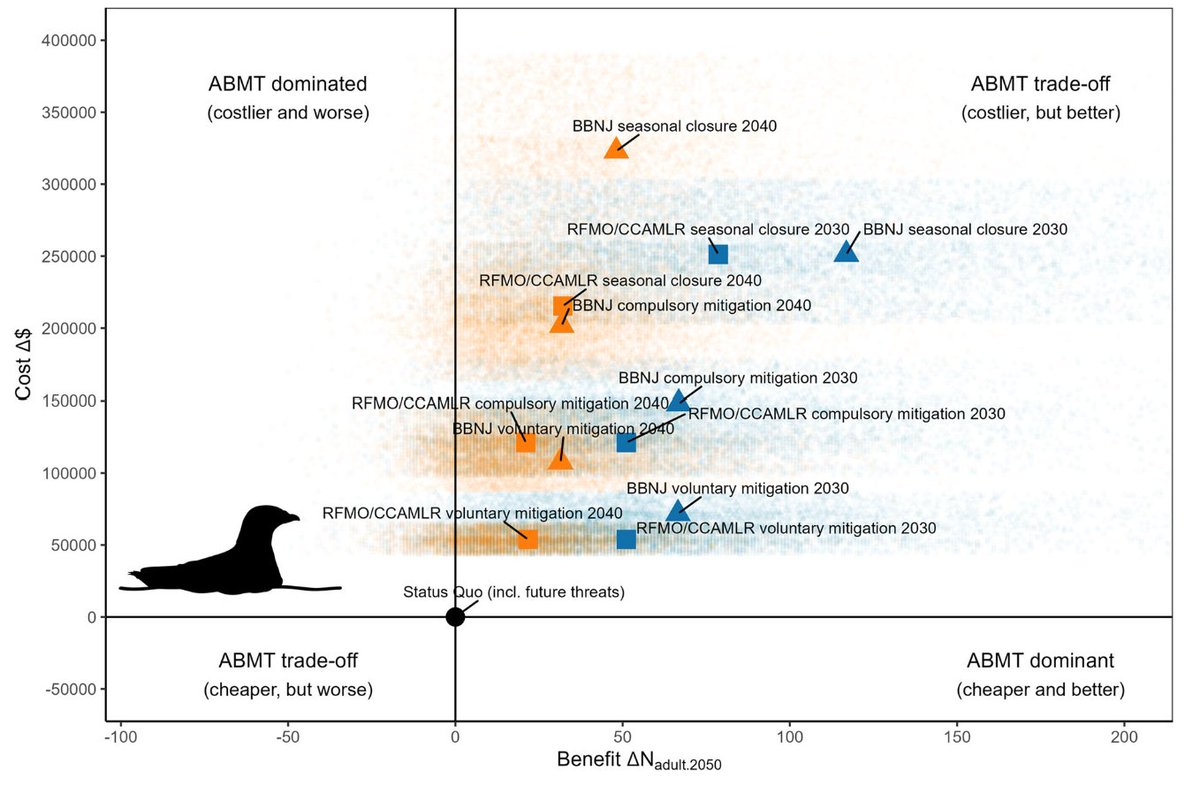
Wow! My first publication in @ConsLetters, thanks to @flying_force, @hihinews , @Stefano_Canessa and so many others. We evaluated how potential area-based management tools (ABMTs) could influence the conservation of the Critically Endangered seabird, Kuaka, on the high seas 1/7
This is a super interesting study evaluating potential area based management tools for seabird conservation on the high seas. Led by @MscBgc student @MosesGee and expertly coordinated by @docgovtnz’s @flying_force! A fun and impactful collaboration 🙏
The high seas cover ~90% of Earth’s ocean volume, yet only ~1.2% is protected, with threats to wildlife including pollution and commercial fishing, and highly complex governance structures 🌊 1/4
which will result in the implementation of more robust ABMTs, supporting the holistic action required for Kuaka conservation and all the other species that inhabit the high seas 7/7 https://t.co/LEDFf8EX4v
There is hope for Kuaka! The BBNJ Treaty will utilise majority decision-making, reducing the power of single countries in negotiations, and providing a framework for coordination and cooperation across oceans... 6/7
Our paper also highlights the value of decision science tools to help inform the best decision when faced with a high degree of uncertainty, which is so often the case in species conservation. Something @docgovtnz is embracing brilliantly 5/7
Cost-effectiveness analysis revealed:
- Decisive and early action (by 2030) is not only the most effective conservation strategy for Kuaka, but costs less and minimises international negotiation effort 4/7
- Mitigation implemented by 2040 under current high seas governance structures performed the worst
- Acting sooner (by 2030) rather than later (by 2040) is critical to Kuaka survival 3/7
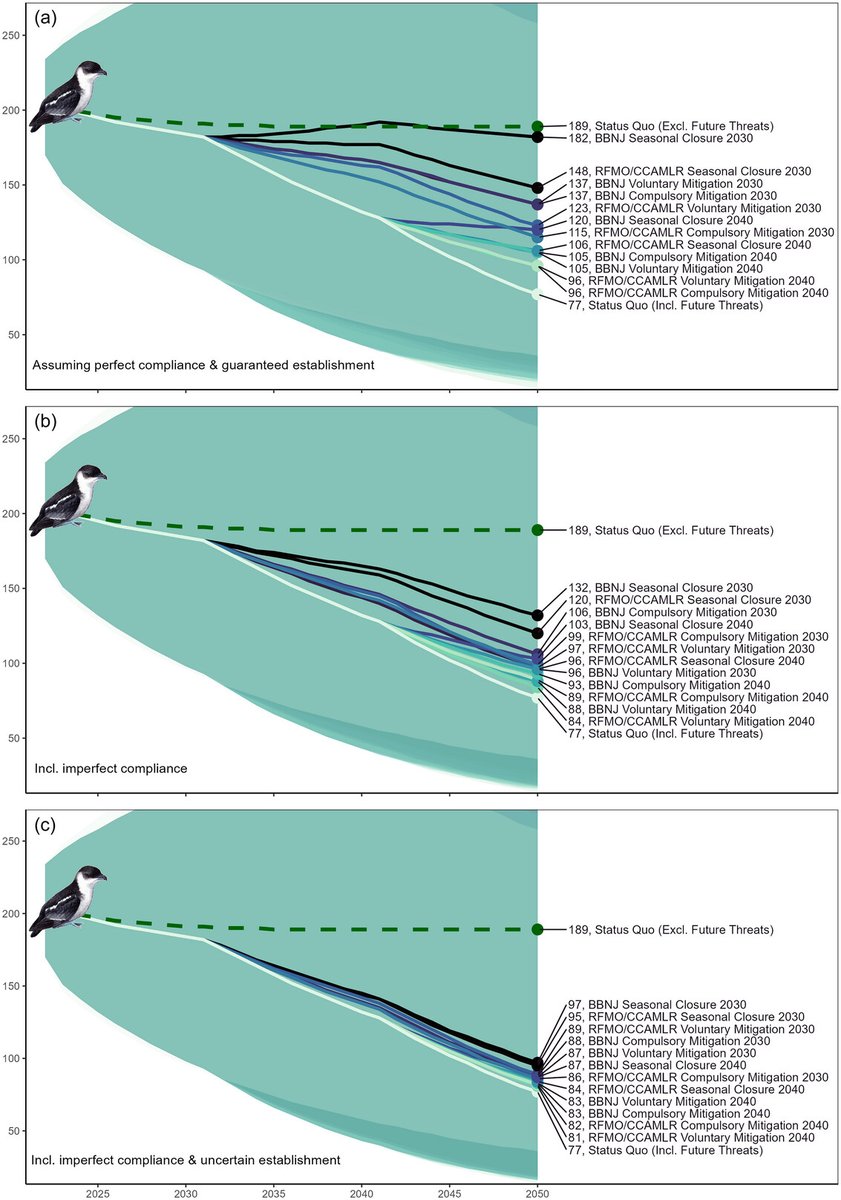
Population projections under ABMTs, informed by expert elicitations, predicted:
- Implementation of ABMTs would prevent a 60% decline in Kuaka by 2050
- Seasonal closure implemented by 2030 under the @UN's Biodiversity Beyond National Jurisdiction #BBNJ performed the best 2/7
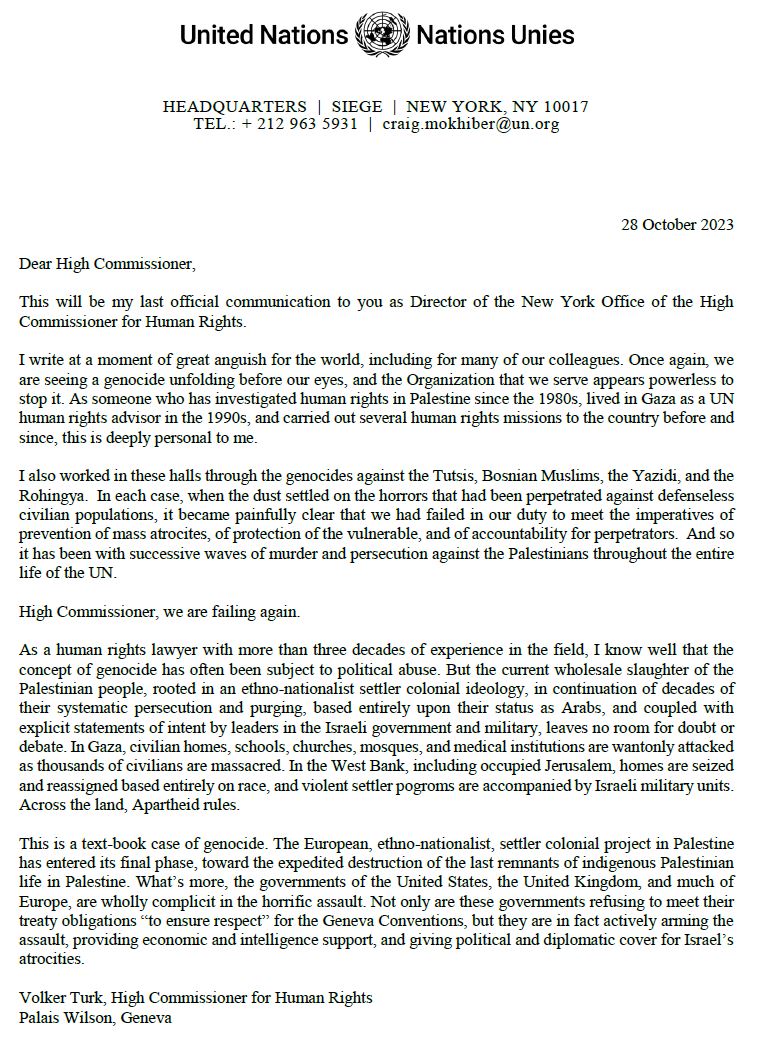
The Director of the UN's New York office just resigned after thirty years at the organisation over the UN's handling of the ongoing genocide of Palestinians.
The entirety of his resignation letter is a necessary read but this first page blew me away.