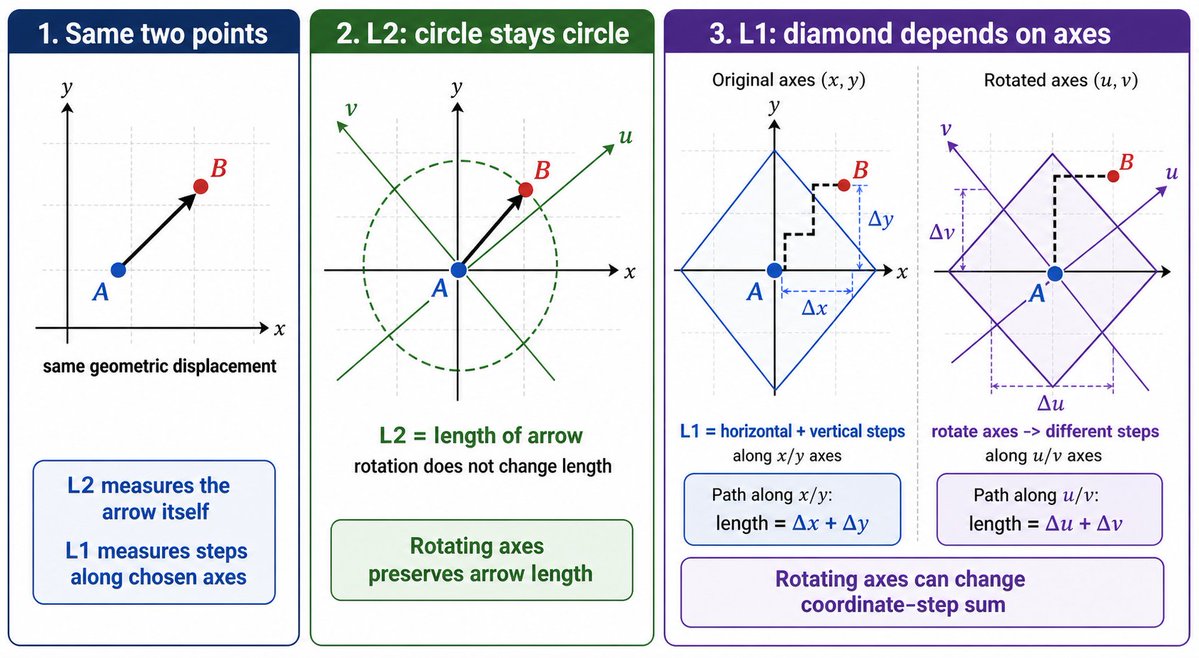
This strange FT article has been making the rounds. Strange, because it's arguing that @ChadJonesEcon is making questionable claims about accepting existential risk. But if you actually read the paper, Chad is using that calculation as an example for why you *shouldn't* use the quoted model, exactly because it leads to questionable conclusions. FT should do better.
Codex makes for a very nice learning interface with Jupyter notebooks
I've started working through the cs231n (Stanford deep learning) course
LHS is Codex chat; RHS is Jupyter
Codex has a meta instruction in my cs231n skill to only give me minimal hints when I'm stuck
If I need help remembering something in Python, I just ask Codex
If I'm not understanding something, I'll talk to Codex or ask it to generate an image.
This seems to me to be a pedagogically very useful format also for econometrics and economic theory (Jupyter for econometrics, maybe some "fill in the LaTeX"/math UI for theory)
Pluto 1.0 is here, marking six years of continuous development of one of Julia’s most popular interactive notebook environments. This major release brings meaningful advances in reproducibility, sharing, accessibility, educational tooling, and developer experience—strengthening Pluto’s mission to make scientific computing more interactive, approachable, and engaging for learners, educators, and researchers worldwide.
#JuliaLang #Plutojl #ScientificComputing #OpenSource #DeveloperTools
https://t.co/dxSsc35xqH
There is so much productive economic activity that is currently blocked by bureaucracy and red tape. One of the most promising uses of AI is to unlock that activity by streamlining how the government functions. That's why I'm super excited to see this work by my colleagues @OCLarter and @davthack, who partnered with the UK govt to help it build more housing faster.
Housing shortages are a huge problem all over the world. In the UK, planning officers have to consolidate masses of data and paper work just to process a single application. The AI tool they've developed will consolidate all that, helping the UK meet its 2029 goal of building 1.5 million homes.
My hope is that we'll see a lot more of this. Business applications being processed instantly, permits being approved in minutes rather than months. There is such a huge unlock of potential in getting the government to work for its citizens.
Here is the article:
https://t.co/x8dqsFBiqa
The loop of trying and failing and learning has been such a big part of the process to solidify intuition and develop convincing ideas, that many like me are worried while being excited at the same time.
Genuine issue for those starting research. A counter argument is that AI frees up time to read papers, think more etc. The worry is if the induced impatience leads to reduce spending time with own thoughts to understand own's comparative advantage and figure out something new.
I feel using Codex/Claude has made me more impatient with research. The process is quicker, and I get to explore much more than I could before. but i also feel i want to get too much done in a short period of time. i want to do good work, and pay attention to what i am doing.
Congratulations to Shelly Lundberg, the 2026 Jacob Mincer Award recipient for lifetime contributions to labor economics. Her research has profoundly shaped our understanding of the economics of the family, inequality, and intra-household decision-making. https://t.co/lIwvnOuFuW
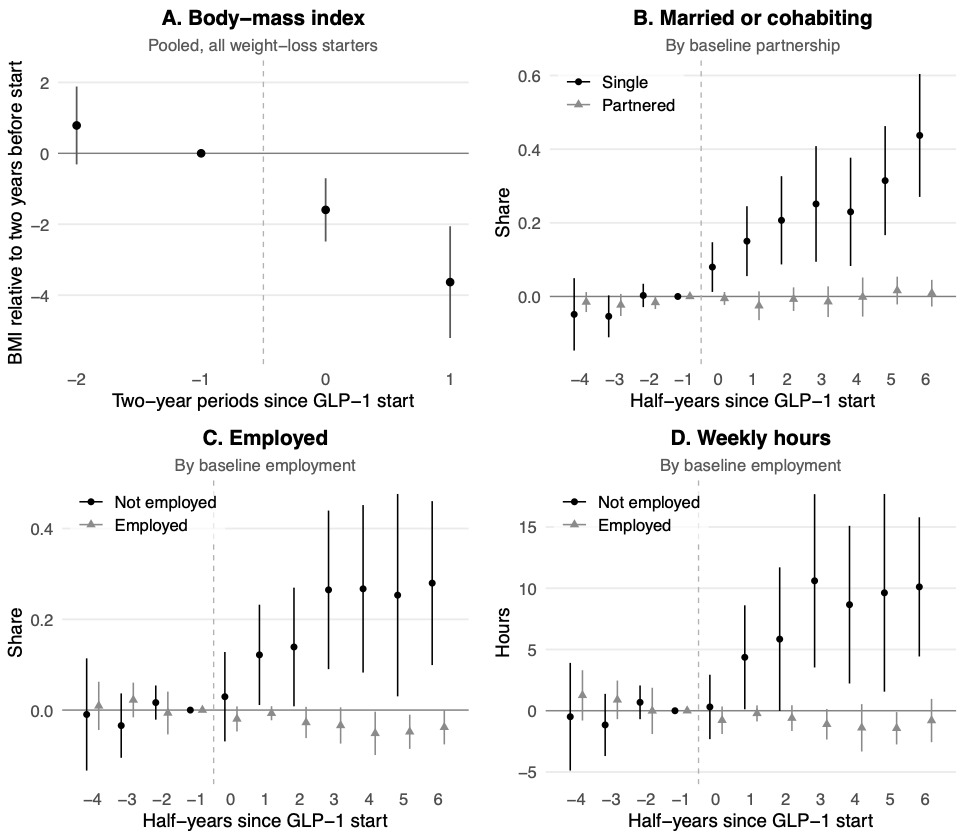
GLP1s for weight loss impact lives beyond health. My new paper shows single women’s marriage/cohabitation rates rise 29pp, employment among nonemployed women rises 27 percentage points after 1.5+ years.
Link to paper below:
For grads it’s not that big a deal because of selection and they know that you can figure out how much effort they have put after speaking with them for sometime. Not sure about future cohorts as the marginal student selecting in could be very different.
This is a great thread. Really hard when evaluation rests on a paper. I teach the econometrics sequence to undergrads & grads. For undergrads I had to lower the weight on assignments and push it to exams when the variance in exams insanely increased. More pop quizzes maybe. 1/
Before AI, the standard teaching approach worked reasonably well for both motivated and demotivated students.
Now you kind of have to choose.
You can teach them to learn with AI and they'll be superpowered, but doing so makes assessment / grading near impossible. 1/
But it's hard to teach the right way to use Codex without the unmotivated students also learning the wrong way.
Once you start using Codex, you inevitably realize you can get a great undergrad paper with the magic alternating prompts "A. What should I do next?" "B. Ok do it" 8/
What does AI mean for the future of research? At a recent campus workshop, social sciences faculty agreed: This may be the best moment in a generation to do empirical social science.
https://t.co/viQQsucugj
**New NBER Paper Alert**: "Don't Give Up on Lab Experiments: Why the Field Still Needs the Lab."
This one might surprise people, as I have spent my career pushing field experiments and urging organizations to conduct natural field experiments.
Yet, I think the pendulum has swung too far. In some quarters, the lab has even started to look obsolete. I think that's wrong.
I make the case why via a simple model that shows each major design type (lab, artefactual field, framed field, and natural field experiments) has a key place in our pursuit to change the world with experiments.
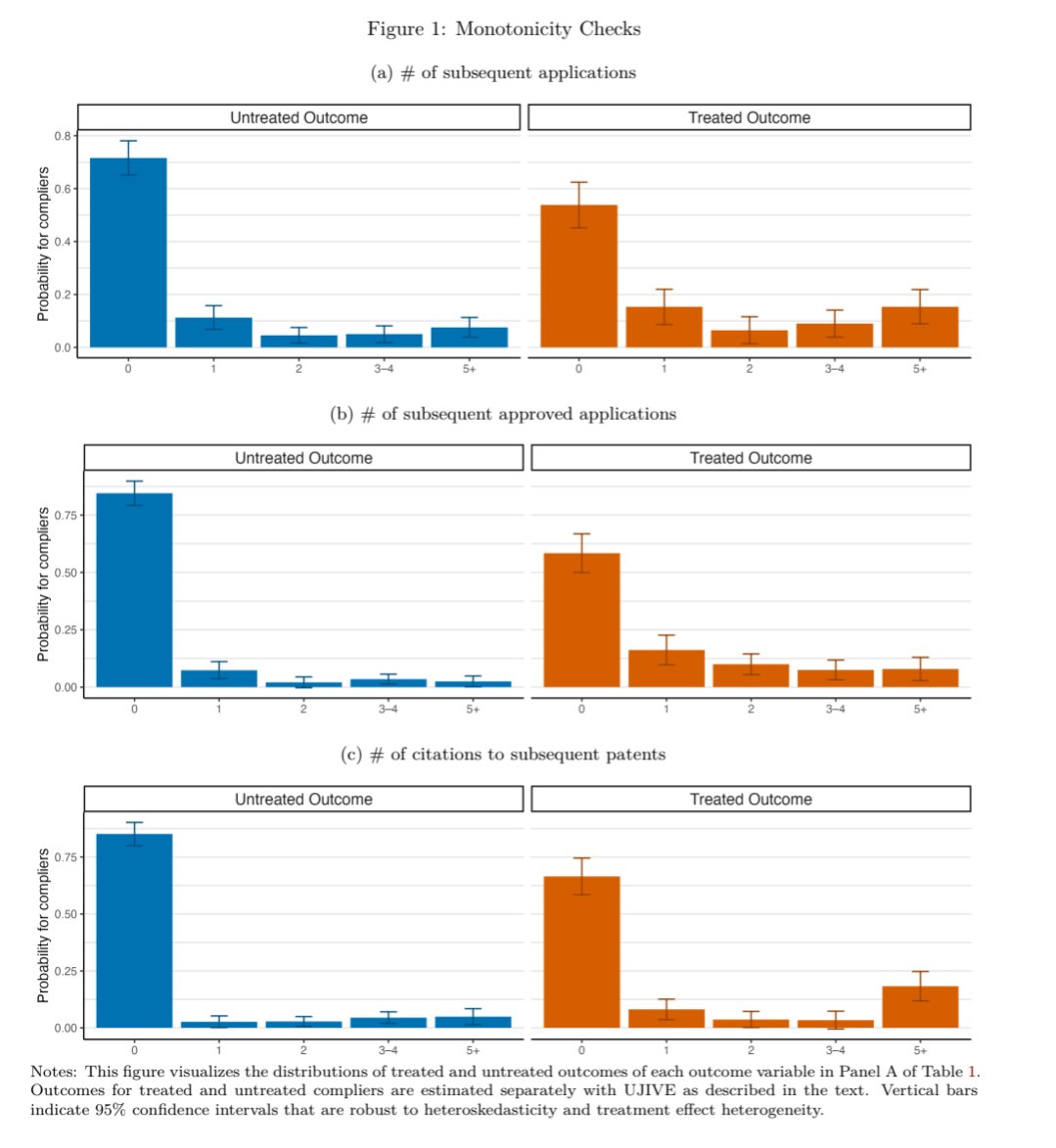
One of my favorite parts of the paper is where we bring the "one weird trick" (for characterizing effective populations) to judge designs
By just changing around the outcome of a UJIVE regression, we can unbiasedly estimate complier means, gauge external validity, and even test the appropriate monotonicity condition -- all with standard SEs!
Spent the last week at the Econometric Society Summer School, organized by the amazing In-Koo Cho and @ArielRubinstein.
some quick impressions, disorganized and unfiltered
Economic theory is in a crisis, but productively so.
1/
Another (nice) one is seniors casting about for something new.
I at least felt that there's no dogmatism in either old or young people about what is a good question, what is a good approach.
So the ground is fertile for seeds that might blossom into new paradigms.
4/
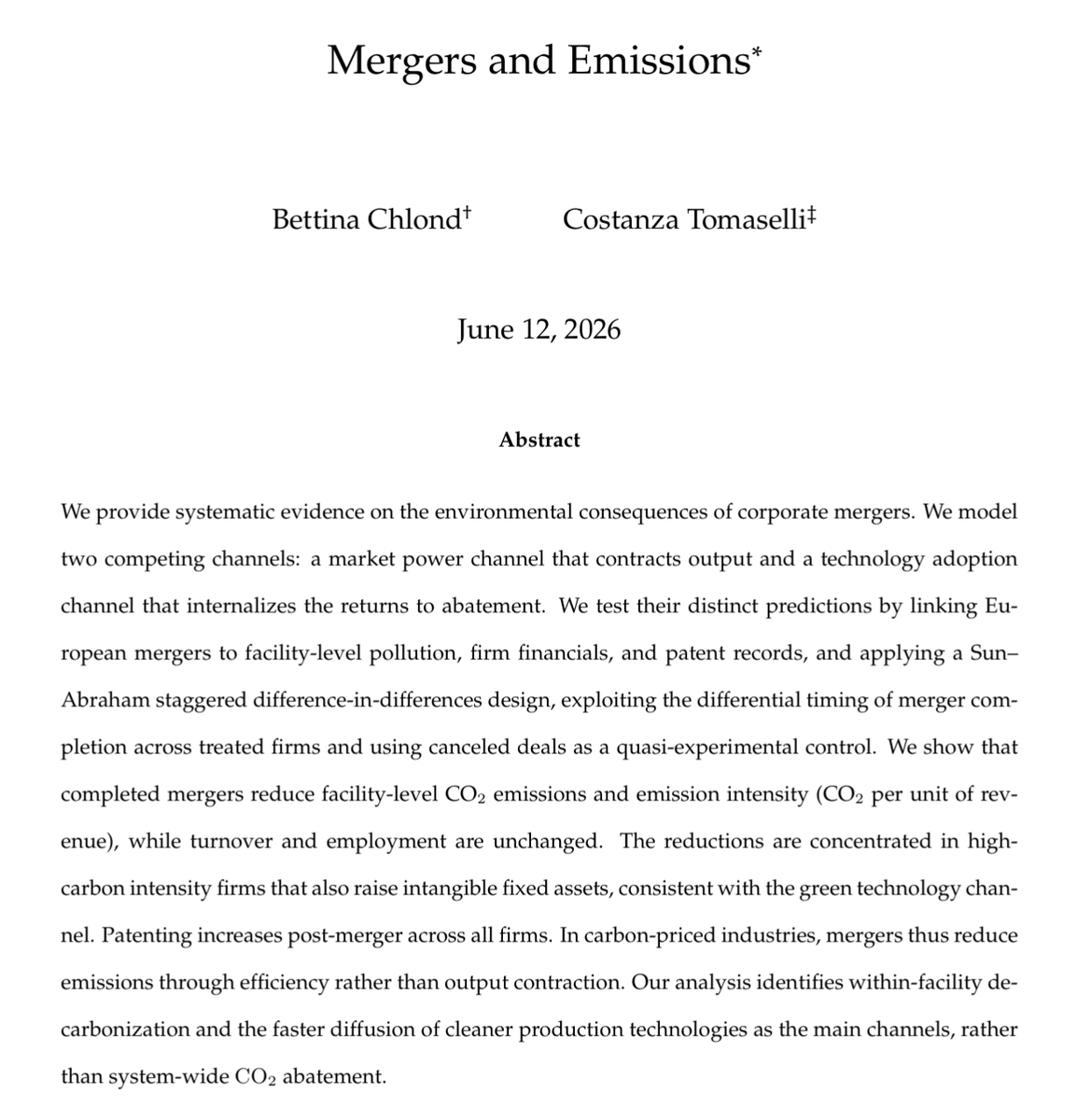
Mergers reduce facility-level CO2 emissions and emissions intensity without reducing turnover or employment.
Emission reductions are driven by within-facility decarbonization and faster diffusion of cleaner production technologies in dirty industries.
https://t.co/VUkGUzCYz9
The Ronald Coase Workshop is a fantastic opportunity for young scholars interested in institutional analysis and political economy broadly defined.
Having participated as a graduate student (Beijing 2012) and later as faculty (Perugia/Florence 2025), I can say that it is a transformative experience and one of the very best mentorship opportunities for young scholars.
Applications for the December 2026 workshop in Mexico City are open until July 31, 2026:
https://t.co/uxVKGGY3V4
Please consider applying — and help spread the word!
RA opening at @warwickecon
Work with urban economists @AmritaKulka and Nikhil Datta on a UK Housing and Planning System project & help develop policy recommendations and communications to policy, media and civil society stakeholders.
Apply: https://t.co/AkL9eOV2UX