In this paper in JDE, we provide new evidence on the impact of teachers' stereotypical attitudes on students' cognitive and non-cognitive outcomes. https://t.co/vpbtFj14vQ (1/4)
In his latest Business Standard column, Prof. M S Sriram, Public Policy area, argues that while India's microfinance sector "works, but at a modest growth rate", the model has reached the limits of expansion. The way forward? 'Micro' to 'meso' finance.
🔗https://t.co/irl7arlR49
I think one reason is that obvious AI writing violates a reciprocity norm in human communication. If someone felt something is important enough that they bothered to write about it, it gives many of us an initial willingness to reciprocate by bothering to read it.
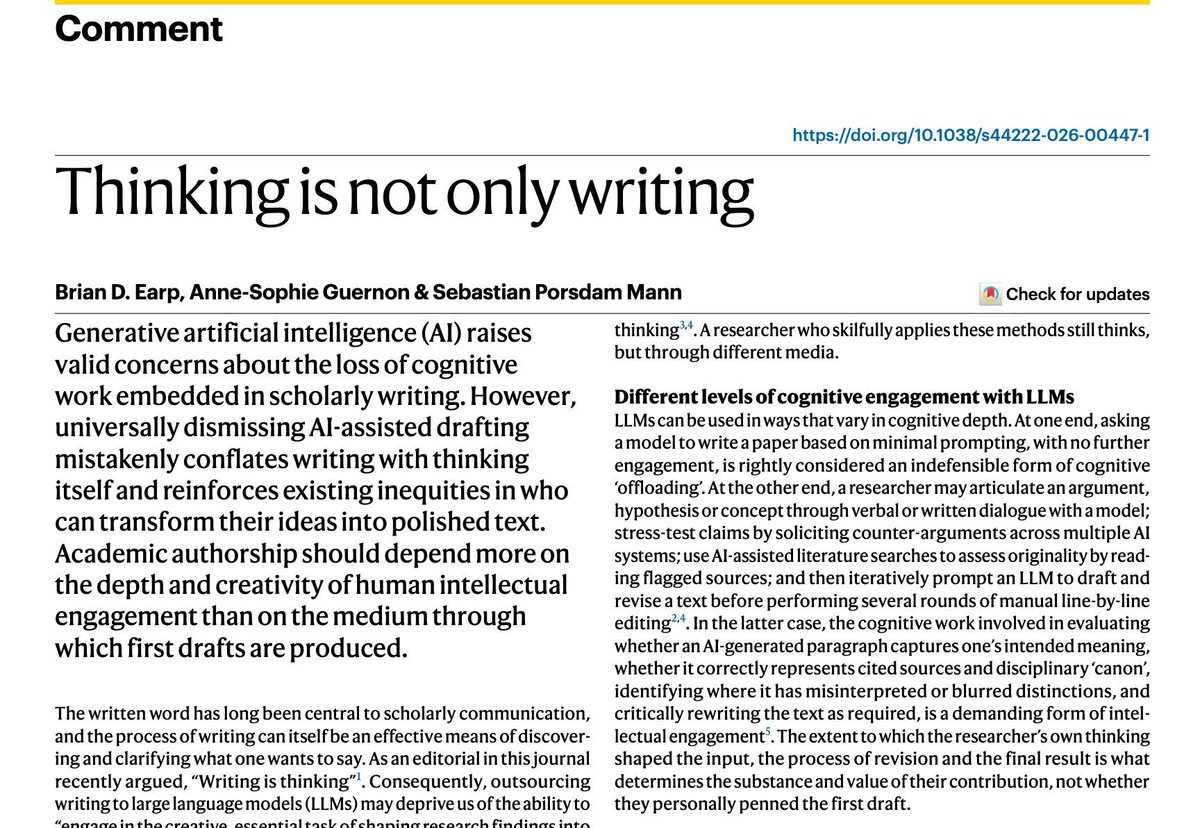
"Writing is thinking." This phrase went viral recently (from https://t.co/4GDZHnm82U), often quoted in the context of objections to use of AI in drafting academic prose. In Nature Reviews Bioengineering we respond: "Thinking is not only writing." Preview below. Shareable full access link: https://t.co/ktHuPFcPga
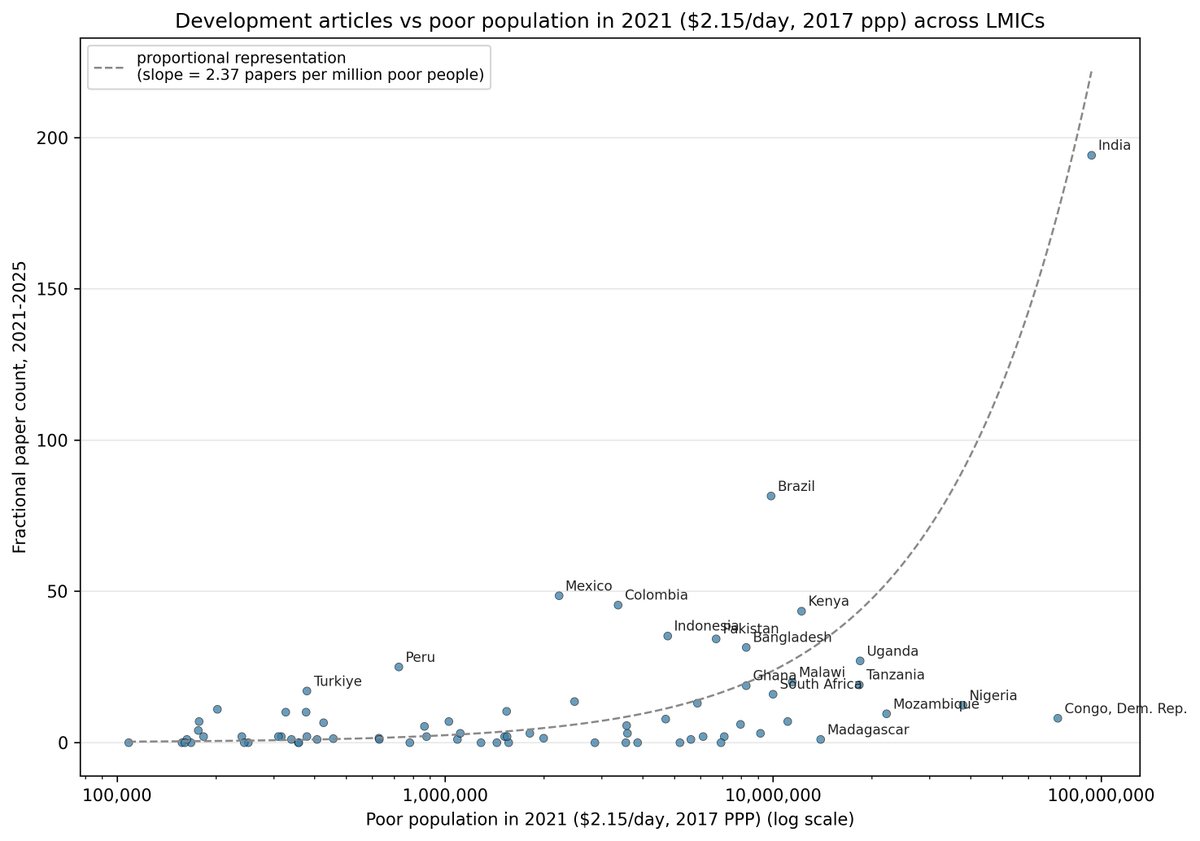
What countries are overrepresented in dev research? Using new database of published dev papers, a scatterplot of papers published vs. log extremely poor population (<PPP $2.15 in 2021); left-truncated for < 100K ppl. Curve captures proportional representation (given log scale)
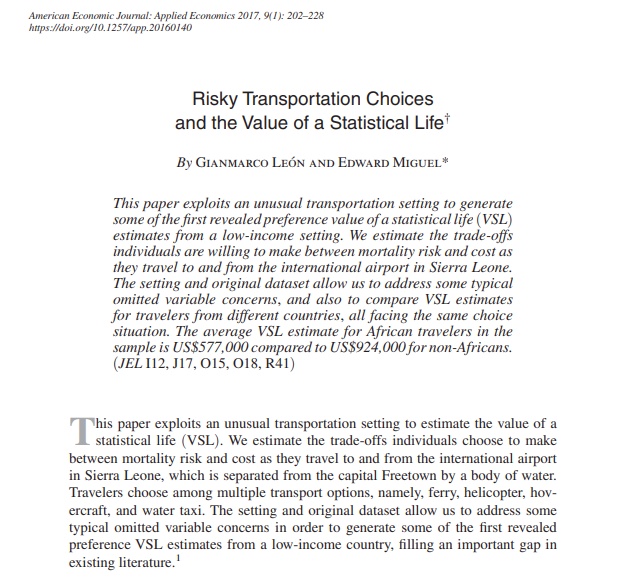
Last night I was chatting with someone about the different ways of getting to/from the airport by Freetown, Sierra Leone, and remembered this study by León and Miguel. I took the ferry, the helicopter, and the water taxi. (Never managed the hovercraft.) https://t.co/ReUrfLNpCd
A new study by Dr. Gopinath Annadurai, PhD alumnus, Dr. Allen Ugargol, IIMB, and Dr. Parul Puri, The George Institute for Global Health, examines the relationship between caste, discrimination and mental health among older adults in rural India.
Read here: https://t.co/HSFigajbRN
Very pleased to release this paper on meritocracy, in which I continue to develop ways to understand the concept of meritocracy and its relationship to efficiency and to equality.
As famously argued by Amartya Sen, meritocracy and merit are underdetermined as abstract concepts. I answer this challenge in two ways. First, I focus on education and labor markets as specific contexts. Second, I distinguish between retrospective and prospective meritocracy.
Retrospective meritocracy refers to a conception of meritocratic assignments of students to colleges, workers to jobs, that is based on the idea that assignments to schools, jobs, etc. should be rewards for past achievement or be done on the basis of some notion of intrinsic excellence embodied in an individual. As such, the concept is backwards-looking. Prospective meritocracy refers to a conception of assignments in which merit is functionally defined by the objectives of the social planner setting the assignment rules. This means first, merit cannot be defined prior to these objectives, and second, one must account for the social and dynamic consequences of the assignments, which may place the focus on societal consequences as well as the consequences for the organizations for which the assignments apply.
My main arguments involve the implications of prospective meritocracy for evaluating different rules for assignments. Focusing on education, the interactions between students within a school, the consequences for school assignments for the distribution of skills among workers, and the intergenerational consequences of contemporary assignments, mean that efficient assignment rules can be very complex. The idea that meritocracy mechanically implies that students with the highest test scores and grades should be assortatively matched to the most elite universities can break down, even if the social planner does not make egalitarian considerations intrinsic to their objectives. It is possible for affirmative action to be efficiency enhancing and therefore prospectively meritocratic. Further, I argue that dynamic considerations mean that prospective meritocracy requires forms of equality of opportunity because of efficiency considerations. This does not mean that some forms of equality of opportunity cannot be efficient (under some standard criteria), but rather than equality of opportunity and meritocracy should not be understood as in conflict per se.
One conclusion from this type of reasoning is that an environment can be conditionally meritocratic but unconditionally not meritocratic. Static efficiency assignment rules that justify assortative matching at a single point in time, can be dynamically inefficient. By implication, I argue that there is excessive sorting in various environments because of the failure to address dynamic considerations.
Prospective meritocracy places qualitatively greater information requirements on a policymaker than does retrospective meritocracy. This is an important caveat to my arguments, and implies the the need, IMO, to develops ways to understand the design of robust meritocratic policies. On the other hand, to the extent that retrospective meritocracy is claimed to be efficient, for example following the logic of Becker's marriage model, evidence is also weak. See the forthcoming paper by Zachary Bleemer @zbleemer and Jeffrey Rothstein "The Meritocratic Consensus and Stratification in Higher Education,"
Satyajit Ray on how audience from other countries can connect with his movies:
"There are obvious risks in exposing an audience to a wholly alien culture. There was an American lady, for instance, who was so upset by the spectacle of Indians eating with their fingers that she had to leave the theatre as soon as the second dinner episode commenced. But such squeamishness is not common. If details confuse, or offend, or go over the head, there is always the human element to fall back upon.
In 'Apur Sansar' (1959), Apu attends the wedding of a friend’s sister. The bridegroom (this is an arranged marriage) arrives and is found to be touched in the head. With the bride’s mother refusing to give away her daughter, the marriage seems on the verge of being abandoned. If it doesn’t take place at the appointed hour, the bride would be cursed and made unmarriageable for life. The crisis is averted at the last moment by Apu offering to step in as the groom. A Western viewer ignorant of orthodox Hindu customs must find the episode highly bizarre. But since Apu himself finds it so, and since his action is prompted by compassion, the viewer accepts it on moral grounds, though given no opportunity to weigh the pros and cons of a seemingly irrational practice.
Faced with a film from an alien culture, swamped by details which evoke no responses in him, a viewer will often find that the only aspect which offers a common ground is the moral one. Broad concepts of good and evil, right and wrong, do not vary much from culture to culture. Human behaviour also falls within patterns which are largely familiar and predictable. Abnormal situations may affect such behaviour as, say, in Hitler’s Germany; but as long as a film makes the context clear, a viewer is unlikely to lose his bearings. This can happen only when the development of the story itself turns on social and historical factors of which the viewer has no knowledge."
("Deep Focus- Reflections on Cinema", Satyajit Ray, 2011)
P.S: On this day, 67 years ago, 'Apur Sansar' was released in India.
Who is an ‘entrepreneur’, and why is it the wrong question? In his latest piece writing for Mint, Prof. Suresh Bhagavatula, Entrepreneurship area, revisits the question through Peter Kilby’s evocative metaphor of the ‘heffalump’.
🔗Read below or click: https://t.co/XgtgmRa9Rb
Forthcoming in the AER: "The Effect of Omitted Variables on the Sign of Regression Coefficients" by Matthew A. Masten and Alexandre Poirier. https://t.co/A8RpcJ3xtE
"We show that, depending on how the impact of omitted variables is measured, it can be substantially easier for omitted variables to flip coefficient signs than to drive them to zero."
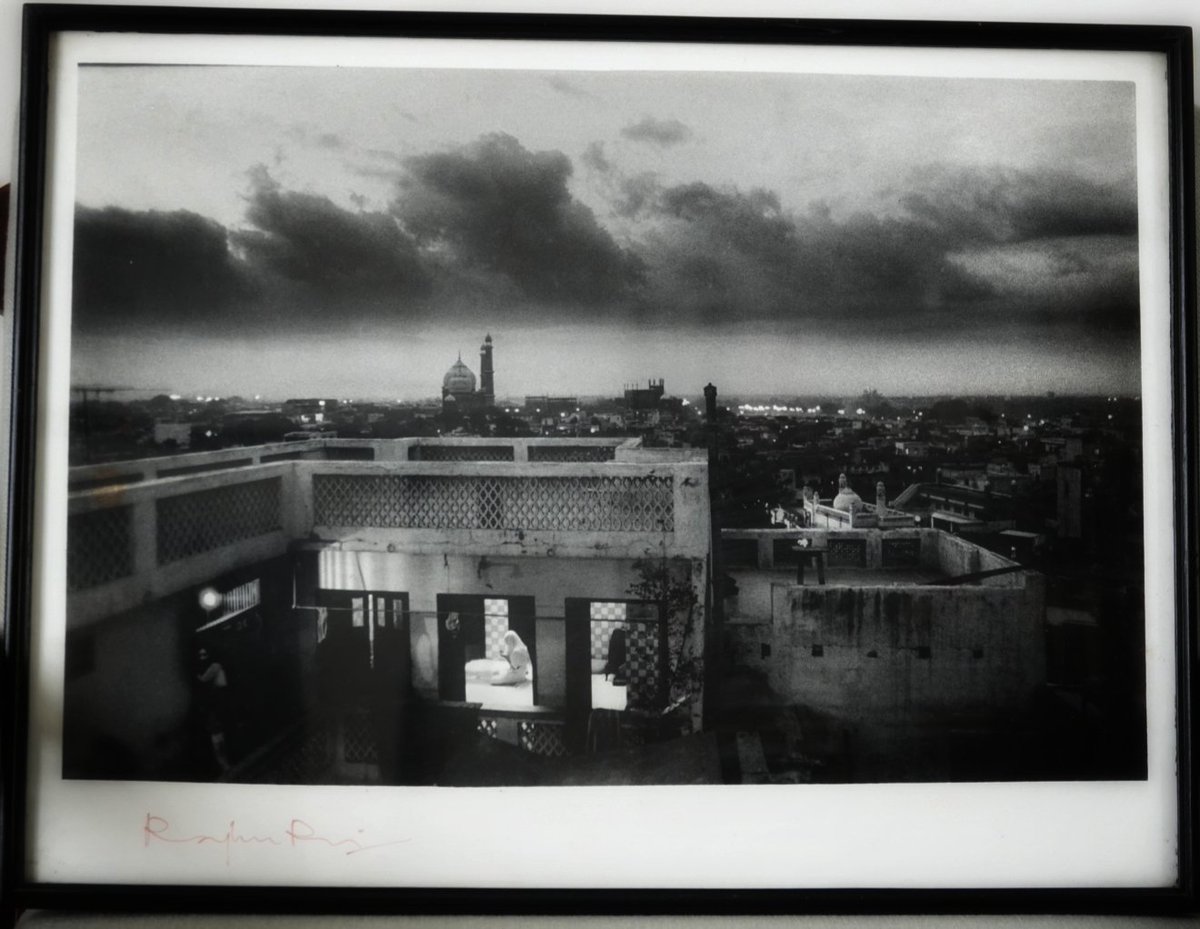
There are photographers—and then there was Raghu Rai, who revealed India’s inner life.
Twilight over Shahjahanabad: a lone figure at namaaz, the city stilled.
I’ve seen him in the India Today darkroom, singing taans to time the light.
Nothing was taken. Everything revealed.
RIP🙏