Carlos Castillo Peraza no lidiaba con resignación la frivolidad ni el juicio banal sobre ningún acontecimiento. Pero estuvo invariablemente dispuesto a oír con respeto las certidumbres ajenas, expresadas en buen castellano y en ardua lógica. Era un gusto escucharlo discurrir, tal vez aún más, cuando uno no pensaba como él ni en el cabo ni en el rabo. Pero escucharlo contar cualquier anécdota, desde las glorias de su tíos hasta los ires y venires de sus empeños políticos, era una verdadera fiesta. De ahí que cuando llegaba, a cualquier hora, casi siempre en la noche, muy tarde, o en la mañana muy temprano, nosotros estuviéramos dispuestos a caer en la trampa de su conversación como un río, desvelándonos o gastándose de un tirón las primeras horas de sol.
De Ángeles Mastretta:
https://t.co/QQen5B1Roy
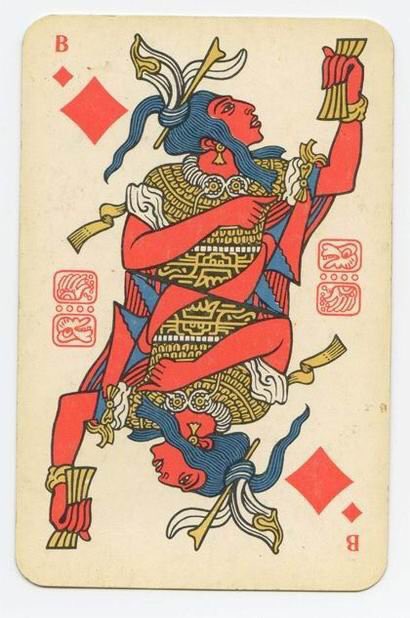
En 1975, la Unión Soviética publicó un excepcional set de naipes diseñado por el artista gráfico ruso V.M. Sveshnikov en la Colour Printing Plant de Leningrado, inspirado directamente en la iconografía antigua maya de México para honrar los avances del lingüista Yuri Knorozov en el desciframiento de los glifos; las tradicionales figuras de reyes, reinas y jotas fueron reemplazadas por personajes, dioses y elementos de la mitología mesoamericana —incluyendo representaciones como la de Lady Xoc de Yaxchilán y glifos del calendario Tzolkin—, convirtiéndolo en una verdadera rareza cultural que demuestra que la admiración por las culturas originarias de #México no tiene fronteras.
Las Bellas Artes a través de Montenegro 🎵🔨🖼️.
A diferencia de muchos artistas de su tiempo, en esta obra de 1947, Roberto Montenegro desarrolló figuras estilizadas y refinadas que se alejaban de los modelos tradicionales de masculinidad del arte posrevolucionario.
A través de ellas, exploró nuevas formas de representación que incorporaban sensibilidades y códigos visuales habitualmente asociados a las figuras femeninas, construyendo personajes que desafiaban las convenciones de género de su época.
La obra reúne algunas de las principales inquietudes del artista. En ella convergen influencias de las vanguardias europeas con su interés por explorar distintas formas de identidad dentro del contexto mexicano.
Conoce esta obra en la exposición “Roberto Montenegro. Muralismo fuera de la norma” en el Museo del Palacio de Bellas Artes.
Hasta el 6 de septiembre.
Visitas guiadas de martes a sábado 11:30 y 16 h
Even something like that I would advise against, because I don't think the AI can be trusted to correctly "read" the details of the linework and to not misinterpret things/fill in areas with the wrong color
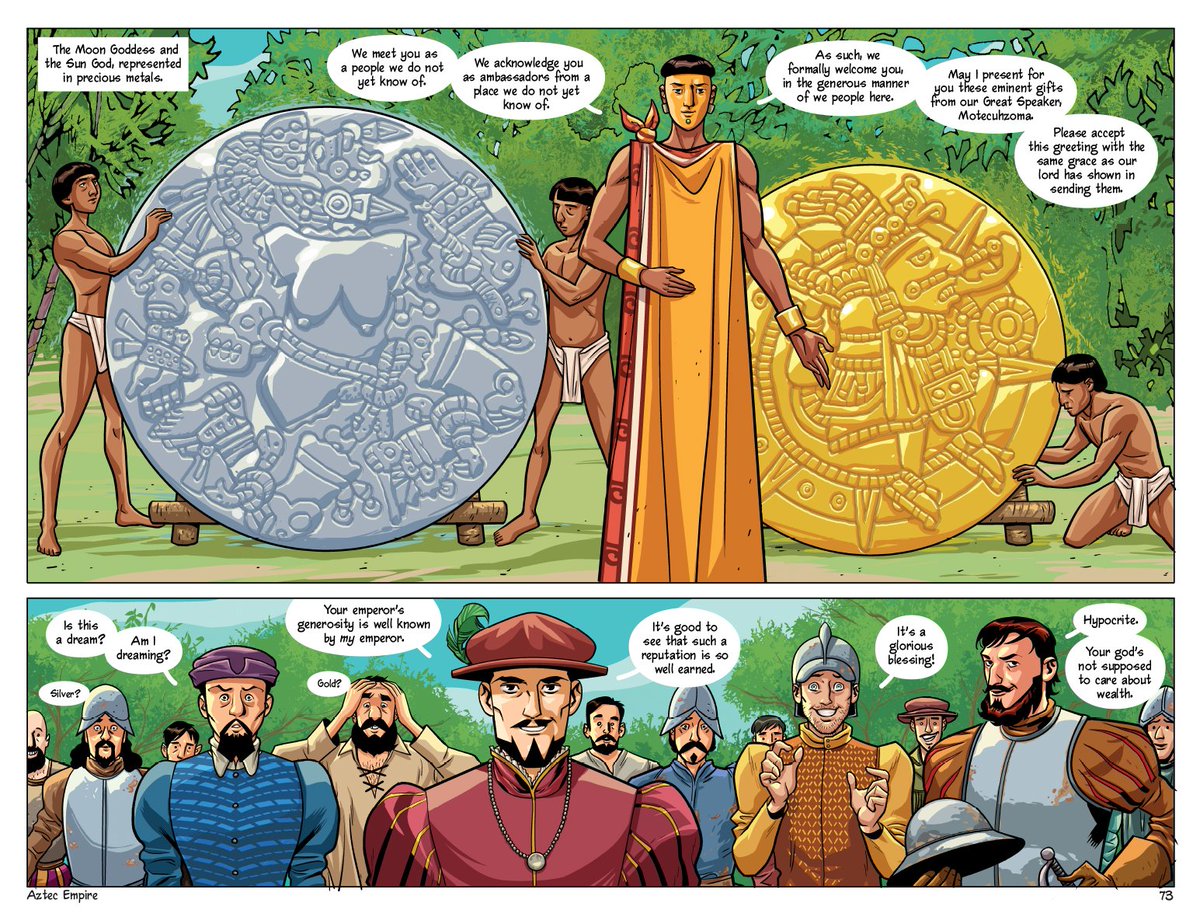
Anyways, tangential Albrecht Durer fact: He saw and praised Aztec art that was on display in an exhibit in Brussels in 1520, actually a year before their capital of Tenochtitlan fell, as some of the items given to or looted by Cortes had already arrived in Europe that early
Here is Durer's description of the exhibit:
"I saw the things which have been brought to the King from the new land of gold, a sun all of gold a whole fathom broad, and a moon all of silver of the same size, also two rooms full of armor of the people there, and all manner of wondrous weapons of theirs, harness and darts, very strange clothing, beds, and all kinds of wonderful objects of human use, much better worth seeing than prodigies [myths, fairy tales]. These things were all so precious that they are valued at 100,000 florins [guilders] All the days of my life I have seen nothing that rejoiced my heart so much as these things, for I saw amongst them wonderful works of art, and I marvelled at the subtle Ingenia [genius] of men in foreign lands. Indeed I cannot express all that I thought there."
The same exhibit was also seen by Pedro Martir de Angleria who also described it, as did (IIRC?) Jose de Acosta.
Pic 1 here shows some of the items (including the gold/silver discs, gold animals mentioned by Angleria and Acosta, and the famous Quetzal headdress which was likely also in that shipment, note said headdress was not a crown: https://t.co/EusbB5I03S) as depicted in @AztecEmpire1520 's comic; Pic 2 shows various pieces of art (be it literally Aztec, or stuff in a similar style) I think are particularly pretty and help visualize what other things might have been on display, pic 3 shows various kinds of Aztec armor to help illustrate Durer mentioning that, and pic 4 shows various atlatl dartthrowers to likewise demonstrate some of those/other weapons he mentions
There are also some surviving shields which also have feather mosaic and is probably a better demonstration of clothing, armor, weapons, etc, but pic 3 already shows some reconstructions of shields, I prefer the Saint John feather mosaic as a demonstration of that artform, etc, but this https://t.co/vsIWOgizCq shows photos of some and some details of their construction
In 15th Century AD, while most of Europe educated only the sons of the wealthy and the church, the Aztec Empire had already built something that no other civilization on earth had yet attempted: a system of mandatory schooling for every child, regardless of sex, social rank, or the circumstances of birth. The child of a noble and the child of a farmer were both enrolled.
Girls attended alongside boys. Even the children of slaves received an education. The Aztec state did not consider this generosity. It considered it a basic obligation of governance.
Education began before school ever did. From birth, Aztec parents understood themselves to be teachers first. The first years of a child's life were gentle — children were indulged and pampered until around age three.
Then the tone shifted sharply. Parents began instructing their children in the huehuetlatolli, a vast body of oral wisdom translated as "the words of the elders" or "ancient speech." These were not simple proverbs.
They were full rhetorical orations — speeches on how to greet a newborn, how to mourn the dead, how to address a ruler, how to conduct yourself in the marketplace, how to speak to the gods. A child raised on the huehuetlatolli was being shaped into a person who understood their exact place in the world and had the precise language to inhabit it. Every few years, children were brought to the temple and tested on how much of this inherited knowledge they had absorbed.
At around fifteen, boys entered one of two formal institutions. The sons of nobles attended the calmecac, attached to temples and governed by priests, where the curriculum included astronomy, the sacred calendar, law, medicine, architecture, rhetoric, and the reading and painting of codices.
Life there was deliberately brutal: cold baths before dawn, midnight prayer vigils, manual labor, and ritual penance involving cactus spines. The sons of commoners attended the telpochcalli, the House of Youth, present in every neighborhood, where military training formed the backbone of daily life.
Boys learned weapons, tactics, and the physical endurance that warfare demanded. But neither school was purely vocational. Both taught religion, history, and the ceremonial knowledge required to participate fully in Aztec civic life.
Girls entered their own parallel institutions. Noble daughters trained at the calmecac as priestesses-in-training, learning the same rigorous ritual knowledge as their male counterparts. Other girls attended schools where they learned weaving, the preparation of ritual foods, and the ceremonial practices that structured household and community life.
What every child — boy or girl, noble or common — shared was the cuicacalli: the House of Song. After regular school hours each day, all children were required to attend. There they memorized the sacred hymns associated with each deity and festival, learned the dances that accompanied them, and studied the flower-songs, xochicuicatl, a Nahuatl poetic tradition built on elaborate metaphors linking beauty, impermanence, and the divine.
The House of Song was also, in the evenings, a social space where young people gathered to sing, play instruments, and perform for one another. The communal drums were kept there, along with flutes and rattles. Music was not an extracurricular activity. It was a civic duty.
What the Spanish encountered when they arrived in 1521 AD, was a population of extraordinary cultural literacy. The 16th Century Jesuit José de Acosta was so impressed by the Aztec education system that he formally recommended it be adopted by Spanish colonial administration as the framework for introducing Catholicism to the conquered population.
#archaeohistories