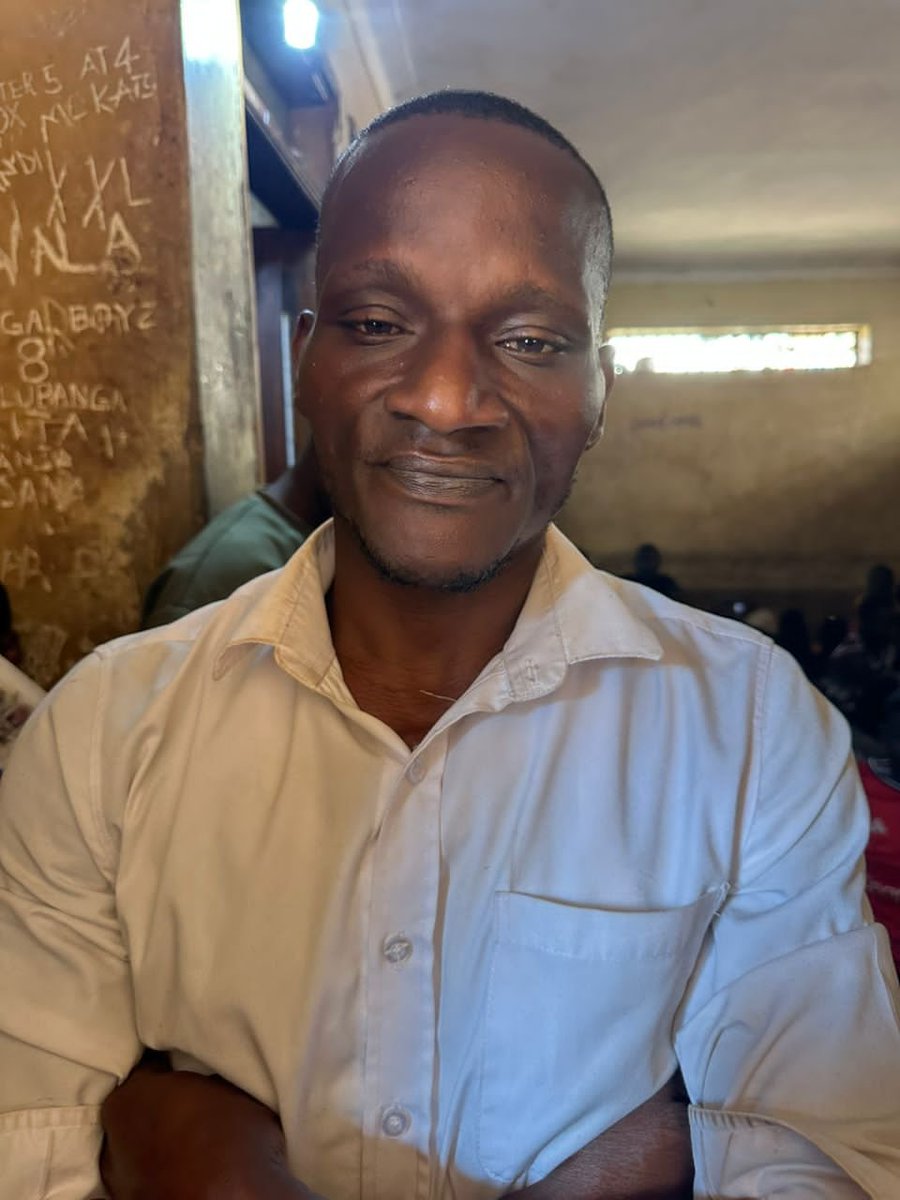
On 23rd September 2017, I made a decision to quit taking alcohol....today marks 9 years. My life has been better and I have no single regrets .The only regret I have I should have done it earlier.
Many of you can also make personal decisions to avoid substance abuse.
Following the sudden death of King Patrick Olimi Kaboyo II, his toddler son, Oyo Nyimba, was crowned reigning monarch. Because the king was a child, a regency was formed to govern the kingdom's affairs. This leadership was dominated by the Queen Mother Best Kemigisa and the kingdom’s powerful Prime Minister, John Sanyu Katuramu.
Prince Charles Patrick Happy Kijanangoma publicly accused Katuramu and Kemigisa of corruption, mismanagement, and overstepping their authority. As Kijanangoma’s rebellion grew louder and he began organizing legal and political challenges to oust the kingdom's leadership, he became a direct threat to Katuramu’s immense power and influence.
The brewing conflict reached a violent climax on March 25, 1999. While sitting at the Palace View Bar in Fort Portal town, Prince Kijanangoma and his guard, Stephen Kaganda, were ambushed and gunned down by hired assassins. The public execution of a royal prince sent shockwaves through Uganda.
The police investigation successfully traced the logistics and financing of the hit squad directly back to the Prime Minister. In 2001, the High Court in Kampala found Katuramu, his brother, and their accomplices guilty of orchestrating the assassination. Katuramu was stripped of his titles and sentenced to death by hanging.
Katuramu spent the next two decades behind bars at the Luzira Maximum Security Prison. His fate shifted in 2009 when a landmark Ugandan Supreme Court ruling commuted long-standing death sentences to life imprisonment. Katuramu's punishment was eventually modified to a fixed 20-year sentence. While incarcerated, Katuramu underwent a public reformation, expressing deep remorse and seeking forgiveness from the Tooro royal family. The Kijanangoma family ultimately chose path of reconciliation and publicly forgave him, paving the way for Katuramu's official release from prison in September 2021.
As former Tooro King Oyo Nyimba is buried today at the tender age of 34, we have to acknowledge the most unusual and surprising fact of his reign that only came into sight with his death; he occupied a place in Ugandan’s hearts that is several times bigger than the quiet relatively small kingdom he led. And he did it without getting in Ugandan’s faces, without noise, or drama. In fact, if truth be told, he did it while not trying to. The irony is that more powerful men and women, who’ve tried one million times harder, for more years, sent thousands to their graves and to gaol, and expended great treasure, will get nowhere near that, and could even end in ignominy instead. He probably didn’t even know it. And so, if one asked the famous Amama Mbabazi-derived question, “how did he did it?”, the only honest answer has to be that it is one of the great mysteries of these our lands. RIP
Hi Comrade @AndrewMwenda as your friend and also as a friend of our late King oyo I appeal to you to consciously make a decision and keep quiet/ceasefire for now. We owe this to our humble and gentle King. All other issues are secondary plz. Debates can ensue thereafter. Plz 🙏
THERE IS A BIG PROBLEM IN YOUR STATEMENTS, THEY WILL TEAR THE KINGDOM. LET ME TELL YOU WHY;
Your statement is long, but its central weakness is remarkably simple: it assumes the very authority that the Queen Mother is challenging.
You tell us that over 100 Babiito met at Karuziika, selected 21 people, and that this became the “Royal Succession Committee.” But where, precisely, did those 100 Babiito derive the legal or customary authority to constitute a body whose decision would determine the next Omukama?
Calling it a “Royal Succession Committee” does not answer that question. A committee does not become legitimate merely because it gives itself a name, holds a meeting and votes.
If the Queen Mother’s objection is that this was a “self-appointed group,” the answer cannot simply be: more than 100 people attended. The real question is whether those people had the recognised mandate under Tooro custom to constitute the body that Mwenda now treats as the supreme electoral authority. That is the answer 'Best' is looking for.
There is another serious problem.
You say Oyo’s son was excluded because there was no photograph, there were questions about his mother, different names had been used, and some Babiito had never heard of him.
But since when does not having a photograph at a meeting become a customary test of dynastic legitimacy? As, you claim to be an 'old man of the clan', do you think the absence of the above, delegitimise the young boy (if any) of his royalty? Be fair Andrew!!!
If the existence of a possible heir was genuinely in dispute, the rational course would have been to verify the claim—identity, parentage, birth records, DNA where appropriate, testimony, and the applicable customary requirements. Instead, the committee allegedly moved from uncertainty to exclusion.
That is not the same thing as disproving the claim.
You also make a revealing rhetorical move by repeatedly calling the child “Oyo’s purported son.” That is a conclusion masquerading as neutral description. If paternity is disputed, then say it is disputed. Do not use the language of uncertainty to create the impression that the claim has already been discredited.
You say the Queen Mother was represented on the committee by her brother Patrick Kawamara. But if the Queen Mother herself is an institutionally significant actor in the succession of her deceased son, why should her participation be reduced to being represented by a relative on a committee whose mandate she disputes? Would you expect a sober mother like 'Best' to be in such a contested meeting with her son lying unburied??
Representation is not the same thing as consent. Nor does the fact that a person attends a meeting necessarily mean that they accept the legitimacy of the process taking place at that meeting.
The argument about the will is equally problematic. You say the will contains only a “hypothetical heir” and therefore does not resolve succession. Fine.
But if the will does not resolve succession, why is it being deployed as part of the argument against the Queen Mother’s position?
A will may answer questions concerning property and personal wishes. Succession to a traditional throne is a different question governed by the applicable constitutional, statutory and customary framework.
So the real issue is not whether Oyo’s will magically names a successor. The real issue is whether the succession process being undertaken is lawful, customary, legitimate and inclusive of the institutions entitled to participate in it.
And this is where your statement becomes politically interesting. You spend enormous energy explaining why Oyo’s possible son should not automatically inherit. But who is arguing that a son automatically inherits? That is a straw man!!!
The more difficult question is whether the existence of a son and the circumstances of his birth must first be conclusively established before the kingdom closes the succession question. Those are completely different propositions.
Your statement also says the kingdom was “time barred” and therefore moved to the next candidate after George Kamurasi allegedly asked for time to consult his wife and business partners. Time-barred by what rule? What customary provision imposes that deadline? Who set it? Why was the deadline necessary? And why should the urgency of filling the throne override unresolved questions concerning a possible direct descendant of the deceased Omukama? These are not minor procedural questions. They go to the legitimacy of the entire process.
But there is an even deeper issue that your statement does not confront. Why is there such extraordinary urgency to determine the next King?
If the real objective is simply to identify the most legitimate successor, there should be no fear of a transparent process that establishes the facts first. The controversy therefore appears to be about more than the identity of the next Omukama. It is about who will have influence over the next Omukama.
The Queen Mother is not merely another relative of the late King. She occupies a distinct cultural position and has been closely associated with the young King and the institution of the Tooro monarchy.
Therefore, a succession struggle in which the Queen Mother’s influence is diminished, her preferred position is challenged, and a new succession structure is rapidly constructed around her is inevitably going to raise questions about the political future of the institution itself.
This is why the debate should not be reduced to:
“Did Oyo introduce his son?”
“Was there a photograph?”
“What did the will say?”
“Did 100 Babiito meet?”
Those are pieces of the puzzle—not the puzzle itself.
The fundamental questions are:
Who has the authority to determine succession?
What customary rules confer that authority?
Was the Queen Mother’s institutional role properly recognised?
Why was the possible heir excluded rather than subjected to a transparent verification process?
What exactly made the succession process “time barred”?
And, ultimately:
Who benefits from determining the next Omukama through this particular process, at this particular moment, and with the Queen Mother’s influence reduced?
Until those questions are answered, your statement does not settle the succession dispute.
It merely gives us one side’s explanation of why it believes it should control the process.
And that is precisely the issue in dispute.
What the sun has done to coffee in Masaka this year is terrible. In some gardens, all leaves have literally dried. It rained about four weeks ago, and the coffee flowered. But the sun that followed wasted all the flowers. Considering that many people are reliant on coffee and very few irrigate, tough times ahead! Agricultural efforts need to be put on irrigation now. Living at the mercy of nature is very unsustainable.
One day in 2014, while at the prestigious University of Cape Town, we lost a colleague in the most unfortunate way, an incident that still disturbs my mind to date. Yoboka was Congolese. I had met him at the Uni through his chaotic Xhosa girlfriend, Thandolwethu, who would arrive at her boyfriend’s house on most weekends wearing her umbhaco and idzila, ready for what we jokingly called their weekend marriage. Yoboka was more than a friend. He was like a brother to me, despite the fact that I had known him for barely a year when he died. He was also a relentless manufacturer of jokes at my expense. He always warned me that it was dangerous for a lanky fellow like me to go running or walking outside because a strong Cape Town wind might blow me away like rubbish, or an eagle might mistake me for an appetiser and carry me off for a feast. This advice came from a man who weighed about 125 kilograms and regarded unnecessary movement with profound suspicion. He lived roughly two kilometres from the university and had bought a car for the journey.
The disturbing part is that nobody knew. For three days, he lay dead in his apartment while life outside continued with its usual indifference. I eventually became concerned by his unusual silence. Calls went unanswered, messages accumulated without reply and when I called Thandolwethu, our dramatic queen, I discovered that she too had sent innumerable texts and made repeated calls. Receiving no response, she had eventually become furious and blocked the dead man. In her imagination, Yoboka was not lying lifeless in his bathroom. The bastard was probably holed up somewhere in the apartment with another pulchritudinous damsel and deliberately ignoring her. She had already quarrelled with him, convicted him and begun moving on, while the accused was unfortunately unavailable to enter a defence. What unsettled her most afterwards was the missing morning text. Yoboka had a ritual, he would wake up and, before properly commencing negotiations with the day, text his girlfriend. According to what he had told me before he died, she had grown so accustomed to these messages that she sometimes ignored them and replied much later in the afternoon. Familiar affection has this peculiar problem. Something done faithfully every day can begin to look ordinary until the day it does not happen.
Yesterday, as I finished my postprandial, Thandolwethu, now a professor, called and somehow our conversation returned to Yoboka. Twelve years later, the story has lost none of its sadness. We spoke about how brutally indifferent life can sometimes be, particularly when nobody has incorporated your existence into the architecture of their day. Someone who notices that you have not awakened, someone who wonders why you have suddenly gone quiet, someone who checks whether you arrived home safely, whether you slept well, whether you are ill, whether something is wrong. Not the perfunctory checks of social obligation, but the one that reminds you that somewhere in another human being’s life, your continued existence is required rather than merely tolerated.
That was the lesson Thandolwethu Qhawekazi took from Yoboka’s death. She told me that she has never found another man who checks on her, cares for her and pays attention to the small details of her existence Yoboka Mokonzi did. And, strangely, that memory has encumbered her progress in finding another life partner. Every prospective man is, in some corner of her mind, being interviewed for a position previously occupied by a dead man who can no longer make mistakes.
The autopsy found that Yoboka had died from blunt-force trauma. Investigators concluded that he had collapsed in the bathroom, struck his head against the washbasin or bathtub and died. When he was finally found, his phone was still plugged into the charger. On its screen were hundreds of missed calls and messages from people who loved him, all arriving too late for a man who could no longer answer any of them.
If you have someone who checks on you in the morning to know whether you woke up safely, and in the evening to know whether you have returned home, eaten, gone to bed healthy or simply survived another day, do not mistake that attention for something ordinary. You possess a form of wealth for which there is no bank account.
Rukirabachwezi
That nagging pain that feels like you were family. Memories from a distance that feel like you were so close. Royalty that came with unusual humility and low profile. No drama, no harm, no noise - just human.
A powerful boost for youth skills development in Kamwokya supporting our work @SkillsKlinic
Rotary Club of Kitante has equipped @SkillsKlinic with cameras, DJ turntables, lenses, lighting and computers to strengthen creative and digital training under the Kamwokya Boy Child Program training boys in creative and digital skills and helping them transition into jobs. #Skillsklinic
Happy birthday Anselmo! 27 today. 3 degrees from Harvard, Chicago and Columbia under your belt! Just broken ground for your PhD research in East Africa. Determined to understand how life is lived at the bottom of the pyramid, the daily struggles of our people.
We are proud of you
. @M_Kananura "Police in Mukono yesterday arrested Kikomeko Christopher, the driver involved in a fatal road crash that occurred on 10 July 2026 at about 6:30 a.m.
The crash involved a Friendship Coaches bus carrying students of Mwebaza High School, Kakiri, Wakiso District.
Following thorough investigations, the driver is expected to face 44 counts, including:
1 count of reckless driving;
1 count of causing death by reckless driving;
40 counts of causing bodily injury; and
1 count of causing damage to a railway train.
The suspect will be presented before court to face the charges and for the appropriate legal process.
The news of the passing of His Majesty, Omukama Oyo Nyimba Rukidi IV, has been received with shock and extreme sadness.
I received the news from Omuhikirwa of Tooro, Calvin Armstrong Rwomiire last evening, and I immediately informed His Majesty Kabaka Ronald Muwenda Mutebi II, who was saddened by the demise of the young monarch (34 years).
The Kabaka urges the people of Tooro to stand together during this period of grief. The Kingdom of Buganda stands with the people of Tooro, and all Ugandans, during this sad moment.
May the Lord receive King Oyo's soul. CPM
A new dawn for Kadindimo Primary School!
Where there was once uncertainty, there is now hope, dignity and a brighter place to learn, a place where every child can dream big and look forward to a brighter future.
#MovitFoundation#KadindimoPrimarySchool
If you’re a white person out there who cheerfully submit that black African people excel in literature, football, music, crafts, etcetera yet the moment the conversation turns to academia you suddenly decide meritocracy has mysteriously collapsed and start inventing new excuses for the gap then congratulations! You are operating with a mind on pure radioactive nonsense.
On the day you took over officer as IGP, that Friday, I was graduating at Makerere University with a Master of Arts degree in Public Administration & Management. When my name was read, there was an uproar from the congregation & I saw the outgoing IGP John Kisembo saying something to you.
Your tour of duty in Police in 2001 found me at the rank of Superintendent of Police(SP).
On your first day in office, the following Monday, you appointed me to the office of head of Community Affairs as an Ag head of Community Affairs department following the interdiction of my boss who had been affected by the Sebutinde Commission.
You left your desk & sat in the visitors sofa where I was seated. You told me that you watched me from far & heard all my radio programs on CBS radio with Mulindwa Muwonge. You told me that you had a lot of hope in me as a young man & asked me to intensify & deepen community policing as a way of preventing crime.
I took the job with the seriousness it deserved. Many times, you appeared with me on same TV/radio interviews. We also traveled together to address public meetings.
Whenever you wanted anything done quickly at HQ, I was your first point of call. I wrote most of your speeches & one time told the university at Nkumba to invite me & talk to your Political Science class. You had a lot of trust in me intellectually.
One day, you summoned me to your office & I found Bishop Kawuma of Namirembe Diocese who had wanted to recruit a police officer to be trained as a Reverend at Bishop Turker Mukono. You said the most beautiful words about me that no IGP has ever said. From that day, you started calling me son.
In the same week, you summoned me to your office. I saw both my confidential & open files lying on your desk. You asked me serious personal questions about my family, business, health etc.
You gave me very good advice. I will never forget what you told me if I was going to be a good officer & serve my country well. You said that the family, my health & what I was doing outside my office were the most important things in my public service life.
The following year in 2002, I was promoted to the rank of Senior Superintendent of Polixe(SSP). In 2004, I was appointed on promotion to the rank of Assistant Commissioner of Police(ACP). The following year in 2005, I was yet again promoted to the rank of Commissioner of Police(CP). I put on my rank exactly on the day you handed over office to Maj. Gen. Kale Kayihura.
Contrary to what people say that I earned all my ranks under your successor, I actually earned 3 promotions in the 4 years you served as IGP. Gen. Kale recommended me for the rank of AIGP in 2009 the rank I retired on.
You trusted me with management of Police FC & the office for chairman Police Council Appeals Court. I handed over those offices on the day I retired in 2022. This was a sign that you knew my strengths so well.
We continued to work together even when you were CDF. You were always calling me to find out how I was doing when I was Director of INTERPOL & CPC.
When I was in the process of publishing my book Chosen, you offered to write the Foreword. I cherish every single word you chose & wrote.
I will always remain indebted to your counsel, command, mentorship & advice. I looked up to you in whatever you did till today. You trusted me, I didn’t let you down even in a single instance. The legacy you left in my life is cemented with the strongest concrete in the world.
You’ve retired a proud officer, a visionary leader, a Pan Africanist, a patriot, a commander, a mentor & a father.
I wish you a good retirement from the army & success in the service of this country as a Minister.
My family & I will always remember you for my life & service to the nation.
I don’t have what to give you. Only this tribute. May God continue to bless you & family my commander @GenWamala