You saw a negative tweet about Joshua Selman; now your heart is not as receptive whenever you see his clips.
Someone called Benny Hinn a false prophet; now those same worship songs that used to bless you don’t bless you as much.
Satan is working on you. Resist.
This is the spiritual warfare o.
❌ Certifications that are WORTHLESS:
・English B1
・Basic Excel
・Basic Power BI
・Generic AI course
・LinkedIn Learning certificate
⭕️ Certifications that ARE actually worth SOMETHING:
Earn $400 per hour by reading books!
I've compiled a guide featuring 20 methods to help you earn $5,000 daily.
Normally priced at $199, But today it's FREE.
To get it: Like this post & RT
Comment 'Book'
I'll DM it to you -->(Must be following)
I have been thinking about something lately, and the more I think about it, the more disturbing it becomes.
A lot of Nigerians became poor without doing anything wrong.
They didn’t stop working. They didn’t become lazy. They didn’t suddenly become irresponsible.
They simply woke up one day and realised that the money they had worked for could no longer buy the things it used to buy.
Think about someone earning ₦100,000 a month.
The person still wakes up early every morning, goes to work, puts in the same hours, probably works even harder, gets promoted occasionally and does everything society says a responsible person should do.
Yet every year, that person seems to be able to afford less.
At some point, ₦50,000 could buy a reasonable amount of food for the house. Today, you can enter the market with the same ₦50,000 and genuinely wonder where the money went.
Nothing happened to you.
The economy happened to you.
And I think this is something we don’t talk about enough.
Imagine working hard for years, only for circumstances completely outside your control to quietly reduce the value of everything you have worked for.
You didn’t lose your job.
You didn’t lose your salary.
But somehow, you lost your standard of living.
That is poverty too.
And this is why I struggle with the way we sometimes discuss palliatives.
Of course, when people are hungry, you must find ways to help them immediately. There is nothing wrong with providing temporary relief.
But surely, the bigger question should be:
Why did millions of working Nigerians suddenly need palliatives in the first place?
If a man could comfortably buy a bag of rice from his salary a few years ago and today he needs government assistance to buy that same bag of rice, giving him rice may solve today’s hunger.
But it has not solved the actual problem.
The real problem is that his labour has lost value.
And perhaps that is what we should be obsessed with fixing.
How do we make the Nigerian worker’s income valuable again?
How do we make ₦100,000 buy more next year, rather than less?
How do we make food cheaper by producing more?
How do we reduce the cost of energy and transportation?
How do we build an economy where salaries can actually keep up with the cost of living?
Because when I think deeply about it, perhaps one of the greatest things a government can do for its people is not to keep giving them money.
It is to build an economy where the money they earn has value.
There is dignity in being able to take care of yourself from the product of your own labour.
There is dignity in a teacher being able to feed a family from teaching.
There is dignity in a nurse being able to pay rent from nursing.
There is dignity in a young person working an honest job and gradually seeing life improve.
People should be able to look back after five years of hard work and say, “My life has become better.”
Not, “I earn more money today, but somehow I can afford less.”
That is the part that keeps bothering me.
Millions of Nigerians are not asking to become millionaires overnight.
They just want hard work to make sense again.
And maybe that should be one of the simplest ways we measure whether our economy is actually working:
Is the ordinary Nigerian who works hard becoming progressively better off, or progressively poorer?
Everything else is secondary.
1. Be vigilant in keeping your conversations, inboxes, direct messages, emails, & texts PURE.
2. Beware of those who use phrases like "this is between us," "you can trust me," or "I won't tell anyone" to get you to lower your guards or remove your boundaries.
3. Anything sown in secret is subject to a public harvest.
4. So be loving; but not lenient. Be friendly but firm. Be compassionate but clear.
5. Don't tolerate inbox chatter that would compromise your character or taint your testimony.
6. Let the last time you did it be the last time you will ever do it.
I hope this is clear?
Written by @MatAshimolowo .official
WE WILL NOT BE SILENT
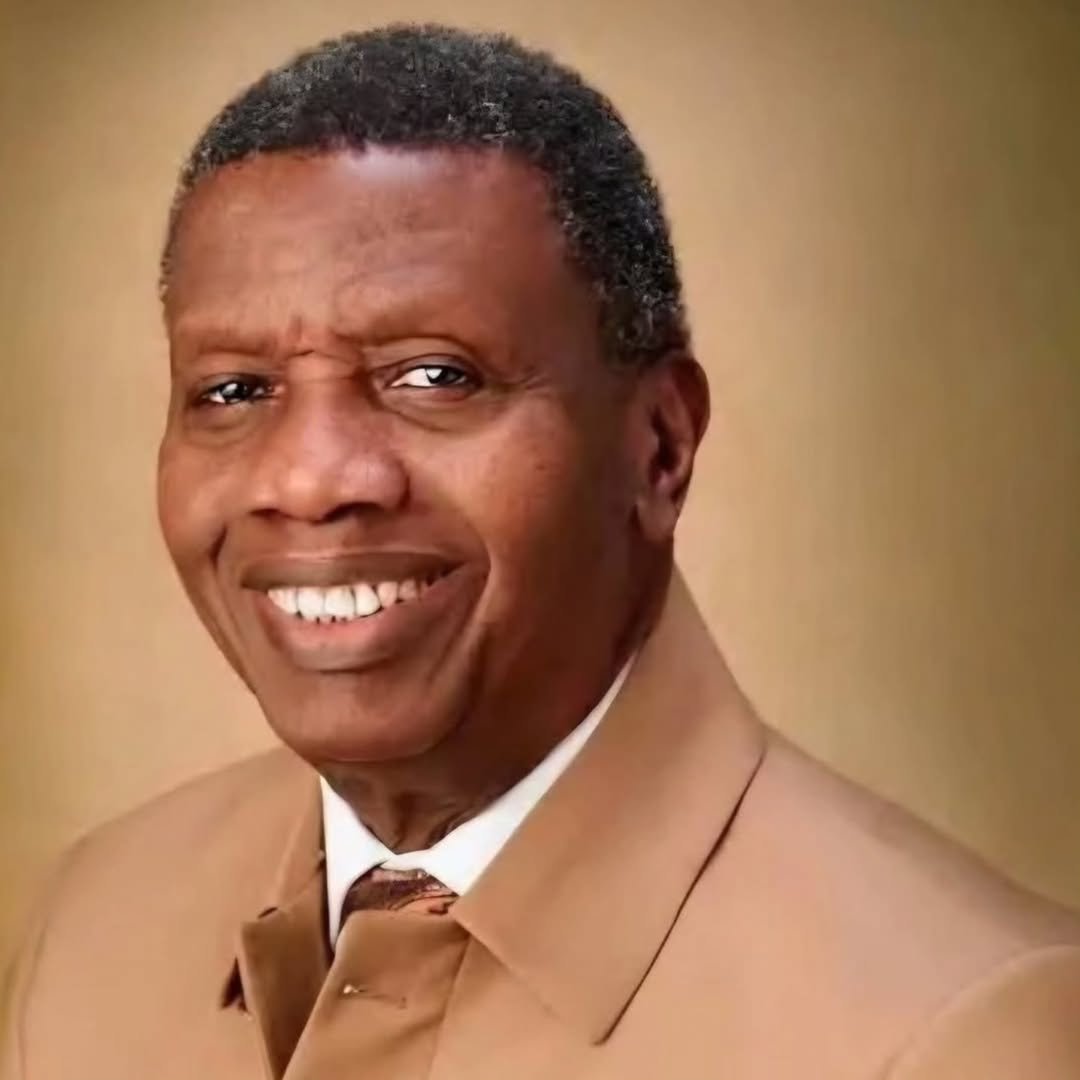
A Celebration of Pastor Enoch Adejare Adeboye
There comes a time when silence becomes ingratitude.
There comes a time when honour becomes a sacred duty.
There comes a time when sons and daughters must rise to celebrate the gifts that God has given to a generation.
This is such a time.
We refuse to be silent while men and women of eternal significance are reduced to headlines, controversies, and social media trends.
We refuse to stand by while those who have sacrificed decades in service to God and humanity are casually criticized by people who have built nothing, fathered nobody, planted no churches, and transformed no nations.
The sons and daughters of prophets must never be silent while cheap publicity seekers use great men as instruments for attention.
A generation that does not honour its fathers has no future.
A people who cannot recognize greatness in their midst will eventually suffer the tragedy of its absence.
Pastor Enoch Adejare Adeboye is not merely a church leader.
He is not merely a denomination head.
He is not merely a respected minister.
He is one of the most significant Christian leaders of our generation and one of the greatest spiritual gifts God has given to Africa and the global Church.
We should never allow a man who chose humility to become the chewing stick of the uninformed.
We should never permit the noise of critics to drown out the voice of history.
We should never watch while modern-day Sauls seek to intimidate, discredit, or silence God's servants.
Scripture records how King Saul pursued David.
Scripture records how Doeg the Edomite became an instrument of destruction against the priests of God.
Throughout history, political power has often sought to suppress prophetic voices.
Yet God has always preserved His servants and vindicated His purpose.
The Church must never become indifferent when its fathers are unfairly attacked.
Nor should we wait until our prophets cross into eternity before we begin to celebrate them.
Too often, flowers are sent to funerals when they should have been delivered while the recipient was still alive.