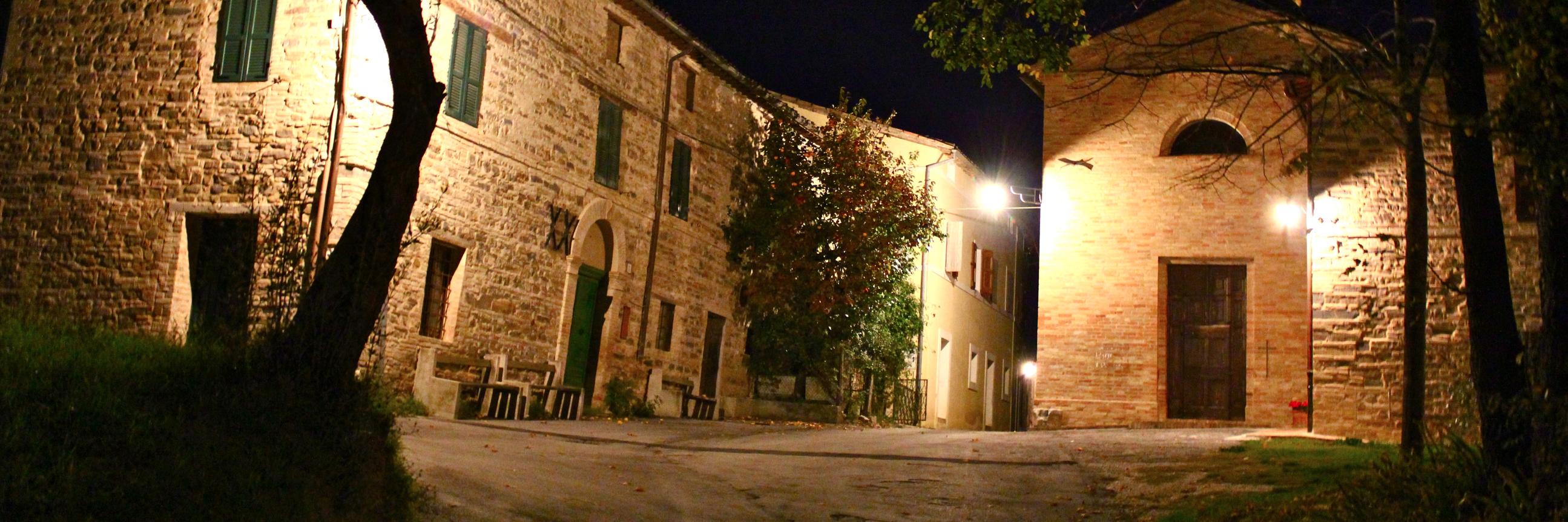
This memorandum of understanding between ESA and UT will boost our collaboration on designing and characterizing dependable computing systems for space applications.
The sky is the limit!
https://t.co/OsuSOYbevg
Do you want to make a difference in the emerging world of computing ushered by the open standard RISC-V? Check out these two exciting opportunities at our group!
https://t.co/s3iDudiBKm
https://t.co/Ruh91cphbI
#riscv#reliability#hardwaresecurity#phdposition#project
The TRISTAN (Together for RISc-V Technology and ApplicatioNs) project has started!
TRISTAN is a EU-funded initiative that aims to mature and expand the European RISC-V ecosystem for the next generation of industrial hardware to compete with existing commercial alternatives.
Is RISC-V ready for space? A security perspective.
In this paper, we discuss the security issues related to space applications mainly focusing on threats that come from the adoption of the RISC-V ISA.
https://t.co/Oec3Xm7h0c
#security#hardware#riscv
Can we use time division multithreading to dynamically provide fault tolerance? In this work we show a solution on a RISC-V architecture. https://t.co/RZvC6snPyr
#riscv#tmr#dependability
Can probabilistic data structures be used to achieve security and reliability at an architectural level? Congratulations to all the coauthors for the DFTS 2022 'Best Paper' Award with “Preventing Soft Errors and Hardware Troians in RISC-V Cores” #riscv#reliable#secure
We propose a RISC-V framework that supports logic-in-memory operations so that different logic-in-memory architectures can be inserted inside the microprocessor.
RISC-Vlim, a RISC-V Framework for Logic-in-Memory Architectures https://t.co/cKlRIO4lbs
New paper: An Efficient and Practical Software Obfuscation Framework" published at DSN-2022.
The paper proposes an end-to-end framework that can provide two-side authentication between the compiler and the executor. Framework (ERIC) open source a https://t.co/zwwwToj87e
Can Machine Learning (ML) detect Hardware Trojans introduced by a CAD tool into an FPGA bitstream? We present a comparative analysis of the ability of several ML models to detect the presence of HTHs in an FPGA bitstream.
https://t.co/6RXmIcCKvi
#ML#fpga#trojan#security#riscv
New paper “Processor Security: Detecting Microarchitectural Attacks via Count-Min Sketches” on TVLSI.
https://t.co/al7zV9g2U6
This work shows that sketches can implement lightweight and effective checkers for security in processor architectures.
#security#sketches#processor
IPA 2021, il brevetto di "Tor Vergata" per migliorare il calcolo dei dati tra i finalisti a Dubai. Da una collaborazione con il Politecnico di Torino https://t.co/0AAkH07Aye @ing_torvergata@PoliTOnews@ItalyinDubai@NetvalITA@MISE_GOV
The results of our experiments on neutron irradiation of perovskite films and solar cells on PET substrates are now available on Nano Energy. https://t.co/u83uXTFu3q
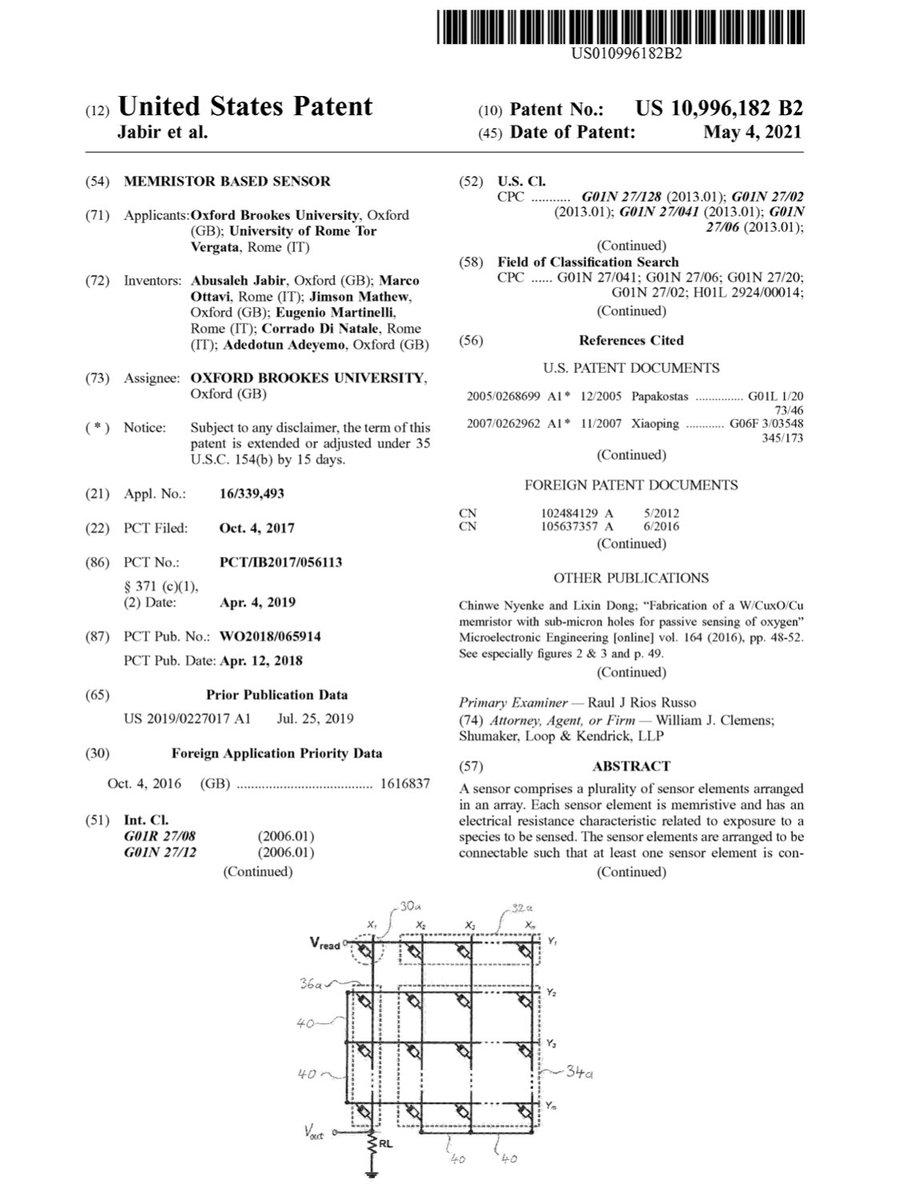
Our patent "Memristor based sensor" has been approved by the USPTO. Among the many potential applications of memristive devices, sensing is one of the most interesting as it could lead to unprecedented sensor density and ubiquity in electronic systems. #sensing#memristor#patent
Congratulations to all the coauthors of "On-Board Satellite Telemetry Forecasting with RNN on RISC-V Based Multicore Processor" for winning the Best Paper Award at DFTS2020!
Danilo Cappellone, Stefano Di Mascio, @GLFurano, Alessandra Menicucci
Can AI be…https://t.co/S8X1r9H8qX
The IEEE DFT Symposium 2020 will be held online.
DFT is an annual Symposium providing an open forum for presentations in the field of defect and fault tolerance in VLSI and nanotechnology systems inclusive of emerging technologies…https://t.co/D2F4UwylDT https://t.co/IsT0v5KvCB
This invention represents a nanoelectronic device that is able to both memorize and elaborate data. Data are stored on a magnetic strip of nanometer sizes. At the same time it is possible to do simple logic operations on the stored…https://t.co/fwKGLkIIdA https://t.co/AeklQLZOJ7
My effort to promote targeted Federal investment in reversible computing R&D has had its first success--an Air Force STTR for an adiabatic/reversible test chip for space applications! 😄👍🏼https://t.co/vqiycz1rg0