Remote Control is here!
Take Antigravity with you anywhere. Access your active sessions from any modern supported browser or mobile device across iOS and Android. Rolling out to all users starting today, beginning with Ultra subscribers.
Hicimos este libro desde la fascinación por el trabajo de esa máquina de leer y de escribir que es Elvio Gandolfo: textos críticos diversos, dispersos, raros, inhallables, imperdibles.
Hay sobre Viñas, Saer, Parra, Levrero, Uhart... Y más.
Ya se va consiguiendo en librerías.
Introducing fx, a tiny, open, native coding agent from Vercel Labs.
Originally an internal tool, fx is a harness and CLI written in Zig, optimized for research and embedding in larger systems. Today, we're open sourcing it.
fx is built on three principles:
1. Fast. A single native binary, no runtime to install. It cold starts in 10µs and does no unnecessary work or I/O before accepting input. fx is the answer to "how fast can a coding agent be?"
2. Light. The 6.3MiB binary uses single-digit megabytes of memory at baseline, made for instant installation and embedding in resource-constrained environments and agent sandboxes.
3. Open. Apache-2.0, model and provider agnostic, suitable for local and cloud inference. Its small core extends through skills, plugins, and MCP.
Minimalism is an obsession throughout the entire harness: system prompt, tools, features, binary. The goal was to keep context usage and time to first token low, and make fx optimal for model benchmarking, sandboxing, evals, and gyms.
You can use fx directly or embed it as infrastructure. The CLI feels more like a Unix shell than an IDE in the terminal: it preserves scroll history, produces minimal output, and uses complex TUI rendering very, very sparingly. Programmatically, 𝚏𝚡 𝚊𝚜𝚔 --𝚓𝚜𝚘𝚗 gives structured output, 𝚏𝚡 𝚊𝚌𝚙 connects to editors and other clients, and WebAssembly can even run the whole thing inside the browser (see: https://t.co/wf2Trg47sC).
Privacy is a design constraint: no product telemetry, sessions and usage stay local, and no source code or prompts are shared with any endpoint other than inference. With local inference and auto-updates off, fx is fully hermetic.
fx is experimental. Use at your own risk and expect frequent changes. Chat with us on X (https://t.co/A2AB2YythC) or file issues (https://t.co/GEjTHSoa1J).
𝚌𝚞𝚛𝚕 -𝚏𝚜𝚂𝙻 𝚏𝚡.𝚜𝚑/𝚜𝚎𝚝𝚞𝚙.𝚜𝚑 | 𝚋𝚊𝚜𝚑
https://t.co/g2uEuXhGnt
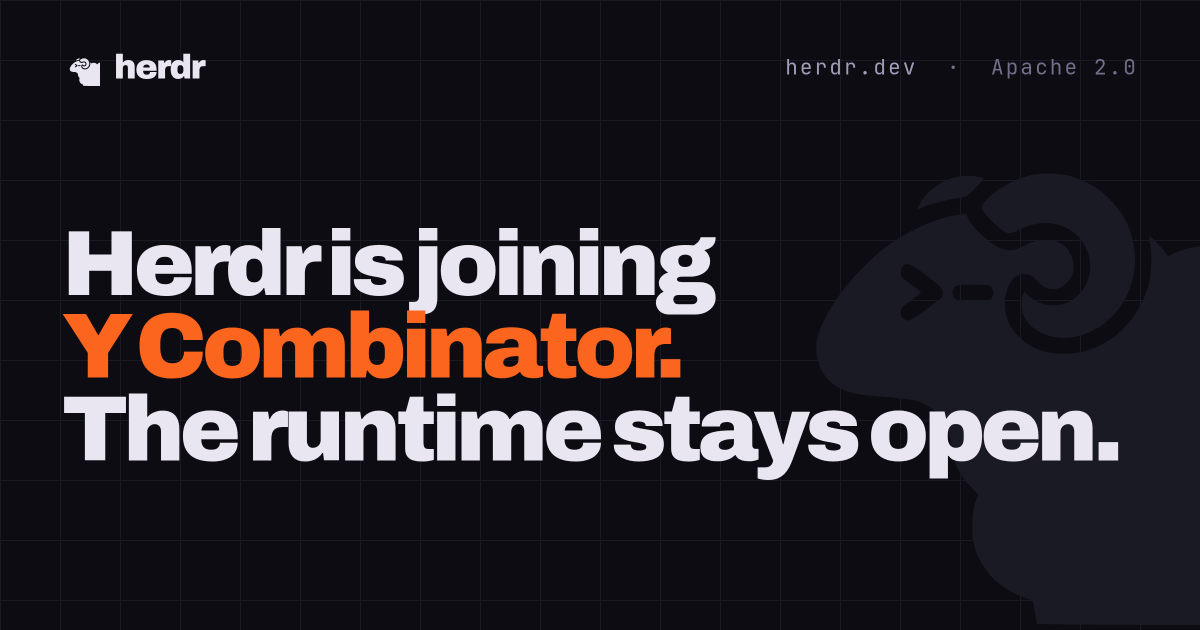
big update: herdr is joining Y Combinator, F26 batch.
herdr has been a solo project from day one. in four months it reached a place i couldn't have imagined; and that's entirely thanks to this community. all the love, all the support, all of you. i'm so grateful, thank you!
this doesn't mean herdr is going closed. the whole idea from the start: herdr is the open agent runtime, you use it freely, you build on top of it, and it carries your agentic work every day. that doesn't change. i'll be building on the same open runtime as everyone else.
read the full story here:
https://t.co/iK6HPSpYJk
This weekend’s project: a ‘kinetic’ instrument.
Pull back and release to send glowing objects across the screen. Every time one hits a wall, it plays a note.
Use the REC button to share your creations in the replies https://t.co/tssvd4bAGt
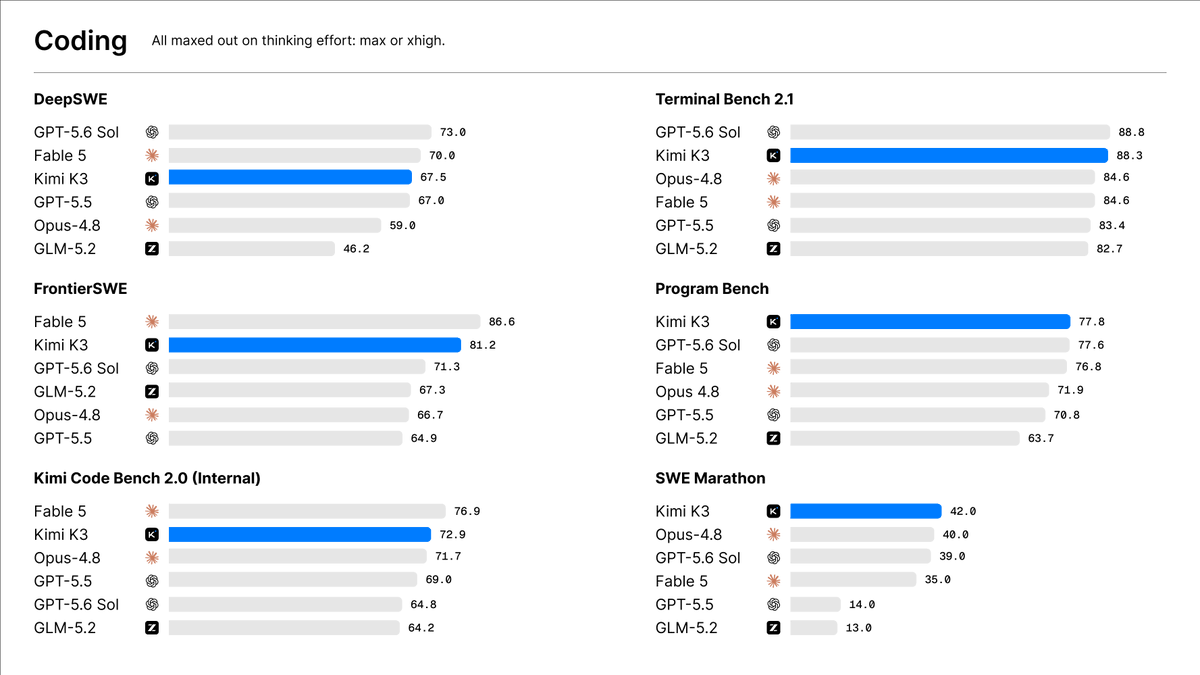
Introducing Kimi K3: Open Frontier Intelligence
🔹 2.8 Trillion Parameters, 1 Million Context, Native Multimodal
🔹 Kimi Delta Attention enables up to 6.3x faster decoding in million-token contexts
🔹 Attention Residuals deliver ~25% higher training efficiency at <2% additional cost
🔹 Built for long-horizon agentic coding and self-evolving workflows
Kimi K3 is now live on on https://t.co/zrk6zZxZUo, Kimi Work, Kimi Code, and the Kimi API.
Open Weights by July 27, 2026.
🔗 API: https://t.co/XCrgjXAqMw
🔗 Tech blog: https://t.co/YTfiMSNM1f