The last paper from @MikkelSB PhD thesis has just been published @Nature_NPJ Computational Materials. We inform a machine learning model with info from statistical mechanics to predict the short-range structure of glasses from their composition. @DFF_raad
https://t.co/bpH4HZDjLk
Congratulations to Wei for his work on balancing strength and toughness in bioactive hybrid materials!
https://t.co/fYhXmnyvea @acsnano
Nice collaboration with groups of @Xing_Group_NTU, @pk_bio_aau, @Moutmat, Lars Jensen and Randy Youngman
Glass is an amazing material that we keep touching all day long as we interact with our smartphones. How can we discover the next groundbreaking glass? How to design an unbreakable transparent glass? The answer is machine learning https://t.co/i59JawHMb0
Congratulations to Professor Xiaoyu (Rayne) Zheng and his team of researchers, who have received a $1.4 million grant from the National Science Foundation to design architected materials that are fine-tuned with dynamic behaviors!
https://t.co/fZ90pJlIyL
We are pleased to have Sam Schoenholz @sschoenholz from Google Brain as our next https://t.co/pedq3ycCYu speaker. He'll talk about "JAX MD: A Framework for Differentiable Atomistic Physics". Please tune in on Wed. Sept. 8 at noon US Central time (11am @UWMadPhysics).
Check out our paper on experimentally quantifying ring statistics in silicate glasses—which is typically hidden from experiments. Great collaboration with @Corning! https://t.co/H1kHKjpIbT
Researchers from UCLA led by @Moutmat, along with other organizations, have used atomic-level computer simulations to suggest a path toward developing stronger, more ductile glass.
Read the article: https://t.co/LBSnQOqTaH
The UCLA CarbonBuilt Team, led by Professor Gaurav Sant, has become the first university team to win the NRG COSIA Carbon XPRIZE competition grand prize.
Read the full article: https://t.co/qJyRDJ2qpk
Using machine learning to identify the structural origin of creep in disordered materials—following the cool softness approach introduced by @ekindogus and @sschoenholz https://t.co/VwjoklXV49
If you're interested in the intersection of physics, machine learning, and JAX you might like JAX, M.D., a set of tools to do molecular physics simulations on top of JAX.
Spotlight #NeurIPS2020 Wednesday: https://t.co/IK6FKkksbV
Github: https://t.co/ZMKSpEVcP4
With @ekindogus.
Check out our new paper from my lab published in JNCS!
Decoupling of indentation modulus and hardness in silicate glasses: Ev... https://t.co/uEXJvjlQRR
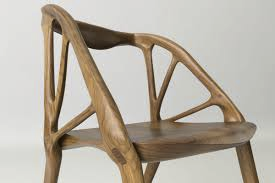
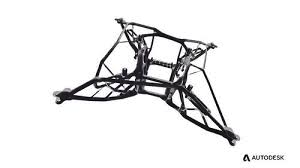
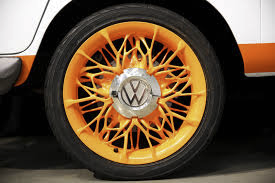
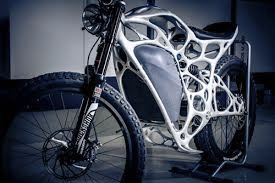
Machines are making beautiful things without even trying to. We ask them to make something that optimizes for our requirements, they give us something back that looks surprisingly like nature. What is going on? A Thread
It is hard to think of a material that has impacted human history so much (microscope, telescope, light bulbs..) and continues to do so (touchscreen display, fiber optics..)—2022 might be the International Year of Glass. A well-deserved recognition! https://t.co/43Wpw6FLUH