The Gu Lab @UCBerkeley@BerkeleyME has postdoc positions available in additive manufacturing, machine learning, and computational mechanics. More information here: https://t.co/0kTj6jq9si Please help RT, many thanks!
By combining AI with inexpensive optical sensors, UC Berkeley researchers have created a set of “smart eyes” for 3D printers that can spot moisture damage in real time.
Read our story: https://t.co/zznl530uI9
Adhesive, non-fibrotic neural interfaces enable long-term, drug-free blood-pressure reduction
Humans, machines, and AI are steadily converging. In human–machine integration, a widely accepted principle is to make devices soft to enable long-term integration—for example, in implantable bioelectronics. The MIT Zhao Lab (https://t.co/lUa4iWsn1X) proposed an additional principle: make devices adhesive so they form long-term, non-fibrotic, stable, and high-efficacy interfaces for seamless human–machine integration.
In our latest work, we report that:
* Adhesive, non-fibrotic neural interfaces can be applied to multiple peripheral nerves.
* Electrical stimulation via these adhesive interfaces achieves long-term, drug-free lowering of blood pressure.
* We provide a simple, general, and practical method for fabricating the adhesive electrodes.
https://t.co/qomGe9m0yb
The Dept. of Mechanical Engineering's @ProfGraceGu was named a winner of Wiley’s 2025 Advanced Science Young Innovator Award, one of the most competitive early-career honors in interdisciplinary science!
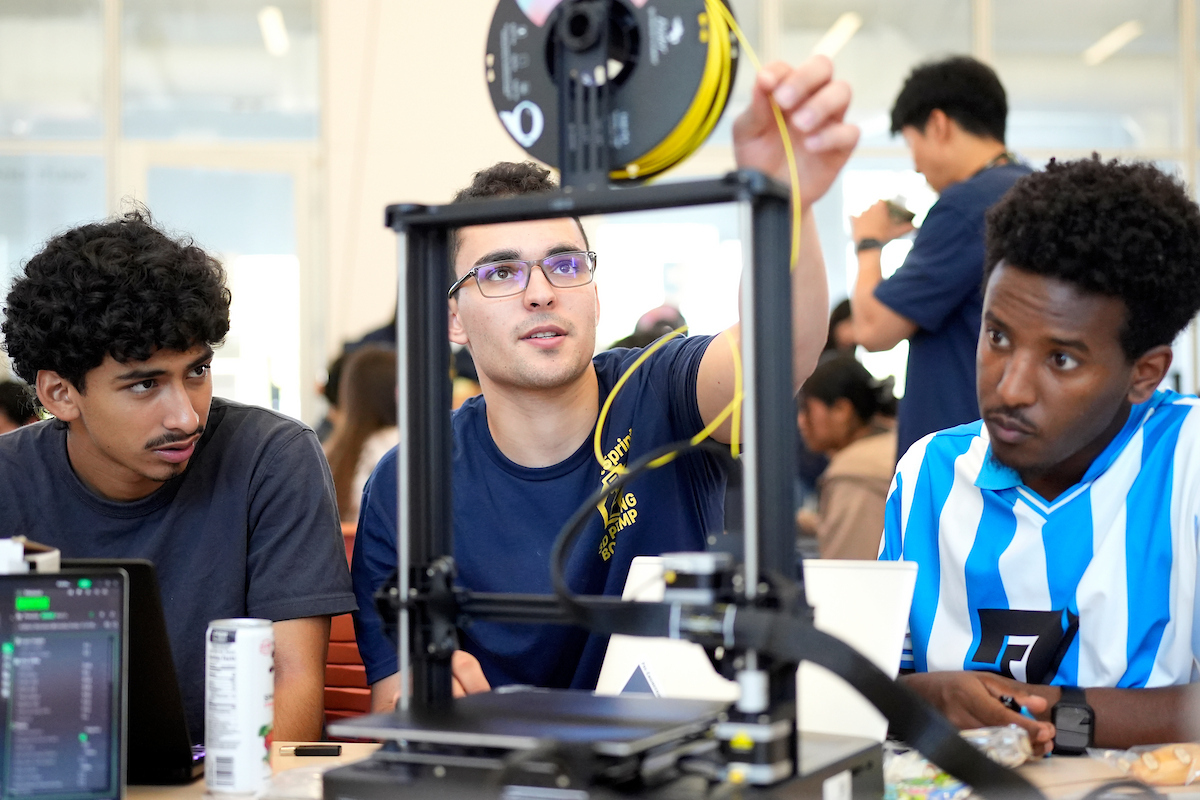
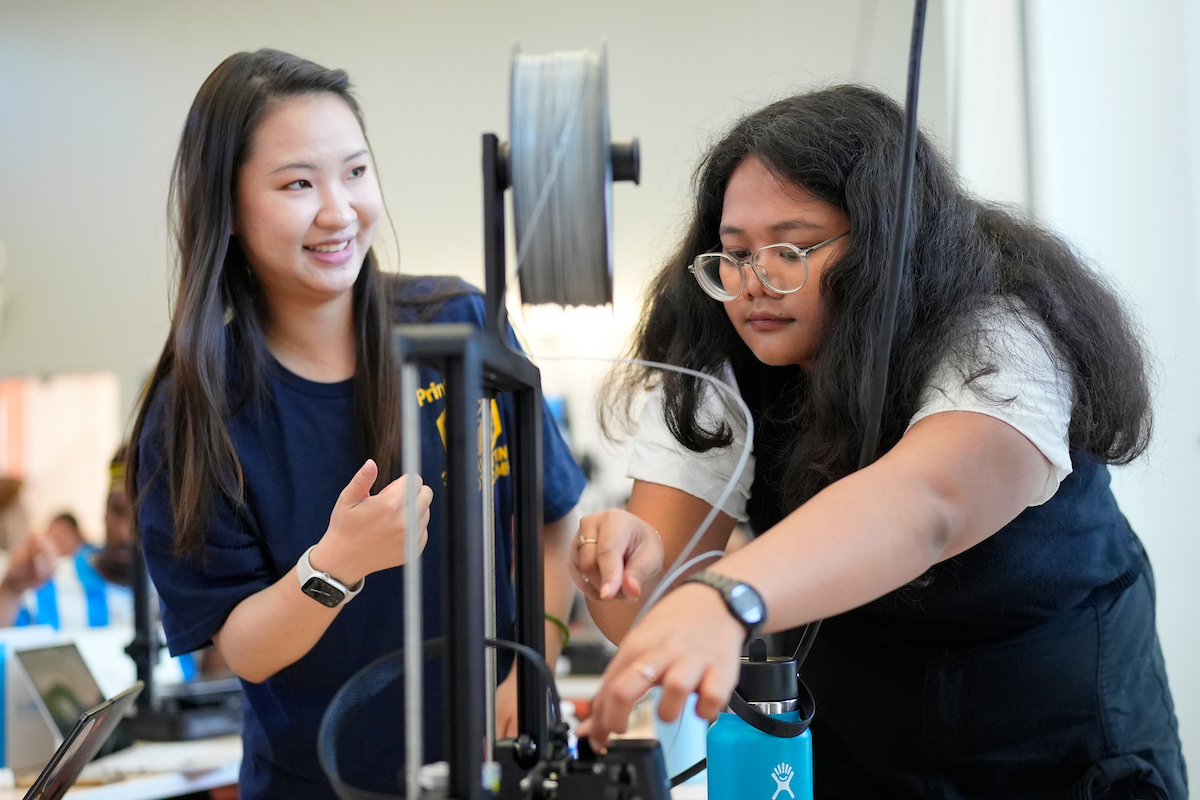
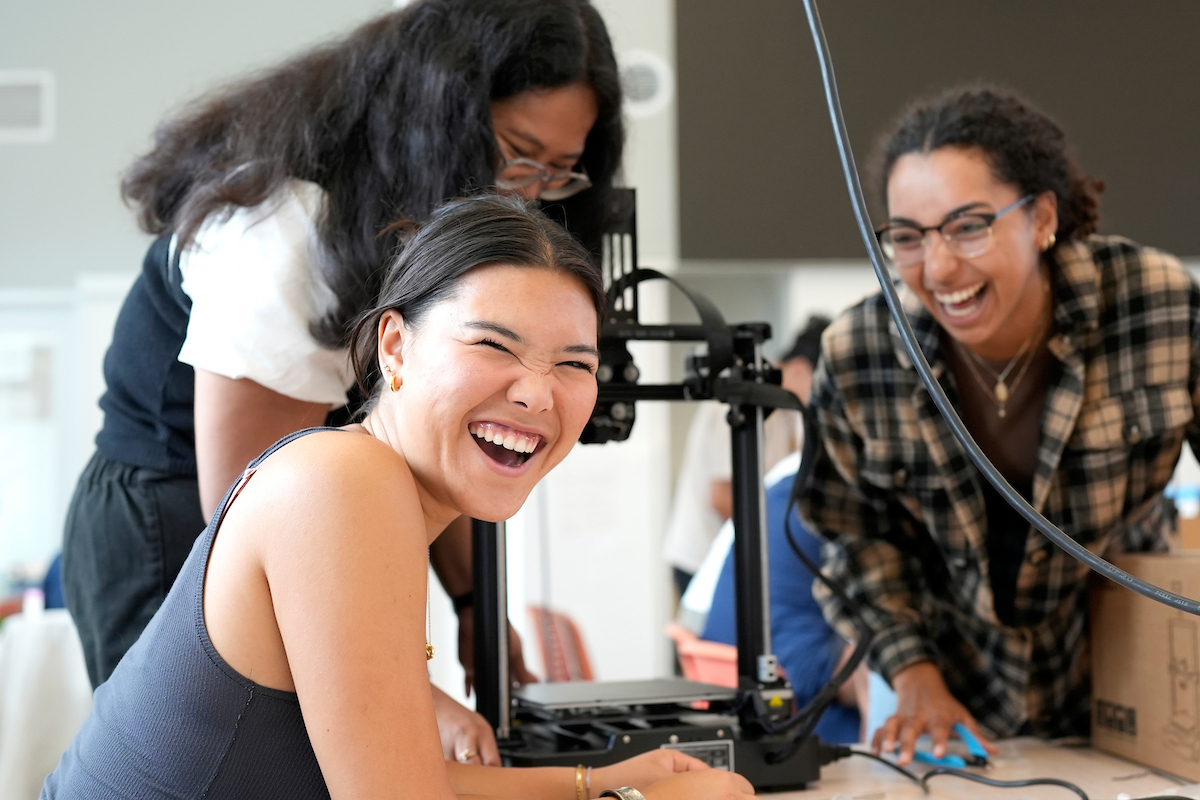
Here’s a glimpse of the PrintSprint 3D printing bootcamp for PREP students! Participants built their own printers, learned CAD design and competed in a design challenge.
@ProfGraceGu of mechanical engineering led the workshop! Learn more: https://t.co/aVzAsIeIad
Inspired by nature — and for nature 🌍: our @PNAS paper shows how seashell-inspired designs can make recycled plastics more reliable and potentially cut manufacturing costs of packaging materials by nearly 50%, while keeping plastics out of landfills.
In the paper, you’ll find our uncertainty-aware tension-shear-chain model, a beautiful experimental demonstration, and a @McKinsey-style case study for stretch wraps.
Cover:
https://t.co/IMfyEVs5xF
I am looking for a PhD scientist to work together @SanaHeal. Will work on products based on our bioadhesive technology platform internally & with large publicly traded company partnered on diverse medical devices. Our office/lab is in Boston & competitive salary & compensation
Can a soft robot swim backwards? As part of our effort to design ingestible robots, we use 3D printing to investigate the propulsion behavior of elastic artificial flagella. Our results, recently published in a Soft Matter Emerging Investigator article, demonstrate that a flagellum’s curvature dictates both the magnitude and direction of propulsion. These findings highlight the possibility of bidirectional swimming through on-demand curvature modulation during active oscillation, thereby enhancing the dexterity of flagella-driven soft robots for a wide range of microscale applications.
Paper: Curvature-dependent propulsion of elastic flagella, Soft Matter (Emerging Investigators Series)
https://t.co/FHz7lAMbDc
Authors:
Prof. Taylor Greenwood†, Luis Felipe Córdoba†, Dr. Jian Teng, Dr. Saebom Lee, Genevieve Dare, Prof. Ebru Demir, Prof. On Shun Pak and Prof. Yong Lin Kong*
†contributed equally.
*[email protected]@RiceMECH@RiceEngineering@RiceUniversity
We are extremely grateful for the support from:
@NIH@NIBIBgov@USNavyResearch@NSF
Just out in @J_A_C_S! We demonstrate resin-to-resin circularity in cycloolefin resins crosslinked with DCPD. Catalyst choice, co-monomers, post-processing of 3D printed and conventional parts dictate efficacy and bounds for regeneration. https://t.co/YHLRK1xtnF
If you have NSF-funded projects, please encourage your students to submit posters to @ASMEdotorg IMECE (Nov. 16-20, 2025, Memphis, TN). Students, if you worked on NSF-funded research, please talk to your advisor about submitting. Participants have a chance to receive one of 30 travel awards ($1000 each) sponsored by National Science Foundation (NSF) and win poster competition awards.
When you submit, please select:
Paper Type: Poster Presentation
Track: Government Agency Student Poster Comp
Topic:
Topic 19-01: NSF-funded Research (Grad & Undergrad)
Topic 19-02: NSF Research Experience for Undergraduates (REU)
I am looking forward to meeting many of you in Memphis TN this November! If you have any questions, please leave a message in the comment.
Just out in @ACSEnergyLett! We demosntrate electrochemical Li+ enrichment in mixed-cation brines with antiselective cation-exchange PIM membranes. Collab with Mike Baird, Ryan Kingsbury, Gan Chen, Mike Whittaker @molecularfndry@advlightsource@Princeton https://t.co/F0v4tW8ayY
How do discover #causal relationship from high-dimensional spatiotemporal data? Check out our #icml2025 paper on ``Discovering Latent Structural Causal Models from Spatiotemporal Data.''
Paper: https://t.co/wf4kTRcdEh
Code: https://t.co/bpleO04ZbZ
(1/3)
Spider silk is nature’s composite: steel-strong yet elastic. But its gigantic, repetitive proteins have kept full-strength synthetic fibers out of reach. Enter our SilkomeGPT-driven multi-agent framework that combines language models with physics reasoning, in research led by my graduate student @IrisWeiLu. We trained a language model on ~1,000 real spidroins, generated thousands of novel sequences to explore diverse mechanical features, folded them virtually, then yanked each atom-by-atom in steered molecular dynamics. We generated thousands of force curves that pinpoint which glycine coils give stretch and which β-sheet blocks lock in strength. Along the way, we uncovered a hidden rule: toughness tracks with adaptability. The number of secondary structure transitions - shifts between helix, sheet, and coil during pulling - is highly predictive of molecular toughness (R = 0.77). Proteins that reshape themselves under strain absorb more energy. We also found that protein length alone predicts toughness with R = 0.93, offering a simple lever for energy absorption. But at the fiber scale, mechanics diverge - revealing that hierarchical assembly, not sequence alone, governs real-world strength. We now have a quantitative map from sequence to mechanics, a GPS for designing tougher, more resilient and greener fibers. Applications include custom biomedical materials, parachute lines, biodegradable sutures, even soft exoskeleton cables or soft robotics actuators - all tuned in silico before a single bioreactor run.
Link to open-access paper in reply...
🌍♻️🚀 Lessons from Earth. Blueprints for Mars.
My @TEDxAtlanta talk explores how the same resourcefulness that helps us reuse and recycle plastic waste on Earth could help us construct life-supporting habitats on Mars.
It’s a story about turning scarcity into strength - using #mechanics, #materials engineering, #biology, and a bit of #AI to build smarter, lighter, and longer-lasting structures.
📺 here:
https://t.co/EANg5gwMA1
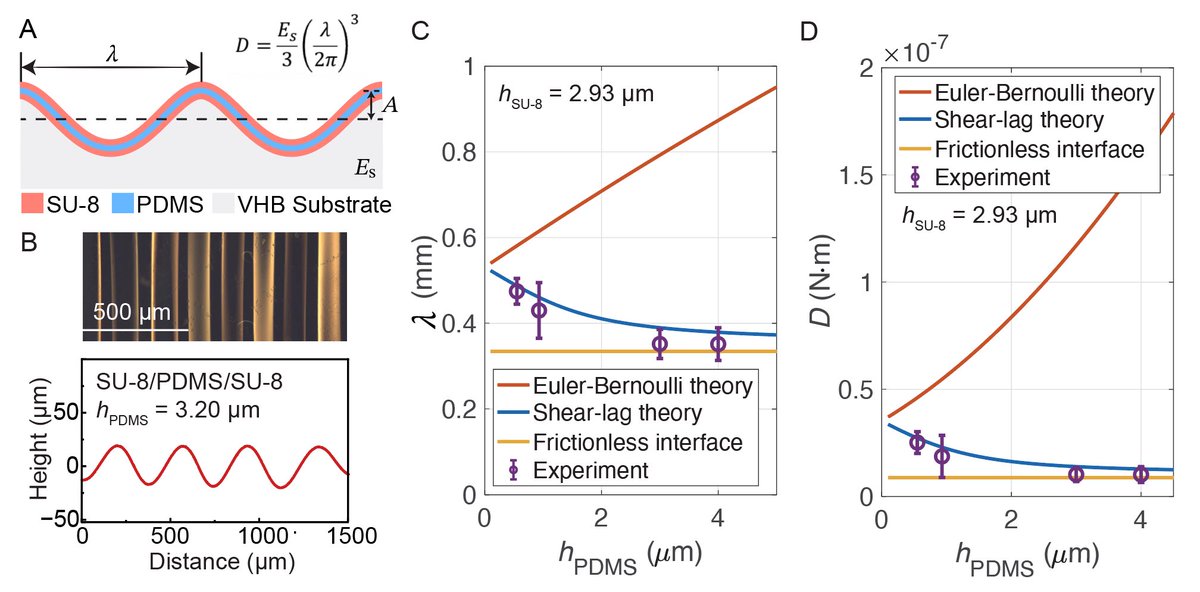
Although exactly one year late, our JMPS VSI paper honoring @zhigangsuo’s 60th birthday, “Shear-lag model of laminated films with alternating stiff and soft layers wrinkling on soft substrates” is published. @zhigangsuo pioneered wrinkling analysis 20 years ago. Happy Birthday 🎂
We're hosting an #IndustryDay at our HQ in Arlington! We will explore future S&T needs, capability gaps & rapid tech transition for the @USNavy & @Marines. Register by 4 p.m. on August 19. Click the link for details and registration requirements: https://t.co/htvOrdVxIX
Join us for our upcoming University-Industry Workshop “High-Throughput Soft Material Development” on May 30th. We expect to have ~ 50 participants from more than 10 Universities and Industrials. You may also attend the event via zoom ID: 670 705 8733
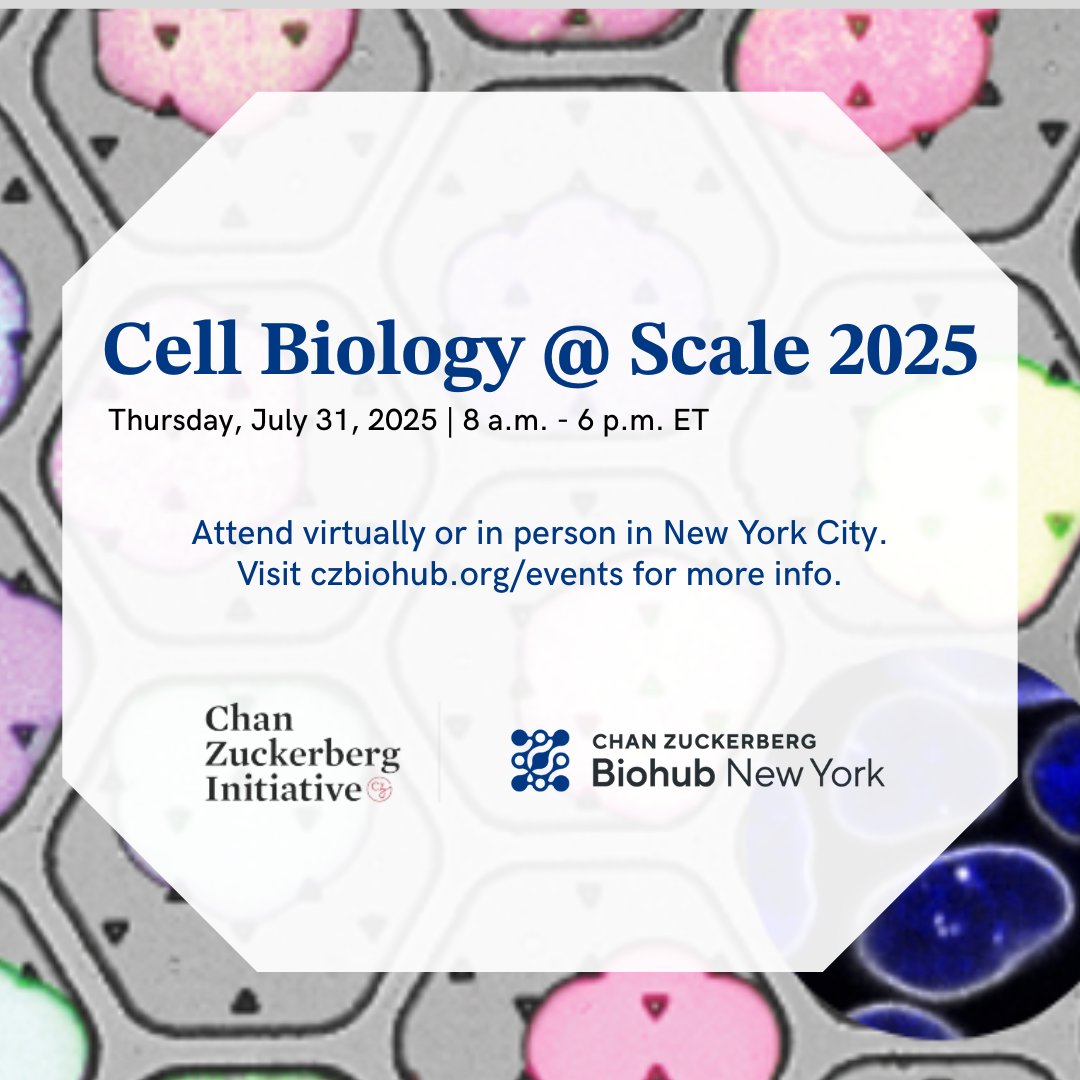
It’s time again for Cell Biology at Scale (CB@S), an annual gathering for researchers from diverse disciplines to share ideas on how new technologies can transform #cellbiology!
Co-hosted by #CZBiohubNY & @ChanZuckerberg.
Learn more and register:
https://t.co/JleiackGKO
🦈 Bioinspired riblets for quieter seas!
Study shows shark-skin-like riblets can cut flow-induced noise in towed sonar arrays.
🌊 In turbulence:
🔇 Noise ↓ 14.3%
💨 Drag ↓ 5.1% (up to 25.7% with fine riblets)
🔗 Read more: https://t.co/wKLeQMFqxm
@ProfGraceGu