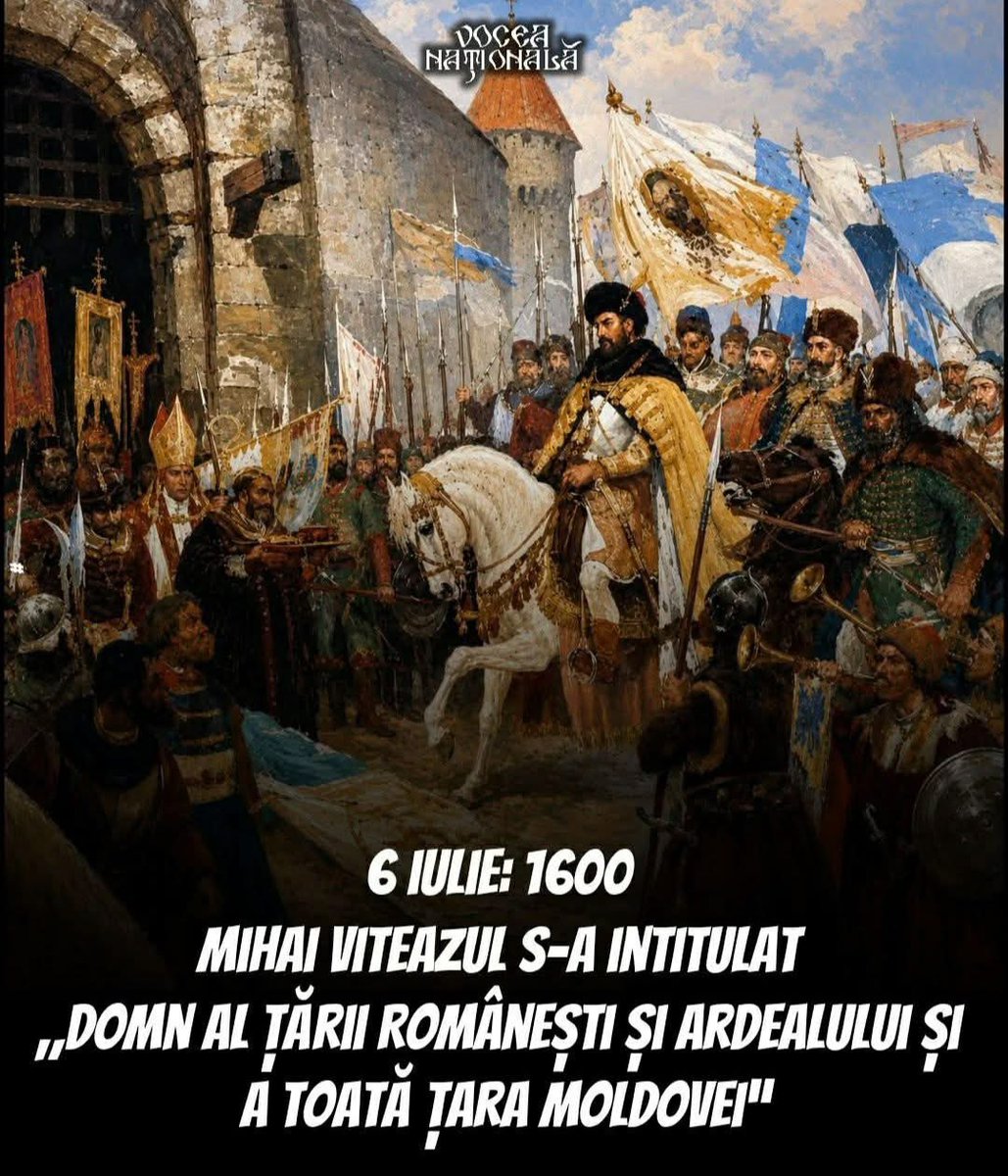
📜 6 iulie 1600 – Prima unire politică a celor trei țări române.
În această zi, Mihai Viteazul se intitula oficial „domn al Țării Românești, al Ardealului și al Moldovei”, confirmând documentar prima unire politică a românilor. #mihaiviteazul#unire#romania#moldova
Your tattoo isn’t just decorative ink: it’s a permanent trigger that keeps your immune system locked in a lifelong cycle of chronic inflammation.
As soon as the ink is injected into your skin, your body recognizes the pigment particles as foreign invaders. Immune cells called macrophages immediately swarm the area and attempt to swallow them up. But because they can’t actually break down the ink, the macrophages eventually die, releasing the pigment back into the surrounding tissue — only for a new wave of macrophages to arrive and repeat the process.
This endless cycle is what keeps the tattoo permanently visible, while also maintaining a state of ongoing, low-level inflammation in the skin.
Over time, some of these ink particles migrate through the lymphatic system and accumulate in the lymph nodes, placing constant stress on the body’s defense mechanisms. Emerging research suggests this internal ink buildup may interfere with normal immune function, potentially reducing the effectiveness of certain vaccines, including mRNA types. Additionally, many tattoo inks contain heavy metals like nickel and cobalt. Combined with the chronic inflammation, this has been linked to a modestly elevated risk of lymphoma and skin cancer.
While tattoos remain a powerful form of self-expression, they represent a complex, decades-long biological conflict between your immune system and foreign substances embedded in your skin.
[Nielsen, C., Jerkeman, M., & Jöud, A. S. (2024). Tattoos as a risk factor for systemic lymphoma: A population-based case-control study. eClinicalMedicine]
📽️General Weidling Enters the Führerbunker Downfall 2004 Scene 🔥
In this gripping scene from the 2004 film Downfall, General Helmuth Weidling is summoned to Hitler’s bunker in the final days of World War II in Berlin. Expecting to be executed for the collapsing front, he marches in anyway, wearing his dusty combat uniform and proudly displaying his earned Knight's Cross. As he descends deeper into the bunker, the contrast becomes striking: clean uniforms and relative calm inside while artillery shells rain down outside.
The moment captures the surreal atmosphere of the Führerbunker as Weidling faces the chaotic command structure and ultimately receives an unexpected promotion from Hitler to lead the defense of Berlin. It powerfully shows the desperation and denial in the final hours of the Third Reich.
A standout scene from one of the most intense historical war films ever made.
#Downfall #DerUntergang #Führerbunker #WWII #HitlerBunker #GeneralWeidling #BrunoGanz #LastDaysOfBerlin #WarMovie #HistoricalDrama
😃Cats' reaction speed is insane!! Cat reaction time: approximately 20-70 milliseconds Human reaction time: approximately 250 milliseconds (average) The human limit is apparently 183 milliseconds
Credit. Honeycat
He was not condemned by the enemy. He was condemned by the regime he had served for years.
On October 14, 1944, Erwin Rommel received a visit that would forever change his fate. Two generals arrived at his home with a choice that was no choice at all: stand trial for high treason, exposing his wife and son to severe consequences, or take a cyanide capsule. If he chose the latter, the regime would announce that he had died from wounds sustained in the war, grant him a state funeral, and spare his family from persecution.
Rommel got into a car with the two officers, and within minutes he was dead.
For several months, Germany believed the official version of events. Only after the end of the Second World War did the truth become known.
But Rommel's story cannot be told starting with his death.
His fame began several years earlier during the 1940 campaign in France. Commanding the 7th Panzer Division, he led such rapid advances that his unit earned the nickname "The Ghost Division." Its movements were so swift that even the German High Command sometimes struggled to keep track of its location.
He achieved his greatest fame in North Africa as commander of the Afrika Korps. Despite constant supply shortages and a chronic lack of fuel, he repeatedly caught British forces off guard through mobile tactics, unpredictable maneuvers, and deception operations. He even ordered modifications to some vehicles to make it appear that his forces possessed far more tanks than they actually did.
Even his enemies acknowledged his military talent. Winston Churchill publicly described him in Parliament as one of the most skillful commanders the Allies had faced during the war.
Rommel also drew attention for another reason. In North Africa, he repeatedly ignored orders calling for the execution of prisoners of war or captured commandos. Instead, he adhered to traditional military principles and ordered that wounded soldiers receive medical treatment regardless of which uniform they wore.
Over time, he became increasingly convinced that Adolf Hitler was leading Germany toward inevitable catastrophe. In 1944, Rommel established contacts with a group of officers seeking a change in leadership. Although he did not directly participate in the July 20 plot against Hitler, his name emerged during the investigation following the failure of Operation Valkyrie.
His story remains one of the most complex paradoxes of the twentieth century: a commander who became famous for his military brilliance but, in the final months of the war, was himself transformed into a threat to the very regime that had once made him one of its foremost symbols.
@eviljunglelord@RomNatDanUK@HistoryWJacob 🤣🤣🤣 Sunt destule sporturi in care echipamentul costă mult și totuși sunt practicate in restul lumii. Altele sunt motivele pentru care fotbalul american nu prinde.


![Rainmaker1973's tweet photo. Your tattoo isn’t just decorative ink: it’s a permanent trigger that keeps your immune system locked in a lifelong cycle of chronic inflammation.
As soon as the ink is injected into your skin, your body recognizes the pigment particles as foreign invaders. Immune cells called macrophages immediately swarm the area and attempt to swallow them up. But because they can’t actually break down the ink, the macrophages eventually die, releasing the pigment back into the surrounding tissue — only for a new wave of macrophages to arrive and repeat the process.
This endless cycle is what keeps the tattoo permanently visible, while also maintaining a state of ongoing, low-level inflammation in the skin.
Over time, some of these ink particles migrate through the lymphatic system and accumulate in the lymph nodes, placing constant stress on the body’s defense mechanisms. Emerging research suggests this internal ink buildup may interfere with normal immune function, potentially reducing the effectiveness of certain vaccines, including mRNA types. Additionally, many tattoo inks contain heavy metals like nickel and cobalt. Combined with the chronic inflammation, this has been linked to a modestly elevated risk of lymphoma and skin cancer.
While tattoos remain a powerful form of self-expression, they represent a complex, decades-long biological conflict between your immune system and foreign substances embedded in your skin.
[Nielsen, C., Jerkeman, M., & Jöud, A. S. (2024). Tattoos as a risk factor for systemic lymphoma: A population-based case-control study. eClinicalMedicine]](https://pbs.twimg.com/media/HMcwu39WYAASLfq.jpg)


