Precisely. Invoking a man's tragic death to validate political warnings is indefensible. Claims of privileged intelligence mean nothing without evidence. If there are genuine threats, report them to the police. Grief is not political ammunition, and innuendo is not intelligence.
Rutendo, you told Hon. Minister Dr Tagwirei to slow down. Perhaps that advice is better directed at you.
Political commentary requires intellectual discipline, factual integrity and a sense of responsibility. Your message displayed none of the three.
Less than two weeks after Wicknell and Lucy Chivayo perished, you insinuate murder without naming a perpetrator, a motive or a shred of evidence. Witnesses in the support helicopter described a pilot trapped in cloud and worsening weather. Investigators are still at work. You chose innuendo anyway.
Your boast that Wicknell ignored you and "look where he ended up" is not foresight. It is delusional self-promotion on a matter you clearly know nothing about.
If you know of a threat to anyone's life, take it to the authorities. If you do not, stop dressing intimidation up as counsel.
You call him a liability to his principal. A week before you wrote, that same principal entrusted him with a Cabinet portfolio. The President's judgement is on public record. Yours is on Facebook and X.
ZANU PF is a mature institution that resolves its differences through its own structures, democratically and amicably, from the grassroots to the highest office. That is the way of the Second Republic. The Party does not settle its affairs through threats on social media, nor does it confuse digital theatrics with political authority. Social media has an unfortunate tendency to give even the most inconsequential voices an exaggerated sense of their own importance.
A loud voice is not authority. Access to gossip is not intelligence. And mistaking online attention for political relevance is a dangerous failure of judgement.
Slow down, Rutendo. Prophecy, false or otherwise, is not your calling. Siyira ana Panga vazvijaira.
Rutendo, you told Hon. Minister Dr Tagwirei to slow down. Perhaps that advice is better directed at you.
Political commentary requires intellectual discipline, factual integrity and a sense of responsibility. Your message displayed none of the three.
Less than two weeks after Wicknell and Lucy Chivayo perished, you insinuate murder without naming a perpetrator, a motive or a shred of evidence. Witnesses in the support helicopter described a pilot trapped in cloud and worsening weather. Investigators are still at work. You chose innuendo anyway.
Your boast that Wicknell ignored you and "look where he ended up" is not foresight. It is delusional self-promotion on a matter you clearly know nothing about.
If you know of a threat to anyone's life, take it to the authorities. If you do not, stop dressing intimidation up as counsel.
You call him a liability to his principal. A week before you wrote, that same principal entrusted him with a Cabinet portfolio. The President's judgement is on public record. Yours is on Facebook and X.
ZANU PF is a mature institution that resolves its differences through its own structures, democratically and amicably, from the grassroots to the highest office. That is the way of the Second Republic. The Party does not settle its affairs through threats on social media, nor does it confuse digital theatrics with political authority. Social media has an unfortunate tendency to give even the most inconsequential voices an exaggerated sense of their own importance.
A loud voice is not authority. Access to gossip is not intelligence. And mistaking online attention for political relevance is a dangerous failure of judgement.
Slow down, Rutendo. Prophecy, false or otherwise, is not your calling. Siyira ana Panga vazvijaira.
Easier journeys for the diaspora, smoother remittances, stronger tourism inflows and freer trade flows all gain from the new Harare-Gatwick link. Three weekly A330 rotations make the difference. Route rights prove more valuable than any leased jet. Zim back onto the global stage.
The return of direct Air Zimbabwe flights to London is about far more than aviation. It's about reconnecting Zimbabwe to global markets, investment, tourism, trade and our diaspora.
The debate shouldn't begin and end with who owns the aircraft. In global aviation, leasing is a standard commercial strategy. The real asset is the route - and what it unlocks for the country.
Today it's London. Tomorrow it could be Beijing, Dubai or Guangzhou.
Watch the latest episode of The Goto Brief as I explain why this flight matters for Zimbabwe's future.
The Tungwarara-Matinyarare and Mliswa-Chivhayo controversies over the weekend were loud, emotional, and messy. They were also, beneath all of that, among the most useful intelligence exercises the Zimbabwean social media space has produced in years - entirely by accident.
What has emerged from the wreckage is a clear categorisation map.
The episodes stripped away the usual ambiguities and forced every actor to reveal themselves. We can now identify the Information Mercenaries with precision - their synchronised messaging, their payroll footprints, the external interests they mask as conviction. We can see clearly those who hold their ground on principle, who remain disciplined and unambiguous in their alignment with the President and ZANUPF. We can trace the real opposition actors who have been celebrating every moment of the friction and discord. And we can now read, in high resolution, the deeper layer - who hates whom, and why - grievances and allegiances older than these particular episodes.
What unfolded was an inadvertent surfacing of information that subjects would not ordinarily disclose and in some cases actively conceal. The blunt mechanics of human nature under emotive pressure revealed it all.
The terrain is now well-mapped.
Interestingly, there are the politically confident and astute who chose to ignore the drama entirely, relegating it to a mere sideshow. Those are probably the true movers and shakers in the grand scheme of Zimbabwe's politics.
WHAT IF MUZARABANI CHANGES EVERYTHING?
What if the most important story in Zimbabwe right now isn't on the front page, but buried beneath the soil of a quiet district in the north?
For decades, Zimbabwe has spent billions importing fuel.
Every litre of petrol in a vehicle, every diesel-powered tractor in a field, every truck moving goods across the country has run on energy sourced from beyond our borders. We bought fuel. We never made it.
That reality may not last much longer.
While much of the public conversation stays fixated on politics, a quieter development in northern Zimbabwe could prove more consequential than most of the headlines dominating our timelines.
This week, Government signed a Petroleum Production Sharing Agreement for the Cabora Bassa Basin - the legal foundation for oil and gas production in northern Zimbabwe. A single signature moved a homegrown petroleum industry from ambition to law.
And this is no hopeful guess. The exploratory drilling has already happened.
From just two wells, within a single 200-square-kilometre structure, came an estimated 230 million barrels of oil equivalent and 1.3 trillion cubic feet of gas - ranked the second-largest oil and gas discovery in Sub-Saharan Africa in 2023. Two wells. The basin spans 360,000 hectares.
But here is the part that matters more than the numbers.
Nations are transformed when they solve their energy question.
Cheap, reliable, locally available energy lowers production costs, attracts investment, drives industrialisation and strengthens national competitiveness. History is clear on this point: countries rarely become manufacturing powers while depending on imported energy. Solve the energy question, and you change the structure of the economy itself.
This is why Muzarabani deserves serious attention.
If commercial production proves viable, Zimbabwe stops being solely a consumer of petroleum and becomes a producer. And the implications run far beyond the fuel pump.
Energy security. Relief on foreign currency reserves. Jobs in drilling, transport, manufacturing and power generation. New roads, new service industries, new technical skills, new opportunities for local businesses. Entire towns could rise around a thriving energy sector.
Viewed regionally, it grows larger still. Southern Africa remains heavily dependent on imported energy. A working petroleum and gas industry would position Zimbabwe strategically within regional supply chains - an exporter of energy rather than a hostage to it.
But optimism must walk with realism.
Many nations have struck hydrocarbons and failed to turn them into broad prosperity. Success will demand strong regulation, environmental stewardship, transparency and deliberate local content - so that Zimbabweans participate meaningfully across the entire value chain, not merely watch the wealth pass through.
Because the discovery itself is not the prize.
The prize is what Zimbabwe does with it.
And yet one shift is already undeniable. A country once spoken of only through agriculture, mining and tourism is now being discussed in the language of oil and gas. That alone is remarkable.
Years from now, historians may mark this period as the moment Zimbabwe began laying the foundations of a new economic chapter.
The question is no longer whether the world is paying attention to Muzarabani.
The question is whether Zimbabweans fully grasp what is taking shape beneath their own soil.
THE CURIOUS HABIT OF SEEKING FOREIGN VALIDATION
One of the more peculiar features of Zimbabwean politics is how frequently some of our political actors appear more interested in convincing foreign audiences than convincing Zimbabweans themselves.
The latest comments by David Coltart on Constitutional Amendment Bill No. 3 are merely the latest manifestation of a much older phenomenon. Whenever an important national debate emerges, a familiar pattern follows. Instead of directing their energy towards Parliament, political parties, public consultations or domestic civic mobilisation, certain individuals instinctively seek validation from foreign governments, international organisations and external media platforms.
The question is not whether Coltart has the right to oppose CAB3. He does. Any democratic society worth the name must accommodate disagreement. The real question is why opposition to a Zimbabwean constitutional process so often finds its loudest expression outside Zimbabwe.
If the argument against CAB3 is compelling, then surely the most logical audience is the Zimbabwean public. If the concerns are genuine, then surely Parliament, which is currently considering the legislation, should be the primary target of persuasion. If the objective is democratic accountability, then the battleground should be domestic institutions.
Yet there remains a persistent tendency among some political actors to behave as though legitimacy must first be conferred abroad before it can be recognised at home.
This mindset has deep historical roots. Colonialism was not merely a political system. It was also a psychological arrangement in which authority was assumed to reside elsewhere. Decisions were made elsewhere. Approval was sought elsewhere. Validation came from elsewhere. While the political structures of colonialism disappeared decades ago, traces of that mentality still occasionally reveal themselves in our political discourse.
There is something fundamentally contradictory about claiming to defend democracy while simultaneously implying that Zimbabweans cannot be trusted to resolve their own disagreements through their own institutions.
One may support CAB3 or oppose it. Reasonable people can hold different views on constitutional reform. What should concern all Zimbabweans, however, is the growing tendency to treat foreign capitals as courts of appeal whenever domestic political battles become difficult.
Nations mature when they develop confidence in their own institutions. They become stable when political disputes are settled through constitutional mechanisms rather than external pressure. They become stronger when citizens learn to persuade one another instead of constantly seeking foreign intervention whenever they fail to secure domestic consensus.
The future of CAB3 will ultimately be determined by Zimbabwean institutions operating under Zimbabwean law. That is precisely how it should be.
A sovereign nation does not ask outsiders to settle every internal disagreement. It develops the confidence to settle them itself.
CAB3 Has Exposed the Difference Between Visibility and Influence
Zimbabwe held public hearings for CAB3 across the country. Written submissions were accepted. Formal channels were opened. Citizens were invited to place their views on record through constitutionally recognised processes. Many participated - some in support, others in opposition. That is democracy functioning as it was designed to function.
Yet some of the loudest voices objecting to a process whose destination is now largely a matter of procedure rather than uncertainty were largely absent when participation mattered most.
What the CAB3 debate has exposed is a growing confusion between commentary and citizenship.
One of the great misconceptions of the social media age is the belief that visibility is the same thing as influence. It is not. Democratic institutions are shaped by participation, not by algorithms.
A trending tweet is not a parliamentary submission. A viral WhatsApp message is not evidence before a committee. A Facebook comment is not a contribution to the legislative record.
The distinction matters because democratic outcomes are not ultimately determined by who generated the most online engagement. They are determined by who engaged the institutions empowered to make decisions.
Thousands of ordinary Zimbabweans who will never trend on social media quietly attended hearings, submitted representations and placed their views on record. Whether one agrees with their position or not, they understood something essential about democratic citizenship: political outcomes are shaped by those who enter the arena, not merely by those who comment from the sidelines.
In many respects, the most important lesson from CAB3 has very little to do with CAB3 itself. It is a reminder that democracy rewards organisation, engagement and presence. It rewards those willing to participate in the often unglamorous work of institutions. It does not reward passivity.
History is rarely shaped by spectators. It is shaped by participants.
That is the difference between observing a democratic process and helping to determine its outcome.
Here is a free lesson in Political Science 101.
If you want to discredit someone, do not - under any circumstances - write report after report declaring them unstoppable.
Yet that is precisely what these so-called intelligence documents shared by @LynneStactia on her X (Twitter) handle have accomplished. In one report, the "Zviganandas" have captured the military. In the next, they own the intelligence services. Then ZANU-PF itself, the Central Committee, the Presidency, the whole Government. And now - USD 3.2 billion at their disposal.
Congratulations. You have just made them invincible legends.
No rational Zimbabwean reads that pile of claims and thinks "someone must stop these people." The only logical conclusion available is: NOBODY CAN.
This is the law of unintended consequences in its most embarrassing form. You aimed for discreditation. You delivered mythology.
Effective psychological operations require discipline and strategic intelligence. What this operation reveals instead is poor coordination, zero editorial oversight, and a complete absence of strategic thinking.
You do not defeat an enemy by making them invincible on paper.
You have not exposed the Zviganandas.
YOU HAVE CROWNED THEM.
Ndangoti tionesane.
Ndatenda.
Here is a free lesson in Political Science 101.
If you want to discredit someone, do not - under any circumstances - write report after report declaring them unstoppable.
Yet that is precisely what these so-called intelligence documents shared by @LynneStactia on her X (Twitter) handle have accomplished. In one report, the "Zviganandas" have captured the military. In the next, they own the intelligence services. Then ZANU-PF itself, the Central Committee, the Presidency, the whole Government. And now - USD 3.2 billion at their disposal.
Congratulations. You have just made them invincible legends.
No rational Zimbabwean reads that pile of claims and thinks "someone must stop these people." The only logical conclusion available is: NOBODY CAN.
This is the law of unintended consequences in its most embarrassing form. You aimed for discreditation. You delivered mythology.
Effective psychological operations require discipline and strategic intelligence. What this operation reveals instead is poor coordination, zero editorial oversight, and a complete absence of strategic thinking.
You do not defeat an enemy by making them invincible on paper.
You have not exposed the Zviganandas.
YOU HAVE CROWNED THEM.
Ndangoti tionesane.
Ndatenda.
I spent my early years in Sanyati, Kadoma. I learned at Chiguvare Primary School and later did my secondary education at Sanyati Baptist High School. That’s why I’m still active in several local whatsapp groups from the area.
One of those groups has recently uncovered the truth: Knox is not a war veteran. He was nowhere near our liberation war. His real surname is Mutimusakwa. He only became friends with Geza when he worked as an ARDA manager in Sanyati.
Right now, he’s hiding in South Africa. Let there be no doubt - the man is an outright phony.
These are the voices that matter - not the hollow, self-serving noise manufactured by social media elites who have turned narratives into a revenue stream.
In the end, it is the quiet, unfiltered verdict from the people on the ground that decides outcomes. It is this enduring disconnect that explains the ritual shock of urban social media circles after every decisive electoral defeat at the hands of ZANUPF.
Nyaya yese iri paground. Pano, it is all performance and echo chambers. Confuse the two, and you will continue to misread the country's politics.
Once you grasp this distinction, you begin to understand ZANUPF politics in its true form.
Uyu ari kutoti tinoda 20 years chaidzo nekuti 2 years ishoma.
Ndatenda.
@dereckgoto The issue is about trust of the custodians of the power not that the ideas in the ammendment proposal are bad. They are good ideas but vanhu vacho
Development or Disruption? The Real Battle Behind Amendment No. 3
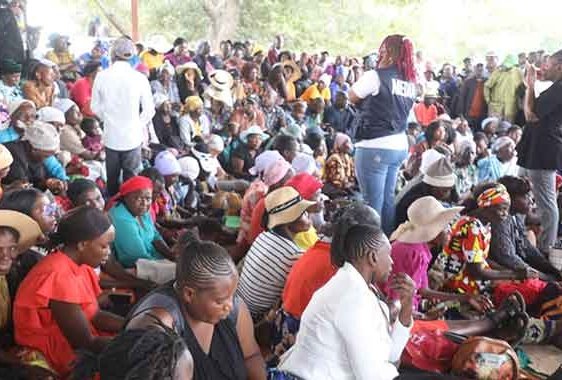
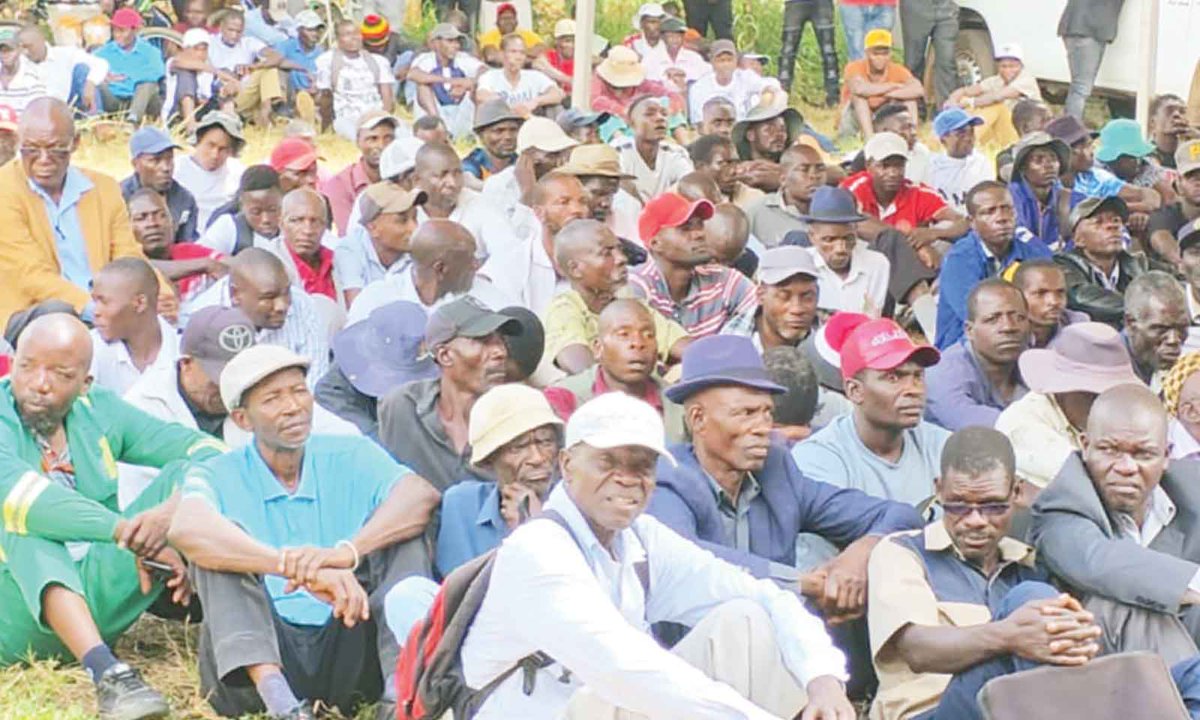
There is a certain kind of observer who insists that constitutional reform must always be treated with suspicion – that any adjustment to presidential terms is, by definition, a retreat. It is a tidy theory, comfortably held at a distance. Yet it begins to unravel the moment one steps into the charged, restless atmosphere of a public hearing – where people queue for hours, where seats run out, where voices strain to be heard because they carry something urgent.
What has emerged across Zimbabwe in these hearings is something far less convenient for the cynic: a pattern. Not a perfect uniformity of opinion, but a convergence of instinct. A shared recognition, cutting across age, class and geography, that the country’s greatest constraint is no longer political choice, but political interruption.
You hear it, quietly but firmly, in the words of Mr Amon Murandu, who speaks with the authority of lived experience, framing the Bill in terms of stability, peace and accountability. You hear it again, from a different generation entirely, in Mr Godknows Makucheti, whose concerns are immediate and unforgiving – jobs, drug abuse, the narrowing horizon confronting young people. Between those two voices lies the country itself: stretched across generations, yet arriving, almost reluctantly, at the same conclusion – that five years is often too short for anything meaningful to take root.
The point, ultimately, is structural. As Bindura lawyer Mr Rainos Gumbo observed with disarming clarity, Zimbabwe has long been caught in a cycle of motion without completion – a perpetual election mode that consumes energy, fragments attention, and leaves too many projects suspended between promise and delivery. It is not that elections are undesirable. It is that their frequency, in a developing context, carries costs that polite debate rarely confronts.
A road does not adjust itself to campaign cycles. A dam does not accelerate because a manifesto demands it. Development follows its own tempo – slower, more exacting, and far less forgiving of disruption. When political timelines fail to respect that tempo, the outcome is familiar: half-finished infrastructure, policies that never quite mature, momentum lost just as it begins to gather force.
What is striking about this moment is that such insights are no longer confined to economists or policy analysts. They are being articulated, plainly and without ornament, by citizens themselves. They have seen projects stall. They have watched priorities reset with each electoral cycle. They have endured the peculiar fatigue of a nation that is always preparing to choose, but rarely allowed to complete.
It is within this context that the language of continuity has gained traction. Not as a slogan, but as a demand for coherence – for a governance framework that allows what is started to be finished, what is planned to be realised. Amendment No. 3, in this light, attempts something deceptively simple: it seeks to align political time with developmental time. There is, whether one admits it or not, a certain strategic clarity in that move.
Predictably, critics reach for familiar alarms – concerns about over-centralisation, or worries about reduced electoral frequency. These are not trivial points. They deserve serious engagement. But they lose much of their force when detached from the context that has produced this conversation. The hearings themselves – open, crowded, at times chaotic – are a reminder that participation in Zimbabwe is not being suppressed; it is being exercised, visibly and insistently.
Perhaps the more revealing shift lies in how accountability is being understood. For years, it has been framed almost exclusively in terms of frequency – how often leaders must return to the electorate. Yet another interpretation is now asserting itself, more quietly but with growing persistence: that accountability also resides in delivery, in whether commitments made are commitments fulfilled.
This is not a rejection of democracy. It is an evolution of it. A recognition that the ballot is not an end in itself, but a means toward a larger objective – a functioning, developing state.
For ZANUPF, this moment carries a certain resonance. The emphasis on infrastructure, stability and long-term planning has long been central to its framing of the Second Republic. What is changing now is not the message, but its reception. It is no longer confined to official platforms; it is being echoed, in varied accents and lived realities, by the citizens themselves.
And so the debate settles into something more grounded than its critics might prefer. Not a contest of slogans, but a negotiation with reality. How long does it take to build? What does it cost to interrupt? What kind of state emerges when policy is allowed to mature rather than perpetually restart?
Increasingly, the answers are not coming from think tanks or social media timelines. They are coming from crowded halls, from patient queues, from individuals who have chosen – sometimes at real personal cost – to participate in shaping the framework that governs their lives.
What they are saying is neither radical nor obscure. It is, in fact, disarmingly straightforward. That stability is not stagnation. That continuity is not the enemy of change, but its precondition. That a nation serious about development must, at some point, organise its politics around the demands of building rather than the rituals of constant contestation.
Amendment No. 3 does not resolve every question. No constitutional reform ever does. But it reflects, with notable fidelity, the direction in which public sentiment appears to be moving – toward a politics that values completion over interruption, substance over spectacle, and progress measured not in cycles, but in outcomes.
It is a shift worth paying attention to because it is already underway!