@CarlWoods25 Hi Carl, this looks really interesting. Would you be willing to send me a copy? If that's okay, you can send it to [email protected] - I really appreciate it.
This paper isn't your typical commentary...
I had the chance to review On A Corresponsive Sport Science by @CarlWoods25@Duarterbparaujo and Keith Davids - but it felt like a redundant, static process
1/🧵
https://t.co/7jsN5nFfkT
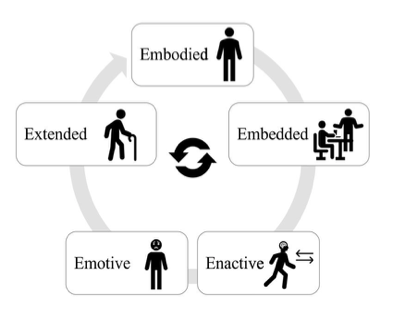
An enactive approach to pain: beyond the biopsychosocial model
A great perspective on the multi dimensional nature of pain
Not just the brain 🧠😳🤔
https://t.co/7SEAEYUpe6
Over the past few years, I’ve shifted more towards adopting an ecological perspective on human movement experience. It’s changed how I go about providing support for people rehabbing injuries and navigating pain as an MSK clinician. Sharing a few points in a thread below:
@YujiSuzukiDC@PaulNelsonPT@thecoachjav@EMERGENTMVMT In my experience, patients with persistent pain (closed of field of affordances, stuck.) find it difficult to perform an exercise (i.e deadlift) in many different ways. Guiding them to exploring new movement solutions using the CLA works well in that situation.
Interesting read on how one's landscape of affordances changes during and after injury. Missing link in RTP process? It's time to view injury and rehabilitation as an ecological event. @thecoachjav
https://t.co/xQpxKwEHU5
Hoe kan de (sport)fysiotherapeut (maar ook de trainer/coach) variatie inzetten om bewegingsvaardigheden te trainen? Lees het deze week in de nieuwe @SportGericht in deel 2 van de reeks van @Williammgraeme en @mpalips over #ecological_dynamics.
https://t.co/eX6mf2Y4Ge