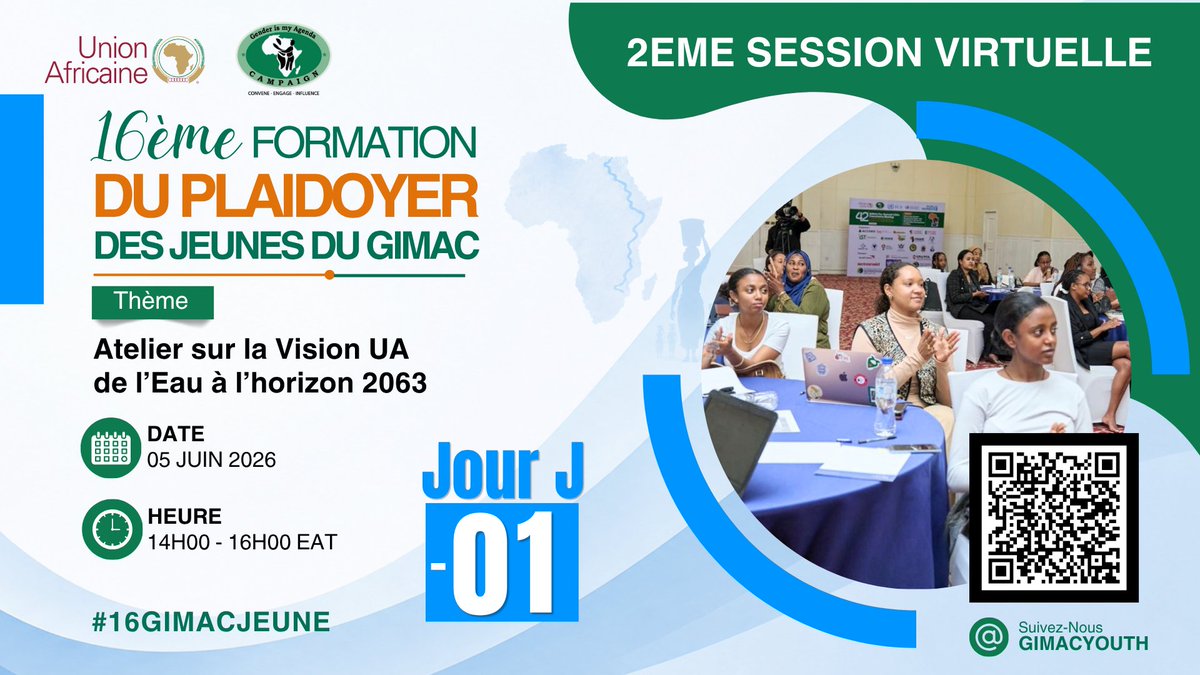
💧 𝐄𝐥𝐚𝐛𝐨𝐫𝐞𝐫 𝐮𝐧 𝐜𝐨𝐧𝐬𝐞𝐧𝐬𝐮𝐬 𝐞𝐧 𝐯𝐮𝐞 𝐝𝐞 𝐥𝐚 𝐑𝐞́𝐮𝐧𝐢𝐨𝐧 𝐝𝐞 𝐜𝐨𝐨𝐫𝐝𝐢𝐧𝐚𝐭𝐢𝐨𝐧 𝐬𝐞𝐦𝐞𝐬𝐭𝐫𝐢𝐞𝐥𝐥𝐞 𝐝𝐮 𝐆𝐈𝐌𝐀𝐂
Rejoignez les décideurs politiques, les organisations de la société civile, les jeunes leaders, les experts WASH et les acteurs régionaux pour renforcer la collaboration et élaborer des recommandations concrètes en faveur de politiques WASH sensibles au genre en Afrique.
📅 10 juin 2026
🕑 14h00 – 16h00 EAT
🔗 Inscrivez-vous ici : https://t.co/TMNdQ3rM24
#8GIMACCERs #WASHAfrique #GenreEtWASH #JeunesseEtWASH #VisionAfricaineDeLEau2063
𝙒𝒉𝙖𝒕 𝑻𝙝𝒊𝙨 𝙈𝒆𝙖𝒏𝙨 𝙛𝒐𝙧 𝙔𝒐𝙪𝒏𝙜 𝙒𝒐𝙢𝒆𝙣 𝘼𝒅𝙫𝒐𝙘𝒂𝙩𝒆𝙨?
𝑼𝙣𝒅𝙚𝒓𝙨𝒕𝙖𝒏𝙙 𝙝𝒐𝙬 𝙙𝒆𝙘𝒊𝙨𝒊𝙤𝒏𝙨 𝙖𝒓𝙚 𝙞𝒎𝙥𝒍𝙚𝒎𝙚𝒏𝙩𝒆𝙙 𝙞𝒏 𝒚𝙤𝒖𝙧 𝙘𝒐𝙪𝒏𝙩𝒓𝙮.
✅Identify the responsible ministries and agencies.
✅Engage policymakers as partners, not adversaries.
✅Use evidence and data to strengthen advocacy.
✅Push for budget allocations, not just policy commitments.
✅Monitor implementation and hold institutions accountable.
✅Build coalitions with civil society, parliamentarians, and communities.
#16GIMACYOUTH
🙏 Thank you to all participants, speakers, moderators, and organizers who made the #16GIMACYOUTH Advocacy webinar Trainings a success. Your insights, energy, & commitment are driving change across 📷. We look forward to continuing the conversation in New Alamein and here!
Join @RehemaMalole as she facilitates an interactive reflection on the barriers and opportunities young women encounter in implementing AU commitments. Together, participants will explore practical pathways to turn policy into meaningful community impact.
#16GIMACYOUTH
📚 #ThursdayReads#BeyondRhetoric | Reclaiming the WPS Agenda
25 years after UNSCR 1325, the #WPS Agenda is at a crossroads.
Reclaiming:
• meaningful participation, not tokenism
• feminist leadership, not symbolism
• structural change, not rhetoric
https://t.co/rfUGuBLQyb
Speaking during the GIMAC Pre-Consultation Meeting, Dr. Helen Kezie-Nwoha, Chairperson of the GIMAC Network calls for intersectionality to be at the centre of WASH policy, budgeting, research, and accountability across Africa.
#GIMACRECs#WaterVision2063#GenderEquality#WASH@AWLNetwork@awln_YoungWomen
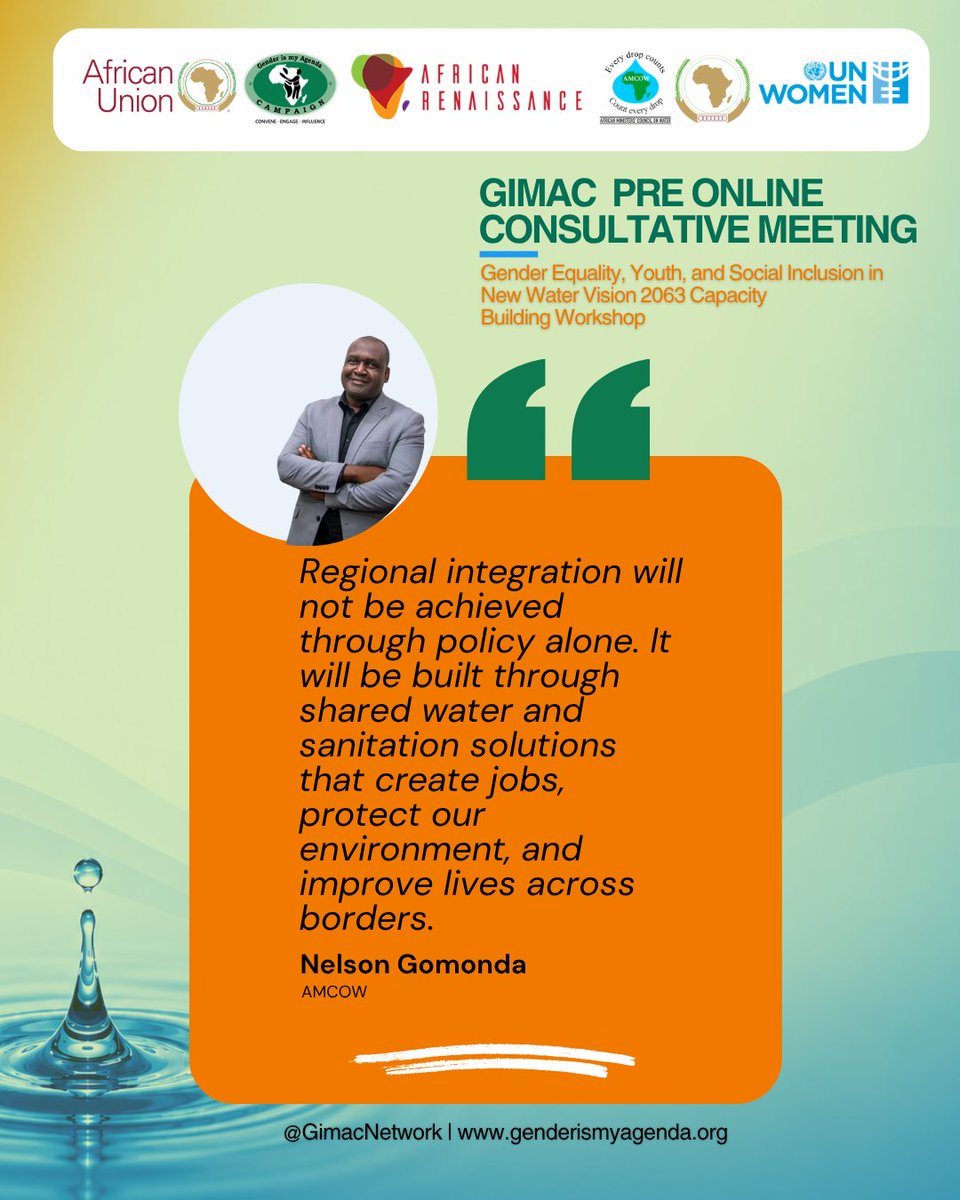
Speaking during the GIMAC Pre-Consultation Meeting, Nelson Gomonda of @amcowafrica highlighted the critical role of regional cooperation in achieving the Africa Water Vision 2063. From shared water resources to harmonized sanitation policies and innovation exchange, regional integration remains essential to delivering sustainable, inclusive, and resilient WASH systems across Africa.
Achieving Agenda 2063 requires collective action, stronger partnerships, and solutions that transcend borders.
#GIMACRECs #AWV63P #YouthGenderInclusion #YoGI #WaterSecurity #Agenda2063
#GEYSI #SanitationEconomy
During the Capacity Building Session on Gender, Equality, Youth and Social Inclusion in WASH, Caroline Kwamboka of the @TheAR_Trust emphasized that meaningful change happens when policies are translated into action through inclusive planning, budgeting, implementation, and accountability.
Drawing on the #GEYSIToolkit and years of collaboration with @amcowafrica and partners, she highlighted the importance of self-diagnosis, intersectionality, and community participation in ensuring that water and sanitation services reach those who are too often left behind.
Because water and sanitation are not acts of charity—they are fundamental human rights.
#GIMACRECs #WaterVision2063 #GenderResponsiveWASH #SocialInclusion #WaterAndSanitation #Agenda2063
🤝 "This should become a document of the continent, not merely a document of the Commission."
Hon. Commissioner Janet Ramatoulie Sallah-Njie called for a collaborative and inclusive process to develop the Guidelines on the Right to Sanitation in Africa, ensuring that the voices and priorities of women and girls remain at the centre.
#GIMACRECs #WaterVision2063 #SanitationRights #WomenAndGirls
@achpr_cadhp
Reflecting on the Africa Water Vision 2063 and the outcomes of the GIMAC consultation process, Elena Ruiz Abril of @unwomenafrica emphasized the need to better connect climate change, water insecurity, and violence against women and girls.
As droughts and water scarcity intensify, women and girls often bear the greatest burden—walking longer distances to collect water, facing increased risks of gender-based violence, and experiencing heightened vulnerabilities.
Addressing these interconnected challenges requires policies that place women and girls at the centre of climate resilience, water governance, and sustainable development.
#GIMACRECs #WaterVision2063 #ClimateChange #GenderEquality #ClimateJustice
🌍 As the consultation came to a close, Dr. Helen Kezie-Nwoha, Chairperson of the @GimacNetwork , reminded participants that meaningful change requires more than commitments—it requires collective action, accountability, and sustained engagement.
Reflecting on the rich discussions and recommendations shared throughout the session, she called on all stakeholders to continue championing gender-responsive water and sanitation policies that place women, girls, youth, and marginalized communities at the centre.
Together, participants reaffirmed a shared commitment to advancing the Africa Water Vision 2063 and ensuring that the voices of civil society help shape continental and regional decision-making processes.
#GIMACRECs #WaterVision2063 #GenderResponsiveWASH #WomenAndGirls #Agenda2063 #PolicyToAction
3/4💬Water is more than a resource—it is dignity and justice.” Participants highlighted how unequal access to water deepens inequality, especially for migrants, refugees, and young women. A gender-responsive water future leaves no one behind. 🌍💧✊🏾
#16GIMACYOUTH#WaterJustice
4/4 🤝 From Figuig to other regions of Morocco, climate change &unequal water governance are disrupting traditional systems and increasing vulnerability. Young women must be at the center of water governance to ensure policies reflect lived realities and leave no one behind.💧🌍
3/4 📚 Mariam Oulhiad shared the story of a girl who could not continue her education like her brother because of barriers linked to gender, mobility, and unequal access to resources. Water insecurity deepens inequalities and restricts girls’ futures.
4/4🚰 Access to safe water is about more than infrastructure—it is about dignity, health, & equality. Girls should not have to choose between managing menstruation safely & staying in school. Investing in gender-responsive WASH services is investing in Africa’s future. #16GIMAC
1/4 🎉 What an engaging first webinar of the #16GIMAC Young Women Advocacy Training! Participants from across Africa exchanged ideas on translating AU policy into national action, emphasizing that effective advocacy must be evidence-based, community-driven, and youth-led. 🌍💧
4/4🚀 The webinar closed with a clear call to action: young women must move from participation to influence. Through advocacy and collective action, youth can shape policies and drive Africa’s water future. The time to lead is now. 🌍💧✊🏾
#16GIMACYOUTH
1/4🌍 Towera Ngwira reminds us that achieving Africa Water Vision 2063 requires more than policies. We must invest in grassroots movements, youth-led solutions, & community action already transforming lives. When young women lead, communities thrive. #YouthAdvocacy#16GIMACYOUTH