For the next seven days, get free unlimited GPT-4.1 on Windsurf, on us.
That’s right, free.
We are very excited about GPT-4.1 given our internal evals. We have rate limits to prevent abuse, so go build without worrying about credits.
New course to bring you up to state-of-the-art at using AI to help you code: Build Apps with Windsurf's AI Coding Agents, built in partnership with WIndsurf (@codeiumdev) and taught by @_anshulr!
AI-assisted IDEs (Integrated Development Environments) make developers’ workflows faster, more efficient, and much more fun. Agentic tools like Windsurf are more than just code autocomplete—they are collaborative coding agents that help you break down complex applications, iterate efficiently, and generate code that spans multiple files.
Although a lot of coding assistants share the same underlying large language models for planning and reasoning, a major point of distinction is how they handle tools, keep track of context, and stay aligned with your intent as a developer.
For instance, if you make modifications to a class definition in your code and make the same modifications to other classes in the same directory, you might tell the AI agent "Do the same thing in similar places in this directory." Here, tracking your intent means understanding that “the same thing" refers to that recent edit you just made, which must be followed by appropriate search and tool-calling to implement the changes.
In this course, you'll learn the inner workings of coding agents, their strengths and limitations, and how to use Windsurf to quickly build several applications.
In detail, you'll:
- Build a mental model of how agents work by combining human-action tracking, tool integration, and context awareness to carry out an agentic coding workflow.
- Learn the challenges of code search and discovery and how a multi-step retrieval approach helps coding agents address them.
- Use Windsurf to analyze and understand a large, old codebase and update it to the latest versions of the frameworks and packages it uses.
- Build a Wikipedia data analysis app that retrieves, parses, and analyzes word frequencies.
- Enhance the performance of your Wikipedia analysis app by adding caching, and through this, also learn how to course-correct when the AI agent produces unexpected results.
- Learn tips and tricks such as keyboard shortcuts, autocomplete, and @ mentions to quickly call on agentic capabilities.
- Use image/multimodal capabilities of the AI agent to increase your development velocity; you'll see an example of uploading a mockup with sketched-out UI features, and ask the agent to use that to build new functionality to an app.
By the end of this course, you’ll understand agentic coding in-depth and know how to use it to make your development process much faster, more efficient, and enjoyable.
Please sign up here! https://t.co/IhFB3IwHAh
@YayaSoumah@pontusab@windsurf_ai To answer your question:
- Global Rules and .windsurfrules are each limited to 6000 characters
- Anything you write in the either rules file will be "set as default" and Cascade will always be aware of them
Will update the docs with some best practices too!
Today we’re making DeepSeek R1 and V3 available in Windsurf, making Cascade the first coding agent to support R1. It'll be half the cost to start with but we are committed to rapidly reduce this with time.
R1 is truly fun and reading the chain of thought almost feels like a requirement for reasoning models.
@steve_ike_@windsurf_ai It can remember general things too. You may have to be more explicit to surface these preferences in the chat conversation, but once you do, you can take a memory snapshot by asking it to remember them
Alternatively, you can always manually specify them:
https://t.co/X2T0ncmoru
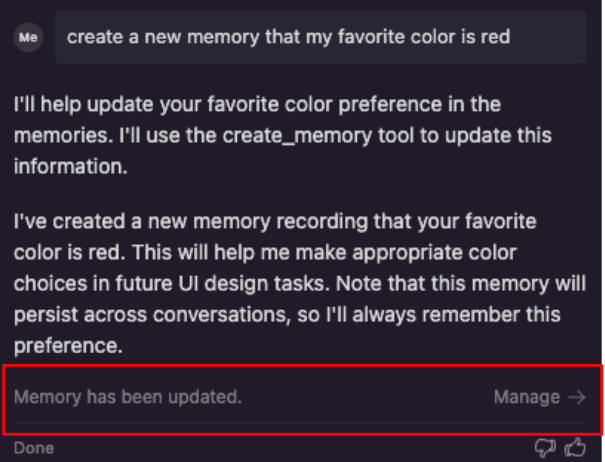
@rodcisal@windsurf_ai The automated memories feature was only rolled out to 25% of users, so you may not have it yet. If you do have it, you should see "Memory has been updated" after you request it to create a memory.
Introducing Wave 1.
Included in this update:
🧠 Cascade Memories and .windsurfrules
💻 Automated Terminal Commands
🪟 WSL, devcontainer, Pyright support
... and more.
Today we’re excited to launch the Windsurf Editor - the first agentic IDE, and then some 🏄
In Windsurf, we have given the AI a previously unseen combination of deep codebase understanding, powerful set of tools, and real time awareness of your in-editor actions. The result? A magical experience we call Cascade, the evolution of chat that keeps you truly in the flow state.
We essentially took the best of both copilots and agents - the collaborative nature of copilots and the ability to be independently powerful like an agent - to create the world’s first collaborative agent, which we are dubbing a “flow.”
One important note - everyone can use this today. No waitlists, no invite only, no crazy rate limits. General access, as it should be.
Check out what Cascade is able to do in the thread below.
#windsurf #cascade
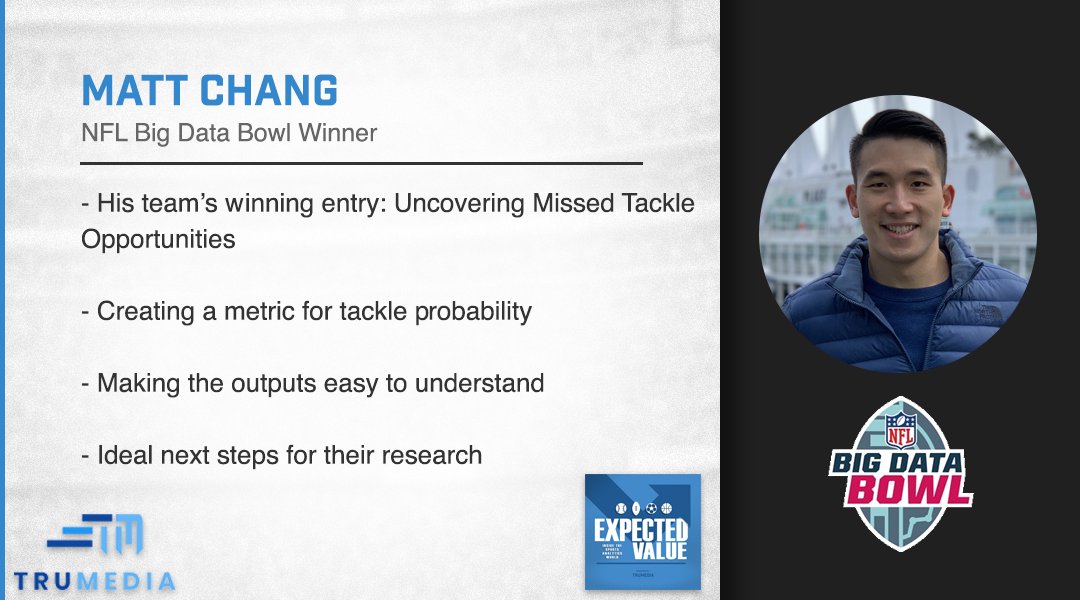
🏈 New Expected Value podcast! 🏈
We talk with @mpchang17, whose team won the NFL's Big Data Bowl this year.
Listen on Apple and wherever you get podcasts! https://t.co/MwQkeBl33L
Want to learn more about Missed Tackle Opportunities? Here's a link to a re-recording of our winning presentation at the NFL #BigDataBowl
https://t.co/3ZgHlSI2GH
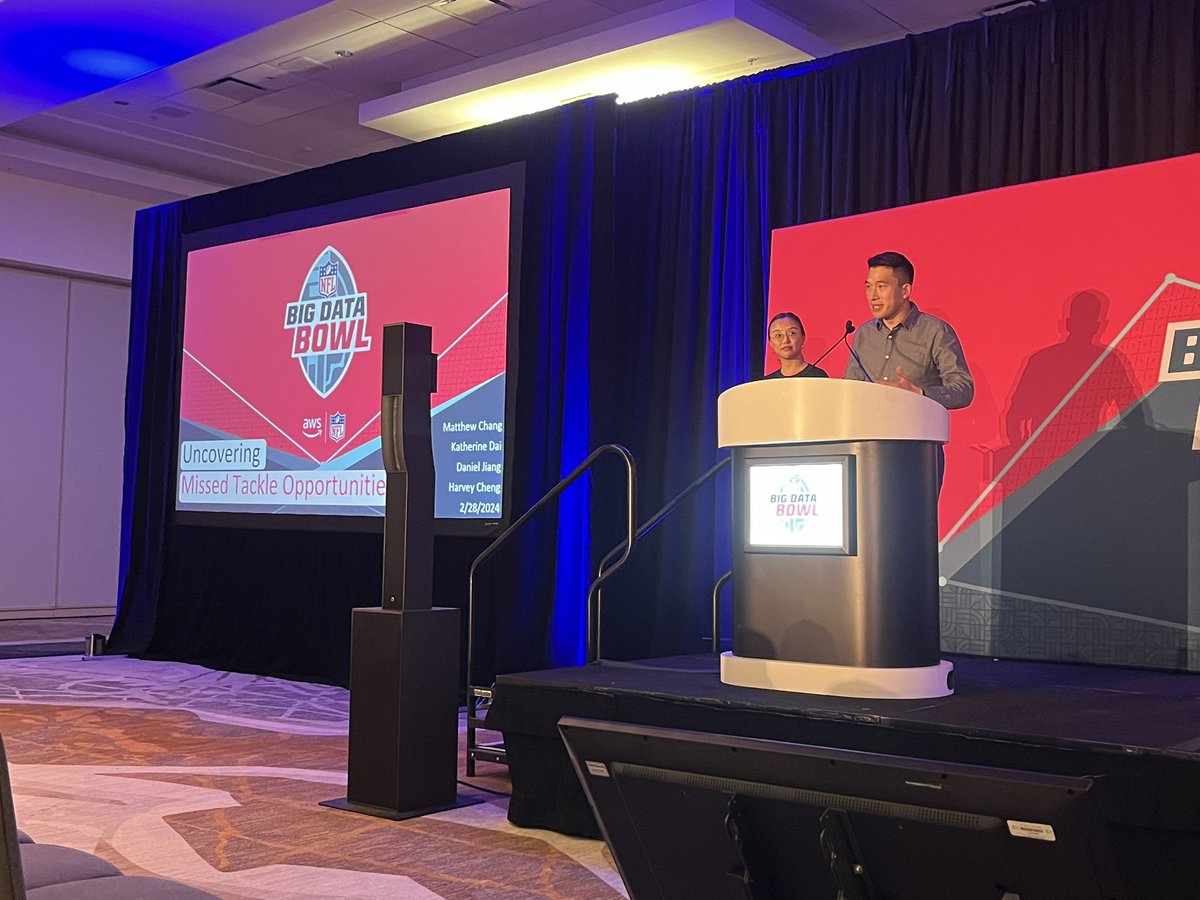
Congratulations to the winners of the 2024 #BigDataBowl: Matthew Chang, Katherine Dai, Daniel Jiang and Harvey Cheng!
Check out their winning submission, "Uncovering Missed Tackle Opportunities" powered by @NextGenStats and @awscloud: https://t.co/tNKl2qkwVa
Missed Tackle Opportunities is a tackling metric that represents a new class of defensive mistake not captured by the current stats. Check out our report for more details!
https://t.co/8SSQdkBQs9