Our unit @OregonStateBEE is hiring! SIX new tenure-track positions are currently open, seeking hires spanning areas of agricultural, biological, ecological, and water resources engineering. Apply by 14-Jan for full consideration. See details at
https://t.co/iRGoLUvgJv
If you are at AGU this week, please come to my talk on Monday 11:10 at MC 3007 (B12B-06). I will present using molecular composition of SOM to predict soil respiration.
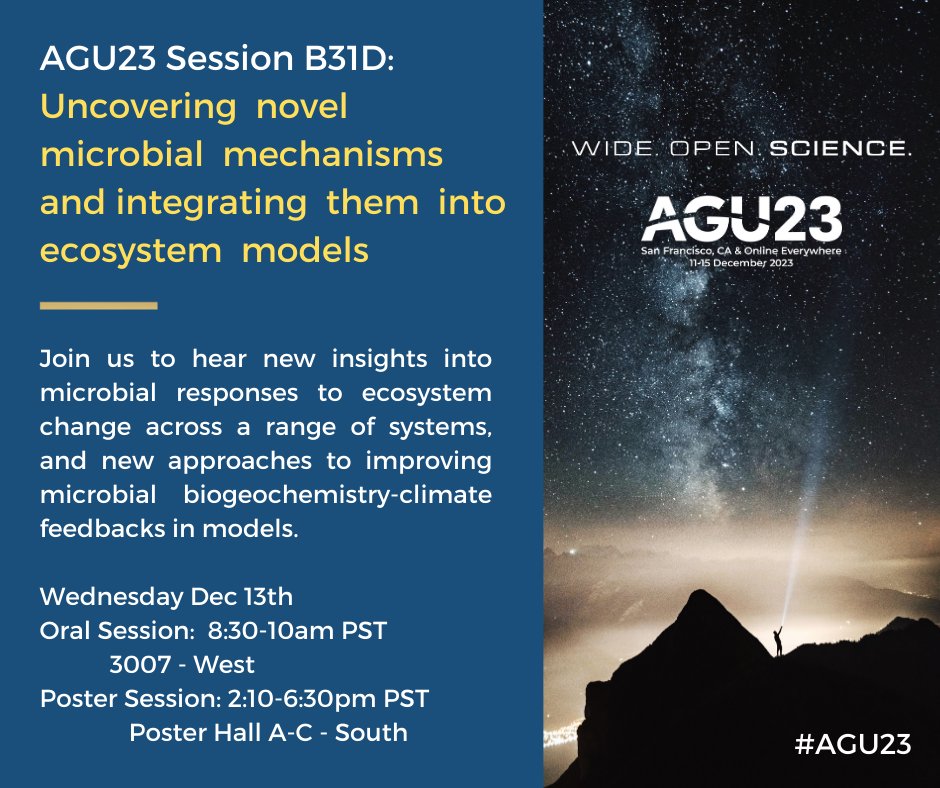
Please also consider join us at session B31D and B33J on Wednesday. Looking forward to seeing you! #AGU23
I'm at #SETACLouisville this week, come to my presentations at 4.25.P-Tu-191, 4.08.T-02, 4.08.P-We-091. Looking forward to meeting old friends and making new ones!
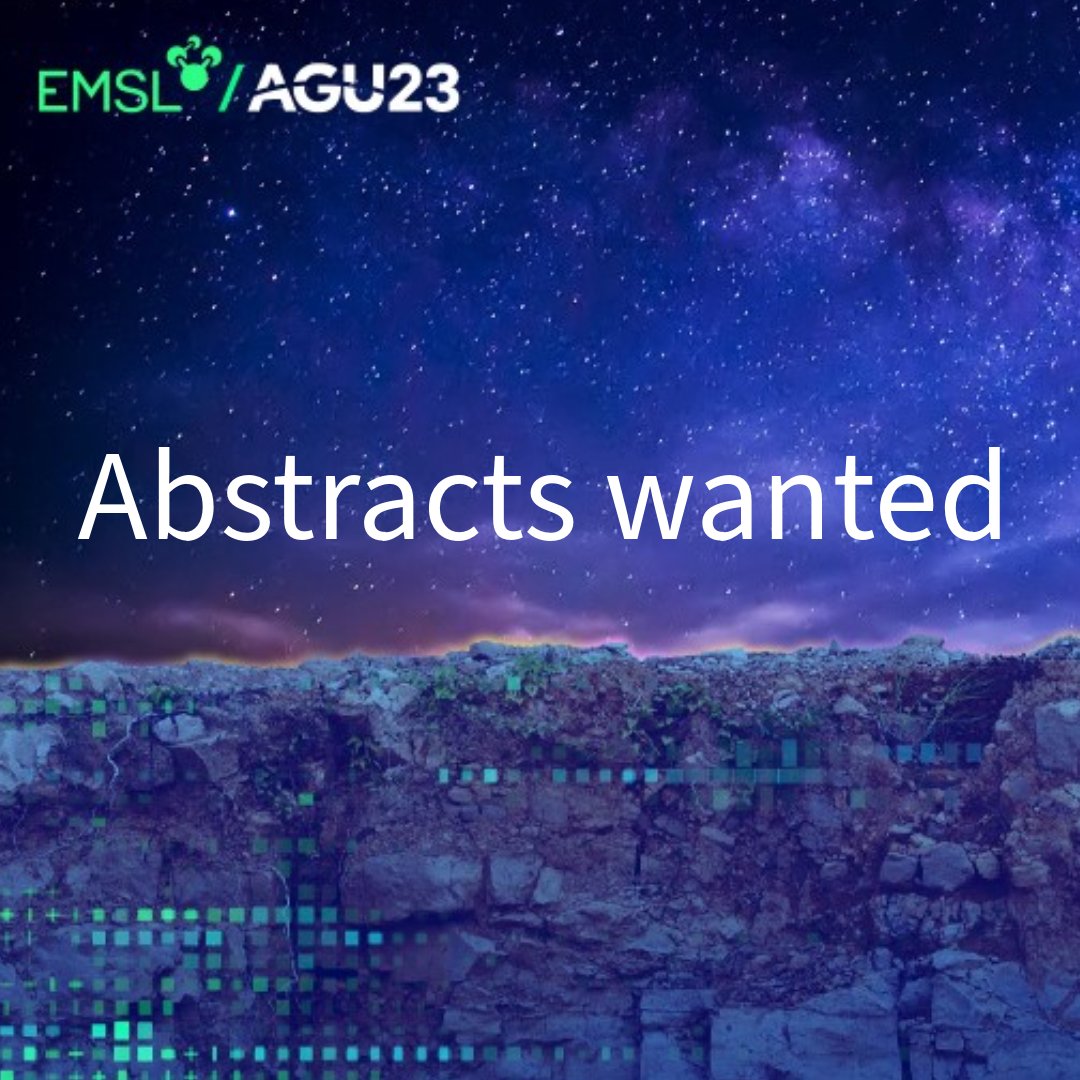
Abstracts wanted! @EMSLscience is seeking abstract submissions through August 2 for @theAGU meeting session, "Bridging soil molecular and structural measurements with ecosystem modeling." Submit an abstract: https://t.co/lxup05p2sn
Abstracts wanted! @EMSLscience is seeking abstract submissions through August 2 for @theAGU meeting session, "Bridging soil molecular and structural measurements with ecosystem modeling." Submit an abstract: https://t.co/lxup05p2sn
We will have invited speakers of @chopinzi and @mnweintraub to share their insights and experience on this topic. Abstract submission is due August 2nd: https://t.co/XQ4QqTfKBe
If you are interested in soil organic matter #SOM, biogeochemical processes, ecosystem modeling, please consider submitting an abstract to B015 and joining us at #AGU23.
Abstracts wanted! @EMSLscience is seeking abstract submissions through August 2 for @theAGU meeting session, "Bridging soil molecular and structural measurements with ecosystem modeling." Submit an abstract: https://t.co/lxup05pAhV
@QZhao24@debjani_sihi @sr_weino and I are convening this session about integrating soil molecular data (like MONet: https://t.co/yeZYPDrFus ) into ecosystem biogeochemical modeling.
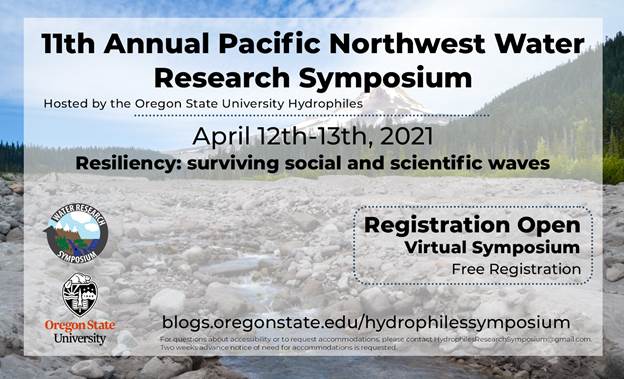
The 11th annual Hydrophile's Pacific Northwest Water Research Symposium is coming up! The virtual conference will be free to attend and feature keynote talks, workshops, a career panel, networking, and a trivia night! Register to attend or present (https://t.co/eVqkirTT3I)
node degree (co-occur) was correlated with sequences% from sedim. So habitats determine the degree of co-occur. CCA shows sedim community is more related to environment (r2 = 0.53), including discharge, conduct, nuturients. Polynucleobacter is a strong urban indicator.
https://t.co/s7yZA6dXMV
This paper reports that urbanization (land use) influence bacterial community composition of water column, while sediment community correlated with environmental conditions. Decreased Shannon diversity as urbanization increase. PCoA gradient related to ...
impervious cover% for both water and sedim. water and sedim grouped separately on PCoA plot. They also identified 312 indicator taxa for water, sedim, urban, forest. They also plotted co-occurrence network, where urban network is smaller and less connected than forest...
Increased expression of DNA repair and recombination genes, efflux pump genes (T6SS), biofilm formation genes (cell adhesion, virulence), also occurred. Similar response to exposure to antibiotics. They also simulated long term changes with more transformants.
https://t.co/LmCGCKWMv7
#HGT#AMR This paper reported that non-antibiotic pharmaceuticals enhanced natural transformation of ARGs. 6 hrs exposures to 5 pharms at conc between 0.005 to 50 mg/L increased transformation frequency of A. baylyi by 2-3 fold, comparable to antibiotics
They suggested four mechanisms of increasing transformation by pharms. a) increased ROS production, b) increased membrane permeability, c) upregulation of universal stress and stress responses, d) increased expression of competence regulons and transformation genes.