“Doc, please do an operation to remove the right side of my head so that I won’t have to suffer from horrible headaches.”
32-year-old Ms. Neha (name changed) had been suffering from migraine for the past three years. During the first two years, she suffered from headaches about 1-2 times a week; however, the headache frequency increased over time, and for the past one year, she had been suffering from daily headaches.
Headaches used to get triggered by the slightest sound, bright light, little bit of stress, slight delay in having meals and smells of perfumes, etc. These headaches had crippled her life. She was unable to focus on her work or enjoy social gatherings and parties with friends.
Neha consulted multiple neurologists, but no treatment seemed to work. She first consulted me about six months ago. I reviewed her history, as well as past investigations and treatment records.
The diagnosis was chronic migraine with chronic daily headache.
Over a period, I started three different drugs to try and reduce the headache frequency and severity. Despite using multiple medications at optimal dosage, headache frequency only mildly reduced (from 30 days to 21 days in a month).
In her last visit (a month back), Neha seemed to have given up. Out of desperation, she asked me, “doc, is there an operation to cut & remove the right side of head (where I get headaches), so that I won’t have to suffer from this horrible pain again”?
I also seemed to have exhausted all options. It was indeed a case of refractory migraine.
Suddenly, an idea came to my mind. I requested Neha to try another treatment method for six weeks, where she would need to follow one simple protocol that could be easily done at home.
Treatment protocol suggested was hydrotherapy.
I asked Neha to sit in an arm and foot bath by immersing arms in the arm bath and legs in foot bath tub. The temperature of the bath was maintained between 103°F and 110°F. The duration of this arm and foot bath was 20 minutes, and she was asked to do this on five days a week for six weeks.
I asked her to continue medications also (along with hydrotherapy), as she had partial responded to them.
Six weeks later…
Neha had a smile on her face when she came for follow up. “Doc, the last 6 weeks were the best of my life. Headache occurred on only 4 days during that period and they subsided with the medications that you had given”.
We knew we had hit the jackpot. I asked Neha to continue the same treatment protocol for another six weeks. We also discussed reducing medications from the next visit onwards.
Take home message
Hydrotherapy (immersion of arms and feet in warm water) could be effective in patients with migraine.
#migraine #hotwater #hydrotherapy #MedTwitter #neurotwitter
(Acknowledgement: NIMHANS, Bengaluru for publishing the first research paper on this topic in 2016)
Dr Sudhir Kumar MD DM X:@hyderabaddoctor
Chandrayaan-3 Mission:
'India🇮🇳,
I reached my destination
and you too!'
: Chandrayaan-3
Chandrayaan-3 has successfully
soft-landed on the moon 🌖!.
Congratulations, India🇮🇳!
#Chandrayaan_3#Ch3
Cancer is the emperor of all maladies. The only thing worse than fighting this formidable foe, is fighting it alone and poor. Imagine you have a stable career as a Professor of Surgical Oncology in one of Asia’s most renowned hospitals in Chennai. Your wife works for the US consulate and you have a daughter studying class 5. Will you risk your idyllic life to give poor cancer patients in a remote part of India, a shot at least, at dignified death?
That’s exactly what Dr Ravi Kannan did. One fateful day in 2006, Dr Kannan, then a surgical oncologist in Adyar cancer institute, got a call. Dr Chinmoy Choudhury, from Cachar cancer center in Silchar, Assam had called to discuss about a case - but he also asked whether Dr Kannan would like to work in Barak Valley, Silchar. Dr Kannan wasn’t sure - he however agreed to visit the hospital once.
What he saw there, made him realise the dire situation - to reach the nearest cancer center people had to travel nearly 15 hours through serpentine roads. Cancer treatment required multiple visits to the hospital. It was expensive. The outcomes weren’t always great. People had imbibed the fatalistic idea that there is little one can do about cancer - it is too powerful. So when a family member got the dreaded disease, the family had to choose between which life to save - the patient’s or their own.
Initially, Dr Kannan tried the usual silver bullet - free treatment to poor patients. He asked his IT friend to help him track patients - to his shock, he found that more than 50 % of patients never came back for the second visit. Unlike Chennai, these people hadn’t gone doctor shopping - for there were no doctors to shop! It turned out that even to access free health care, the patient and the attender had to lose out on daily wages. If the family had only one earning member this meant trouble.
They came up with an innovative idea - ad hoc jobs for the attenders in the hospital itself ! Not only that, but the attenders who were employed in cleaning, cooking etc - got free accommodation and nutritious meals. No one had to go hungry, just to get treatment. Having solved the first problem, Dr Kannan set out to solve the cost of treatment.
Some suggested making the rich pay more to subsidise treatment for the poor. Dr Kannan refused - fearing that the paying “customers” will eventually elbow out the “free” ones. He instead devised a flat lifetime fee of Rs 500 - which included unlimited visits to hospital, dental care and treatment ! Even with a flat fee, free food and stay, some people were still falling through the cracks. He then realised that treatment for the poor had to be faster - because there was no one to take care of elders or kids at school. To reduce time to diagnosis and treatment, Dr Kannan replaced the time consuming standard biopsy with frozen sections.
Patients started coming in large numbers. This made Dr Kannan wonder - why do these people get cancer in the first place and what can we do about it? Lifestyle is a major contributor, but hard to change. So he settled for the next best thing - to pick up cancer early, by screening people in their homes itself. Since there weren’t enough doctors , he trained volunteers to do the job - fighting a lot of skepticism. The idea paid off - examining patients in their own homes meant everyone could be screened for cancer.
One day a trainee doctor told Dr Kannan, “Sir, many patients are actually well off. They don’t want to pay. They are gaming the system”. He was quiet for a couple of seconds, then went with the trainee doctor to homes of random patients. The abject poverty of their homes hit the trainee doctor like a ton of bricks - perhaps there were people who gamed the system, but the vast majority did not.
The effort bore fruit and Silchar mounted a counter attack against cancer. Indian govt gave him Padmashri
Dr Ravi Kannan’s life shows what one man can do, if he cares enough.
@BisleriZone I had received a call 2 days back from someone in Mumbai who asked me for a day’s time for this to be resolved. Am yet to receive the call or the solution to the problem.
@BisleriZone How low have your customer service standards dropped to ? Multiple calls, assurances from customer service on delivery and now a reply to my email that the order is delivered,when in fact it has not been.
BOTSA-047CH-2910290
Noise is an addiction. That distant hum of activity. Of life.
No matter how much I romanticize a post-retirement life on a peaceful hill-top. I would get bored in a week, and would want to come back to the maddening city.
“Pakistani songs are the best. But we are Hindu, so we can listen to these songs. Muslims cannot.”
Out today: @SharanyaDeepak on musicians from Pakistan and music lovers of India.
https://t.co/7uiUkKuNA9
On the UK's hottest day of the year, I put on thick boots, overalls, and a hard hat, and sweltered my way through Sellafield, to find out: How do you decommission a nuclear facility? [1]
https://t.co/IDy2RYgQsv
Hey #Chennaiites
You have been worrying about what will happen to the trees that have fallen, right?
Here's the answer to it👇
The wood is crushed, &recycled to produce engineered wood products &other products, the green waste is converted into manure.
#ChennaiCorporation
Urgency culture has us believing we need to respond immediately to every text, email, or phone call.
We don’t.
And healthy people don’t take this personally.
They know we’ll respond when we can.
Our nervous system needs space from constant connection.
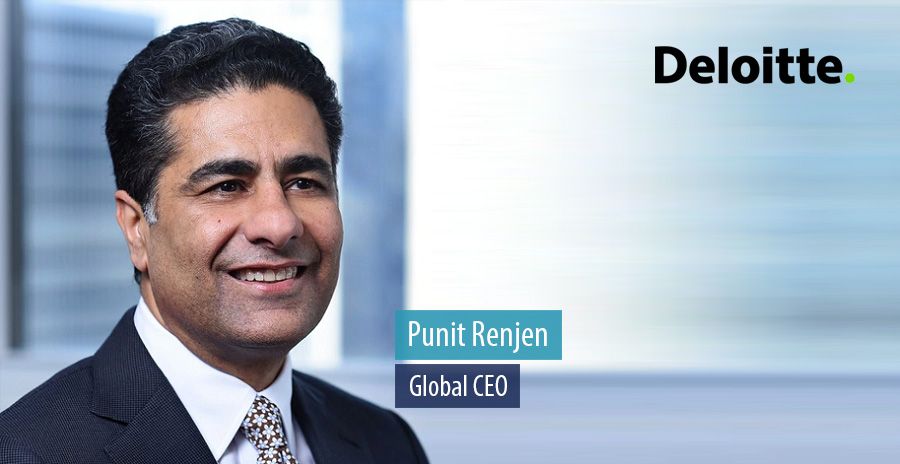
#TIL - Punit Renjen, now CEO of Deloitte, had to drop out of a school because his parents couldn't afford the school fees.
Graduated from a local college in Rohtak because it was cheap.
Went to Delhi to find jobs based upon an advert for Usha that he saw in a newspaper.
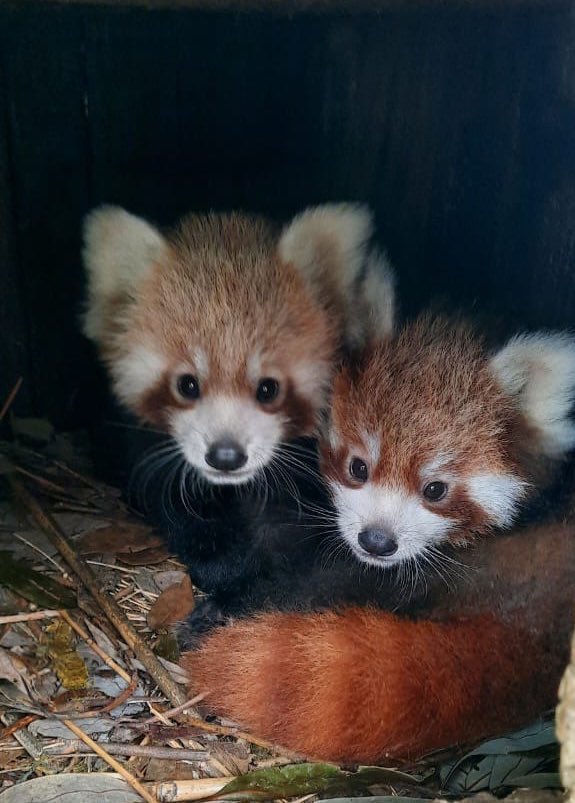
Two reasons not to cut trees. But they are #endangered now due to #habitat loss & #poaching. These will be released soon in the wild. Do you know where do we have India’s only #RedPanda#Conservation Breeding Centre.
The trough working its magic. A long squall line of #thunderstorms intensify about 100 kms to 200 kms from the coastline of #Tamilnadu and S. #Andhrapradesh. Storms will move in roughly from ENE to WSW bringing in widespread rains in a few hours time. #COMK#NEM2022#Chennairains