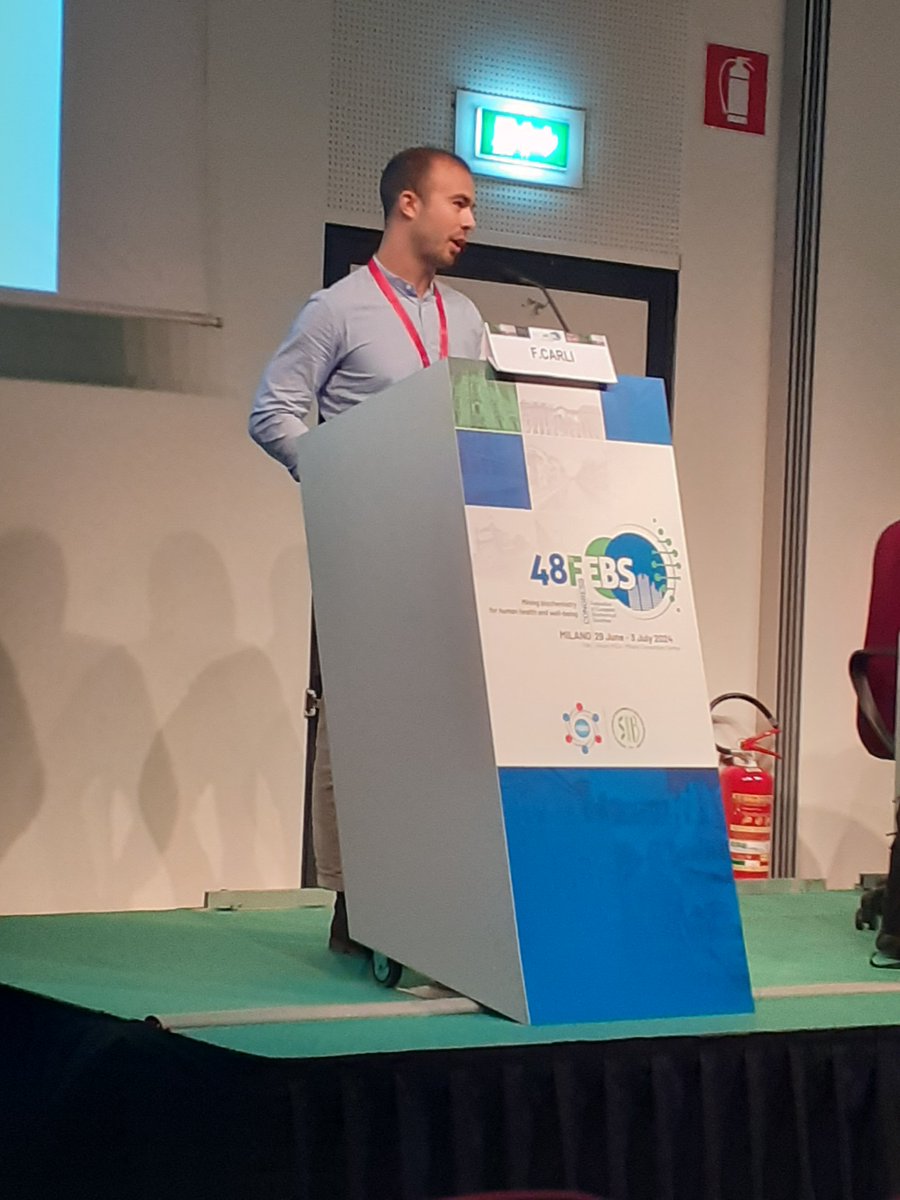
🧵I'm thrilled to share that our latest paper is out in Nature Communications! 🎉
This work marks a key milestone in my PhD journey, where we've used AI to gain insights into cancer — a small step toward understanding this disease better and offering hope for the future. 🧬🤖
🧵 A huge thanks to the creators of umap-learn for their work on UMAP! While trying to get Parametric UMAP to work for my project, I ran into some challenges, so I decided to dive in and build my own version from scratch. You can check it up here https://t.co/vhb7pesxLv
Thanks to everyone who's tried it, filed issues, or given it a star. It's really nice when something small you put out there ends up being useful to people 🙏
🧵I'm thrilled to share that our latest paper is out in Nature Communications! 🎉
This work marks a key milestone in my PhD journey, where we've used AI to gain insights into cancer — a small step toward understanding this disease better and offering hope for the future. 🧬🤖
This achievement wouldn’t have been possible without the incredible colleagues who supported me along the way — and a special thanks to my PhD supervisor @raimondifranc, for the invaluable guidance. 🙏
Our work “Learning and actioning general principles of cancer cell drug sensitivity” is out on Nature Commun https://t.co/hMT3sAJpX4. A monolithic work brilliantly crafted by #Francesco Carli, it allows to predict anti-cancer drugs based on patients’ transcriptomics data.
The implementation closely follows the original work by @tim_sainburg et. al, for which I am deeply thankful. While still a work in progress and a bit rough around the edges, it is already functional and ready to use
Key features include a Python implementation enhanced by PyTorch for efficient modeling and GPU acceleration, along with fast neighbor computation by FAISS. It supports batched training for scalability and provides a user-friendly, scikit-learn-style API for easy use
Our new paper "The landscape of cancer-rewired GPCR signaling axes" is out on Cell Genomics https://t.co/V9Bn0KNa3o
Huge work by @chakitarora and the bioinformatics group of @scuolanormale. Great collaboration with @SilvioGutkind, Natoli @IEOufficiale and other groups!
Concluding, there are a lot more results detailed in our full text, showcasing the depth of our work. Immense thanks to all coauthors for their exceptional contributions. Stay tuned: all code and data will be shared soon.
Thrilled to unveil our latest work: predicting drug sensitivity in cancer cell lines to gain actionable insights. Utilizing a vast gamma of ML techniques, we've crafted an interpretable pipeline leveraging vast pharmacogenomics datasets 🧬💊
https://t.co/fig2mn2YoW
We computationally validate our predictions on TCGA and experimentally on Glioblastoma (in collaboration with Fondazione Pisana per le Scienze) and on PDAC (in partnership with @IEOufficiale ).